10 online subcultures that isolated men often migrate into, leaving women behind
Nearly 78% of video game players say gaming has helped them meet people they would not have otherwise encountered, according to the Entertainment Software Association, an inconvenient fact in an era where many men insist no one wants to talk to them.
What they often mean is something narrower: attractive women aren’t engaging with me. It’s true that a much larger share of young men report being single than women: roughly six in ten men under 30 versus about one-third of women. Be it that women are pairing off en masse with each other or quietly practicing polygamy with a small elite of men is still an under-researched point.
What we know is that women tend to date slightly older men (hypergamy), many opt out of dating altogether, and men who invest socially and financially are simply more visible in the mating market.
Meanwhile, these same men ignore entire categories of social opportunities, such as talking to older people, forming platonic friendships with other men, or engaging strangers without an agenda. If the only people you try to talk to are women you find attractive, isolation isn’t mysterious. It’s engineered.
The Fatalistic Anchor of Inceldom
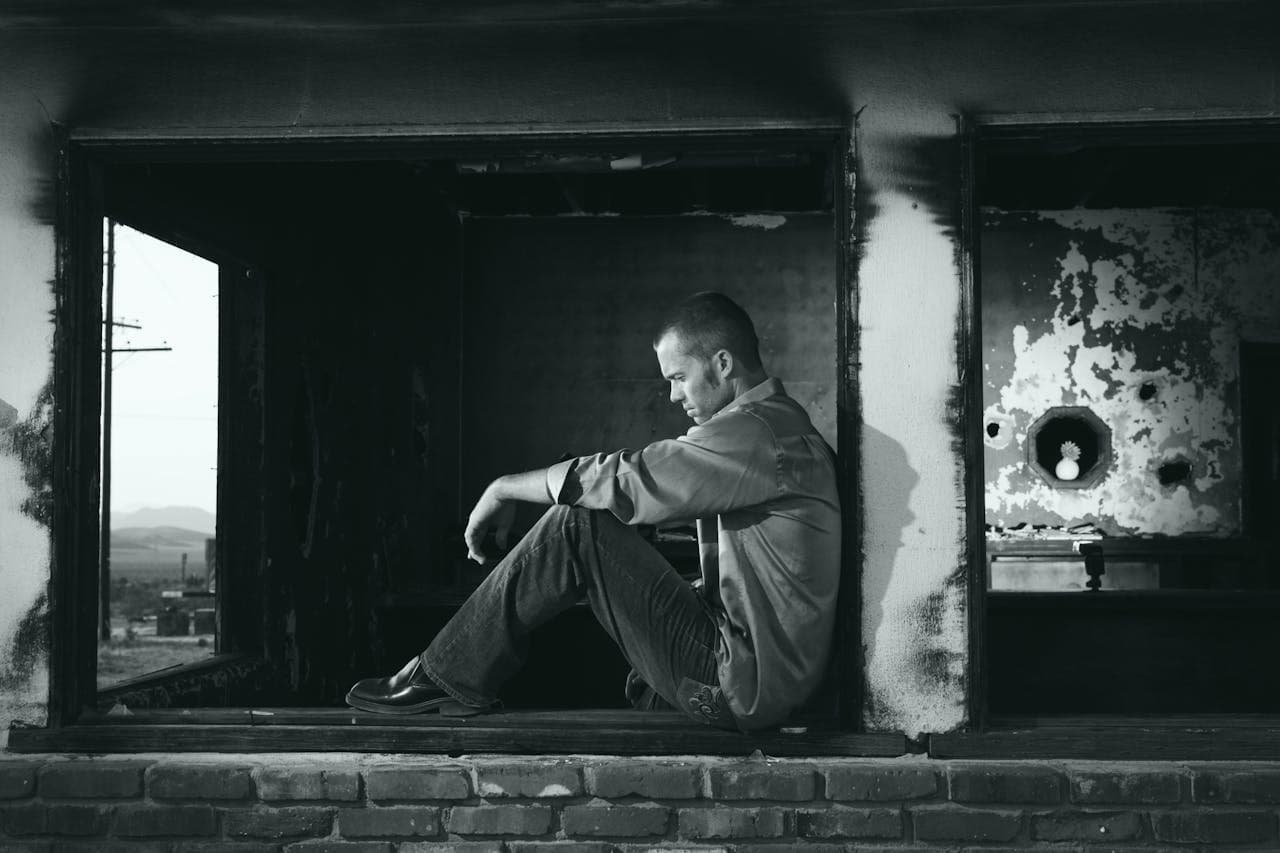
The rise of the involuntary celibate subculture serves as a digital lightning rod for men who feel physically or socially disqualified from the modern dating market. Unlike standard loneliness, this community is defined by the Black Pill, a deterministic ideology suggesting that genetic factors like bone structure and height are the sole arbiters of human value.
Research published in the journal Evolutionary Psychological Science indicates that many participants suffer from high rates of clinical depression and social anxiety, which the community often reinforces rather than alleviates.
By centering their identity on a shared sense of biological rejection, members find a paradoxical sense of belonging through collective hopelessness. The group’s lexicon, ranging from Stacys to Chads, creates a linguistic barrier that further isolates them from mainstream social discourse. Ultimately, this subculture transforms personal grief into a rigid, pseudo-scientific worldview that rejects the possibility of individual change.
Sovereignty and the MGTOW Exodus
Choosing to Go Their Own Way represents a voluntary secession from the traditional social contract of marriage and long-term partnership. These men view the legal and domestic landscape as a rigged game, often citing the fact that approximately 70% of divorces in the United States are initiated by women as a reason to avoid commitment.
Sociological studies on the Manosphere by researchers like Debbie Ging suggest that MGTOW participants are frequently older than incels, often entering the community following a traumatic legal or romantic dissolution. They prioritize financial independence and solitary hobbies, advocating for a life where male utility is not tied to providing for a nuclear family.
The Algorithmic Pursuit of the Pick-Up Artist

While other groups embrace defeat, the PUA community treats social interaction as a programmable machine that can be mastered through game. Isolated men are drawn to this subculture by the promise of actionable blueprints, using psychological tactics like negging or social proof to manufacture attraction.
This community flourished following the success of Neil Strauss’s non-fiction work titled The Game, but it has since evolved into a high-priced industry of dating coaches and digital seminars. Despite the promise of empowerment, many participants report a hollow-victory effect, in which successful interactions feel unearned or manipulative rather than genuine.
Reliance on scripts can hinder the development of authentic emotional intelligence and long-term stability. Consequently, the man remains isolated even in a crowd, unable to drop the persona he has built to survive the social market.
Bio-Essentialism and the Looksmaxxing Trend
From mewing to correct jaw alignment to gymmaxxing for muscular hypertrophy, the community utilizes a vocabulary of optimization borrowed from Silicon Valley tech culture.
While fitness is generally healthy, psychologists at institutions like the University of Melbourne warn that this community often borders on body dysmorphia, with men seeking invasive surgeries to fix perceived flaws.
The trend is fueled by the visual nature of apps like TikTok, where facial symmetry and the Hunter Eyes aesthetic are prioritized above personality or character. In this space, the body is treated as a product to be engineered rather than a vessel for a human being.
The Doomer and the Aesthetics of Nihilism

Characterized by a distinctive aesthetic, often a hooded figure in a bleak, gray landscape, this subculture bonds over the collapse of the environment, the economy, and the soul. Unlike the angry rhetoric of other groups, Doomers are defined by a quiet, smoke-filled resignation, often documented through Doomerwave music playlists on YouTube that garner millions of views.
This group mirrors the Lost Generation of the post-WWI era, finding kinship in the shared belief that traditional milestones like homeownership or stable careers are no longer attainable. A 2023 Pew Research Center study showing that 63% of young men are single helps explain the fertile ground for this specific brand of existential dread. The community provides a space to grieve the American Dream, yet it offers no path forward, trapping its members in a loop of digital melancholia.
Semen Retention and the Quest for Vitality
The NoFap and Semen Retention movements offer a quasi-religious path to reclamation through the discipline of sexual abstinence. Members believe that porn addiction is the primary cause of male isolation, claiming that rebooting the brain’s dopamine receptors will result in increased alpha energy and social magnetism.
While medical professionals acknowledge the benefits of reducing compulsive p*rn consumption, the community often attributes near-supernatural benefits to abstinence, such as improved skin quality and deeper voices. This subculture, centered on sites like NoFap.com, which boasts over 300,000 members, provides a sense of heroic struggle, turning the mundane act of self-control into a grand battle for one’s masculinity.
Tactical Preparedness as Masculine Utility

By focusing on survivalism, firearms training, and disaster response, these men adopt the role of the protector in a world where they feel their traditional roles have been stripped away.
Dr. Michael Kimmel, author of Angry White Men, notes that the aggrieved entitlement many men feel is often channeled into fantasies of a world-ending event in which their skills would finally be valued. The community is built on acquiring high-end gear that serves as a uniform for a civilian soldier in a perpetual state of training.
The Restoration of the Trad Ideal
This movement romanticizes a specific, often sanitized, version of the 1950s or even the Middle Ages, where social expectations were rigid, hierarchical, and clear.
Members often migrate toward Orthodox Christianity or traditionalist Catholicism, seeking the ordered life they feel is lacking in the chaotic, fragmented digital age. Literature such as Julius Evola’s Revolt Against the Modern World serves as a foundational text for those who believe that modern progress is actually a form of spiritual and cultural decay.
Advocacy and the Men’s Rights Movement
Men’s Rights Activists (MRAs) provide a political and legal framework for men who feel victimized by contemporary social institutions and changing cultural norms. The movement focuses on issues such as high male suicide rates, workplace fatalities, and perceived biases in family court systems across the Western world.
Data shows that men account for nearly 75% of suicides in many developed nations, a statistic MRAs use to highlight what they term a crisis of masculinity. While many of their concerns are rooted in real social issues, the movement is frequently criticized for its adversarial stance toward feminist progress on sites such as A Voice for Men.
The Digital Third Place of Gaming Guilds

For millions of men, the primary site of migration is not a specific ideology but a persistent, interactive virtual world. Massively Multiplayer Online games and Discord servers function as third-place social environments outside of home and work, where community is built through shared goals and mutual reliance.
According to the Entertainment Software Association, a significant portion of gamers report that their online friendships are as meaningful as their physical ones, with 55% of players saying games help them stay connected to friends. Within a guild, an isolated man can be a leader, a strategist, or a reliable teammate, earning respect for his merit and contributions rather than social status or physical appearance.
Key Takeaways
- A large share of young men who report loneliness are responding to romantic rejection, not to a lack of social contact overall.
- The gap between single men and single women is real, but it’s driven by age preferences, opt-out behavior, and effort asymmetries, not women disappearing into same-sex coupling or widespread polygamy.
- Men who narrow their social focus to attractive women dramatically reduce their chances for connection and inflate feelings of isolation.
- Broad social engagement, friendships, casual interactions, and mixed-age connections build social capital that buffers against loneliness.
- Chronic loneliness is less about being unwanted and more about refusing to engage without guaranteed validation.
Disclosure line: This article was written with the assistance of AI and was subsequently reviewed, revised, and approved by our editorial team.
Like our content? Be sure to follow us