12 daily habits women should break to stop doing things out of pure routine
You wake up, check your phone, brew the coffee, and hit the ground running. By 10:00 AM, you’ve checked off six tasks, but if someone asked why you did them in that specific order, you might not have an answer beyond, “That’s just how I do it.”
According to a 2024 behavioral study from Duke University, approximately 45% of our daily behaviors are driven by habit rather than conscious decision-making. For many women, these routines are survival mechanisms for managing the mental load. However, when routine replaces intentionality, we risk occupational burnout and decision fatigue, phenomena that the World Health Organization (WHO) now recognizes as legitimate workplace hazards.
If you feel like you’re winning at your to-do list but losing your sense of purpose, it’s time to audit your autopilot. Here is how experts suggest you break the cycle of pure routine to reclaim your cognitive energy.
The Immediate Inbox Response

“If you start your day by responding to emails, you are essentially putting yourself in a reactive state,” says productivity expert and author Nir Eyal. He argues that high performers who succumb to reactive work early in the day lose up to 20% of their deep work capacity.
While it feels productive to clear the deck, neuroscience suggests that the first two hours of wakefulness are the brain’s peak time for divergent thinking. By immediately tethering your brain to external requests, you sacrifice your most creative window for administrative upkeep.
This creates a systemic issue in which women are viewed as reliable executors rather than strategic visionaries.
The Yes Reflex

Women are asked to perform non-promotable tasks, such as organizing office parties or taking notes, 44% more often than men. Most women say yes out of routine habit.
When women routinely accept low-value tasks, they suffer from opportunity cost. Every minute spent on a routine favor is a minute stolen from high-impact projects that lead to promotions.
Office housework remains a significant barrier to the C-suite because it isn’t tracked in performance reviews. When asked to do something outside your job description, say: “Let me check my current project load and get back to you by tomorrow.”
The Midnight Scroll Wind-down

Sleep scientist Dr. Matthew Walker, author of Why We Sleep, often notes that the blue light from screens isn’t the only issue; it’s the “alerting” nature of the content. Routine scrolling keeps the cortisol levels spiked when they should be dipping.
The habit of scrolling is often a search for revenge, a way to procrastinate before bed, or a way to reclaim agency after a day of following someone else’s schedule. However, it creates a physiological deficit. The irony is that by trying to gain a sense of freedom, we sacrifice the quality of sleep necessary to feel free the next day.
Charge your phone in a different room. If you need an alarm, buy a $10 digital clock.
Defaulting to Soft Language
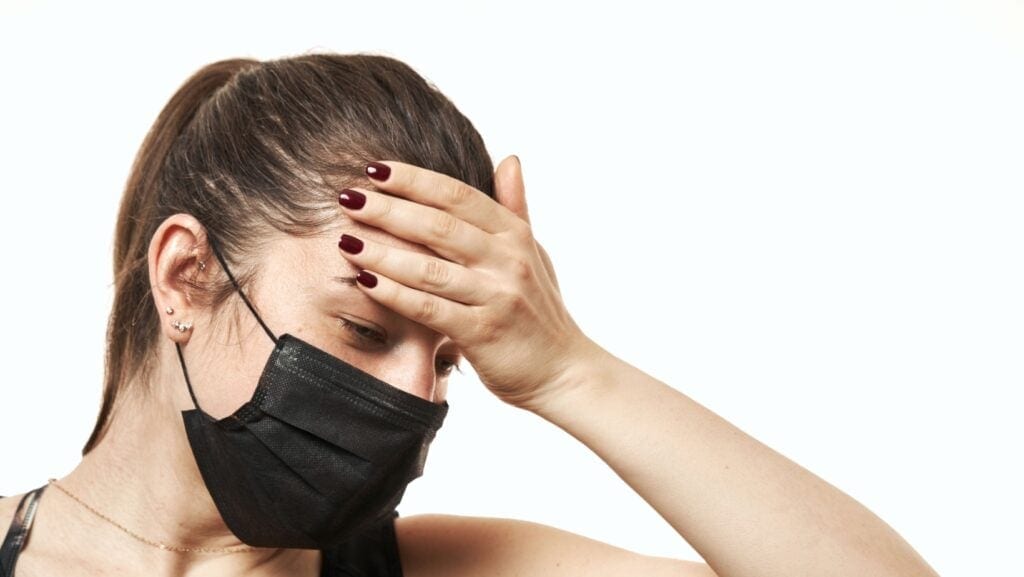
“I just think…” or “Does that make sense?” are phrases many women use out of habit to soften their presence. Former Google executive Ellen Leanse famously noted that the word “just” is a “permission word” that subtly undermines the speaker’s authority.
While some argue this language fosters collaboration, linguists suggest that over-reliance on hedges in professional settings creates an authority gap. It’s a routine defense mechanism against being perceived as aggressive, but it often leads others to credit the speaker’s ideas to those who speak more definitively.
The Lunch at the Desk Syndrome
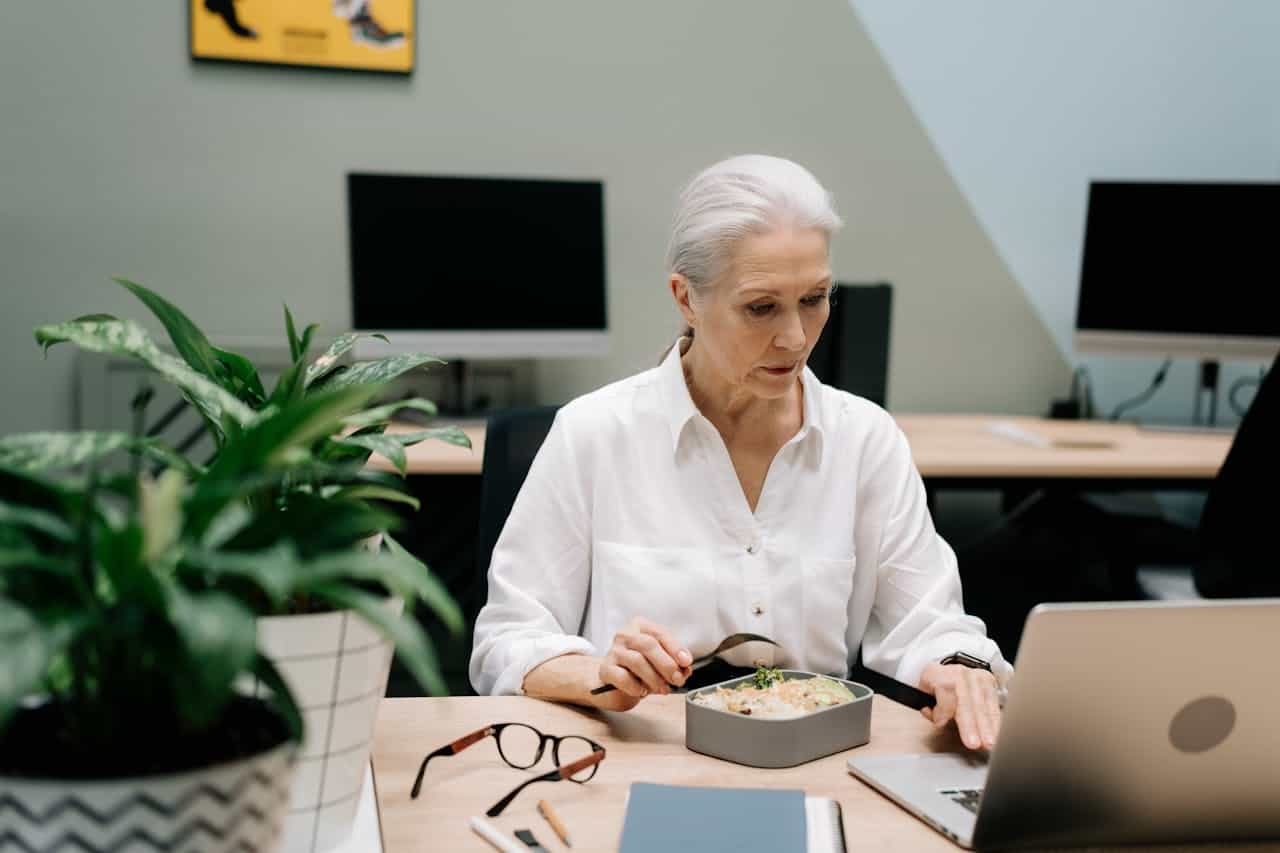
Arianna Huffington, founder of Thrive Global, has been a vocal critic of the burnout culture, where eating lunch at your desk is a badge of honor. She argues that sacrificing your meal break is a sacrifice of your sanity.
There is a presence bias in many corporate cultures, leading women to feel they must be visible at all times to be seen as hardworking. However, the prefrontal cortex requires deactivation to maintain focus. Staying at your desk is a routine of diminishing returns.
Physically leave the building, or at least the room, for 15 minutes. No phone, just a change of scenery. and touching grass, as the young generation puts it.
Curating the Perfect Response

This leads to a routine of over-preparing and over-editing before speaking up.
This habit manifests as waiting until you have 100% of the data before making a suggestion. In a fast-moving economy, the 80% certain decision-maker usually wins. Perfectionism is a routine that masks a fear of failure, but it acts as a ceiling on leadership.
The Confidence Gap (Shipman & Kay) in The Atlantic cites that men often apply for jobs when they meet 60% of the qualifications, while women wait until they meet 100%.
In your next meeting, contribute one thought or question when you’re ready. Practice the B-minus work principle for internal drafts to save time for high-stakes projects.
The Comparison Loop on Social Media

Social psychologist Jonathan Haidt has highlighted how performative social media leads to a routine of constant self-surveillance. For many women, checking Instagram is a routine that triggers a scarcity mindset.
When we routinely compare our lives to curated feeds, we make decisions based on external validation rather than internal values. This leads to lifestyle creep, spending money and time on a routine that doesn’t actually bring joy.
Unfollow or Mute any account that makes you feel less than during your morning scroll.
Also on MSN: Culture shift: what it means to be human in a post-social media world
Ignoring Tiny Physical Cues

According to a 2025 American Psychological Association (APA) report, women are 28% more likely than men to report physical symptoms of stress but 12% less likely to take time off to address them.
Dr. Susan David, author of Emotional Agility, suggests that we often treat our bodies like biological machines. Women, in particular, are socialized to push through pain or fatigue to maintain their roles as caregivers or employees.
Ignoring a tight neck or a recurring headache is a routine of somatic suppression. Over time, this habit leads to chronic stress conditions. The body’s signals are data points; ignoring them is poor data management.
Multitasking During Personal Time

Many women listen to podcasts while exercising or folding laundry. While efficient, this routine prevents the brain from entering the default mode network, a state in which the brain processes emotions and solves complex problems.
Choose one activity today, even if it’s just washing the dishes, and do it in total silence.
The Self-Correction Routine

Apologizing out of routine (when no harm has been done) signals that your presence is an intrusion. This habit erodes self-esteem and signals to others that your time or opinions are negotiable.
Replace “Sorry for the delay” with “Thank you for your patience.” Replace “Sorry, can I ask a question?” with “I have a question.”
Staying in the Safe Zone of Skills
Volunteer for one task this month that you have no idea how to do.
The 2025 World Economic Forum Future of Jobs Report emphasizes that active learning is the #1 skill for the next decade.
Volunteer for one task this month that you have no idea how to do.
End-of-Day Ruminating

Women are statistically more prone to rumination than men. This routine doesn’t solve problems; it just reinforces neural pathways of anxiety. It keeps the brain in a state of threat overnight, leading to poor cognitive function the next morning.
Write down three things that went well today before you close your eyes. This forces the brain into a search-and-find mission for positive data.
Key Takeaways:
- Audit Your Language: Remove just and unnecessary apologies to reclaim your authority.
- Protect Your Peak Hours: Keep the first hour of your day for yourself, not your inbox.
- Prioritize Recovery: Move your phone out of the bedroom and replace scrolling with rest.
- Embrace Discomfort: Stop waiting for 100% certainty; 80% is enough to move forward.
- Mindset Tip: View your habits not as who you are, but as programs you are running. If a program is outdated, you can hit update.
Disclosure line: This article was written with the assistance of AI and was subsequently reviewed, revised, and approved by our editorial team.
Like our content? Be sure to follow us