Why do some married men avoid wearing their wedding rings? 12 reasons behind the habit
Marriage is one of the few institutions where the expectation of visible loyalty is not evenly distributed. The wedding ring appears to be a mutual symbol, but in practice, it functions asymmetrically. Women are expected to wear it consistently enough that its absence raises questions. Men are given just enough flexibility for their inconsistency to become noticeable.
Data from the Pew Research Center shows that women are significantly more likely than men to maintain visible markers of relationship status in daily life, from rings to social identifiers. And that’s the real trigger behind the complaints. Not the missing ring itself but the ambiguity it introduces. A man can take his ring off for entirely practical reasons and mean nothing by it. But because the baseline expectation has already been set by women’s consistency, the same act lands differently.
So when women push back, they are reacting to a break in a pattern that, socially, was never equally flexible to begin with. The reasons men give for not wearing their rings are often ordinary: safety, comfort, habit. But once they collide with unequal expectations, even ordinary behavior starts to carry a weight it was never meant to bear.
Workplace safety

Mechanics, electricians, and surgeons frequently leave their rings in a jewelry box to avoid ring avulsion, a traumatic injury in which a snagged ring can tear skin or even amputate a finger. In high-voltage environments, gold or platinum bands can become dangerous conductors, posing a risk of severe thermal burns during accidental electrical grounding. In heavy industry, the O-ring effect describes how a wedding band might get caught in gears, dragging the hand into machinery.
The American College of Surgeons confirms that surgical scrubs and sterile environments often require removing all jewelry to maintain baseline clinical hygiene and prevent the harboring of pathogens. While some opt for silicone alternatives, many men find that the constant cycle of removing and replacing a metal band eventually leads to abandoning the habit to prevent loss.
This isn’t merely a preference; OSHA (Occupational Safety and Health Administration) guidelines often strictly prohibit loose jewelry near moving parts, making ring-free hands a professional requirement rather than a personal choice.
Physical discomfort

For some men, the sensation of a foreign object on the finger can trigger sensitivities or skin conditions, such as contact dermatitis. Nickel itch or reactions to alloyed metals can cause persistent rashes under the band, exacerbated by trapped sweat and soap residue. Some individuals possess a heightened tactile awareness: a biological trait often discussed in sensory processing research, where the constant pressure of a ring feels like a restrictive burden.
Furthermore, fluctuating weight or physical labor can cause fingers to swell, turning a symbol of devotion into a literal tourniquet.
Unlike women’s rings, which often have thinner bands, men’s rings are typically wider and heavier, creating a larger surface area that can irritate the skin with moisture, leading many to prioritize physical relief over the traditional display of marital status.
Professional image norms
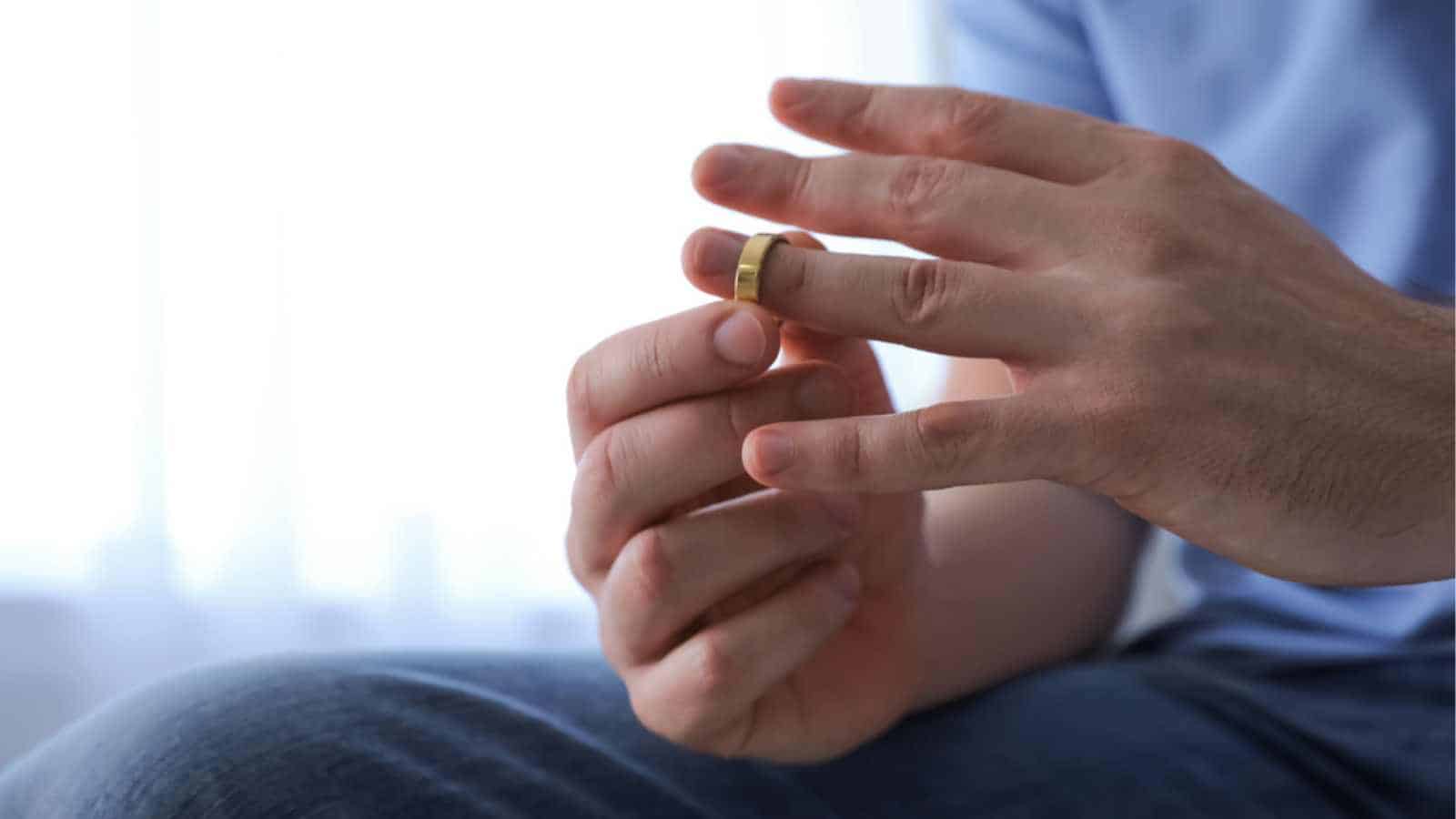
In certain high-stakes corporate or artistic circles, the absence of a ring can serve as a subtle signal of brand alignment or perceived availability. Historical sociologist Erving Goffman, in his work on impression management, explores how individuals curate their appearance to fit specific social frames.
Some men in sales or competitive negotiations believe that appearing unattached fosters a different type of rapport with clients, albeit often subconsciously. Interestingly, some people perceive the absence of accessories as a preference for functionality, efficiency, and mental clarity. By omitting extraneous items, individuals are often seen as focused on substance rather than style.
While it may seem contrarian, some men in the tech or startup world view the ring as a legacy symbol that doesn’t mesh with a minimalist, forward-thinking aesthetic. This trend is particularly visible among the C-suite in Silicon Valley, where personal branding often leans toward a clean, unencumbered look. The goal isn’t to hide the marriage, but to ensure that the physical self projects an image of total professional immersion, free from any external signifiers that might distract from the mission at hand.
Forgetfulness, not intent

The psychological phenomenon of habit slips explains why many rings end up by the bathroom sink instead of on the finger. Dr. James Clear, author of Atomic Habits, discusses how a break in a daily routine, like taking a ring off for a workout or a shower, often leads to failure to reintegrate the action.
Data from insurance claims via companies like Jewelers Mutual indicates that a significant percentage of lost jewelry is misplaced during these transition moments. For men who didn’t grow up wearing jewelry, the ring never becomes a secondary skin, meaning its absence isn’t immediately felt by the nervous system.
The lack of a ring in these cases is a failure of memory retrieval rather than a statement on the marriage itself. Men with ADHD or high-stress jobs may find their cognitive load is too saturated to track small personal items, leading to a permanent-temporary state where the ring stays in a drawer for months after a single accidental omission.
Symbol vs. substance belief

A growing demographic of men views the ring as an antiquated social performance that bears no relation to the actual health of their relationship. Human connections are built on constant conjunction and utility rather than on artificial rituals.
Approximately 3% to 5% of millennials believe rings are entirely unnecessary, while a much larger group, often cited at 20% to 25%, views them as optional or occasional rather than a constant requirement. They argue that the ring is a public-facing tool, whereas the marriage is a private-facing reality. In this framework, the ring is seen as a vestige of property-based marriage traditions, a brand that some find ideologically uncomfortable.
These men often point to the fact that infidelity occurs regardless of jewelry, suggesting that the ring offers a false sense of security. By forgoing the band, they feel they are engaging in a more authentic form of commitment that doesn’t rely on a 14k gold band to prove its existence to strangers.
Relationship ambiguity or dissatisfaction

When a marriage enters a period of high friction or emotional distance, the ring is often the first thing to be discarded as a quiet form of protest. Dr. John Gottman, a leading researcher on marital stability, describes turning away as a sign of relationship decay; removing the ring can be a physical manifestation of this internal withdrawal.
Unringing often precedes formal separation by several months. It serves as a psychological distancing mechanism, allowing the man to feel a sense of autonomy or singleness, even while still legally bound. This behavior isn’t always about seeking a new partner; it is often about shedding the weight of a role that has become painful.
In these instances, the bare finger acts as a silent barometer for the home environment. If the marriage feels like a cage, the ring is the most immediate barrier the individual can remove, providing a temporary, if illusory, sense of freedom from the union’s expectations.
Desire for social flexibility

In social environments like bars, clubs, or networking mixers, some men remove their rings to navigate the space without the immediate pre-selection or exclusion that a wedding band triggers. Evolutionary psychologist David Buss has written extensively on mating signals; a ring is a mate-guarded signal indicating that a person is off-limits. For a man seeking social flexibility, not necessarily for infidelity, but for the ego boost of being noticed, the ring acts as a barrier.
Men often receive different treatment in social settings based on their perceived availability. By going ringless, a man can engage in low-stakes flirtation or simply enjoy the feeling of being an individual rather than half of a couple. This motivation is frequently fueled by a desire to validate one’s own attractiveness outside the domestic sphere, using the anonymity of a bare hand to test one’s market value in the social world.
Cultural variation

In many Orthodox Christian traditions, particularly in Greece and Russia, the wedding ring is worn on the right hand to signify the right hand of God, which can make a man appear unmarried to those accustomed to Western left-hand conventions.
In several Hindu communities, the vivaah ceremony focuses on the mangalsutra (necklace) for women, while men traditionally receive no permanent jewelry. Men from these backgrounds may view the ring as a Western import rather than a spiritual necessity.
In high-context cultures, those where social standing is communal rather than individual, a man’s marital status is often communicated through his presence at family events and public associations rather than a metallic band. In these environments, the ring is viewed as a redundant “low-context” signal for strangers.
Interestingly, in modern Nordic countries, the plain gold band is becoming a symbol of gender-neutral partnership, yet a small but vocal rebel movement among men who reject all adornment to signal an egalitarian stance that refuses to participate in visual labeling.
Habit discontinuity

The internal map of our physical boundaries, and for many men, a ring remains a persistent foreign object rather than a natural extension of the self.
Establishing a life-long habit starting in adulthood requires significantly more cognitive reinforcement than those learned in youth. If the hand has functioned “cleanly” for the entirety of a man’s formative years, the neural pathways for “checking for the ring” simply don’t exist.
Unlike women, who are often socialized into jewelry culture through earrings or bracelets from a young age, many men encounter the wedding band as their very first piece of daily-wear hardware.
Without an existing jewelry-wearing scaffold, the likelihood that a new accessory will be abandoned is relatively high. The ring doesn’t feel like a symbol; it feels like an itch that never quite goes away, leading to a slow, unintentional drift toward leaving it on the nightstand.
Fear of loss or damage
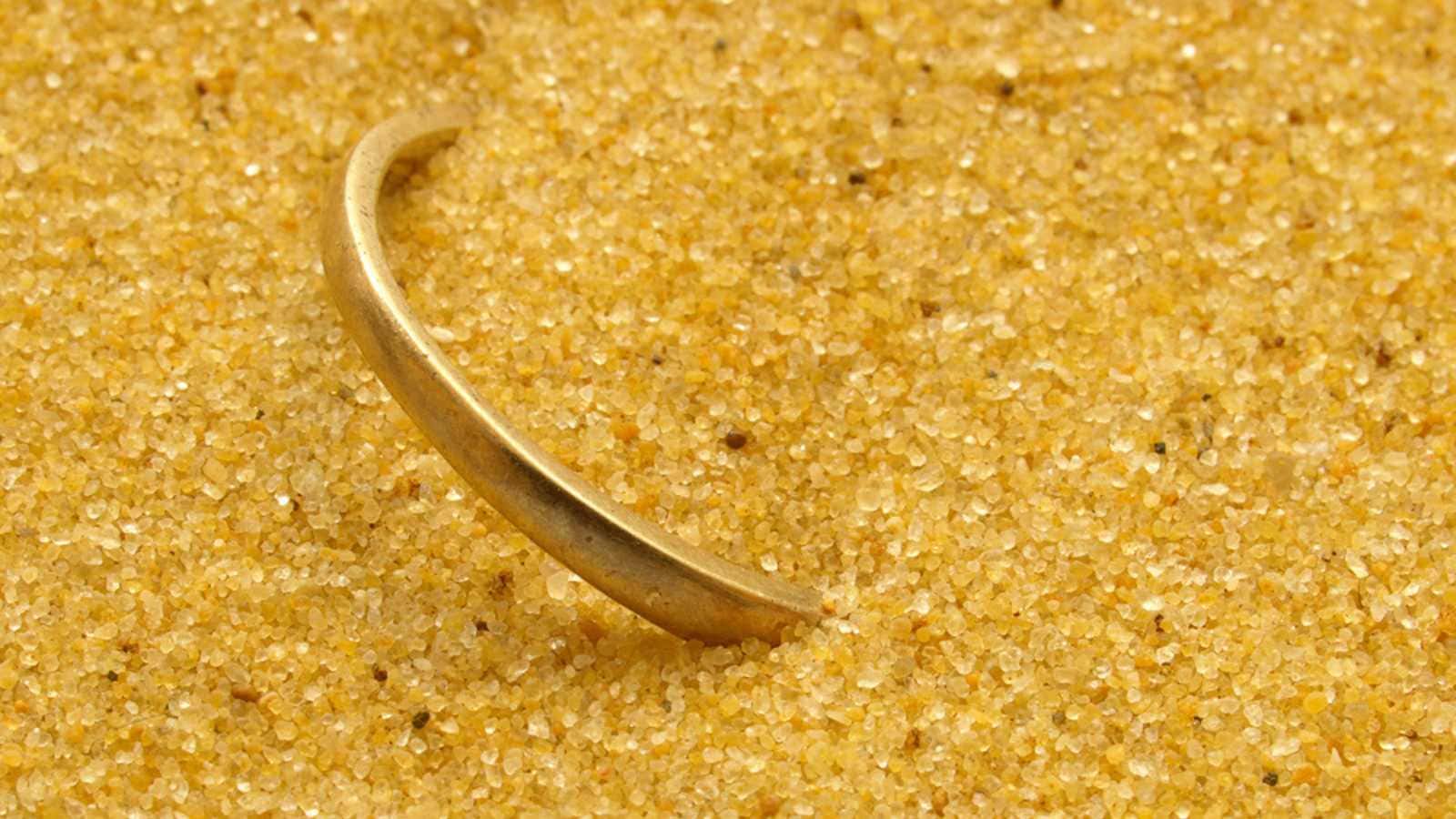
High-value sentimental items carry a loss aversion weight that some men find too stressful to manage daily. For those owning heirloom rings or bands encrusted with expensive stones, the risk of theft or accidental loss outweighs the benefit of constant wear.
According to insurance industry data, the average cost of a man’s wedding band has risen significantly, prompting greater focus on safekeeping. Men who engage in active lifestyles, such as hiking, rock climbing, or traveling, often leave the ring at home to avoid scratching the metal or losing it in water.
This is particularly common among men who view the ring as a holy relic, rather than a daily tool. They treat it with the same reverence as a tuxedo; it is brought out for anniversaries, weddings, and formal events, but tucked away during the grind of daily life. The logic here is protective: the best way to ensure the ring lasts for fifty years is to keep it away from the hazards of the modern world.
Identity resistance

For many men, the transition from bachelorhood to husbandhood involves an identity shift they may subconsciously resist. Sociologist Peter Berger’s theories on the social construction of reality suggest that our identities are sustained by external symbols; rejecting a symbol is a way of maintaining an older version of the self.
A man who has prided himself on being independent or unbound may find the ring to be a jarring reminder of his new, domesticated status. This resistance is often seen in men who marry later in life, having spent decades with clean hands.
The ring feels like a uniform they didn’t choose, even if they chose the partner. They aren’t looking to cheat, but they are looking to feel like the same person they were at age twenty-five. The ringless finger is a small patch of sovereign territory where they can still feel like an autonomous agent rather than a defined component of a family unit.
Testing boundaries

In some psychological profiles, removing the ring is a form of passive-aggressive testing directed at the spouse. It becomes a tool for gauging the partner’s level of jealousy, attention, or control.
If the wife notices and complains, it provides a hook for a conflict the man might be seeking. If she doesn’t notice, it might be interpreted as a lack of care. This behavior falls under what psychologists call “distancing maneuvers,” used to create a controlled amount of anxiety within the relationship.
The person who cares less often holds the power; by appearing indifferent to the union’s symbol, the man may be attempting to rebalance the scales of power in his favor. This is a subtle game of cat and mouse, with the ring as the cheese. It is a rebellion against the rules of marriage, testing how much of the traditional script can be ignored before the structure of the relationship actually breaks down.
Key Takeaways

- Most cases of men not wearing wedding rings come down to practical constraints like safety, comfort, habit, or fear of loss, not deliberate signaling about the relationship.
- The tension arises because ring-wearing carries uneven expectations: consistent display is more normalized for women, while men’s inconsistency is more noticeable and open to interpretation.
- A missing ring on its own is a weak indicator of relationship issues; it only gains meaning when paired with changes in behavior, communication, or transparency.
- Cultural, religious, and professional contexts shape whether a ring is necessary, optional, or even relevant, making the behavior highly context-dependent rather than universally symbolic.
- The real conflict isn’t the ring itself but the mismatch between intent and perception. Ordinary actions can be misread when expectations about visible commitment aren’t aligned.
Disclaimer – This list is solely the author’s opinion based on research and publicly available information. It is not intended to be professional advice.
Like our content? Be sure to follow us