12 phrases that can signal pick-me behavior
One little sentence can turn a whole room against women before anyone notices. “I’m not like other girls” may sound harmless in a group chat, on a date, or in a TikTok comment, but it often carries an implicit bargain. Praise me by making them look smaller. That bargain feels louder now because so much identity is built in public.
The Pew Research Center found that 90% of U.S. teens use YouTube, roughly 6 in 10 use TikTok and Instagram, and 55% use Snapchat, with 1 in 3 using at least one major platform almost constantly.
Pew also found in 2025 that 45% of teens say they spend too much time on social media, up from 36% in 2022. Approval no longer stays in one room. It follows people home, lights up from the phone, and waits quietly under every post.
That is what makes “pick-me” behavior such a loaded topic. Merriam-Webster defines “pick-me” as slang for someone, usually a young woman, who seeks attention and approval, often from male peers, by acting in a way that sets her apart from others.
But this is not about shaming women for liking sports, having male friends, skipping makeup, eating freely, or holding different views. The real question cuts deeper. Does the phrase come from confidence, or does it ask another woman to shrink so one woman can feel chosen?
“I’m not like other girls.”

This is the old crown jewel of pick-me language, polished by years of movies, memes, dating app bios, and nervous laughter at parties. It sounds like confidence, but it often leans on comparison. The phrase quietly turns “other girls” into a pile of stereotypes: too loud, too dramatic, too needy, too basic, too vain.
Amber Wardell, Ph.D., wrote in Psychology Today that pick-me behavior refers to women who seek male interest, validation, or acceptance, often by putting down other women, and she links it to unaddressed internalized misogyny. That’s why this line can sting. It asks to be seen as rare by making ordinary womanhood seem embarrassing.
Pew’s 2025 data adds useful context here: 31% of teens say social media makes them feel pressure to post popular content, and 31% say it makes them feel excluded by friends. In a world where being liked is counted in numbers, “I’m not like them” can become a shortcut to attention, but it also builds self-worth on a shaky little stage.
“I just get along better with guys.”

There’s nothing wrong with having close male friends. Some women grew up with brothers, joined male-heavy hobbies, work in male-heavy spaces, or simply connect more easily with certain men in their lives.
The pick-me warning appears when the phrase turns into a blanket insult against women. “Girls are too much drama” doesn’t just describe one bad friendship. It paints women as emotional clutter and men as the clean, easy escape.
The Pew Research Center found that 39% of teens say social media makes them feel overwhelmed by drama, and girls are more likely than boys to say so, at 45% compared with 34%.
So yes, drama is real. Group chats can burn hot. Friendships can bruise. But when every hard moment with a woman becomes proof that women are the problem, the phrase stops being self-protection and starts sounding like a public audition for male approval.
“Girls never really like me.”

This one deserves a softer hand because sometimes it comes from a real wound. Plenty of women have been frozen out, mocked, replaced, copied, or quietly punished by other women.
That kind of hurt can sit in the chest for years. But the phrase starts to signal pick-me behavior when it becomes a repeated performance for reassurance, especially from men. It can invite the response, “They’re just jealous,” which feels sweet for a second but keeps the story stuck.
Pew’s 2025 report found that 31% of teens say social media makes them feel excluded by friends, with girls more likely than boys to report that feeling, 36% compared with 26%. Exclusion hurts, and the data backs that up. Still, healing usually begins when a person can ask, “What happened here?” rather than turning every woman nearby into a suspect.
“I only have guy friends.”

This phrase can be a plain fact, and that matters. A woman can have mostly male friends without performing for anyone. The pick-me energy enters when “I only have guy friends” becomes a badge, as if female friendship is beneath her or femininity is a stain she managed to escape.
That kind of line often says, “I’m easier than women, funnier than women, safer for men to like.” Pew’s 2025 data shows why belonging has such emotional force: 74% of teens say social media makes them feel more connected to friends, and 52% say it makes them feel accepted or supported through hard times.
Belonging is human. We all want a table where our name sounds welcome. But if the price of sitting with the guys is laughing when they mock other women, that table can become very lonely, even when every chair is full.
“I don’t do makeup, unlike other girls.”
A bare face can be beautiful. A full beat can be beautiful. Lip gloss in a gas station mirror at 8 a.m. can be beautiful, too. The problem is not the makeup choice. The problem is the little knife hidden inside, unlike other girls.
That phrase turns personal style into a moral contest, where one woman gets to be “natural” only if another woman becomes fake. Pew’s 2025 report found that girls’ social media experiences skew more negative than boys’ in several areas: 25% of teen girls say social media hurts their mental health, compared with 14% of boys, and 20% say it hurts their confidence, compared with 10% of boys.
Those numbers matter because beauty talk already lives in a pressure cooker. A woman who chooses less makeup does not need to be used as proof that women who choose more makeup are shallow. Both can be true, soft, smart, and whole.
“I’m not into drama; that’s why I avoid girls.”

This phrase often wears maturity like a perfume. It sounds calm. It sounds reasonable. But if every woman becomes “drama,” the speaker never has to look at her own conflict style. She never has to ask if she avoids hard talks, dismisses feelings, or runs toward men because they reward her for being agreeable.
Pew found that 39% of teens say social media makes them feel overwhelmed by drama, and 27% say it makes them feel worse about their own life. Those numbers show that social pressure can be loud and messy, especially online.
Still, avoiding women as a group does not solve drama. It just moves the drama into a different room, where it may come dressed as silence, people-pleasing, or the constant need to be seen as the “cool” one who never asks for much.
“I eat so much… but I never gain weight.”
This line is tricky because it often arrives with a laugh, a plate of fries, and a quick glance around the table. On the surface, it sounds self-deprecating. Underneath, it can fish for praise and turn bodies into a contest.
The expected reply is usually something like, “Stop, you’re tiny,” which makes the room orbit one person’s body while everyone else quietly compares their own. The University of Queensland reported in 2026 that Associate Professor Michael Noetel linked social media to “small but real effects” on depression, risky behavior, and body image problems, and Pew found that 20% of teen girls say social media hurts their confidence.
That’s the danger of body talk dressed as banter. It may feel harmless to the speaker, but it can leave other women doing secret math with their appetite, their waist, their hunger, and their worth.
“Other girls are so fake.”

This is where pick-me behavior shows its teeth. “Other girls are fake” is not a preference. It is a public offering: I am not with them, I am above them, I am safe for you to choose. The line often turns other women into cardboard villains so the speaker can look rare by contrast.
Dr. Christina Riley, a professorial lecturer in critical race, gender, and cultural studies at American University, told Jezebel that patriarchal expectations teach women that their value is tied to attracting men, which can lead them to adopt behaviors they believe men find attractive.
Pew’s 2026 report also found that roughly three-quarters of teen users on TikTok, Instagram, and Snapchat see harassment and bullying as a problem for people their age. That gives this phrase extra weight.
Calling women fake or crazy may win a laugh, but it adds one more stone to a culture already heavy with public judgment.
“As a woman, I think women are just too emotional.”
This phrase can feel powerful because it wears identity like armor. It says, “I’m allowed to say this because I’m a woman.” Of course, women can disagree with women. They can reject bad arguments, challenge weak claims, and think for themselves.
But this phrase starts to smell like pick-me behavior when it turns into a way to dismiss women’s pain in front of men. “Women are too emotional” is an old insult with a fresh coat of paint.
Pew’s 2025 report found that about one in five teens say social media hurts their mental health, and teen girls are more likely than boys to say it hurts their mental health, sleep, and confidence.
So when a woman mocks other women for speaking up, it can do more than sound harsh. It can teach everyone listening that female discomfort is background noise, even when the numbers show many girls are already carrying plenty.
“I’d never let my man do that.”

This phrase sounds loyal at first, but listen closely, and you may hear the heartbreak underneath. It often turns self-abandonment into a flex. A woman may brag that she would tolerate cheating, disrespect, flirting, secrecy, or public embarrassment because she does not want to be seen as insecure or demanding.
But boundaries are not a character flaw. They are the fence around a person’s peace. Pew found that 52% of teens say social media makes them feel accepted or supported, but 27% say it makes them feel worse about their own life. That split captures the emotional trap well.
Approval can feel warm in the moment, especially from a man someone wants to keep, but if being chosen requires pretending not to hurt, the relationship becomes a small room with no windows.
“I don’t get why women are so sensitive about…”

This line often arrives with a shrug. Catcalling, rude jokes, period shame, pay gaps, cheating, creepy messages, being talked over, and being touched without permission: someone brings up discomfort, and another woman rushes to prove she is not bothered. The phrase can sound calm, but it can also be a bid for male comfort.
Asaduzzaman Khan, Associate Professor at the University of Queensland, said social media platforms are built around likes, notifications, and fast feedback, which can make young people more responsive to approval or criticism.
Pew’s 2026 report provides the social backdrop: about three in ten teen Snapchat users reported at least one experience of harassment, while about one in five Instagram and TikTok users said the same.
So, no, not every complaint needs to become a public trial. But brushing off women’s discomfort as sensitivity can train people to stay quiet in rooms where someone should have listened.
“People always tell me I’m not like other women.”

This is the humble-brag version, soft as lace and sharp as a pin. Instead of saying, “I’m better than other women,” the speaker lets unnamed people say it for her. “People always tell me I’m different” can be harmless once in a while, but repeated too often, it starts to sound like borrowed proof of specialness.
Merriam-Webster traces pick-me slang to a person, usually a young woman, seeking approval from male peers, and the phrase is popularly tied to the famous Grey’s Anatomy plea, “Pick me. Choose me. Love me.”
Pew’s 2024 data found that one-third of teens use at least one major online platform almost constantly, which helps explain why praise can become something people collect, repeat, and polish. But real self-worth does not need a parade of compliments to prove it exists. It can stand quietly, even without applause.
The Gentle Warning Behind These Phrases
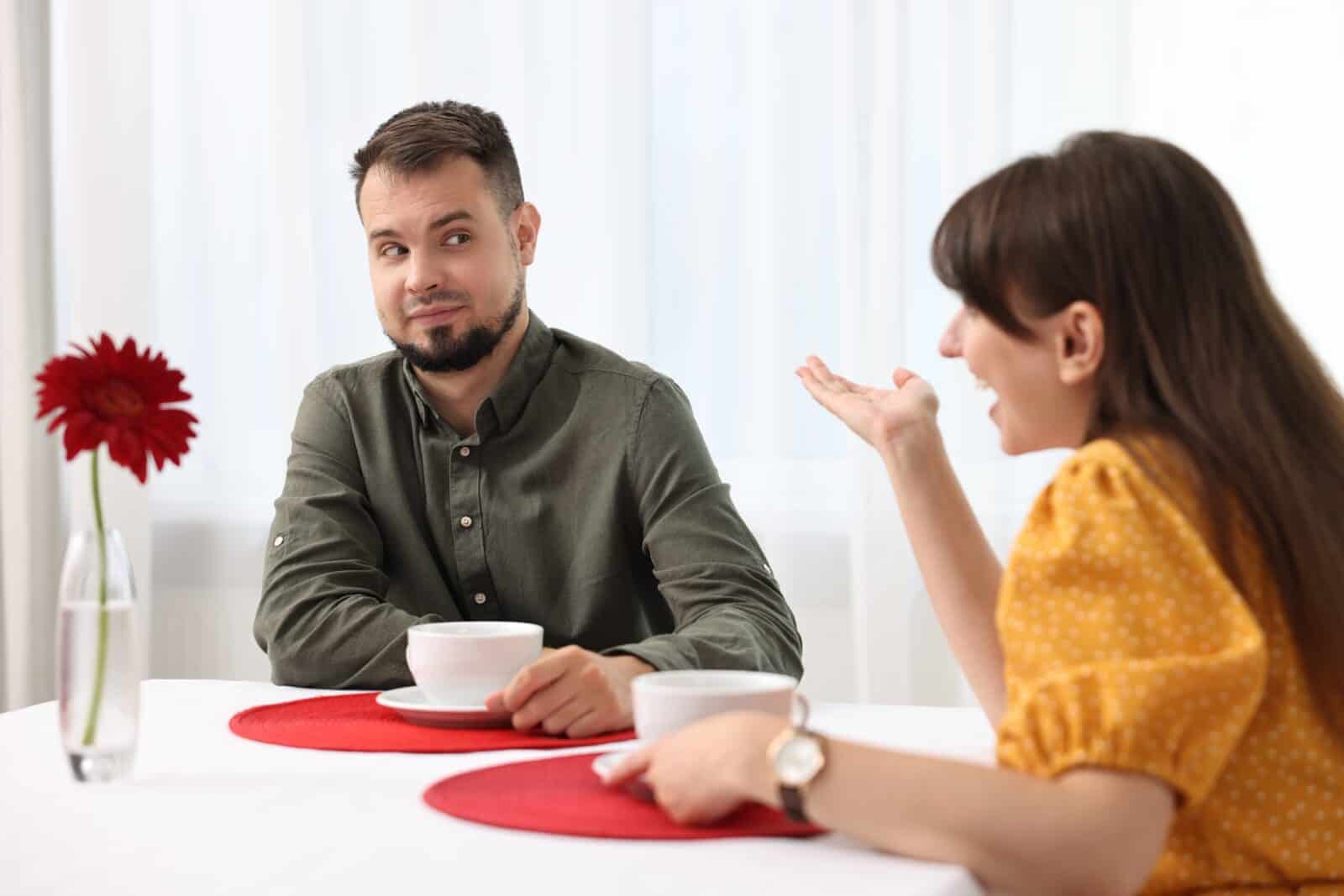
Pick-me behavior is easy to mock, but mockery misses the ache. Many women learn early that male approval can feel like safety, status, romance, protection, or proof that they are finally enough. The problem is that the approval often comes with a hidden bill.
It may ask them to laugh at other women, lower their standards, reject softness, hide their hurt, or turn every room into a contest they never agreed to enter. Psychology Today also warns that criticizing pick-me behavior online can become another way to shame and harass women, especially when the label gets thrown at women for harmless interests, male friends, or simple differences in personality.
Pew’s 2026 report found that roughly three-quarters of teen users on TikTok, Instagram, and Snapchat see harassment and bullying as a problem for people their age, so the warning cuts both ways: call out the pattern, but don’t turn the callout into another public stoning.
A Short Reflective Close

A woman can be different without making other women smaller. She can love football, hate makeup, prefer male friends, eat freely, speak boldly, and hold her own views without turning any of it into a stage for male approval.
The wound begins when being chosen matters more than being honest. Pew’s 2025 data shows that teens still find connection online, with 74% saying social media makes them feel more connected to friends, but the same report also shows real pressure, exclusion, drama, and confidence issues that come with living alongside that connection.
Maybe the better question is not, “Is she a pick-me?” Maybe it is, “What did she learn she had to trade away to feel wanted?”
Key Takeaways
Pick-me behavior is not about one phrase said once. It is about a repeated pattern of seeking male approval by putting women down, shrinking personal needs, or turning basic preferences into proof of superiority.
Many of these phrases can come from pain, not cruelty. A woman who says girls never like her may be carrying real rejection. A woman who says she is one of the guys may be protecting herself from old wounds. The problem begins when hurt turns into contempt for other women.
The strongest warning signs are comparison, stereotype, and self-erasure. If a phrase makes other women sound fake, dramatic, jealous, overly emotional, or overly demanding, it may be doing more harm than the speaker realizes.
The label itself also needs care. Calling someone a pick-me can become another way to shame women, especially online, where Pew’s 2026 data shows teen users widely see bullying and harassment as a problem across major platforms.
Disclaimer – This list is solely the author’s opinion based on research and publicly available information. It is not intended to be professional advice.
Like our content? Be sure to follow us