Who controls history? 12 patterns behind erased women’s stories
Women have always been 50% of the population. Yet historian Bettany Hughes puts their presence in recorded history at roughly 0.5%: a hundred-to-one ratio between existence and documentation that, as she notes, means the maths simply doesn’t work. That gap is not an accident of survival or the natural attrition of time. It is the output of a system that, at every institutional checkpoint across centuries, decided whose life was worth recording and whose wasn’t.
Hatshepsut ruled Egypt as pharaoh from around 1473 BCE, commissioning monuments, leading trade expeditions, and governing one of the ancient world’s most sophisticated states. After her death, her statues were defaced and her memory methodically erased, her male successors proceeding as though she had never existed.
That impulse, to sand a woman down from actor to absence, didn’t die with ancient Egypt. It became infrastructure. It embedded itself in archives, property laws, religious texts, publishing houses, medical manuals, and now in machine learning models trained on everything those systems produced.
The Archive Was Never Neutral

Historians estimate that women authored fewer than 1% of surviving texts from ancient Greece and Rome, not because women weren’t writing, but because male archivists, monks, and institutional gatekeepers selected what was worth copying and preserving. The Library of Alexandria, often mourned as a catastrophic loss of human knowledge, housed an estimated 700,000 scrolls; we have no inventory of how many were by women, because the cataloguers didn’t consider authorship by gender worth noting.
The problem compounds across centuries. Medieval European monasteries controlled the vast majority of literary production between 500 and 1200 CE, and monks were under no obligation other than to transcribe works by women.
When Hildegard of Bingen produced her theological and musical compositions in the 12th century, she survived the archive largely because she had the political cover of a powerful male patron and a direct correspondence with Bernard of Clairvaux. Without that cover, her manuscripts would likely have joined the unnamed majority: deteriorated, donated, or deliberately set aside. Most women had no such political insurance.
Pseudonyms Were a Tax on Existence
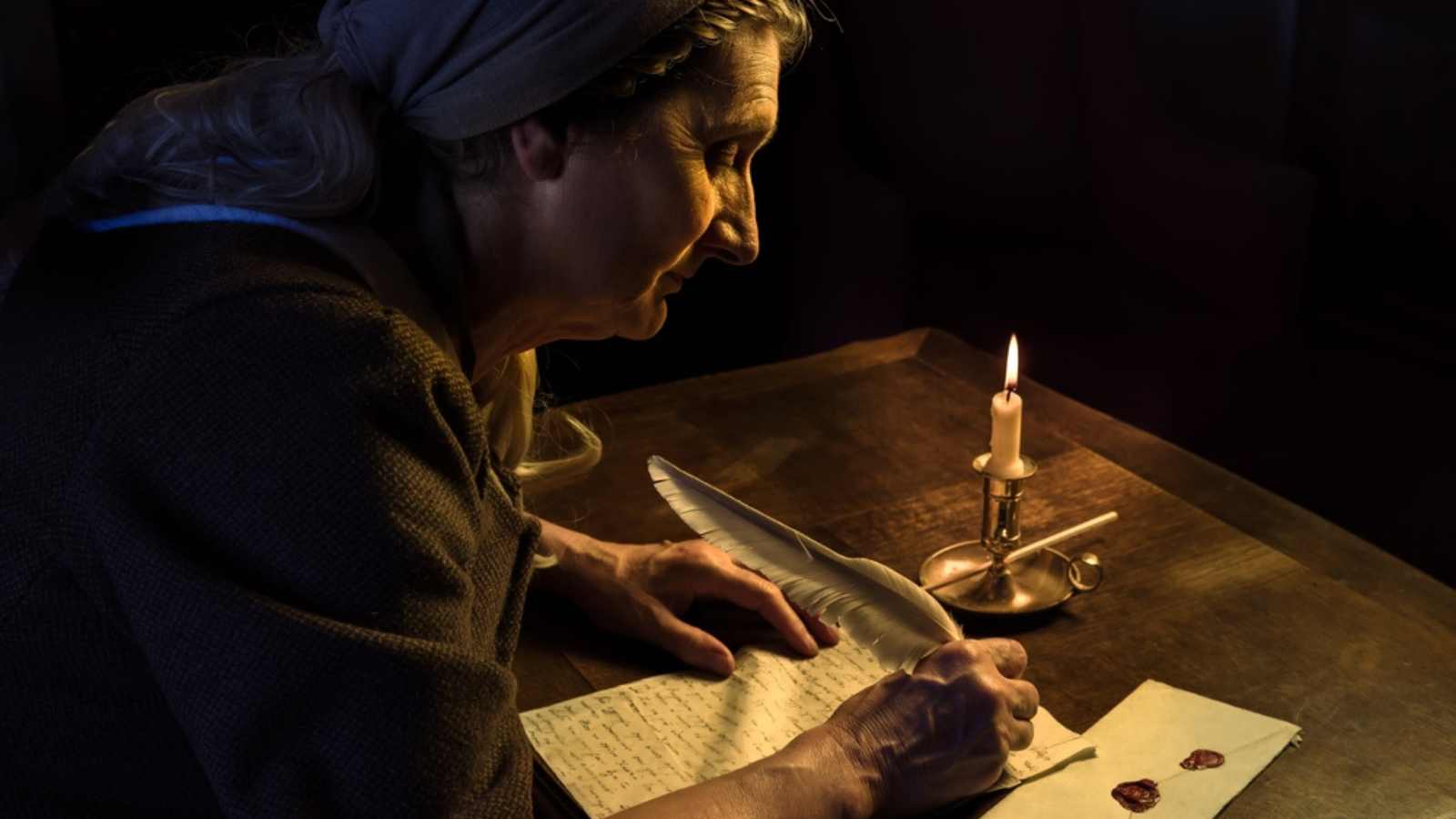
Between 1700 and 1900, a documented pattern repeated itself across English, French, Russian, and German literary traditions: women published under male names or gender-neutral initials, and when later unmasked, critics frequently revised their assessments downward.
Mary Ann Evans became George Eliot. Charlotte Brontë’s Jane Eyre debuted as Currer Bell. George Sand, born Amantine Lucile Aurore Dupin, kept her male pseudonym for the entirety of her 45-year publishing career, not out of preference, but because French law at the time classified a married woman’s published income as her husband’s property.
Literary scholar Cheryl Turner identified over 500 British women novelists active between 1696 and 1796 in her 1992 study Living By The Pen: the majority of whom published anonymously or pseudonymously and consequently fell out of literary history entirely, their books surviving without names attached. The canon that emerged from the 19th century wasn’t the best work of the era; it was the work most legible to male editors, critics, and buyers operating a market that structurally disadvantaged female authorship.
Science’s Uncredited Workforce
In 1950, Cecile Hoover Edwards completed a PhD in nutrition science at Iowa State, one of the first Black women to do so in the United States, and spent the following decades producing foundational research on protein deficiency and poverty that influenced federal food policy. She was not a footnote in that history; she was omitted from it entirely until archival recovery work in the 2000s began correcting the record.
A 2018 study published in PLOS Biology tracked 36 million authors across more than 6,000 journals covering most STEMM disciplines and found the gender gap likely to persist for generations, with prestigious journals showing the steepest female underrepresentation, even when controlling for field, institution, and paper quality.
Rosalind Franklin’s X-ray crystallography work is the most cited example of the Matilda Effect, but she shares company with Nettie Stevens, who identified sex chromosomes in 1905 while Edmund Wilson received co-credit; Chien-Shiung Wu, whose experimental confirmation of parity violation earned her male collaborators the 1957 Nobel; and Vera Rubin, who provided the observational evidence for dark matter and died in 2016 having never received one. These are not anomalies. They are a methodology.
War Records Left Women Holding Context Without Credit
Of the approximately 80 million people who served in military roles during World War II, an estimated 2 million were women, and that figure excludes resistance fighters, couriers, coders, and the vast civilian intelligence networks that were structurally female.
The Soviet Union alone fielded over 800,000 women in active combat positions, including the 588th Night Bomber Regiment, later named the Guards Night Bomber Aviation Regiment, which flew over 30,000 missions and was so feared by German forces that they called its members Nachthexen, night witches.
Western military histories written in the 1950s and 60s barely mention them; the regiment’s commander, Marina Raskova, who also founded two other all-female aviation units, appears in almost none of the standard English-language accounts of the Eastern Front.
In occupied France, women made up an estimated 12–25% of Resistance membership depending on the network, and in several rural circuits, they constituted the primary operative force because German checkpoints were less likely to search women.
Religious Texts Were Edited After the Fact
Phoebe is described in Romans 16:1 as a diakonos, the same term used for male deacons, and Junia is named in Romans 16:7 as outstanding among the apostles. That was a reference to male translators from the 13th century onward systematically altering it to Junias, a male name that doesn’t actually appear in any other ancient Greek source. Bible scholar Eldon Jay Epp’s 2005 study Junia: The First Woman Apostle traces the manuscript history and finds the feminine form Iounian dominant across early texts; the masculinization was an editorial choice, not a linguistic inevitability.
The Therigatha, a collection of poems by the first Buddhist nuns dating to the 6th–5th century BCE, is the oldest known anthology of women’s writing in any language,and it survived largely because it was included in the Pali Canon, which provided it with institutional protection that most female religious writing lacked.
The Islamic tradition holds a parallel: Aisha bint Abi Bakr is among the most cited sources in Hadith literature, and the number of authenticated narrations traced to her, over 2,000, places her among the most significant transmitters of religious knowledge in early Islamic history. Yet most popular histories of Islam’s founding period treat her primarily through her marriage to the Prophet rather than her documented scholarly authority, which shaped Islamic jurisprudence for centuries.
Property Law Erased Economic Actors

In England, the Married Women’s Property Act was not passed until 1882. Before that date, any property a woman owned at the time of marriage became legally her husband’s upon the ceremony. It governed the economic lives of women during the height of the Industrial Revolution, a period when female labor built textile mills, staffed factories, and ran household economies across the country.
Women who accumulated capital, managed businesses, or held property in their own names before marriage vanished from economic records the moment they wed, their assets absorbed into male-headed households and their contributions, if at all, credited to their husbands.
Coverture law, its legal mechanism, operated for centuries across England, the United States, Canada, and Australia. American women could not apply for a credit card in their own name until the Equal Credit Opportunity Act of 1974. That’s not ancient history; it’s the economic context within which millions of women alive today began their adult lives.
Oral Tradition Was Classified as Non-History
Griots: the oral historians, genealogists, and cultural custodians of West and Central African societies, maintained family lineages, political histories, and community records through memorized recitation, often across generations spanning centuries. Female griots, called griottes, preserved traditions specific to women’s lineages, childbirth rites, and social histories that male griots didn’t carry. When European colonial administrators arrived in the 18th and 19th centuries with their bureaucratic systems, none of this was classified as documentation. It didn’t exist in a form recognized by the archive.
Whole genealogies, territorial histories, and legal precedents embedded in oral tradition were treated as myth or folklore rather than evidence, stripping communities of documented claims to land, identity, and political continuity. The women who carried these histories were doubly erased: first as women in a colonial system that prioritized male intermediaries, and second as practitioners of a form of knowledge the system had already decided didn’t count.
In Indigenous North American contexts, the pattern repeated. Anthropologists who arrived in the late 19th and early 20th centuries to document Native cultures before they disappeared predominantly interviewed male community members.
Education Bans Created Knowledge Gaps That Looked Like Aptitude Gaps
Prussia introduced compulsory primary education in 1763. Women weren’t admitted to Prussian universities until 1908. In England, Oxford and Cambridge admitted women to full degree status in 1920 and 1948, respectively. Harvard Medical School denied women entry until 1945.
The United States military academies: West Point, Annapolis, and the Air Force Academy, opened to women only in 1976. Saudi Arabian universities admitted women only in the 1960s, but gender-segregated campuses, limited degree programs, and guardian permission requirements continued to constrain access well into the 21st century.
When women appear underrepresented in historical records of philosophy, law, engineering, or political theory, the absence is often cited as evidence of limited aptitude or interest. Ada Lovelace wrote the first algorithm in 1843 with no institutional support, no formal mathematics degree, and access to advanced mathematics only through private correspondence and self-study, because no institution would have her.
Publishing Houses Controlled What Got Called Literature
Between 1950 and 1970, the New York literary establishment effectively determined which American fiction would reach national audiences. Women made up a majority of fiction readers during this period, and a substantial portion of fiction writers, but editorial boards, prizes, and critical hierarchies were predominantly male.
VIDA: Women in Literary Arts began tracking gender representation in major literary publications in 2010. The first VIDA Count, covering 2010, found that men accounted for 84% of reviewers in The New York Review of Books, which also reviewed 306 books by men and 59 by women. At The London Review of Books, men wrote 78% of reviews, and 74% of the books reviewed were by male authors. Harper’s had 27 male book reviewers against six females.
These numbers shifted in subsequent years partly because the Count made the disparity impossible to ignore, but the historical record created in the preceding decades stands. The books reviewed in 1965, 1975, and 1985 are the ones that appear in syllabi, in retrospective lists, and in the citation trails that define what a given era is believed to have cared about.
Diagnostic History Wrote Women Out of Their Own Bodies
Hysteria, derived from the Greek hystera, meaning uterus, was a medical diagnosis used actively from the time of Hippocrates until 1980, when it was finally removed from the Diagnostic and Statistical Manual of Mental Disorders. For approximately 2,500 years, medical literature attributed a wide spectrum of women’s physical and psychological symptoms to a wandering or disordered uterus, a framework that made female testimony about their own bodies categorically suspect.
Because women’s self-reported symptoms were systematically doubted, clinical research that would have taken female experience seriously didn’t accumulate. Autoimmune diseases, which affect women at rates ranging from 3:1 to 9:1 depending on the condition, took decades longer to be classified as legitimate disease categories rather than psychosomatic presentations. This is because the population most affected was the same population medicine had trained itself to disbelieve.
Nationalist Histories Cast Women as Symbol, Not Agent
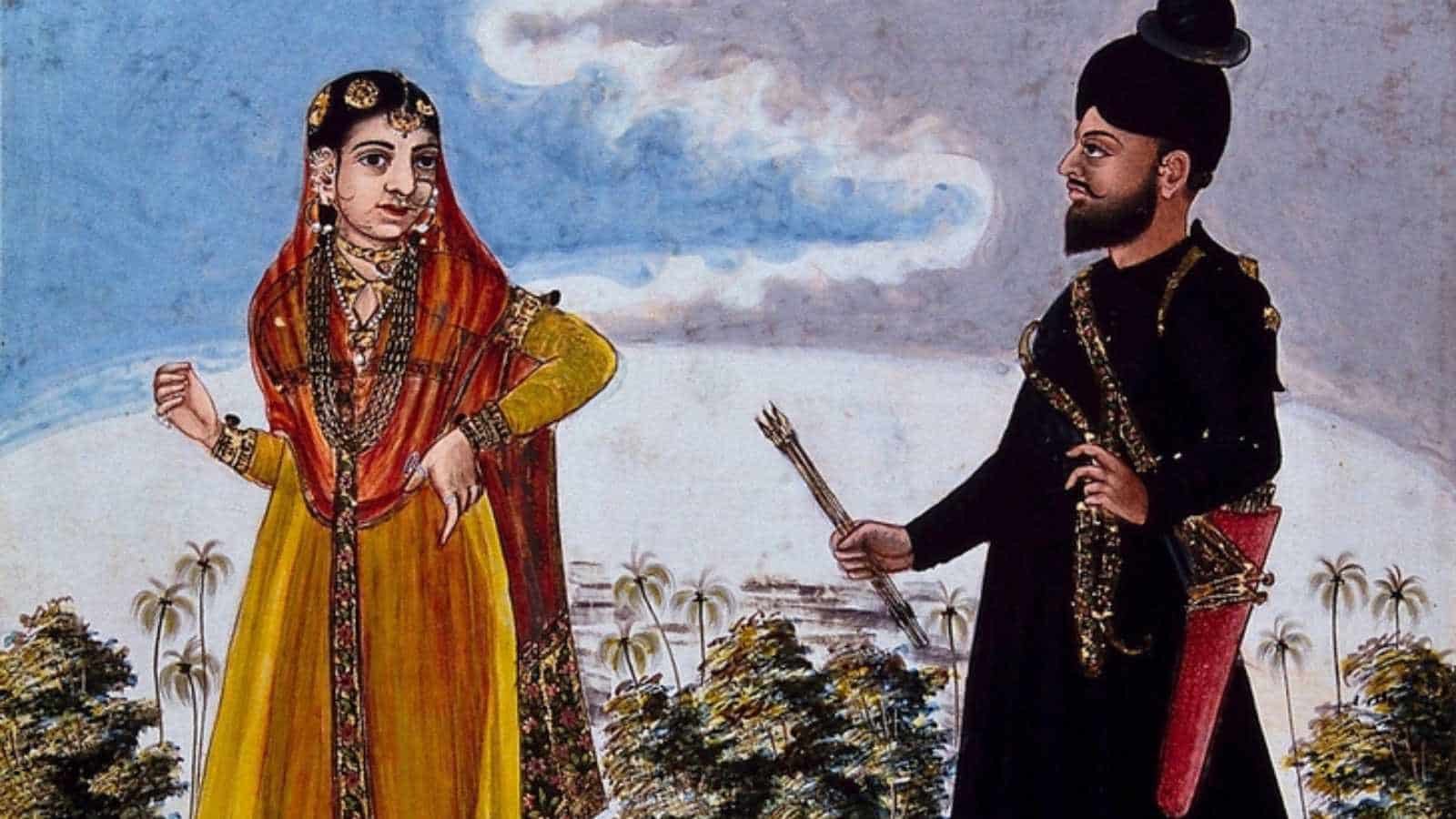
Every major 19th-century nationalist movement constructed a female symbol: Marianne for France, Britannia for Britain, Mother India for the subcontinent’s independence movement, Rodina-Mat for Russia. These figures served a precise function. They represented the nation as an object to be protected, fought for, and claimed by male citizens. Female political actors who operated in the same periods were either absorbed into this symbolic framework or expelled from the nationalist narrative entirely.
Sarojini Naidu, the first Indian woman to serve as president of the Indian National Congress, was a published poet, a campaigner for women’s voting rights, and a diplomatic representative of the Congress abroad. Yet in popular historical memory, she is most often referred to as the Nightingale of India, a title that reduced a political actor to an aesthetic function.
Nationalist myths need mothers and symbols; they don’t particularly need strategists, resisters, or administrators who happen to be women, because those figures complicate the story of who the nation was made by and for.
Digital History Is Reproducing the Same Gaps at Scale

Language models trained on web text absorb the gender biases embedded in those corpora and reproduce them in generated content, in autocomplete patterns, and in the associations built into their underlying representations of who does what in the world. Major language models consistently associated words like scientist, professor, and engineer with male pronouns at rates significantly higher than those for female pronouns, reflecting not reality but the historical record from which they learned.
Between 2001 and 2020, the number of digitized books available through Google Books grew from zero to over 40 million. The proportion of texts written by women reflects centuries of publishing, archiving, and educational gatekeeping. This means the digital revolution didn’t democratize access to knowledge so much as it universalized the biases already embedded in the analog record.
The 21st century’s most powerful knowledge infrastructure was trained on the 20th century’s most persistent blind spots, at a scale and speed that makes correction harder, not easier. The archive was never neutral. Now it runs on servers.
Key Takeaways:

- History wasn’t passively recorded; it was curated by institutions that were structurally male, meaning absence in the archive is evidence of gatekeeping, not women’s silence.
- The erasure operated across every domain simultaneously: science, religion, law, literature, war, and medicine all ran systems that either absorbed women’s contributions into male credit or discarded them entirely.
- The mechanisms were rarely conspiratorial: coverture law, pseudonym culture, and oral tradition, when classified as non-evidence, were bureaucratic defaults that produced erasure as a byproduct, making them harder to challenge and easier to sustain.
- The gap between women’s actual participation in history and their representation in its record was manufactured at the point of documentation, then used to argue limited aptitude and limited relevance across generations.
- Digital infrastructure inherited the problem at scale: AI systems and digitized archives were built on a record already shaped by centuries of exclusion. The 21st century didn’t correct the bias; it automated it.
Disclaimer – This list is solely the author’s opinion based on research and publicly available information. It is not intended to be professional advice.
Like our content? Be sure to follow us