12 basic Math skills employers say most new graduates completely lack
One in four 15-year-olds across OECD countries is now considered a low performer in mathematics, as per the 2022 PISA report, the largest international student assessment on record. Between 2018 and 2022 alone, mean math performance fell by 15 points, a decline three times greater than any previous consecutive drop in the study’s history. The OECD was direct about the cause: this is not purely a pandemic story. Structural failures in how math is taught were well underway before any school closed.
Those 15-year-olds are now 17 or 18. Some are already in the workforce. The rest are finishing their degrees and preparing to enter it.
What they are carrying into offices, warehouses, clinics, and boardrooms is a numeracy gap that employers are increasingly unwilling to absorb. Not because the math they need is sophisticated; it is not. The skills on this list are not calculus, statistics, or linear algebra. They are percentages, fractions, estimation, ratios, and basic probability. The kind of math most people learned before they turned 16 and quietly forgot before they turned 22.
The diploma says graduate; the numbers say otherwise

89%. That is the share of HR leaders in a Hult International Business School survey who said their organizations actively avoid hiring recent graduates because the training cost of bringing them up to speed is simply too high.
The same study found that 91% of those leaders spend at least twice as much onboarding a new grad as they do a more experienced hire, with the average savings when someone walks in already capable landing at over $4,500. And yet, of those same organizations, 98% say they are struggling to find talent. The math on that contradiction is, fittingly, something a lot of graduates would struggle to work out.
The conversation around graduate readiness tends to orbit soft skills: professionalism, initiative, and emotional intelligence.
Employers in industries from logistics to marketing to healthcare to retail are watching entry-level staff reach for a calculator to figure out whether a 15% margin beats a 12% margin. They are watching reports get filed with numbers that contradict the attached chart. They are watching new hires freeze in a vendor meeting, the moment someone asks them to quickly estimate a cost per unit.
Percentage calculations

30% of U.S. adults aged 16-65 had low numeracy skills in 2012/2014, rising to 33% by 2017, according to the National Center for Education Statistics.
Most graduates can enter numbers into a phone and get an answer. What they cannot do is sanity-check that answer or work backward from it. A client offers a 12% reduction on a $47,000 contract and needs a revised figure on the spot – and the hire reaches for their phone, gets the number, but cannot immediately tell whether it looks right.
That hesitation is visible, and it costs credibility faster than any soft skill ever will. Less than 25% of Americans report using math beyond fractions and percentages in their careers, which means percentages are essentially the ceiling of workplace math for most people, and they are still failing at it.
The specific breakdown tends to occur in compound percentage problems: percentage increases on values that were already a percentage increase, or in calculating what a 20% markup on cost translates to as a margin on price.
Reading a graph
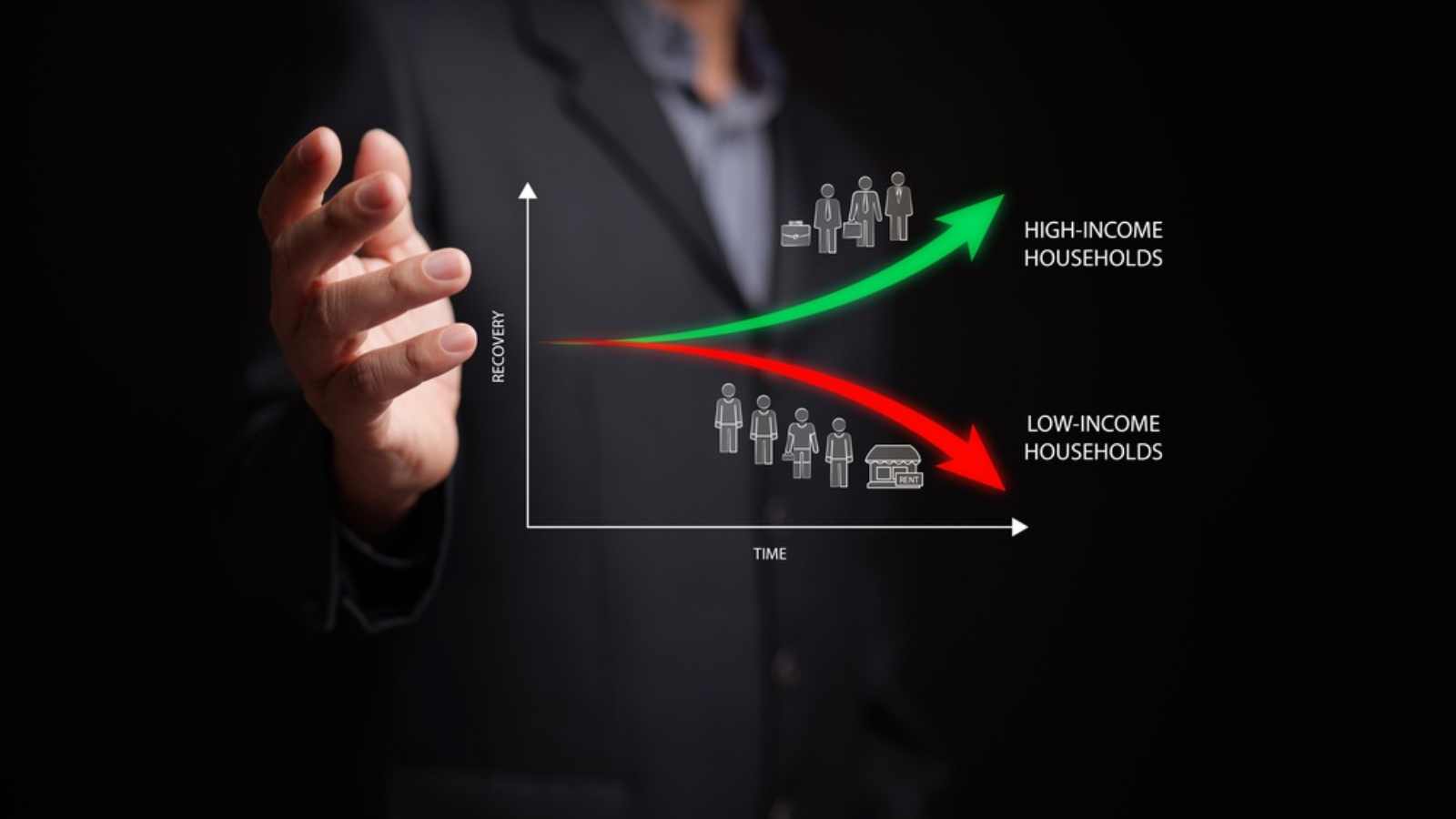
Of 261 low-numeracy US adults studied, only 34% exhibited high graph literacy. That figure lands differently when you consider that the modern workplace is essentially a graph factory. Every dashboard, every quarterly review, every performance report communicates through charts, and the ability to extract accurate meaning from one is increasingly treated as a given, while the data says otherwise.
Graduates routinely confuse correlation shown on a scatter plot with causation, misread a dual-axis chart by assuming both lines are measured against the same scale, or draw directional conclusions from a bar chart that has a truncated y-axis – without registering that the truncation exists. These are not obscure misreadings. They are the standard mistakes made by people who were taught to produce charts in school but never taught to critically interrogate them.
There is a layered irony here. The rise of data dashboards and business intelligence software has made charts more accessible and more abundant at work, but that same rise has weakened the incentive to actually understand how the chart works structurally.
Order of operations

Ask a room of recent graduates what 8 + 2 x 5 equals, and a large portion will say 50. The correct answer is 18. That is not a trick question. That is the order of operations – the convention that multiplication and division are resolved before addition and subtraction, formalized under the acronym BODMAS or PEMDAS, depending on which hemisphere taught you
It is usually introduced around age 10 and revisited barely after that. By the time a student hits university, it is assumed. That assumption is wrong. Spreadsheet formulas, pricing models, budget templates, and data transformation scripts all depend on the correct sequencing of operations.
The pandemic accelerated what was already a structural problem. National Assessment of Educational Progress data show that 8th-grade students are now a full year behind in math skills compared to students in 2013, reverting to achievement levels last seen in the 1970s. A student who missed foundational algebra in year 10 because classes moved online, graduated anyway, and entered the workforce three years later, carrying that gap – that student is now someone’s new hire.
Fractions still cause paralysis in grown professionals

68% of American workers use fractions, decimals, and percentages in their jobs. Yet the fraction is the math concept most likely to produce what educators call math anxiety – a genuine stress response that disrupts working memory and causes adults who technically know how to solve a problem to blank on it in real time.
The practical manifestation of this gap appears in inventory management, recipe scaling in food service, fabric cutting in manufacturing, medication dosing in healthcare, and material estimation in construction. A warehouse associate who cannot quickly determine that 3/8 of a 240-unit pallet is 90 units cannot do their job efficiently. A purchasing coordinator who cannot scale a supplier’s price per half-unit to a full-unit order without a calculator will slow down every negotiation they enter.
The skill sounds elementary because it is – and that is precisely why its absence creates such friction. Nobody expects to have to teach a college graduate how to work with fractions. When it becomes necessary, the managerial cost is invisible but real.
The deeper problem with fractions is that they were the first mathematical concept for which many students began to feel left behind – usually around fourth or fifth grade – and the emotional residue of that experience lingers into adulthood.
Unit rates and pricing

Unit-rate calculation is the math that determines whether a deal makes sense. It is the skill behind determining whether a supplier offering 500 units at $1,240 is cheaper than one offering 300 units at $726.
The hesitation matters because unit rate problems are almost never presented in isolation. They arrive embedded in a larger negotiation, a time-pressured meeting, or a vendor comparison spreadsheet with seven other variables on screen.
The employee who cannot quickly isolate the rate, confirm the better deal, and move on creates a bottleneck. The employee who gets the calculation wrong and locks in the worst deal creates a cost.
The irony is that the unit rate is not a concept most graduates would call hard. Ask them in the abstract, and they will get it right. Put it inside a real transaction, under pressure, with money attached, and something breaks. The math is fine. The application under conditions of consequence is where the gap surfaces.
Estimation

Estimation is what you use to check whether your calculator is lying to you. Without it, a person cannot tell whether the answer they just computed is plausible or the product of a misdirected keystroke. 49% of working-age adults in the UK have the numeracy skills of a primary school child and are unable to work out what 49% of 42 million is with a calculator, with pen and paper, and without time pressure. That is not a speed problem.
Employers in operations, finance, and project management repeatedly describe the same pattern: a junior employee produces a number that is off by an order of magnitude, submits it, and does not realize it is wrong because they have no reference point for what the right answer should look like.
A cost estimate that should be in the tens of thousands comes back in the hundreds. A growth rate of 8% comes back as 80%. The calculation was entered incorrectly, the result was not questioned, and the output was included in a deliverable. Estimation would have caught it. The absence of an estimate let it through.
Basic algebra

About 50% of students do not pass college algebra with a grade of C or above, according to a report by the Mathematical Association of America, which called Americans’ struggle with math the most significant barrier to finishing a degree in both STEM and non-STEM fields. Half. Of the students who are theoretically required to demonstrate competency in it. And of those who do pass, a meaningful share passed by pattern-matching their way through exam problems without ever internalizing what a variable actually represents.
In the workplace, algebraic reasoning shows up constantly without being labeled as such. Writing a formula to calculate projected revenue from projected unit sales and projected price is algebra. Figuring out how many hours are needed to complete a project, given a daily rate and a deadline, is algebra. Determining what markup to apply to reach a target margin is algebra. None of these problems announces itself as requiring algebraic thinking – they just arrive, dressed in ordinary business language, and wait to be solved by someone with the instinct to isolate the unknown.
In the fall of 2024, more than 900 freshmen at UC San Diego – 12.5% of the incoming class – were placed into math courses teaching elementary, middle school, or high school math. Before 2021, less than 1% of freshmen required such courses. Those numbers describe a generation of graduates with a diploma in one hand and a 6th-grade math gap in the other, entering workplaces that assume both hands are useful.
Ratios and proportions

Ratios are the math behind every question that starts with the word compared: compared to last quarter, compared to the industry average, compared to the competition, compared to the budget. They are the operating language of performance reviews, market analysis, competitive benchmarking, and almost every dashboard a mid-level employee will encounter.
The specific failure mode is the conflation of absolute and relative change. A business unit that grew from $2 million to $2.4 million and another that grew from $200,000 to $260,000 are not the same story, but to a person who reads the second as smaller because $60,000 is less than $400,000, they appear comparable. The first grew by 20%; the second, by 30%. A new hire who cannot hold that distinction clearly is a liability in any role that involves reporting performance to a decision-maker. Their description of what happened will be technically accurate and functionally misleading.
Students who learn the mechanics but not the interpretive purpose will be able to simplify 4:6 to 2:3 in a textbook problem and be at a total loss when asked what a 3:1 debt-to-equity ratio says about a company’s financial risk. Both require the same underlying skill. One requires context. Most students only got the first.
Mean, median, mode: misread every day, in every office

The mean, median, and mode are introduced to most students around age 11. By 22, many graduates have spent so long not needing to distinguish between them that the distinction has dissolved. In most casual contexts, that does not matter. In professional contexts, it matters enormously – because mean and median tell very different stories about the same data, and choosing the wrong one can shift a conclusion by a wide margin.
Employers who have asked junior analysts to summarize compensation or performance data have gotten back the mean when the median was what the question required – not because the analyst was careless, but because they defaulted to the only central tendency they felt confident computing.
The same confusion surfaces in customer satisfaction scores, sales performance reporting, and operational metrics. A manager who does not understand why the median matters in skewed distributions will make resource decisions based on a number that no data point in the dataset actually represents.
Mode (the most frequent value) is the most neglected of the three and the most relevant in contexts like inventory planning, where knowing the most commonly ordered quantity matters more than knowing the average order.
Simple interest versus compound interest
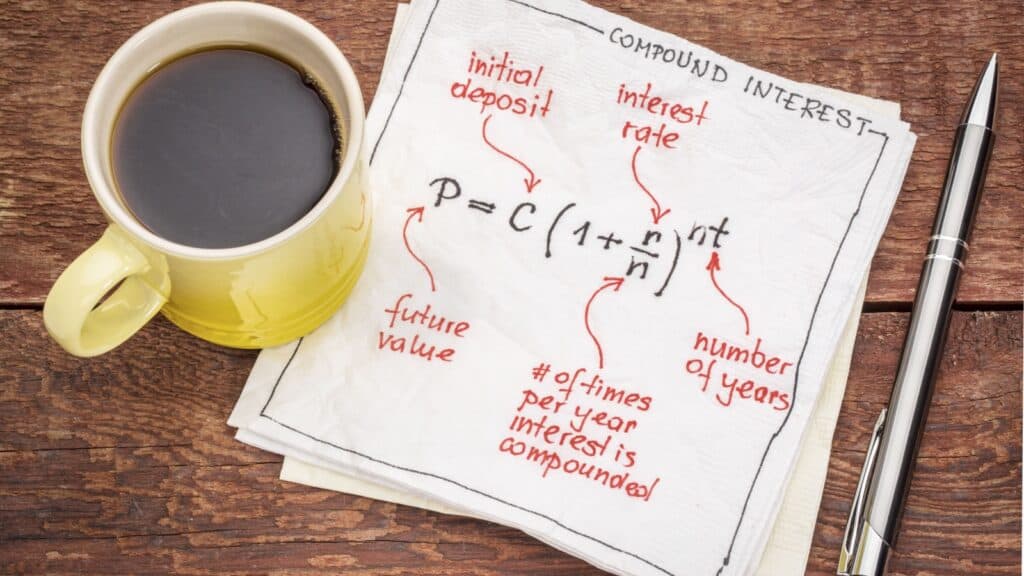
In a study of American adults, only 18% correctly computed the answer to a compound interest question. Of those who got it wrong, 43% undertook a simple interest calculation instead, ignoring the interest accruing on both principal and interest. Those numbers are from research by economists Annamaria Lusardi and Olivia Mitchell, who have spent careers documenting the relationship between financial numeracy and financial outcomes.
In a workplace context, the compound interest gap creates problems that extend beyond personal finance into professional judgment. A marketing analyst modeling the growth of a subscriber base, a financial associate projecting five-year investment returns, or an HR coordinator calculating pension accruals is working with compound logic, whether they recognize it or not.
Simple interest is taught first, which makes sense pedagogically. But it rarely gets explicitly displaced by compound interest in a way that leaves students clear on when each applies. The result is a default to simple interest in every situation involving growth over time, which means the answer is almost always wrong.
Converting between decimals, fractions, and percentages

A profit margin of 0.18 equals 18/100, which is 18%. A price reduction of 1/4 is 0.25, which is 25%. An error rate of 3 per 1,000 is 0.003, which is 0.3%. These are conversions that occur constantly in financial modeling, pricing, medical dosing, engineering tolerances, and data analysis.
A graduate who can identify a percentage when it appears with the % symbol but freezes when the same value shows up as a decimal in a spreadsheet has a conversion gap that will surface every time format-switching is required, which is constantly.
No more than 26% of 12th graders in the United States have been rated proficient in math since 2005. That is a number that has not moved in two decades. The students who passed math class by memorizing a limited set of formats never built the flexibility to move between representations. When a spreadsheet column labeled as a decimal is interpreted as a rate, it is converted to 0 and read incorrectly.
Basic probability and risk

Probability is the hardest to teach, the least present in standard curricula, and the most wanted by employers in every sector that makes decisions under uncertainty, which is every sector.
The specific failure is the confusion between independent and dependent events, and between probability and certainty.
A graduate who hears that a machine fails 2% of the time and concludes that it will definitely not fail during their shift is not applying probability – they are applying wishful thinking dressed in a statistical-sounding frame. A junior manager who calculates the risk of a multi-step project by adding the failure rates of each stage rather than multiplying them will consistently underestimate the likelihood that the whole project will fail.
These errors are systematic. They follow from never having been taught to think about outcomes as distributions rather than as fixed predictions.
Key takeaways:

- OECD PISA 2022 recorded an unprecedented 15-point drop in math performance – three times the size of any previous decline – with the OECD confirming that structural problems in math education predate the pandemic.
- 89% of HR leaders avoid hiring recent graduates despite 98% of organizations struggling to find talent, with onboarding costs running at least twice as high for new grads – a gap employers estimate at over $4,500 per hire.
- The skills driving the most friction in entry-level roles are not advanced: percentages, fractions, unit rates, order of operations, and the ability to read a graph accurately are the consistent failure points across industries.
- Only 18% of adults correctly computed a compound interest question in research by economists Annamaria Lusardi and Olivia Mitchell, with 43% of those who got it wrong defaulting to a simple interest calculation – a pattern that produces systematically wrong projections in financial, marketing, and HR roles.
- No more than 26% of U.S. 12th graders have been rated proficient in math since 2005, a figure that has remained unchanged across two decades, meaning the graduates entering the workforce today are the product of a system whose math outcomes have flatlined for an entire generation.
Disclaimer – This list is solely the author’s opinion based on research and publicly available information. It is not intended to be professional advice.
Like our content? Be sure to follow us