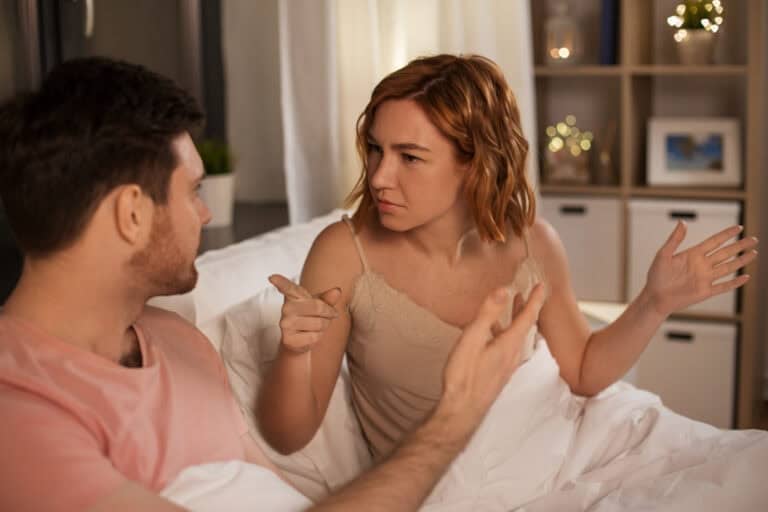
When a ‘joke’ goes too far: A partner’s slap raises questions about respect and boundaries
A slap described as a joke can still leave a serious question behind: when does playful behavior become a warning sign? That is the question at the center of an online relationship post from a 37-year-old woman who said her 55-year-old boyfriend hit her hard in the face while she was bent over tying her shoes.
The woman said the moment shocked her because it did not happen in isolation. In her account, the relationship had already shifted from affectionate and warm to chaotic, with yelling, gaslighting, and repeated boundary-pushing. She said he later apologized by text, blamed stress and overwork, and told her he loved her. But for many readers, the apology did not erase the larger concern: a physical boundary had been crossed after earlier warnings.
The slap was not the whole story

The post described a six-month relationship that started with attention, affection, flirting, and companionship. But the woman said the last two months had brought a sharp change. Arguments became explosive.
She described feeling invalidated during conflicts and said her boyfriend often refused to take accountability. That context matters because troubling relationship moments rarely happen in a vacuum. A single incident may seem confusing. A pattern is harder to dismiss.
According to the woman, the slap was the third physical boundary incident. She said he first slapped her bottom hard without warning, then later pulled her hair painfully during a sexualized “joke” while she folded laundry.
She said she had already made it clear that her face was off-limits and that the hair-pulling made her uncomfortable. That is why the latest incident struck readers so strongly. It was not only the slap’s impact. It was the sense that a clearly stated boundary had been tested again.
Why did people react so strongly?

Online commenters often react quickly to relationship posts, but this one touched a deeper nerve because the woman was not asking whether the slap hurt. She was asking whether she was “overreacting.” That question is common in unhealthy relationship dynamics.
When someone feels shocked and hurt, and is then blamed for reacting, the emotional focus can shift away from the behavior itself and onto whether the victim responded “correctly.”
That shift is one reason experts warn against minimizing unwanted physical contact. The CDC defines intimate partner violence broadly, including physical violence, sexual violence, stalking, and psychological aggression.
It can range from one episode to chronic abuse, and it can vary in severity. In this case, the woman’s own wording reveals the confusion: she knew what she “should” do, yet she struggled to make the final decision. That conflict between instinct and attachment is often where people get stuck.
The “joke” defense can blur consent
Calling something a joke does not automatically make it harmless. Humor depends on shared comfort. Physical play depends on consent. When one person is hurt, startled, or frightened, the other person’s intent does not erase the effect.
In the post, the woman said the slap stung for several minutes and left her horrified. That reaction should have been enough to prevent the discussion from turning into a debate over whether she was too sensitive.
The boyfriend’s reported response added to the concern. She said he stormed out, accused her of abusing him, and said he was tired of walking on eggshells. Then came remorse by text.
That swing from blame to apology is familiar to many people who have experienced unstable relationship cycles. It creates emotional whiplash. The hurt person is left trying to process the original act, the anger that followed, and the loving message that arrived later. Confusion can become part of the trap.
The pattern matters more than the punchline
Peer-reviewed and public health research on abuse often looks beyond single events and studies patterns of control, fear, manipulation, and repeated boundary violations. Coercive control is not only about bruises or police reports.
It can include emotional pressure, intimidation, denial, blame-shifting, isolation, and attempts to make another person doubt their own reality. In the post, the woman used the word “gaslighting” and described feeling pushed to question what really happened during conflicts.
That does not mean readers can diagnose the boyfriend or confirm every detail from one post. But the discussion centered on recognizable warning signs: unwanted physical contact, escalation after earlier objections, anger when confronted, and an apology that redirected blame to stress.
The National Domestic Violence Hotline warns that early warning signs may intensify as relationships grow. That is why many readers focused less on whether he “meant it” and more on whether she felt safe.
Why leaving can feel so hard

One of the most important parts of the post was not the slap itself. It was the woman’s honesty about why she was struggling. She wrote that she loved his company, enjoyed the attention, and felt addicted to the attachment. That admission is not a weakness. It is a human response to a relationship that still contains affection, comfort, and hope alongside hurtful behavior.
The National Domestic Violence Hotline says leaving an abusive relationship is often not as simple as walking away. People may stay because of fear, shame, hope, financial issues, isolation, love, or confusion.
In this case, the woman did not describe shared children or financial dependence, but she did describe emotional attachment. That matters. A person can know something is serious and still feel pulled back by the good moments. That is why support from friends, counselors, and trained advocates can be so important.
What the data says about the stakes

Intimate partner violence is not a niche issue. CDC data shows that more than one in three women and more than one in six men in the United States have experienced contact sexual violence, physical violence, or stalking by an intimate partner during their lifetime. The CDC also links intimate partner violence with injuries, mental health concerns, missed work or school, medical needs, and safety fears.
The Bureau of Justice Statistics has also reported that the rate of intimate partner violence rose from 2020 to 2024. Numbers cannot explain one woman’s private decision, but they show why these stories draw attention.
Many people recognize the early moments that get explained away: the “joke,” the apology, the promise, the blame, the feeling that maybe it was not bad enough to count. The larger lesson is clear. If someone has to ask whether being hit counts as serious, something has already gone wrong.
A safer exit starts with clarity

For readers who see themselves in this story, the most practical advice is not to argue over labels. It is to focus on safety. If a partner has crossed a physical boundary, dismissed the pain, blamed the reaction, or repeated the behavior after being told to stop, that is reason enough to take distance seriously. A person does not need a perfect case, a visible injury, or public approval to leave a relationship that feels unsafe.
Support also matters. Friends in the post reportedly told the woman the behavior could worsen. That outside perspective may feel painful, but it can cut through the fog. For anyone in immediate danger in the United States, calling 911 is the urgent step.
For confidential support, the National Domestic Violence Hotline is available at 1-800-799-SAFE, by texting START to 88788, or through online chat. A safety plan can include saving messages, telling a trusted person, changing locks if needed, and avoiding a private breakup conversation if there is fear of escalation.
Key takeaway
This story is being discussed because it captures a familiar relationship dilemma: a person knows a line has been crossed, but love, attention, apology, and attachment make the decision feel less simple. The issue is not whether the boyfriend thought the slap was funny. The issue is that the woman said it hurt, shocked her, and followed earlier physical boundary violations. A joke stops being a joke when one person is harmed, and the other person makes the harm their fault.
The broader lesson is not only about one couple from one online post. It is about how easily warning signs can hide inside charm, stress, flirtation, and apology. Healthy love does not require someone to shrink their fear, question their memory, or accept pain as play. Sometimes the clearest reality check is the simplest one: if your body says something is wrong, listen before the next “joke” gets harder to explain.
Disclaimer: This list is solely the author’s opinion based on research and publicly available information. It is not intended to be professional advice.
Like our content? Be sure to follow us.