Tesla accused of faking data to win approval for self-driving tech
Regulatory approvals for autonomous vehicles are built on trust, but recent findings suggest Tesla may have severely compromised that foundation.
European traffic safety researchers and Reuters claim they’ve caught the automaker cooking the books on safety statistics. An analysis of public records indicates that Tesla utilized statistically flawed comparisons to exaggerate the safety record of its Full Self-Driving (FSD) system.
The controversial numbers behind the European pitch

The controversy stems from an official presentation delivered by Tesla’s policy manager, Ivan Komusanac, to Swedish and Dutch regulatory bodies. The documentation asserted that Tesla’s FSD system can travel over seven times as far between crashes as average human drivers in the United States. Based on this premise, the presentation claimed FSD could have saved 32,000 lives and prevented 1.9 million injuries over an unspecified period.
Independent traffic safety researchers who reviewed the underlying data quickly labeled these claims as highly misleading marketing. They pointed out that the calculations rely on the absurd assumption that every single vehicle on the road is replaced by an FSD-enabled Tesla. This assumption includes heavy freight trucks, semi-trucks, and crash-prone motorcycles, making the statistics practically impossible to obtain.
European safety advocates are demanding far more transparency before granting any further regulatory permits. Dudley Curtis, a spokesperson for the European Transport Safety Council, urged the automaker to submit its datasets for rigorous academic peer review. “Give the data to a university, have it independently verified by a qualified researcher, and then let’s talk,” Curtis stated.
Mismatched metrics and the apples-to-oranges comparison
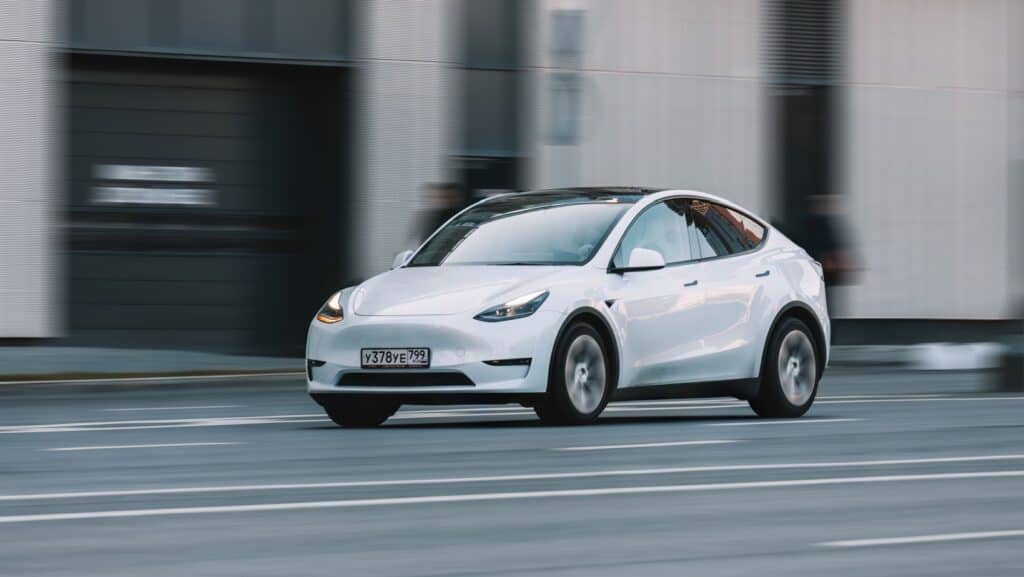
How did the automaker calculate such an enormous safety margin in the first place? It turns out Tesla’s internal methodology compared mismatched datasets to get the results it wanted. Specifically, the company compared crashes that triggered airbag deployments in Teslas to nationwide statistics that include minor fender benders.
This comparison distorts the reality of on-road performance. The average vehicle on United States roads is approximately 12 years old, whereas Tesla’s fleet consists of brand-new, modern models. Newer vehicles naturally experience fewer accidents due to standard, modern driver-assist features, making the comparison highly unfair.
Other regulatory bodies have expressed similar concerns regarding Tesla’s self-produced numbers. Stein-Helge Mundal of the Norwegian Public Roads Administration noted that it’s difficult to find a correlation with official accident statistics. Skepticism is growing as more international regulators look beyond headline figures.
Regulators split on provisional approvals
Despite the intense criticism, Tesla did manage to secure a provisional foothold in Europe. On April 10, 2026, the Dutch vehicle authority, RDW, granted national type approval for FSD Supervised. The agency utilized European Union Article 39 rules, which allow exemptions for innovative, non-deterministic artificial intelligence technologies.
The RDW emphasized that its final decision did not rely on Tesla’s marketing claims. The Dutch authority conducted 18 months of physical road and track testing before granting the provisional permit. However, the agency never clarified whether it actually audited or validated the highly disputed United States crash data.
While Lithuania, Estonia, and Denmark have moved to recognize this Dutch approval, others are pushing back. Internal correspondence reveals that some Swedish regulators were surprised to learn FSD was permitted to exceed posted speed limits. Additionally, independent tests in Europe revealed that the vision-only FSD system struggled to reliably detect motorcyclists in dense traffic.
The tragic reality of real-world testing
While Tesla lobbies European regulators, its automated driving technology faces severe domestic crises. On June 19, 2026, a Tesla Model 3 crashed into a brick home in Katy, Texas, killing 76-year-old Martha Avila. The driver, 44-year-old Michael Butler, told investigators that the vehicle was operating on an automated driving assistant system.
The National Highway Traffic Safety Administration immediately launched a special crash investigation into the fatality. This specific incident falls within a massive, ongoing 3.2-million-vehicle probe already at Engineering Analysis status. An Engineering Analysis is the final regulatory step before the agency can demand a safety recall.
Tesla’s executives rushed to deflect blame on social media before independent crash investigators could pull the black box data. Ashok Elluswamy, director of Tesla’s Autopilot software, posted that the driver manually overrode FSD by pressing the accelerator to 100 percent. Elon Musk quickly amplified the post, claiming FSD drives slowly through neighborhood streets and that this was simply a high-speed manual crash.
But safety experts warn that these quick public explanations don’t paint the whole picture. Critics point out that if a driver panics and presses the wrong pedal while FSD is active, the software should ideally mitigate the crash. The incident has prompted United States Senators Edward Markey and Richard Blumenthal to demand a formal federal audit of Tesla’s safety claims.
What the future holds for autonomous vehicle tracking
The collision between ambitious software rollouts and rigorous regulatory oversight is reaching a boiling point. Regulators are no longer willing to accept self-published safety data without extensive, independent validation. If Tesla wants to secure EU-wide approval, it will have to provide transparent, standardized metrics rather than relying on clever marketing statistics.
This push for transparency is poised to redefine standards across the entire automotive industry. As software-defined vehicles become the new norm, the integration of rigorous, third-party validation will likely evolve into a non-negotiable prerequisite for market entry rather than an optional hurdle. Manufacturers developing autonomous technologies must now recognize that global regulators are shifting toward standardized oversight.
Ultimately, this fundamental transition toward verifiable data could foster significantly greater public trust in autonomous driving. However, this progress depends entirely on whether automakers are willing to prioritize objective safety metrics over the traditional pressures of marketing speed and rapid commercial deployment.
Disclaimer – This list is solely the author’s opinion based on research and publicly available information. It is not intended to be professional advice.
Like our content? Be sure to follow us