When divorce turns into rivalry: how parental conflict quietly shapes children’s futures
A child can adapt to two homes. What many struggle to adapt to is feeling like they have to choose between them.
But researchers are pointing to a sharper concern. The split itself often isn’t what causes the deepest harm. The bigger risk comes when parents stay locked in conflict, turning children into messengers, witnesses, emotional caretakers, or unwilling players in a rivalry they never chose.
Around half of all children experience the breakup of their parents’ relationship before age 16, according to Arizona State University psychologist Karey O’Hara. Yet outcomes vary widely. Some children adjust. Others carry emotional, social, academic, and economic scars for years.
The difference often comes down to one question: what happens after the split?
The Split Is Not Always the Wound

Divorce can bring real pain.
Children may move homes, spend less time with one parent, change schools, or watch family finances tighten. It can shake the routines that made life feel safe.
Research by Science Direct notes that children often struggle more in high-conflict homes than after a calm separation. A respectful divorce can give a child stability. Constant fighting can take it away. In the end, what shapes a child most is often not the family structure itself, but the emotional climate they are forced to live inside.
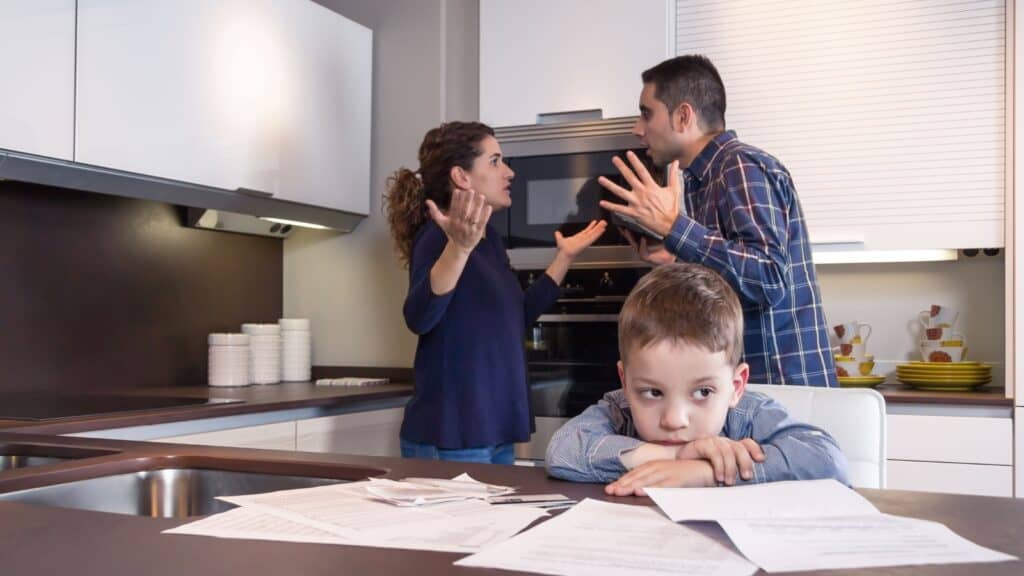
That climate can be loud: shouting, blame, angry texts, and tense custody handoffs. It can also be quiet: a sarcastic comment about “your mother’s house,” a cold look in the driveway, or a parent asking the child to report what happened during the weekend.
Adults may see those moments as small. Children often feel them as warnings.
When Children Become the Middle Ground
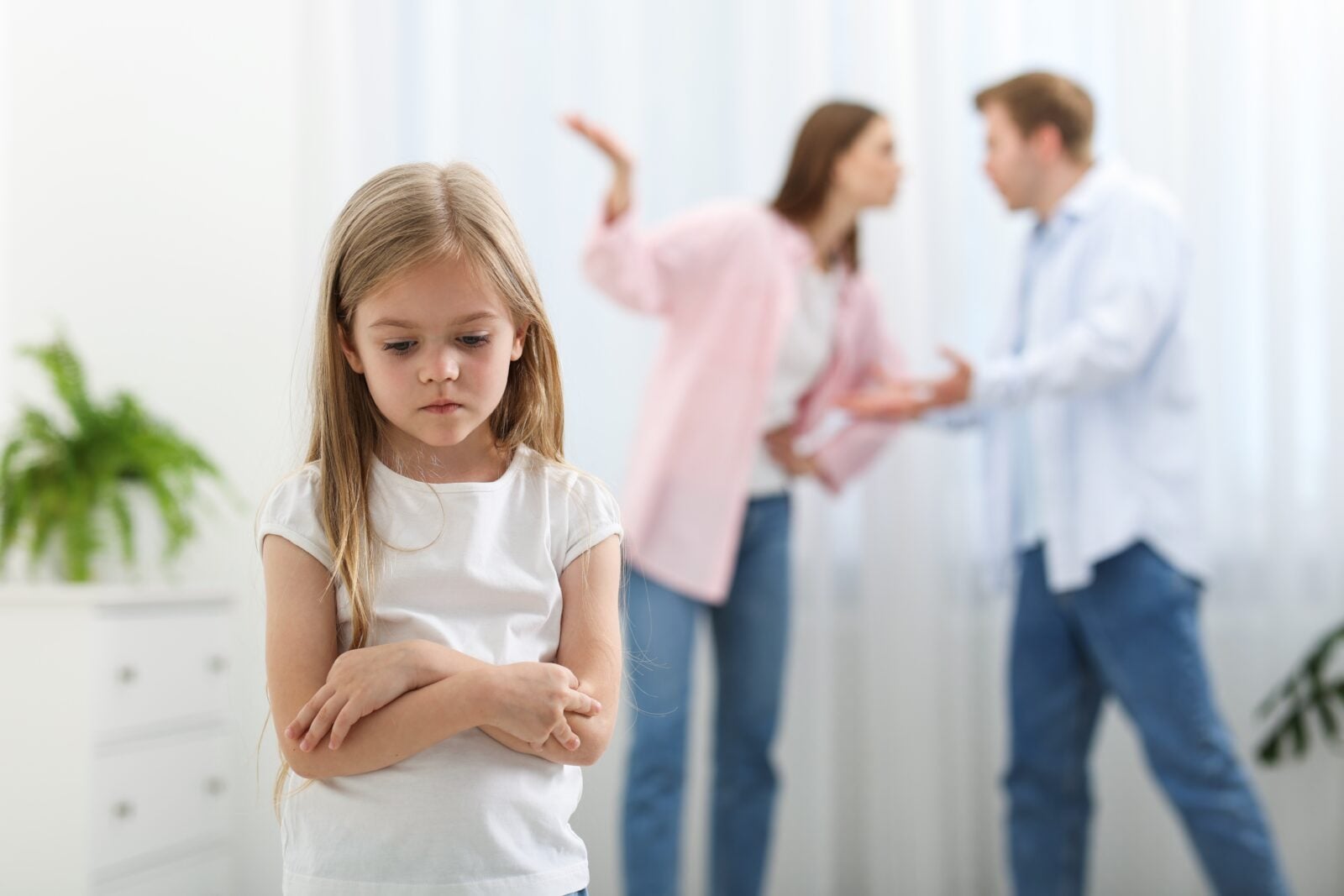
One of the most damaging aspects of parental rivalry is how it pulls children into adult disputes.
Researchers call it triangulation. Most children know it as being stuck in the middle.
It can happen through ordinary sentences: “Tell your dad he needs to call me.” “Don’t mention that to your mother.” “Who was at the house this weekend?” “You’d rather be there, wouldn’t you?”
Each line asks the child to carry emotional weight that does not belong to them. Over time, they learn to edit their feelings. They may hide joy after a weekend with one parent. They may become careful, quiet, and watchful.
A child should not become a diplomat in the collapse of a marriage.
The Body Reacts Before Children Can Explain
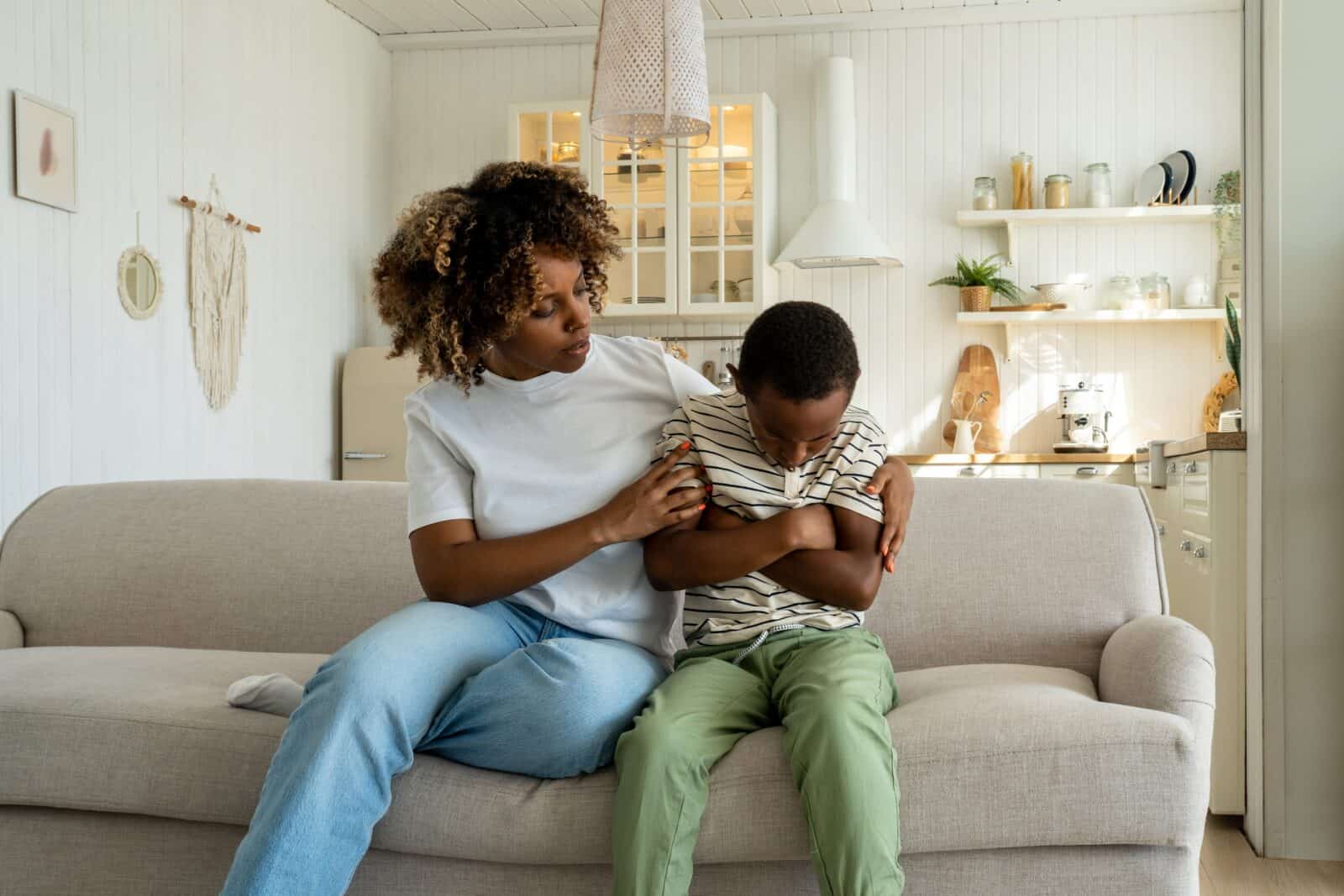
A Springer Nature report shows that children exposed to parental conflict often exhibit higher cortisol levels, the body’s primary stress hormone, than their peers. Their systems start preparing for danger even when no one is physically threatening them.
Children don’t simply observe conflict; they absorb it.
That constant alertness can surface in different ways: sleepless nights, anxiety, withdrawal, or acting out in class. Some become unusually responsible, praised as “mature,” but in reality, that maturity is survival.
When conflict stretches on for months or years, it becomes chronic stress. And chronic stress doesn’t just shape mood; it can alter learning, behavior, and a child’s sense of safety.
The Damage Follows Children Outside the Home

Family conflict rarely stays at home.
It follows children into classrooms, friendships, sports practices, and college plans. A child who spends the morning absorbing a parent’s anger may have less energy for math by afternoon. A teenager who feels guilty for enjoying one household may struggle to focus on the future.
Parental divorce and high-conflict family environments are associated with higher rates of anxiety, depression, conduct problems, and lower academic outcomes. That does not mean children of divorce cannot succeed. Millions do.
But conflict takes up space. It teaches children to manage adult emotions before they fully understand their own.
A National Bureau of Economic Research found that early-childhood divorce was associated with lower adult earnings, lower college residence, higher teen birth rates, higher incarceration risk, and increased mortality.
Those findings show risk, not destiny. But they challenge the idea that family conflict is only a private adult matter when children live within it.
Why This Conversation Is Growing Now
Part of the reason this issue feels urgent is that society now talks more openly about childhood emotional health. Words like attachment, anxiety, trauma, and boundaries now appear in parenting groups, classrooms, podcasts, TikTok videos, and Reddit threads.
Online, many adult children of divorce describe the same pattern. They do not always say the divorce itself ruined their childhood. They say the fighting did. The pressure did. The loyalty tests did. The feeling that loving one parent meant betraying the other did.
That public reaction matches what researchers have documented for years. Children often remember the emotional climate more vividly than the legal arrangement.
The Co-Parenting Contradiction
Modern parenting often rests on one promise: children come first. Divorce can make that promise harder to keep.
After a separation, co-parenting forces two hurt people to keep making decisions together after trust has broken down. School forms, doctor visits, holidays, rules, money, emergencies, and family milestones still have to be handled. The relationship may be over, but the responsibilities remain.
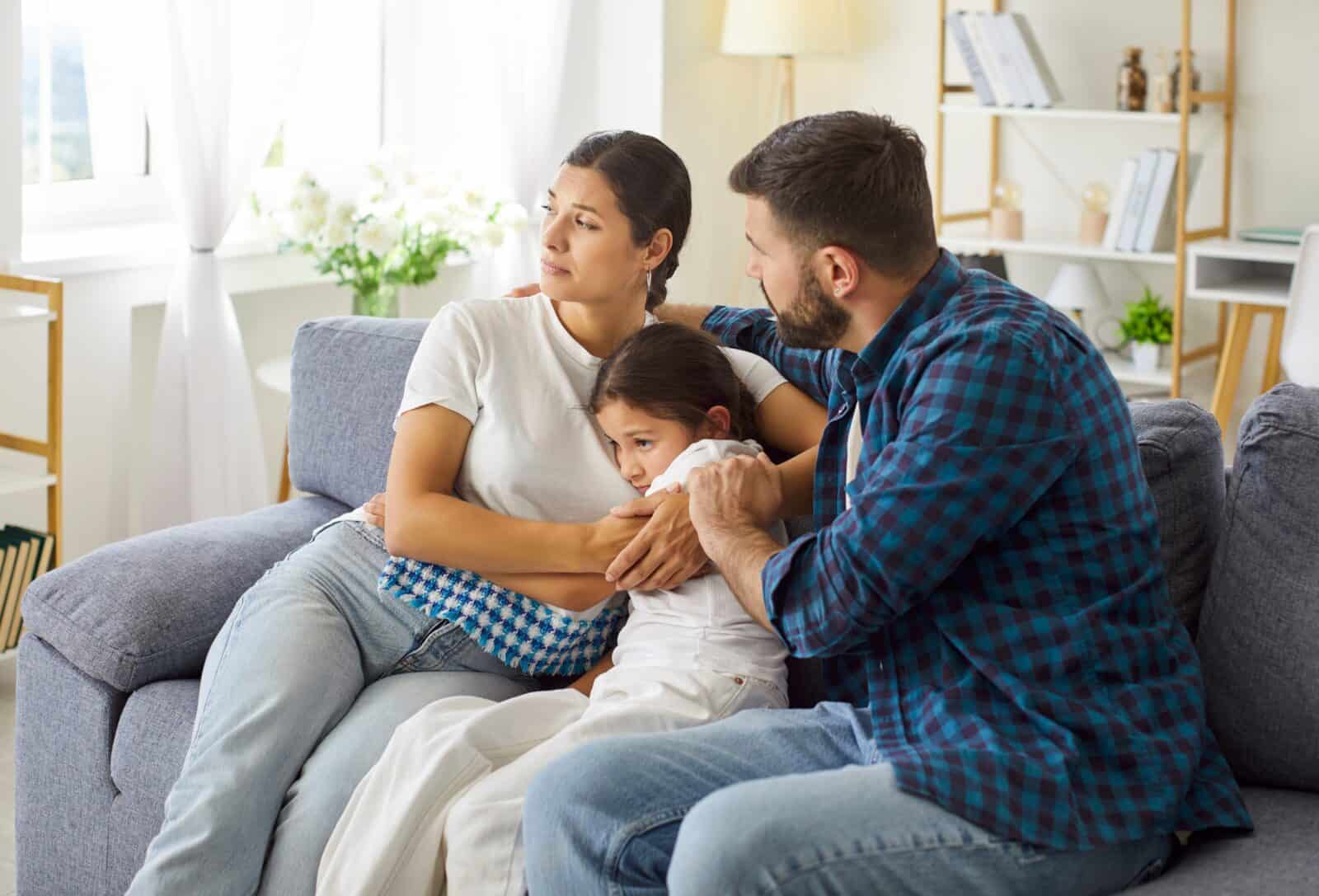
For children, the need is much simpler. Parents do not have to act like close friends. Both homes just need to feel safe, and love for one parent should never feel like betrayal of the other.
The stakes can last for years. A National Bureau of Economic Research analysis linked early-childhood divorce with 9–13% lower lifetime earnings, along with higher risks of teen pregnancy, incarceration, and mortality. Those outcomes are not destiny, but they show why the emotional environment around divorce matters.
This is the contradiction at the center of parental rivalry: adults may believe they are protecting themselves, while children quietly learn that love comes with pressure, caution, and fear.
What Children Need Most

The hopeful part is that parents are not powerless.
The practical meaning is clear. Do not use children as messengers. Do not insult the other parent in front of them. Do not make them hide their affection. Do not turn holidays or birthdays into loyalty tests.
A child does not need a perfect divorce. That does not exist. They need adults who can place their peace above the urge to win.
Divorce ends a marriage. Parental conflict can become the climate in which a child grows up.
The real question after divorce may not be which parent won more time, more money, or more sympathy. It may be if the child was allowed to keep loving both parents without being drafted into the war.
Disclaimer – This list is solely the author’s opinion based on research and publicly available information. It is not intended to be professional advice.
Like our content? Be sure to follow us