10 facts about divorce in the U.S. that many people don’t know
More than 1.8 million Americans have experienced a divorce, according to Pew Research, making it far from a rare event in American life. Yet while divorce remains common, the overall trend is moving in a direction that many people don’t realize.
The U.S. divorce rate has fallen to about 2.4 divorces per 1,000 people, well below the levels seen during its peak decades ago. Even so, many Americans still believe divorce is rising and that marriages are less stable than ever.
Long-held assumptions about who gets divorced, when it happens, and how common it really is no longer match the data.
Here are 10 facts about divorce in the United States that reveal what’s really happening behind the numbers, and why the story is more nuanced than many people think.
Women still initiate most divorces

Despite major social changes in marriage and gender roles, one pattern has remained consistent across research: women are more likely than men to initiate divorce in many relationships, including later-life separations.
This pattern is linked to differences in emotional labor, household responsibility, and relationship satisfaction over time. Over time, these pressures can build into a sense that the relationship is no longer balanced or sustainable.
While every divorce is personal, the broader trend suggests women are more often the ones who decide that a marriage is no longer meeting their needs. Not necessarily because separation is easier, but because staying no longer feels workable.
Most Americans think divorce is rising. It’s actually been falling for years

Ask Americans about divorce, and chances are you’ll hear some version of the same story: marriages are becoming less stable, and the divorce rates keep climbing.
The reality is almost the opposite.
Data from the Centers for Disease Control and Prevention show the U.S. divorce rate has fallen to about 2.4 divorces per 1,000 people, well below its peak in the 1980s.
This does not mean divorce is rare; it means the country has moved away from the high-divorce era that shaped public perception.
The famous “50% divorce rate” is largely outdated

Few relationship statistics are repeated more often than the claim that half of all marriages end in divorce.
The figure gained popularity decades ago when divorce rates were climbing rapidly, and researchers projected that as many as 50% of marriages could eventually fail. But today’s data tells a different story.
Research from the Bureau of Labor Statistics notes that first-marriage divorce rates are roughly 40%. The odds are even lower for some groups, particularly college-educated couples and those who marry later in life.
The statistic survives because it’s simple and memorable.
Divorce is declining, but millions of Americans have still experienced it

Even as annual divorce rates decline, divorce remains deeply embedded in American society. According to Pew Research, more than 1.8 million Americans have experienced a divorce, and roughly one-third of those who have ever been married have gone through a divorce.
This is why divorce still feels widespread, even as fewer new divorces occur each year. Many families continue to live with the long-term effects, even as fewer new divorces occur each year.
Education has become one of the strongest predictors of marital stability

Marriage in America is no longer divided only by love, compatibility, or commitment. Increasingly, it is also divided along economic lines.
College graduates are significantly less likely to divorce than those without higher education. That does not mean a degree automatically protects a marriage, but it often comes with advantages that make long-term stability easier to maintain.
College-educated couples are more likely to marry later, enter marriage with a stronger financial footing, and have access to better job opportunities, health care, housing, and social support. These advantages reduce many of the everyday pressures that strain relationships over time.
This marks a major change from earlier generations, when education was not nearly as strong a predictor of whether a marriage would last. Today, it has become one of the clearest dividing lines in American family life.
The bigger lesson is uncomfortable but important: divorce is not only a relationship story. It is also an economic story.
Nearly 40% of divorces now involve adults over 50

For decades, divorce was seen largely as a turning point in younger adulthood, something that happened early in marriage or mid-life transitions.
That picture is changing.
Today, adults 50 or older account for roughly 36% of U.S. adults going through a divorce, as noted by ABC News, a trend researchers often call “gray divorce.” It reflects longer lifespans, changing expectations, and a willingness to reassess long-term relationships later in life.
Divorce, in other words, is no longer just a young person’s story. It is increasingly becoming a later-life decision.
Many gray divorces happen after nearly three decades of marriage

Even more surprising is how long many of these marriages last before ending.
Among Americans aged 50 and older, the median marriage ends in divorce after about 29 years together, meaning many gray divorces are breaking up relationships that have lasted nearly three decades.
That means many couples aren’t separating because a relationship failed quickly. These couples are not ending short-term marriages; they are separating after careers, homes, children, and decades of shared life.
For many older adults, divorce is less about instability and more about reevaluating what they want from the next chapter of life.
Living together before marriage isn’t necessarily the problem

For years, cohabitation before marriage was widely treated as a predictor of divorce risk. The assumption was simple: living together too early might weaken long-term commitment.
The issue is not cohabitation itself, but the level of clarity couples bring into that decision.
Couples who move in together with shared expectations about finances, roles, and long-term direction tend to build more stable foundations. In contrast, challenges often arise when cohabitation occurs without explicit conversations about where the relationship is headed.
The key factor is not timing, but intention. Living together becomes less of a risk when it reflects a shared plan rather than an unspoken step forward.
Divorce isn’t spread evenly across America
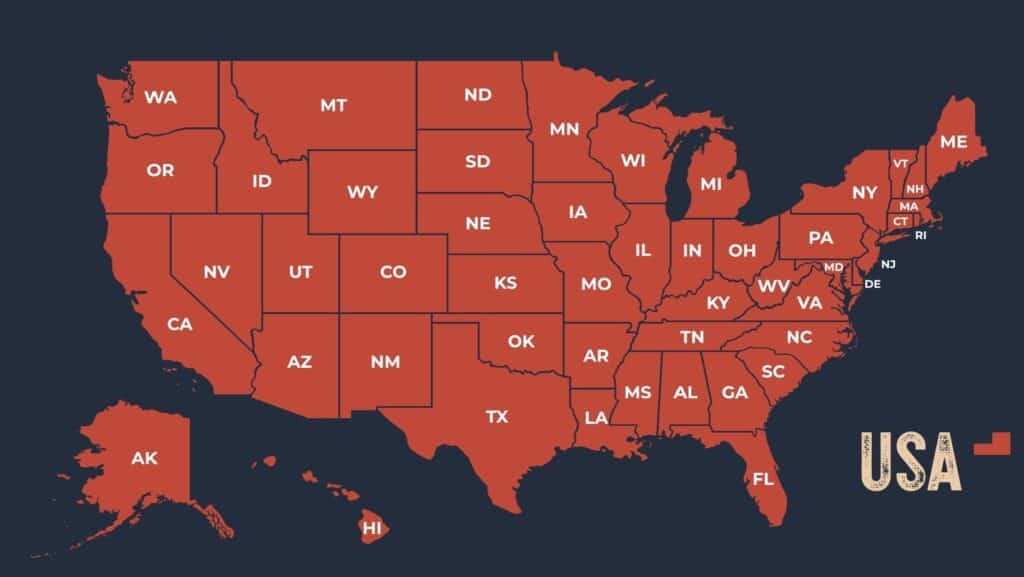
Divorce patterns vary widely across different communities, shaped by economic, educational, and social conditions.
In some areas, marriage rates remain relatively stable, while in others, relationship breakdown is more common. These differences highlight that divorce is not only a personal or emotional decision, but also one influenced by external pressures such as financial strain, job stability, and access to support systems.
This uneven pattern suggests that broader life conditions often shape relationship outcomes as much as individual choices do. Where stress is higher and resources are thinner, relationships tend to face greater strain over time.
The pandemic didn’t create the divorce surge many expected

When the pandemic began, many experts expected a sharp increase in divorces due to prolonged stress, isolation, and financial uncertainty. According to the PMC reports that from March to December 2020, divorce rates fell by about 43%, compared with expected levels,
But what unfolded was more complex.
Rather than an immediate surge, many couples postponed major decisions while legal systems slowed and daily life became more constrained. Over time, relationship changes did occur, but they unfolded gradually rather than in a dramatic wave.
What the period revealed is that even under intense pressure, relationship decisions are often delayed, reshaped, or reconsidered rather than acted on immediately. Human behavior rarely responds to stress in a clean or predictable way.
The Bigger Story Behind the Numbers

Taken together, these facts reveal a divorce landscape that looks very different from the one many Americans imagine. The most striking takeaway isn’t that divorce has vanished. It hasn’t.
Rather, divorce is becoming increasingly concentrated among certain groups while becoming less common among others. Age, education, financial security, and life circumstances matter more than ever.
That shift reflects a broader trend reshaping American society: stability is increasingly tied to access to resources and opportunity. For decades, divorce was often discussed as a universal experience. The data suggest it’s becoming a more uneven one. And that may be the most important lesson of all.
The story of divorce in America is no longer simply about relationships succeeding or failing. It’s increasingly a story about how economics, education, expectations, and changing life choices influence one of the most important decisions people make.
Understanding that reality requires letting go of old assumptions and paying closer attention to what the numbers are actually saying.
Disclaimer – This list is solely the author’s opinion based on research and publicly available information. It is not intended to be professional advice.
Like our content? Be sure to follow us