
You’ve Probably Seen the Fibonacci pattern without realizing what it means
You may have seen the Fibonacci pattern in a sunflower, a pinecone, or even a spiral without giving it a second thought. But that familiar-looking sequence—1, 1, 2, 3, 5, 8, 13—has a surprisingly long history that began with a simple rabbit puzzle in medieval Italy.
Leonardo of Pisa, better known as Fibonacci, introduced the sequence to European readers in his 1202 book Liber Abaci. What started as a mathematical exercise eventually became connected to patterns found in certain plants, the golden ratio, and modern computer science.
The fascinating part is that some of the things you’ve heard about Fibonacci are true, while others have been exaggerated over the years. Here’s the story behind the famous sequence, where you can actually find it, and why this centuries-old pattern still captures our attention.
The Curious Mind of Leonardo of Pisa
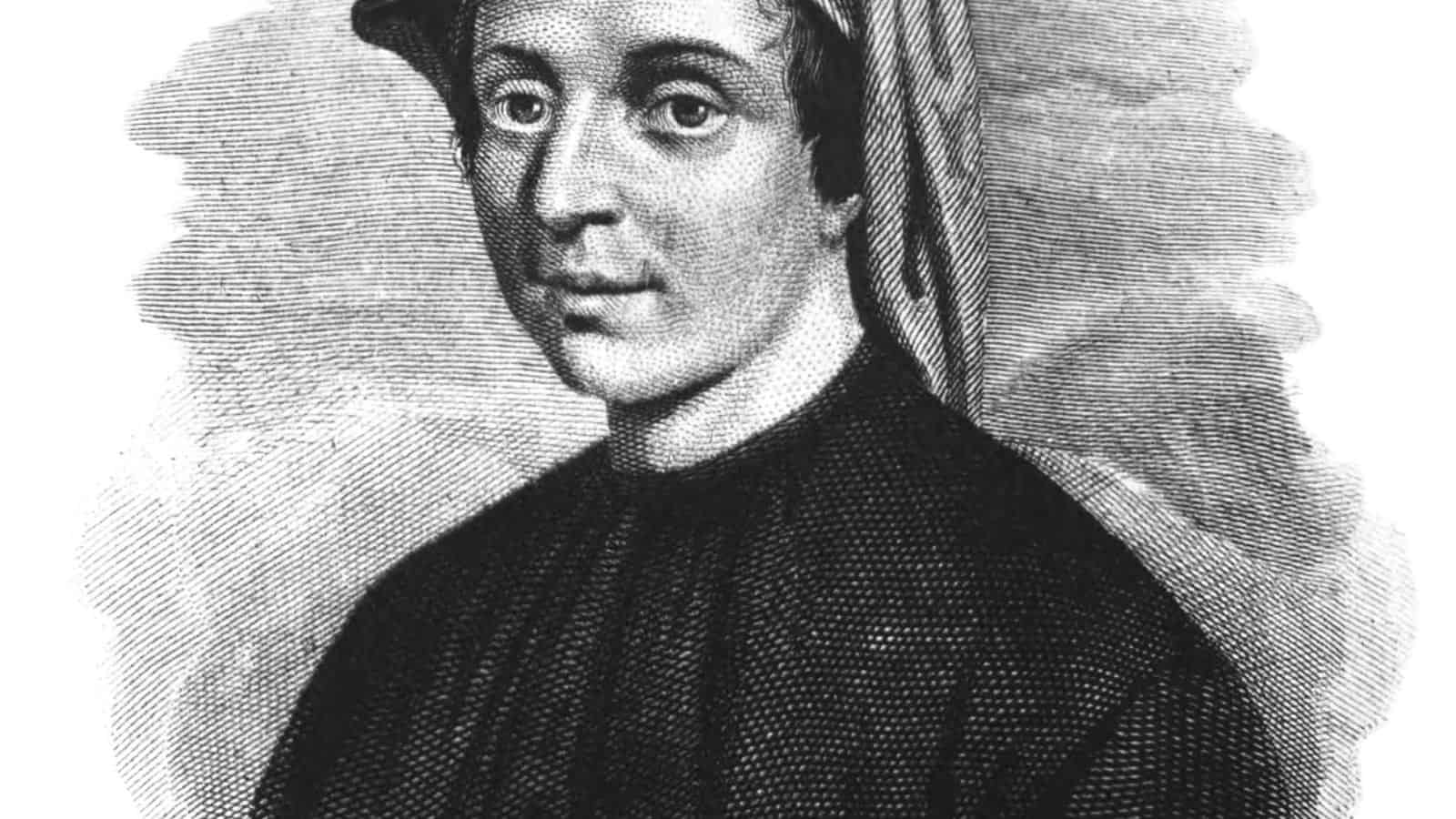
The man behind the sequence was born in Pisa, Italy, around 1170. His name was Leonardo, but he became known by the nickname Fibonacci, derived from “filius Bonacci,” meaning “son of Bonacci.”He grew up in a time when Europe was still finding its mathematical footing, relying mostly on cumbersome Roman numerals. Fibonacci’s father was a merchant, and his business travels brought young Leonardo to North Africa, where he was introduced to the Hindu-Arabic numeral system used by scholars there.
It was a revelation. Fibonacci saw immediately how much more efficient the numerals 0 through 9 were compared to the Roman system. When he returned to Italy, he wrote a book in 1202 called Liber Abaci, or The Book of Calculation. It became a turning point in European mathematics. The book not only introduced the Hindu-Arabic system to the Western world but also included a curious problem about rabbit breeding that would give birth to the famous sequence.
A Question About Rabbits
The rabbit problem seems almost too simple. Fibonacci asked: If you start with one pair of rabbits, and each pair produces another pair every month after their first month of life, how many pairs will there be after a year?
The solution unfolds elegantly. In the first month, there is one pair. In the second, still one, since they have not reproduced yet. By the third month, they produce a new pair, making two. By the fourth, the original pair reproduces again, while the new pair is just maturing, creating three pairs. Each new number adds the previous two, forming the now-famous pattern: 1, 1, 2, 3, 5, 8, and so on.
Fibonacci could not have known that his simple exercise in logic would reveal a mathematical fingerprint present throughout the universe.
Nature’s Hidden Blueprint
Over time, scientists began noticing that the Fibonacci sequence appeared in living organisms. The arrangement of sunflower seeds, the spiral of a nautilus shell, the branching of trees, and even the pattern of hurricanes and galaxies all echo Fibonacci numbers.
The ratio between consecutive Fibonacci numbers approaches what is known as the golden ratio, approximately 1.618. This ratio is often associated with beauty, symmetry, and balance. In plants, it allows for the most efficient packing of seeds or leaves, ensuring that each receives maximum sunlight or space. In animals, it can appear in the proportions of shells, horns, and even DNA structures.
Fibonacci’s discovery became not just a mathematical curiosity but a lens through which to view the natural world.
From Renaissance Art to Modern Science
Artists and architects of the Renaissance embraced the golden ratio as a tool for creating visually pleasing compositions. Painters like Leonardo da Vinci and architects like Brunelleschi and Palladio used proportions based on Fibonacci’s sequence to design harmonious works. The result was art that felt naturally balanced to the human eye.
Centuries later, scientists, musicians, and even stock analysts found new ways to apply Fibonacci’s ideas. The sequence showed up in sound waves, architectural blueprints, and algorithms for sorting and searching data. What began as a thought experiment about rabbits became a universal principle of pattern recognition.
The Digital Life of Fibonacci
Today, Fibonacci’s influence extends into digital technology. Computer scientists use Fibonacci numbers to optimize processes, model growth patterns, and design efficient algorithms. The sequence helps computers make faster calculations and supports data structures like the Fibonacci heap, which improves performance in certain programming applications.
Even in financial markets, analysts use Fibonacci retracement levels to identify potential turning points in price trends. Though not foolproof, the concept reflects how deeply this numerical pattern has embedded itself into modern thought.
A Celebration of Curiosity
Fibonacci Day is more than a tribute to numbers. It is a celebration of curiosity and the power of observation. Leonardo of Pisa did not set out to discover a universal law; he simply asked a question and followed it to its logical conclusion. His legacy reminds us that simple questions can lead to profound understanding.
Whether you notice spirals in a pinecone or admire the symmetry of a seashell, you are seeing Fibonacci’s fingerprints. The same pattern that began with rabbits now shapes everything from algorithms to art galleries. It proves that mathematics is not just a tool for solving problems but a language of beauty that connects us to the world around us.
10 Everyday Products That Were Invented By Accident
Some of the world’s most useful (and fun!) inventions happened completely by accident. Whether it was a lab mistake, a kitchen spill, or a kid messing around with ingredients, these everyday products weren’t the result of a brilliant plan—they were lucky surprises. Here are 10 items you probably use all the time that only exist because of an unexpected twist of fate. Learn more.