12 worst states for women to live and work in going into 2027
Where a woman lives in America can affect far more than her paycheck. It can influence whether she has health insurance, access to reproductive care, affordable childcare, workplace protections—and even how safe she is.
Those differences have become increasingly difficult to ignore.
The latest state-by-state analysis from WalletHub compared all 50 states and Washington, D.C., across 25 measures affecting women. Researchers looked at everything from earnings, unemployment and poverty to healthcare access, life expectancy and safety.
The result is a striking geographic divide. While states such as Massachusetts, Maine and Minnesota rank near the top, women in other parts of the country face a much more difficult combination of economic insecurity, poor health outcomes and limited support.
And as we head into 2027, reproductive healthcare has become another major geographic divide. According to KFF, 13 states had abortion bans in effect as of mid-2026, while several others enforced early gestational limits.
Using the latest available rankings and policy data, these are 12 of the most challenging states for women to live and work in as the country enters 2027.
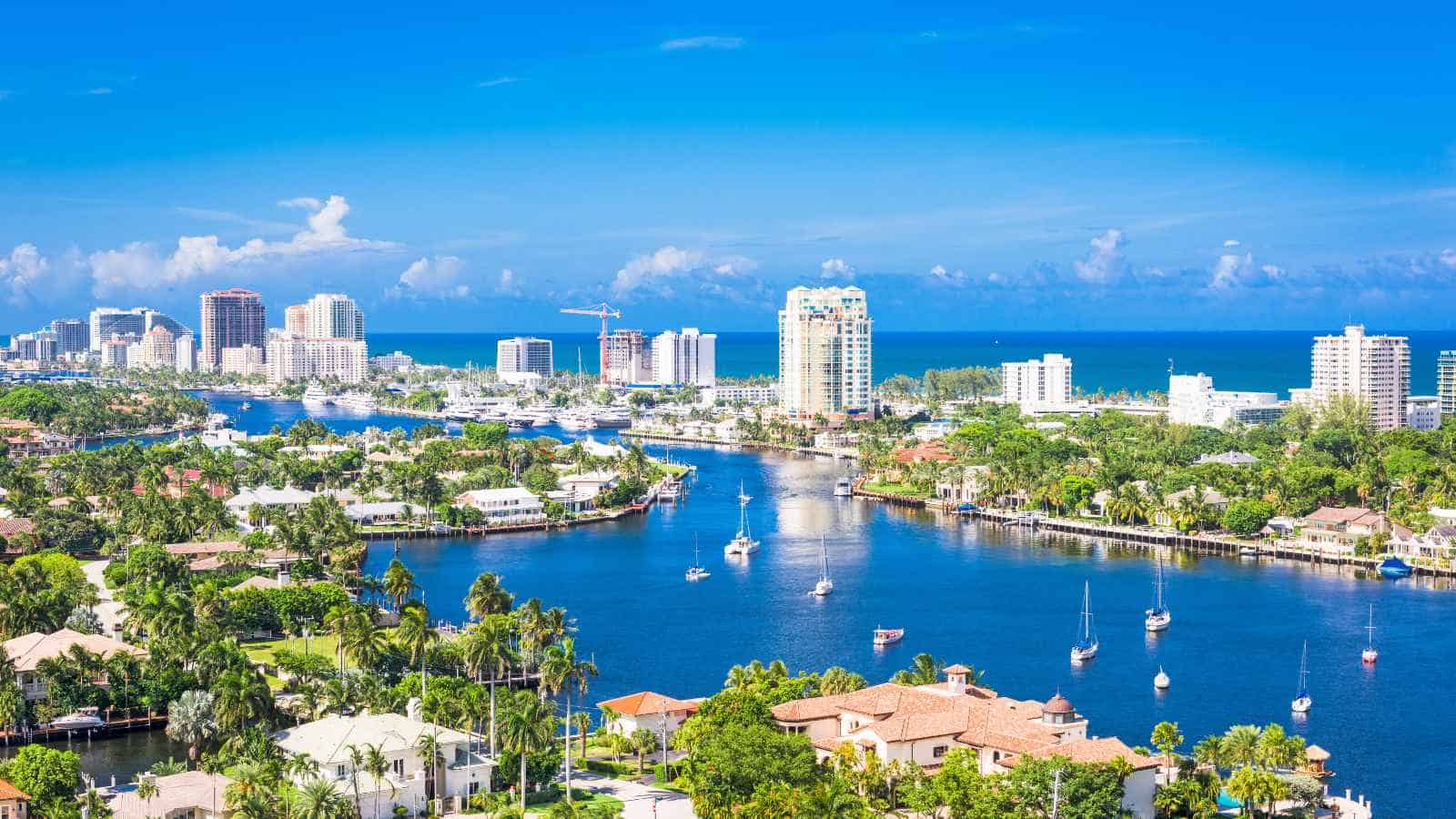
12. Florida
Florida lands at No. 40 overall in the latest ranking, making it the 12th-lowest state or district evaluated.
Its weakest showing is women’s economic and social well-being, where it ranks 42nd.
That’s an important reminder that a booming state economy doesn’t necessarily translate into equally strong conditions for women. Housing costs, wages, healthcare affordability, childcare and workplace conditions all influence whether women can turn employment into genuine economic security.
Florida also restricts abortion after six weeks in most circumstances, making reproductive healthcare another consideration for women of childbearing age.
The Sunshine State may remain attractive for weather, jobs and retirement, but those advantages don’t erase the financial and healthcare challenges many women face.
11. Utah
Utah presents one of the most interesting contradictions on the list.
Women there have one of the nation’s lowest poverty rates, yet the state ranks only 44th for women’s overall economic and social well-being in WalletHub’s analysis.
That illustrates why no single statistic tells the whole story.
Utah has repeatedly struggled in measures of gender equality, including differences in earnings, leadership and workplace outcomes between women and men. A woman can live in a prosperous state while still encountering substantial gender disparities within that prosperity.
For women choosing where to build careers, the question isn’t simply whether a state is economically successful. It’s how much of that success women are able to share.
10. Idaho
Idaho ranks 42nd overall and 43rd for women’s economic and social well-being.
It also has one of the nation’s most restrictive reproductive-health environments. Abortion is banned in the state with limited exceptions.
Those policies matter beyond the political debate over abortion itself. Access to reproductive and maternity care can affect where physicians practice, how pregnant patients are treated during medical emergencies and how far women must travel for certain forms of care.
Meanwhile, Idaho’s rapid population growth doesn’t necessarily mean women’s economic opportunities have kept pace.
A state can attract thousands of new residents while still leaving significant gaps in the systems women rely upon.
Related to Read: Choosing Where to Be Pregnant: Which States Are Conducive To Safe Pregnancy
9. Mississippi
Mississippi’s difficulties are particularly pronounced in health.
The state ranks 49th in the nation for women’s healthcare and safety in WalletHub’s analysis.
That category incorporates factors including healthcare affordability and access, health outcomes and women’s safety.
Mississippi also has an abortion ban in effect, and rural healthcare access remains an important concern in parts of the state.
The problem isn’t that Mississippi women aren’t working hard enough or making good choices. Where healthcare providers are scarce and economic opportunities limited, individual effort can only compensate for so much.
8. West Virginia
West Virginia ranks 44th overall and 48th for women’s healthcare and safety.
Like several states near the bottom, it combines economic challenges with significant health concerns.
West Virginia has struggled for years with poverty, chronic disease and rural healthcare access. Women living far from major medical centers may have fewer choices in specialists, maternity care and other services.
Abortion is also banned in the state with limited exceptions.
Low housing costs can make West Virginia appear affordable on paper. But affordability means more than the price of a house. Wages, healthcare, transportation and access to services determine how manageable everyday life actually is.
7. South Carolina
South Carolina ranks 45th overall, with particularly weak results for women’s economic and social well-being.
The state also restricts abortion at approximately six weeks in most cases.
But the challenges facing women extend well beyond reproductive policy.
Economic opportunity, workplace support, childcare and healthcare all affect whether women can remain in the labor force and advance once they’re there.
That’s especially important for mothers. A job can look perfectly adequate until childcare costs, inflexible hours and a lack of paid leave are factored into the equation.
When working becomes financially or logistically impossible, women are still disproportionately likely to be the parent who steps away.
6. Wyoming
Wyoming ranks 46th overall for women—and 46th for economic and social well-being.
It also has some of the lowest cost-of-living-adjusted median earnings for female workers in the WalletHub analysis.
That’s particularly notable in a state famous for another piece of women’s history: Wyoming was the first U.S. territory to grant women the right to vote, in 1869.
More than a century and a half later, political symbolism doesn’t necessarily translate into economic equality.
Women considering a state for employment need to look beyond unemployment rates. Having a job and having access to good jobs with strong wages and opportunities for advancement are very different things.
Related to Read: 12 reasons women are leaving the workforce: How workplaces are contributing to the shift
5. Alabama
Alabama ranks 47th overall, 47th for women’s economic and social well-being and 46th for healthcare and safety.
In other words, its problems aren’t concentrated in one category.
Alabama also has one of the nation’s most restrictive abortion laws, with abortion banned in most circumstances.
For women raising children, healthcare access, wages and workplace flexibility can compound one another. A lower paycheck becomes even harder to manage when childcare is expensive or difficult to find. Poor access to healthcare becomes more consequential when taking time off work means losing wages.
The disadvantages aren’t necessarily dramatic individually. It’s the way they stack up that can make life harder.
4. Texas
Texas has attracted businesses and millions of new residents, but its overall economic success masks some particularly difficult conditions for women.
The state ranks 48th overall and 50th for women’s economic and social well-being.
Healthcare is another significant problem. In WalletHub’s latest analysis, Texas had the highest female uninsured rate in the country, and a particularly high share of women reported being unable to see a doctor because of cost.
Texas also has a near-total abortion ban.
Those factors create a striking contradiction: one of America’s largest and fastest-growing economic engines is also one of its lowest-ranked states for women’s overall well-being.
A plentiful job market doesn’t necessarily compensate for inadequate health coverage, limited reproductive options or economic disparities.
3. Arkansas
Arkansas ranks 49th overall and 50th for women’s healthcare and safety.
The state also performs poorly on women’s economic and social well-being, ranking 48th.
Arkansas women therefore face disadvantages on both sides of the equation: earning and economic security on one side, health and safety on the other.
The state also has an abortion ban in effect.
These issues become especially consequential for lower-income women, who have fewer resources to work around them. A woman with money may be able to travel for specialized medical care, pay privately for childcare or relocate for a better job.
A woman living paycheck to paycheck may have none of those options.
Geography matters most when you can’t afford to escape its limitations.
2. Oklahoma
Oklahoma ranks 50th overall—second from the bottom—and dead last in WalletHub’s healthcare and safety category.
Women in the state face a combination of poor health outcomes, economic challenges and limited reproductive healthcare access.
Oklahoma also has an abortion ban in effect.
The state’s position near the bottom isn’t based on a single controversial policy or one bad statistic. That’s what makes these rankings important.
A state can struggle simultaneously with women’s health, earnings, poverty, safety and economic opportunity. Those problems can reinforce one another over a lifetime.
Poor health can make employment harder. Lower earnings make healthcare less affordable. Leaving the workforce can reduce retirement savings. And reduced financial independence can make it harder to leave an unsafe relationship.
Related to Read: Women at work: the most and least hardworking states in America
1. Louisiana

Louisiana ranks last overall among all 50 states and Washington, D.C., in WalletHub’s latest analysis.
It also ranks last for women’s economic and social well-being.
Women in Louisiana face particularly high levels of poverty along with challenges involving earnings, healthcare and other measures of well-being. The state also has an abortion ban in effect.
But Louisiana’s last-place ranking shouldn’t be interpreted as saying every woman there is struggling or that the state has nothing to offer.
State rankings describe conditions and probabilities, not individual lives.
A woman with a high-paying job, excellent insurance and strong family support may thrive in Louisiana. Another woman earning a low wage without reliable healthcare or childcare may experience the state’s shortcomings much more directly.
That’s precisely why these comparisons matter.
Where you live can shape how far your paycheck—and your rights—go
Moving from one state to another doesn’t change a woman’s education, ambition or ability.
But it can change the environment in which she has to use them.
State lines can determine the minimum wage a worker receives, whether paid family leave is available, what workplace protections exist, how easily a woman can obtain healthcare, what reproductive choices she has and how much support is available when she becomes a parent.
Those differences can accumulate over decades.
A persistent pay gap affects retirement savings. Leaving work because childcare is unaffordable affects career advancement. Being uninsured can turn a manageable medical condition into a financial crisis. Limited reproductive healthcare can change the course of an entire life.
None of that means women should choose where to live based on a ranking alone. Cost of living, family, employment, housing, community and personal preference matter enormously.
But where a woman lives in America increasingly determines some of the choices available to her—and the obstacles standing in her way.
As we enter 2027, that may be one of the most important differences between states of all.