American ghost towns that were abandoned within living memory
Mention an American ghost town, and it’s easy to picture a dusty Old West settlement abandoned after the mines dried up. But some of the country’s eeriest abandoned communities have much more recent stories.
Over the past several decades, underground fires, toxic contamination, landslides, declining industries, and environmental changes have forced people to leave places they once called home. In some cases, entire communities disappeared with startling speed. In others, only a handful of residents remained as homes, businesses, and streets slowly emptied around them.
The result is a very different kind of ghost town—one whose former residents may still remember when the streets were busy and the houses were occupied. From a Pennsylvania community sitting above a decades-old mine fire to towns devastated by pollution and natural disasters, here are 10 American places that show ghost towns aren’t just relics of the distant past.
1. Centralia, Pennsylvania
Centralia, once a bustling coal mining town, became uninhabitable due to an underground mine fire that has been burning since 1962. The fire, which still burns today, forced most residents to relocate by the 1980s. With only a handful of determined residents remaining, Centralia stands as a stark reminder of the long-lasting impacts of industrial accidents.
2. Times Beach, Missouri
In 1983, the entire population of Times Beach was evacuated due to dioxin contamination. The contamination was traced back to oil sprayed on dirt roads for dust control in the 1970s. This environmental disaster led to a federal buyout and the town’s complete abandonment, making it one of the most infamous examples of a modern American ghost town.
3. Thistle, Utah
Thistle was destroyed by a massive landslide in 1983, which created a natural dam and flooded the town. Once an important railroad junction, Thistle’s demise came swiftly, with residents forced to evacuate as waters rose. Today, it stands as Utah’s first official ghost town, a testament to the power of natural disasters.
4. Picher, Oklahoma
Once the world’s richest lead and zinc mining field, Picher became uninhabitable due to extensive environmental contamination. By 2009, the town was officially dissolved as residents were bought out and relocated. The abandoned buildings and massive chat piles (mining waste) serve as a stark reminder of the environmental costs of unchecked industrial practices.
5. Treece, Kansas
Similar to Picher, Treece was a victim of lead and zinc mining contamination. Located just across the state line from Picher, Treece faced the same environmental hazards. By 2012, the last residents had been relocated through a government buyout program, leaving behind a toxic ghost town.
6. Elkmont, Tennessee
While not completely abandoned, Elkmont transitioned from a thriving resort community to a ghost town within the Great Smoky Mountains National Park. In the 1990s, as leases expired, most residents were forced to leave. Today, the National Park Service is preserving some structures while allowing others to decay naturally, creating a unique blend of restoration and abandonment.
7. Bombay Beach, California
Located on the shores of the Salton Sea, Bombay Beach was once a thriving resort town in the 1950s and 1960s. As the Salton Sea’s salinity increased and fish die-offs became common, tourism declined sharply. While not completely abandoned, the population has dwindled significantly, leaving behind a surreal landscape of decaying structures and abandoned dreams.
8. Love Canal, New York
Love Canal became synonymous with environmental disaster in the late 1970s when it was discovered that the neighborhood was built on a toxic waste dump. The resulting health crisis led to the evacuation of over 800 families. While some areas have been resettled, much of the original Love Canal remains abandoned, a cautionary tale of industrial pollution’s long-term effects.
9. Gilman, Colorado
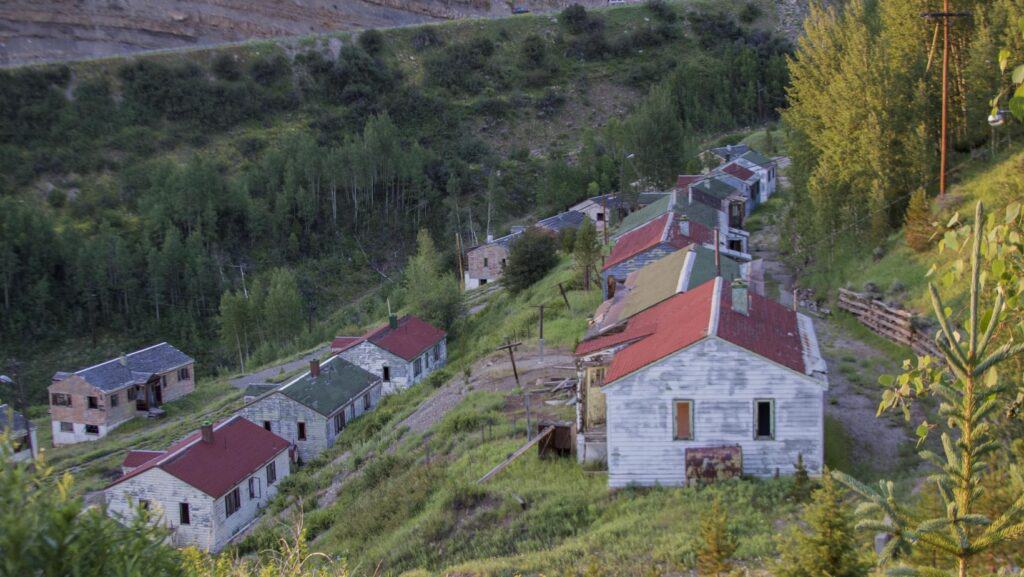
Once a booming mining town, Gilman was abandoned in 1984 due to toxic contamination from mining operations. The EPA declared it a Superfund site in 1986. Today, Gilman stands frozen in time, its abandoned buildings offering a glimpse into the life of a 20th-century mining community and the environmental legacy left behind.
10. Cahaba, Alabama
While Cahaba’s initial abandonment predates our 50-year window, its story of repeated abandonment and partial resettlement continues into recent decades. Once the state capital of Alabama, Cahaba has faced numerous challenges, including flooding and economic shifts. Today, it exists as a ghost town and archaeological site, with ongoing preservation efforts keeping its story alive.
Conclusion
These modern ghost towns serve as poignant reminders of the fragility of human settlements in the face of environmental disasters, economic shifts, and industrial contamination. They offer valuable lessons about sustainable development, environmental stewardship, and the importance of community resilience. As we look to the future, these abandoned places urge us to consider the long-term impacts of our actions on the communities we build and the environments we inhabit.
15 US Communities That Could Be Underwater or Flooded by 2030

Many people still talk about global warming as a future problem, but the danger is here, and will only get worse with each passing season.
Rising sea levels pose an existential threat to many coastal communities in the US, from beloved beach towns to small islands to major cities that sit on a bay. These are areas that could face severe flooding or be partially underwater by 2030 based on current climate projections.
The year 2030 is a measly five years away at the time of writing this, so the disasters are approaching these communities quickly.
READ: 15 US Communities That Could Be Underwater or Flooded by 2030