Are Millennials More Respected Than They Think? 13 Things Boomers Notice
By 2026, Millennials will make up approximately 75% of the global workforce and hold a growing share of managerial roles, yet survey data from organizations like Gallup continues to show that many still feel under-recognized relative to their contributions.
That disconnect matters because respect in modern workplaces rarely shows up as praise. It shows up as reliance. Who gets pulled into high-stakes decisions, who is trusted to translate complexity, and who quietly becomes indispensable when systems start to strain.
The same generation once labeled as entitled or inconsistent is now being leaned on to stabilize operations, interpret new technologies, and navigate ambiguity that didn’t exist a decade ago. Millennials often interpret silence as indifference, while Boomers interpret dependence as trust.
The AI-Human Bridge
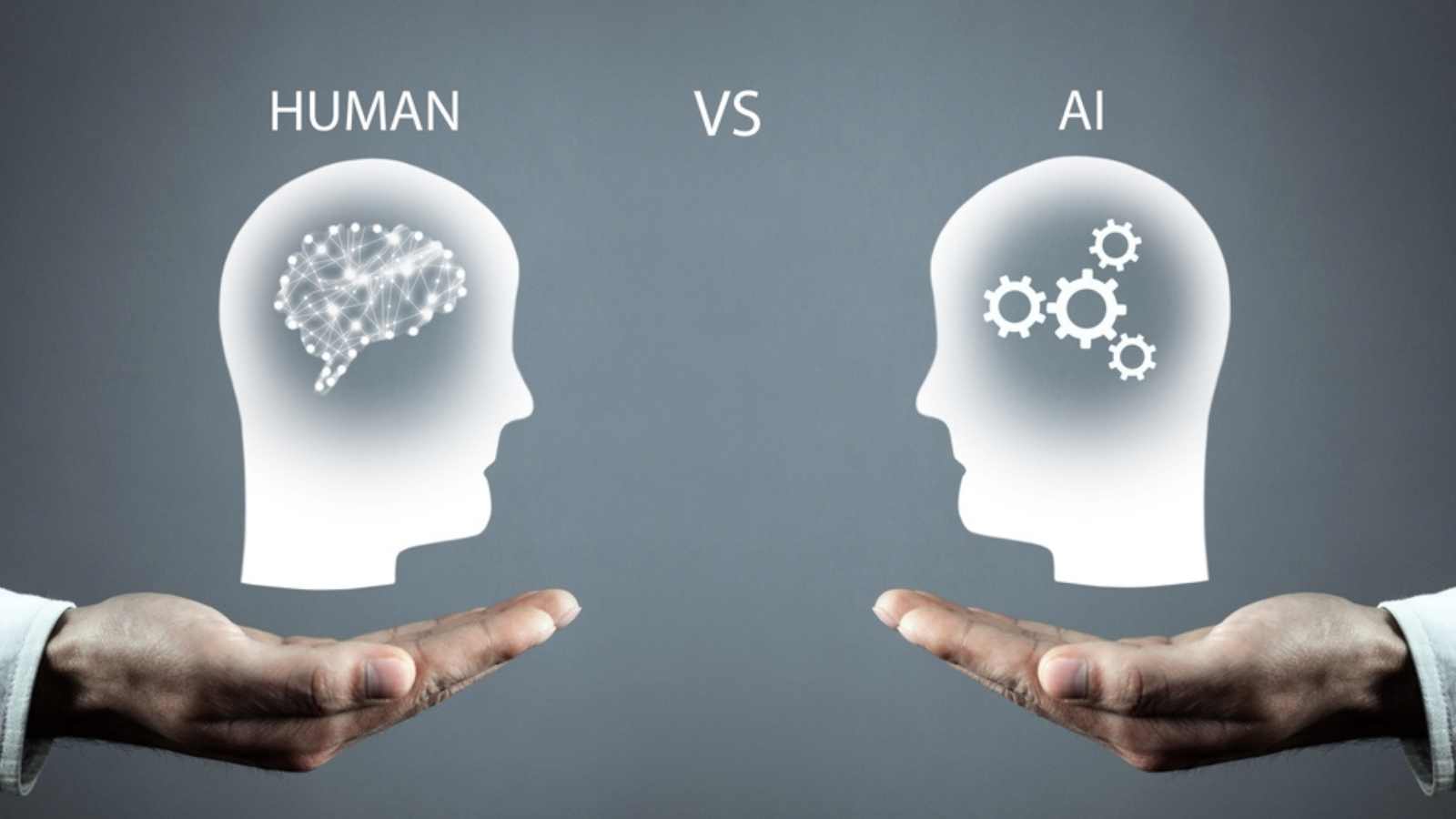
Boomers are quietly marveling at how Millennials have become the structural load-bearers of the modern workplace. Unlike Gen Z, who often lack the memory of a pre-cloud era, or Boomers, who sometimes struggle with the logic of prompt engineering, Millennials occupy a unique middle ground.
They are the ones translating legacy institutional knowledge into generative AI workflows. 2026 reports show a massive shift. In 2026, the AI hype is over, and the industrialization phase has begun.
Boomers have institutional memory, while Millennials translate it into effective AI-driven workflows.
Only 15% of companies have reached full AI industrialization. The ones that have are 3x more likely to have Millennial managers leading digital operations teams that bridge IT and the C-suite (Oliver Wyman Supply Chain Tech Report 2026).
Boomers recognize that without the Millennial “translator,” the technological leap would leave the company’s foundational values behind. This isn’t just tech support; it is the preservation of corporate identity through a digital lens.
High-Stakes Reliability

The myth of the flaky Millennial has evaporated under the heat of a high-pressure 2026 economy. Boomers have noticed that when the chips are down, Millennials are the ones staying logged in to ensure stability.
The Federal Reserve Bank of San Francisco found that remote and hybrid employees currently earn an average of 12% more per hour than their office-based colleagues. This remote pay premium is directly tied to the higher productivity of Millennial and senior-level workers who have optimized their hybrid workflows, given that 50% of the group prefer remote roles.
Older leaders, who once viewed remote work with deep suspicion, now see a generation that delivers complex projects without the need for physical oversight.
This reliability has shifted the conversation from “where are you working?” to “look at what you’ve achieved.” It is a pragmatic respect born from seeing consistent results during periods of intense market volatility and organizational restructuring.
Problem-Solving via Flat Collaboration

The rigid, military-style hierarchies that Boomers spent forty years climbing are being dismantled, and they are surprisingly okay with it because the results are better.
They see Millennials bypassing proper channels to talk directly to experts across departments, a move that used to be seen as insubordination but is now recognized as radical efficiency.
Millennial-led Agile pods reduce project completion time by 30% compared to top-down structures. The article “New Rules for Teamwork” by Angus Dawson and Katy George outlines a systematic approach to teamwork that relies on continuous, real-time testing, learning, and adaptation.
Boomers appreciate that these workers don’t wait for permission to fix a broken process; they simply find the person with the answer and get to work. This initiative signals a level of professional maturity that many older managers initially misjudged as a lack of discipline.
Financial Pragmatism and Stability

There is a growing empathy from Boomers who finally see the math their younger colleagues have been dealing with for years. The “avocado toast” jokes died when Boomers looked at the 2026 housing index and realized that Millennial grit is actually higher than their own was at the same age.
Nearly half (46%) of Millennials now explicitly state they do not feel financially secure, a significant jump from 32% just a year prior. While still contributing to 401(k) plans, this has changed the narrative. Boomer mentors now view the Millennial focus on salary and “career anchors” not as greed, but as a calculated, survivalist pragmatism.
This shared value of fiscal responsibility has created a new, grounded bond between the generations that didn’t exist when the economic gap felt like a chasm rather than a shared struggle.
Reverse Mentorship

The classroom has flipped, and Boomers are finding they enjoy being the students. In many Fortune 500 companies, formal Reverse Mentorship programs now pair senior executives with Millennial directors to learn about everything from cybersecurity ethics to the nuances of digital brand reputation.
By pairing senior leaders with Millennial mentors, organizations are seeing significant improvements in how older management handles emerging trends and social shifts.
These partnerships allow Boomers to regain confidence in their leadership, knowing they are no longer out of touch with the tools and cultural nuances driving the 2026 economy.
It turns a potential power struggle into a collaborative exchange where long-term wisdom meets modern execution, creating a much more cohesive leadership team.
Data-Informed Strategy

The era of management by gut feeling is over, and Boomers are relieved that Millennials brought the receipts.
Older leaders are noticing that Millennial managers rarely walk into a meeting without a dashboard of real-time analytics to support their claims. This shift toward data-informed decision-making has lowered the risk profile of many legacy firms.
In his work on organizational behavior, Adam Grant has noted that teams that prioritize evidence-based management see higher long-term success rates.
Boomers, who have seen plenty of gut decisions lead to bankruptcy, respect the rigor that Millennials bring to the table. It provides leadership with a level of psychological safety, knowing that the path forward is paved with verifiable insights rather than optimistic projections.
Accountability and Emotional Intelligence

The tough-it-out culture of the 1980s has been replaced by a much more effective own-it culture. Boomers are noticing that Millennials handle mistakes with a level of transparency that was previously rare in corporate circles.
Instead of deflecting blame to protect a title, Millennial leaders are more likely to conduct a blameless post-mortem to find the root cause of a failure. This high EQ approach is actually a productivity multiplier.
A 2025 Gallup report states that the world is currently losing $9.6 trillion in productivity due to disengaged, bossed teams. The Millennial manager, who holds more than 50% of managerial roles, is the cure, and the move toward high-EQ coaching isn’t just a soft skill; it’s a hard metric that delivers a 28% performance surge.
Boomers are realizing that you don’t need to scream to be a boss; in fact, being human is a much more effective way to keep a team together.
Purpose-Driven Performance

What Boomers once dismissed as idealism, they now recognize as a sophisticated recruitment and retention tool. They see Millennials turning down higher-paying roles at companies with poor ethical records, and they’ve watched as those same companies struggle to innovate.
By 2026, the data is clear: purpose-driven companies outperform their competitors by significant margins in terms of market valuation. Boomers in leadership roles are starting to respect the Millennial moral compass because it aligns with the bottom line.
It turns out that wanting to save the world and wanting to make a profit aren’t mutually exclusive: the Millennial generation proved that they are, in fact, two sides of the same coin in a transparent, social-media-driven marketplace.
Digital Fluency and Security

In an age where a single phishing scam can sink a mid-sized firm, Boomers have a deep, underlying respect for the Millennials’ inherent security-first mindset.
While younger cohorts might be more experimental with risky platforms, Millennials are the ones implementing multi-factor authentication and encrypted workflows as a standard operating procedure.
Organizations using high levels of security AI and automation, tools most aggressively championed by Millennial tech leaders, saved an average of $1.76 million per breach compared to those that didn’t.
Boomers, who often feel vulnerable in the face of sophisticated deepfakes and AI-driven fraud, look to Millennials as the digital bodyguards of the company’s legacy and assets.
Boundary Setting as Professionalism

Boomers used to wear their burnout like a badge of honor, but they are beginning to admire the Millennial refusal to do the same. They notice that the Millennial who leaves at 5:00 PM is often more focused and productive during those eight hours than the Boomer who stays until 8:00 PM but spends half the time in “performative” meetings.
This sustainable high-performance model is becoming the gold standard for the 2026 workforce. It challenges the old notion that more time equals more value.
By 2026, the data from the WHO and the International Labour Organization suggest that long working hours are responsible for roughly 745,000 deaths annually from stroke and ischemic heart disease. Millennials are the first generation to treat these stats as a professional threat rather than an inevitable cost of doing business.
Boomers are quietly starting to implement these boundaries themselves, realizing that their younger colleagues were right about health all along.
Ethical Stewardship

The shift toward Corporate Social Responsibility (CSR) is no longer a footnote in the annual report; it is the headline, thanks to Millennial pressure.
Boomers in the boardroom are noticing that their most talented hires are asking about the company’s carbon footprint and supply chain ethics during the interview process. This stewardship is being seen as a form of long-term risk management.
Larry Fink’s annual letters to CEOs have consistently emphasized that purpose is the engine of profitability, a sentiment that Millennials have championed for a decade.
Boomers respect the consistency of this stance, realizing that Millennials aren’t just trying to be woke: they are trying to ensure the world remains a place where a business can actually function fifty years from now.
Succinct Digital Communication

The days of the five-page memo are dead, and Boomers aren’t mourning them. They have gained a massive respect for the Millennial ability to condense complex ideas into a concise Slack thread or a three-bullet-point email.
This economy of language has saved thousands of man-hours across global industries. Intangible assets, like organizational communication styles, drive the 25% efficiency delta. Asynchronous work is no longer a perk but a competitive necessity in the 2026 labor market.
Boomers, who often find themselves overwhelmed by the sheer volume of information in 2026, deeply appreciate the Millennial colleague who can cut through the noise and tell them exactly what they need to know, when they need to know it, without the fluff.
Ambition on New Terms

Boomers are realizing that a Millennial’s lack of interest in a VP title doesn’t mean a lack of ambition; it means they have redefined what it means to win. In the 2026 professional landscape, influence is the new authority.
Boomers notice Millennials who decline a promotion that would take them away from the work they love, choosing instead to become individual contributors with massive reach.
This lateral ambition ensures that the most skilled people stay in roles where they add the most value, rather than being promoted into positions where they become incompetent.
It is a smarter, more honest way to build a career, and Boomers are starting to respect the courage it takes to say no to a traditional ladder in favor of a custom-built life.
Key Takeaways

- Respect in today’s workplace is expressed less through praise and more through who gets trusted with critical decisions, complex problems, and cross-functional influence, signaling that Millennials’ value is often recognized in action rather than words.
- A major perception gap exists: Millennials often interpret a lack of explicit recognition as undervaluation, while Boomers tend to equate reliance and delegated responsibility with respect, creating a quiet but persistent misunderstanding.
- Much of the admiration Boomers hold is tied to observable outcomes: adaptability, execution under pressure, and the ability to translate complexity (especially in tech and AI environments), rather than generational stereotypes.
- Several commonly cited strengths risk being overstated unless carefully grounded, especially where correlation is mistaken for causation (e.g., digital fluency or security outcomes being attributed solely to Millennials without direct evidence).
- The real shift is structural, not emotional: as Millennials move into decision-making roles, the need for Boomer validation decreases, making the question less about whether they are respected and more about whether they recognize and leverage the influence they already have.
Like our content? Be sure to follow us