Everyday habits quietly making women over 45 feel invisible – and sick
Feeling invisible after midlife can harm your health.
Many women over 45 describe a gradual, unsettling shift: they walk into a room and feel less seen, less heard, and less considered than they once were. Some dismiss it as vanity or oversensitivity, but researchers and health professionals are paying close attention to what invisibility in midlife and beyond actually costs women. According to the National Institute on Aging, social isolation and loneliness in older adults raise the risk of heart disease, depression, dementia, and early death, which means that feeling invisible is not just an emotional inconvenience. It can become a genuine health crisis if it pushes women toward withdrawal, silence, and self-erasure.
Many of the habits that contribute to this invisibility are not dramatic or obvious; they are small, daily choices made in the name of being agreeable, avoiding conflict, or simply keeping things running smoothly. Understanding them is the first step toward reversing them, and the research suggests it is never too late to reclaim space, voice, and presence.
Saying “It’s Fine” When It Really Isn’t
Constantly downplaying hurt, frustration, or disappointment trains people in your life to take you at your word and stop asking how you really feel. Over time, this emotional minimizing becomes invisible labor, a habit of shrinking your inner world to accommodate the comfort of others. The National Institute on Aging links unaddressed loneliness and emotional disconnection in older adults to higher rates of depression, anxiety, and cognitive decline. Replacing “it’s fine” with honest, calm language does not require conflict; it simply requires the belief that your feelings are worth naming. That belief, consistently acted on, is one of the most powerful antidotes to invisibility.
Letting Others Always Decide the Plans
When you consistently go along with other people’s schedules, locations, and preferences without offering your own, you slowly teach your social circle to plan around everyone except you. Research on social isolation in older adults, including a comprehensive review published in BMC Geriatrics, shows that low perceived control over social interactions is directly linked to deeper feelings of disconnection. Suggesting a time, a place, or a type of outing even occasionally signals that you are a person whose preferences shape the group, not just follow it. This is not about being demanding; it is about showing up as a full participant in your own social life. Women who do this report feeling more valued and more genuinely connected.
READ: Is There A Link Between Being A ‘Good Girl’ And Autoimmune Disease in Women?
Doing All the Emotional Labor in Silence
Remembering birthdays, smoothing over conflicts, keeping the household calendar, and checking in on everyone are forms of real work, but they often happen so quietly that no one acknowledges them. When the people you care for do not see this effort, the invisibility can feel personal, as though you are not a person who gets recognized but only a function that gets used.
Research on family caregivers of older adults, highlighted in findings from Oxford Academic’s journals on gerontology, shows that caregivers and emotional laborers are at significantly higher risk of social isolation and loneliness. Naming what you do, even casually, creates space for acknowledgment and invites others to share the load. Over time, it also shifts the dynamic from invisible supporter to recognized contributor.
Avoiding New Technology Completely

Some women in midlife and beyond step back from group chats, video calls, and social apps because the learning curve feels steep or the culture feels unwelcoming. Yet a scoping review of research on technology and older adults found that when used intentionally, video calls, messaging apps, and online communities can meaningfully reduce loneliness and strengthen existing relationships.
Choosing not to engage at all can mean being left out of plans, conversations, and shared moments that increasingly happen in digital spaces. Learning just enough to stay in the loop is not about surrendering to trends; it is about maintaining access to the people and connections that matter most. Even one reliable way to video call or message can shift the experience from isolation to inclusion.
Treating Health Symptoms as “Just Getting Older”
Brushing off new pain, persistent fatigue, or low mood as inevitable parts of aging can lead women to delay care, and it can lead the people around them, including doctors, to do the same. The National Academies of Sciences, Engineering, and Medicine, in their landmark report on social isolation and loneliness in older adults, found that untreated health conditions and social withdrawal are closely linked and tend to reinforce each other.
When women advocate clearly for their own health, they signal to doctors, family, and partners that their physical experience is real and deserves serious attention. This kind of self-advocacy is not just about getting better medical care; it is also a visible act of self-respect that pushes back against the assumption that older women’s concerns are less urgent. Insisting on answers is one of the most direct ways to resist invisibility.
Accepting One-Sided Friendships Without Question
If you are always the one reaching out, initiating plans, or checking in while others rarely reciprocate, the relationship can gradually start to feel more like a performance than a real connection. Unbalanced networks are identified by national health organizations as a key risk factor for social isolation in later life, since people with few reciprocal relationships feel the effects of loneliness more acutely.
Research on loneliness in old age points out that the quality of connections matters far more than the quantity, and one-sided friendships tend to drain rather than sustain. Stepping back from relationships where you do all the effort is not cruelty; it is an act of self-preservation that creates space for more balanced connections to develop. Women who begin to evaluate their friendships by reciprocity often find their social world becomes smaller but dramatically more nourishing.
READ: 11 Quiet Signs a Friendship Has Turned Into One-Sided Emotional Labor
Staying Quiet About Financial Stress
Women who quietly absorb financial pressure, particularly in midlife and early retirement, often pull back from social life out of embarrassment or because they feel they cannot keep up. The Consumer Financial Protection Bureau has found that many American households have seen declining financial health, and that stress related to money is one of the most isolating experiences people face. Hiding that stress, rather than naming it, means missing access to legitimate help and leaving yourself to manage a heavy burden entirely alone.
Talking to a trusted friend, a nonprofit credit counselor, or using free tools from the CFPB’s consumer resources can both ease practical financial strain and restore a sense of being supported. Being honest about money difficulty is not a sign of failure; in a difficult economy, it is one of the bravest things a woman can do.
Never Mentioning Your Own Achievements
Many women over 45 have decades of hard-won expertise, experience, and accomplishment, yet they quickly change the subject whenever anyone asks about them, often out of a well-practiced humility that can shade into self-erasure.
Research on aging and social connection shows that sharing personal history and felt purpose are central to maintaining identity and emotional well-being in later life, as documented in work reviewed by the National Academies on social isolation in older adults. Keeping your story in the room does not mean bragging; it means being present as a full person rather than a background figure. Practicing one or two honest sentences about what you are proud of is a small but meaningful way to reintroduce yourself to the world. Over time, it reshapes how others see you and, just as importantly, how you see yourself.
Spending Evenings Alone Without Any Intention
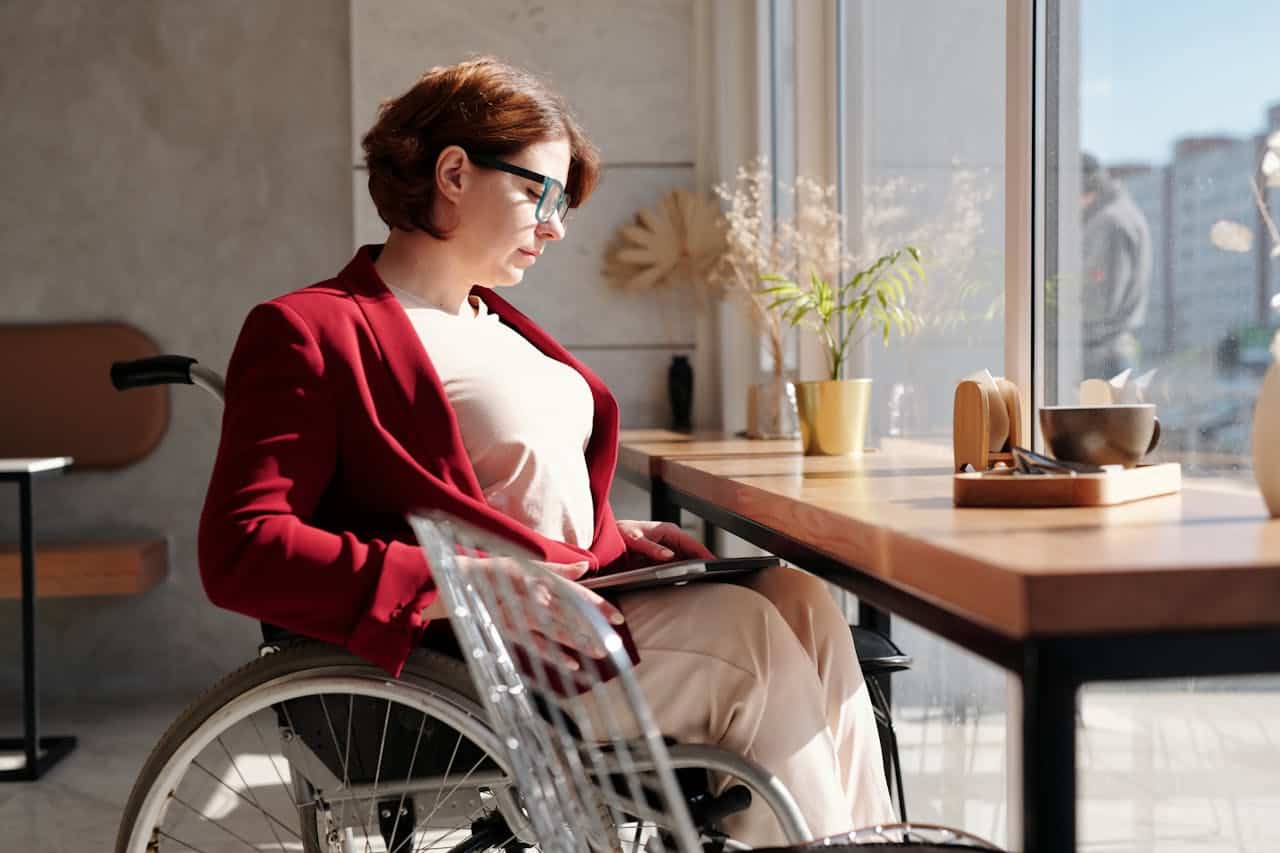
There is a real difference between restorative time alone and unplanned isolation, and the distinction matters more than most people realize. The National Institute on Aging warns that extended unintentional solitude significantly raises the risk of depression, anxiety, and physical health decline in older adults.
Choosing to spend an evening quietly reading or resting is healthy; drifting through evenings simply because no plan was made is a different pattern entirely. Building even one recurring connection into the week, a phone call, a hobby group, a regular walk with a neighbor, can interrupt the drift before it becomes a permanent state. Small, deliberate choices about how to spend unstructured time are among the most underestimated protections against invisibility.
Believing That New Chapters Are for Younger People
Perhaps the most deeply held habit on this list is the quiet conviction that meaningful new friendships, fresh interests, or significant change are for women in their twenties and thirties, not their fifties and sixties. Long-term studies of aging and social well-being, including decades of data reviewed by the National Academies, consistently show that social connection remains one of the strongest predictors of health, cognitive function, and quality of life well into older age.
The research does not suggest that age is irrelevant; it suggests that engagement, not youth, is the real variable. Women who treat every decade as a valid and worthwhile time to pursue new communities and interests tend to feel more visible, more purposeful, and significantly healthier. Letting go of the idea that your best chapters are behind you may be the single most powerful habit shift on this entire list.
READ: Behaviors that can lead to loneliness and isolation in women as they age
The Path Back to Being Seen
Feeling invisible is not an inevitable consequence of getting older, and it is not a verdict on your worth. It is often the accumulated result of small habits that were learned, practiced, and can therefore be unlearned. As the National Institute on Aging makes clear, the health stakes of social isolation are high enough that reversing these patterns is not a luxury but a genuine priority. Starting with one change, speaking up about a frustration, suggesting a plan, or reaching out to a reciprocal friend, can create a ripple effect that shifts how much space you take up in the world. The goal is not to demand attention. It is simply to stop disappearing.