If he does these 12 things, he may be giving off creepy vibes
Creepy behavior can be difficult to spot in the early stages of a relationship, especially when it’s masked by what may seem like harmless quirks or awkwardness. A recent Blaine Anderson survey of over 2,000 adults found that 82% of women encounter creepy behavior “sometimes,” “often,” or “constantly,” with unwanted staring topping the list. Digital stalking came in as a major “creep factor” for 43%.
Almost 70% of men in that study admitted that fear of being labeled “creepy” influences how they interact with women, which shows just how much confusion and anxiety exist on both sides. But while men may worry about saying the wrong thing, women are often worried about their safety, their boundaries, and whether their gut feeling is enough reason to step away.
That’s why learning to recognize specific behaviors, not just vague “bad vibes,” is so powerful.
He ignores your physical boundaries
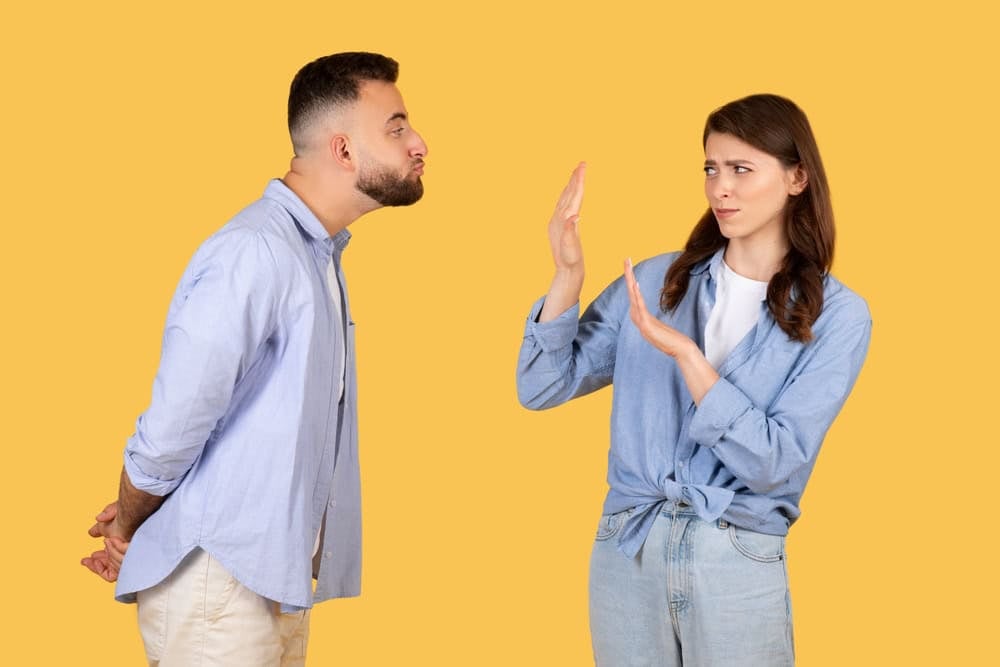
When a man routinely stands too close, “accidentally” brushes against you, or continues to touch you after you’ve pulled away or said no, this is a clear red flag. A study on creepiness found that behaviors such as “standing too close” and “touching frequently” were some of the creepiest, as they signal a potential threat to your safety.
Unwanted physical contact, like persistent hugs or tickling, is a major early warning sign of coercive or abusive dynamics. Psychologists warn that this type of boundary-pushing is often a test. If you tolerate small violations, he may try to push for bigger ones later.
How to respond: Your boundaries should be respected immediately. If you’ve said no or pulled away, and he continues to make physical contact, make it clear that his actions are not acceptable. Stand firm, and don’t be afraid to assert yourself.
His eye contact and body language feel off

Eye contact is essential for connection, but when a man’s gaze feels intense or never breaks, it can become unsettling. Prolonged eye contact combined with “bulging eyes” or “peculiar smiles” can feel menacing.
Eye contact, while normal in flirtation, can be unnerving when overdone. Psychologists McAndrew and Koehnke explain that unpredictable body language and facial expressions often trigger our internal “creepiness detector,” suggesting something is off.
How to respond: If his gaze feels too intense or his body language seems erratic, trust your instincts. A gentle but firm step back or changing the topic of conversation can help shift the dynamics and make you feel more in control of the interaction.
He bombards you with attention way too fast

In the early stages of dating, excitement is natural, but if a man showers you with excessive affection, constant messages, and intense declarations like “You’re my soulmate,” it’s a classic case of “love bombing.” Love bombing often leads to control and dependency.
Psychologists warn that this overwhelming attention is a tactic used by abusive partners to fast-track trust, making you ignore red flags in favor of the excitement.
How to respond: If the attention feels overwhelming, it’s important to slow things down. Politely explain that you appreciate the interest but need space to get to know each other more gradually. Pay attention to how he reacts to ensure your boundaries are respected.
He constantly monitors or invades your privacy

A man who insists on checking your phone, tracking your location, or demands access to your passwords is crossing into controlling and creepy territory. Domestic violence and dating safety organizations point out that digital snooping and location tracking are core signs of coercive control.
AG.gov highlights that this behavior often escalates into isolating you from friends and family, creating a sense of dependency.
How to respond: Privacy is a fundamental right in any relationship. If someone is pressuring you to share personal information or invade your private space, it’s a serious warning sign. Set clear boundaries and keep conversations transparent, especially when you sense any discomfort.
He acts entitled to your time, body, or attention

One of the most unsettling traits of creepy behavior is the sense of entitlement. If a man acts as though he has the right to your time, body, or attention, regardless of your comfort, it’s a major red flag. Creepy behavior often stems from poor social skills and a lack of respect for boundaries, paired with the belief that men have the right to push through women’s personal space.
This behavior can also manifest as pressuring you for s3x or sulking when you say no.
How to respond: Stand firm in your “no.” Assert your boundaries calmly and clearly, making it known that your personal space, time, and body are not negotiable. No one should make you feel guilty for asserting your own comfort.
His emotions swing from over-intense to cold

Creepy behavior often involves unpredictable emotional shifts, either too intense or flat for the situation. Emotional unpredictability can raise alarms because it makes a person’s intentions harder to gauge. Laughing inappropriately, sudden outbursts of anger, or an abrupt shift from sweetness to coldness can trigger physical unease in those around them.
How to respond: If you feel like his emotions are unpredictable or erratic, it’s important to distance yourself. Trust your body’s reaction and try to avoid engaging too deeply until his behavior becomes more consistent and stable.
He won’t take “no” for an answer

Persistent behavior after you’ve said no (whether it’s for a date, a drink, or any other interaction) is a major red flag. Men who don’t respect your refusal may have coercive tendencies. Psychologists note that continued pressure after rejection can involve guilt-tripping, threats, or anger, all of which prioritize his desires over your autonomy.
How to respond: If he continues to pressure you despite clear rejection, it’s essential to firmly reassert your boundaries and walk away if needed. Don’t feel guilty for saying no; your comfort and well-being come first.
He steers conversations toward s3x or personal details

When every conversation with him seems to veer into s3xual topics or invasive questions about your personal life, it can be alarming. When conversations repeatedly shift toward s3x or your body, it becomes less about connection and more about objectifying you. This behavior may make you feel uncomfortable, especially when he ignores your discomfort.
How to respond: Politely redirect the conversation or firmly let him know that certain topics are off-limits. If the behavior continues, consider distancing yourself from him altogether.
He is socially “off” and oblivious to cues

Creepy behavior often comes from people who don’t pick up on social cues or violate unspoken “scripts.” For example, if he makes it hard for you to leave a conversation, laughs at odd times, or refuses to acknowledge your discomfort, this is often a sign of self-absorption or social obliviousness.
Creepiness can stem from a lack of self-awareness, where the person simply doesn’t understand how their behavior is affecting you.
How to respond: If someone repeatedly ignores your body language or attempts to end a conversation, it’s a clear sign to step back. You don’t need to explain yourself in detail; simply removing yourself from the situation can help establish that his behavior isn’t acceptable.
He tries to isolate you and undermine your support system

If he criticizes your friends, pressures you to cancel plans with family, or insists on spending all your time together, he might be attempting to isolate you. Experts note that isolating a partner (whether physically, emotionally, or financially) is a classic tactic used by abusive individuals. This behavior is often the precursor to controlling, coercive dynamics that make it harder to leave.
How to respond: Maintaining your support system is key to staying safe. If he tries to isolate you from friends or family, stand firm in your commitment to your relationships. A healthy partner should encourage, not discourage, your other connections.
You might like: 14 Things Narcissists Hate More Than Anything Else
His jealousy and mood swings feel scary, not flattering

Jealousy can seem romantic at first, but when it turns into accusations or explosive reactions, it’s a sign of something more dangerous. AG.gov lists frequent jealousy and mood swings as major indicators of coercive control. This unpredictable behavior, especially if it leads to blame-shifting or anger when you try to set boundaries, is a classic red flag.
How to respond: If his jealousy feels controlling or threatening, take it seriously. Acknowledge that this isn’t a “cute” or “protective” trait, but rather an unhealthy dynamic that can escalate over time.
Your body feels on edge around him—even if you can’t explain why

One of the most telling signs that something is off is your body’s reaction. Feelings of unease, like chills or a drop in perceived room temperature, are linked to instinctual responses to potential threats. If you feel tense, uncomfortable, or “on edge” around him, your intuition is trying to tell you something.
How to respond: Trust your gut feelings and remove yourself from the situation if you feel unsafe. Even if you can’t pinpoint why, it’s important to take action based on what your body is telling you.
Key takeaways

Creepy behavior often flies under the radar because it’s masked by what might seem like awkwardness or innocence. However, recognizing these patterns early can help you avoid harmful or even dangerous situations.
Remember, your intuition is your best defense. If something doesn’t feel right, don’t hesitate to remove yourself from the situation and set clear boundaries. Your safety and comfort always come first.
Like our content? Be sure to follow us