If You Remember These 12 Things, You’re Definitely a Baby Boomer
Baby boomers grew up in an analog world that feels almost mythical to younger generations. Britannica defines boomers as those born between 1946 and 1964, a cohort shaped by postwar prosperity, network TV, vinyl records, and landline phones. If these everyday experiences are vivid memories for you, there’s a good chance you’re squarely in that group.
From rotary dials to TV static at midnight, here are 12 things only a true baby boomer remembers firsthand.
Dialing a Rotary Phone
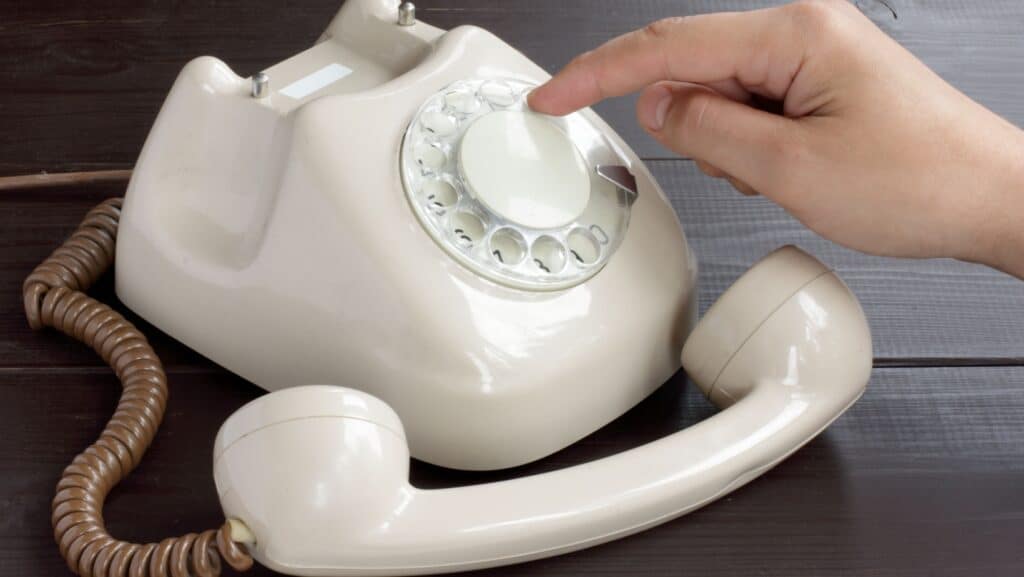
Before smartphones, even before push‑button phones, there was the rotary dial. Calling a friend meant sticking your finger in each numbered hole and spinning the dial, listening to the clicks as it spun back. If the number had a lot of zeros or nines, it took forever, and mis‑dialing on the last digit was agony.
Rotary phones were still standard in many homes until touch‑tone models took over in the 1980s, and nostalgia groups are full of boomers reminiscing about the hallway phone table and shared “family line.” Today, younger people mostly encounter rotary phones as decor or props, not everyday tools.
Watching TV Goes to Static After the National Anthem

Boomers grew up when TV channels didn’t run 24/7. Late at night, stations would play the national anthem, show a patriotic montage or test pattern, and then cut to static until morning.
A CNN report notes that in 1960, the average American home had fewer than four TV channels, making that shared nightly sign‑off a common cultural touchstone. For boomers, falling asleep to TV snow was normal; for Gen Z, 24‑hour streaming makes the concept almost unimaginable.
Flipping Through a Phone Book to Find a Number

If you wanted to call someone in the boomer era, you reached for a hefty printed phone book, white pages for individuals, yellow pages for businesses. These books usually lived under the house phone or on a small hallway table.
By the 2010s, widespread smartphone use and online directories had largely killed off printed phone books, according to House Digest. Boomers remember using their fingers as a search engine; younger generations rarely, if ever, look up a number in the phone book.
Adjusting “Rabbit Ears” to Fix a Fuzzy TV Picture

Before digital streaming and HD, most families relied on antennas, often called “rabbit ears,” to get a decent TV signal. Boomers remember standing next to the set, twisting metal rods, and sometimes even holding them in place to watch a show without static.
Analog TV required constant tweaking; even moving around the room could distort the picture. The “quest for rabbit ears” is a defining living‑room ritual, especially on big event nights.
Dropping a Needle on a Vinyl Record as the Main Way to Hear Music
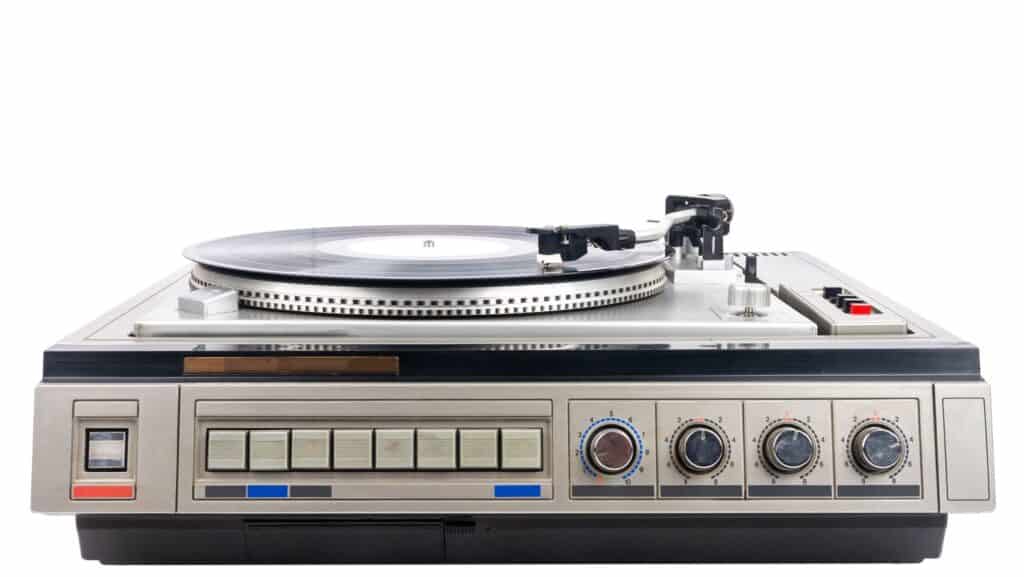
Vinyl isn’t just a hipster trend to boomers; it was the default way to listen to albums. You carefully placed the needle on the record, listened to the pops and crackles, and often played every track in order.
Music historians note that records created shared listening rituals: studying album art, reading liner notes, and flipping sides together. While vinyl has made a comeback, only boomers remember when it wasn’t “retro,” it was just how you heard your favorite bands.
Watching the Moon Landing Live on a Blurry TV
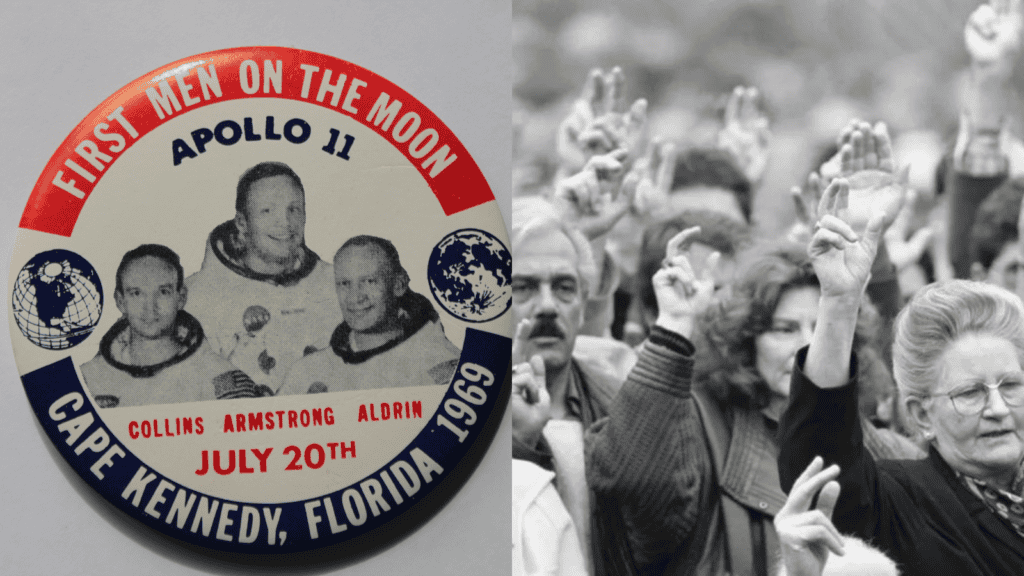
One of the defining events for older boomers, according to Business Insider, was watching the Apollo 11 moon landing in 1969 on a grainy television, often crowded into a family living room or school. An estimated 600 million people worldwide watched Neil Armstrong’s first steps, making it one of the most‑viewed broadcasts of the century.
Boomers who were children or teens then often describe it as a moment when technology and imagination collided, long before smartphones and private rockets made space feel closer.
Road‑Tripping in a Car With No Seat Belts or Car Seats

For much of the boomer childhood, seat belts were optional, and car seats were rare. Kids sprawled across back seats, sat on laps, or napped in the rear window during long winter and summer road trips.
Traffic‑safety history shows that mandatory seat‑belt laws and modern child‑restraint standards didn’t fully come into effect until the 1980s and beyond. Boomers’ memories of riding without any restraints are a stark contrast to today’s hyper‑regulated car‑safety culture.
Using Encyclopedias Instead of Google for Homework

Before search engines, boomers did school research with printed encyclopedias, often a full set purchased from a door‑to‑door salesperson. If the entry didn’t have what you needed, you went to the library and pulled more books by hand.
Education researchers point out that this slower process meant learning to skim indexes, evaluate authors, and physically navigate shelves. For boomers, the smell of library stacks and the weight of a hardcover encyclopedia are core academic memories.
Developing Camera Film and Waiting Days to See Your Photos

Boomer family photos weren’t instant. You took pictures on film, dropped the roll at a drugstore or photo lab, and waited days or a week to see the prints, only then discovering which shots were out of focus or had fingers over the lens.
Nostalgia pieces on boomer life often highlight this delayed gratification as a key difference from today’s instant smartphone photography and filters. That moment of opening the photo envelope in the car or kitchen is something only older generations remember.
Using a Rolodex to Store Contacts

Before digital contact lists, offices and home desks often featured a Rolodex: a rotating file of business cards and index tabs holding phone numbers and addresses. Salespeople and managers would flick through it constantly to find clients or colleagues.
Tech historians note that the Rolodex became a symbol of professional networking in the pre‑digital age. If you remember updating cards by hand with new area codes or job titles, you’re almost certainly from the boomer or early Gen X cohorts.
Being a “Latchkey Kid” Who Came Home to an Empty House

Many boomers grew up in an era of rising two‑income households and less structured after‑school programs. They wore a key around their neck, let themselves into an empty house, and spent hours alone or with siblings until their parents got home.
Sociologists note that this independence shaped a generation that associates childhood with unstructured outdoor play and strong neighborhood ties, kids roaming freely until the streetlights came on. Younger generations raised on scheduled activities and constant contact rarely experienced that level of everyday autonomy.
Seeing Woodstock and Beatlemania Turn Music Into a Movement

Culturally, boomers witnessed events like the 1969 Woodstock festival and the global frenzy around The Beatles, which turned rock music into a social movement. CBC reports that an estimated 400,000–500,000 people attended Woodstock, cementing it as a symbol of youth culture, protest, and experimentation.
Those shared, live musical experiences helped define boomer identity and values, community, rebellion, and a belief that music could change the world. Today’s festival culture and streaming platforms look very different, even if the love of music remains.
If these memories feel less like trivia and more like snapshots from your own life, waiting for the national anthem to end at midnight, juggling phone cords in the hallway, rewinding cassette tapes with a pencil, you’re almost certainly part of the baby boomer generation. The technology and routines may have vanished, but the habits, values, and stories they created still shape how boomers see the world today.
Disclaimer – This list is solely the author’s opinion based on research and publicly available information. It is not intended to be professional advice.
20 Odd American Traditions That Confuse the Rest of the World

20 Odd American Traditions That Confuse the Rest of the World
It’s no surprise that cultures worldwide have their own unique customs and traditions, but some of America’s most beloved habits can seem downright strange to outsiders.
Many American traditions may seem odd or even bizarre to people from other countries. Here are twenty of the strangest American traditions that confuse the rest of the world.
20 of the Worst American Tourist Attractions, Ranked in Order

20 of the Worst American Tourist Attractions, Ranked in Order
If you’ve found yourself here, it’s likely because you’re on a noble quest for the worst of the worst—the crème de la crème of the most underwhelming and downright disappointing tourist traps America offers. Maybe you’re looking to avoid common pitfalls, or perhaps just a connoisseur of the hilariously bad.
Whatever the reason, here is a list that’s sure to entertain, if not educate. Hold onto the hats and explore the ranking, in sequential order, of the 20 worst American tourist attractions.