
Religions That Don’t Have a Single Founder—and How They Began Instead
Christianity has Jesus. Islam has Muhammad. Buddhism has Siddhartha Gautama. Sikhism begins with Guru Nanak and continues through the line of Sikh Gurus.
That familiar pattern can create an assumption: somewhere behind every major religion must be one person who started it.
But try asking who founded Hinduism and the question immediately gets complicated. Ask who founded Shinto and there’s no equivalent of Jesus or Muhammad waiting in the historical record. Ask exactly when Judaism “started” and you’ll find Abraham, Moses, the Exodus, ancient Israelite religion, the Torah, the Babylonian exile, and rabbinic Judaism all competing for space in an answer that can’t honestly be reduced to one date.
Some religions began with a recognizable teacher. Others grew the way languages, cultures, and civilizations grow—layer by layer, generation after generation, until something existed that nobody had simply sat down and invented.
Those may be the most interesting origin stories of all.
1. Hinduism Has No Single Founder—and No Single Starting Date
If someone asks who founded Hinduism, there isn’t a name that fills the role Jesus occupies in Christianity or Muhammad in Islam.
That’s because Hinduism isn’t the product of one revelation delivered at one identifiable historical moment. It’s an enormous family of traditions that developed across the Indian subcontinent over thousands of years.
The Hindu American Foundation’s introduction to Hinduism describes it as lacking an identifiable historical beginning, a single founder, one central religious establishment, or one sole authoritative scripture. Vedic traditions, philosophical speculation, ritual practices, devotional movements, local traditions, epics, temples, gurus, and different schools of thought all became part of the religious landscape we now group under the word Hinduism.
Hinduism wasn’t founded so much as accumulated.
That helps explain why it can contain strikingly different ideas about God, worship, liberation, scripture, and spiritual practice while still being recognizable as part of a broader Hindu religious world.
You may want to read: You’ve Seen These Religious Practices—but Do You Know What They Actually Mean?
2. Even the Name “Hinduism” Came Later
There’s another surprise hiding inside Hinduism’s origin story.
The earliest practitioners didn’t gather one day and decide to establish a new world religion called Hinduism. The word “Hindu” itself has a complicated history connected with the Indus region and outsiders’ descriptions of people living beyond it. Its modern use as a broad religious category developed much later than many of the traditions it describes.
That doesn’t mean Hinduism is somehow a modern invention. Its constituent traditions are extraordinarily ancient. The category is younger than many of the beliefs inside it.
Hindus themselves often use the term Sanatana Dharma, commonly translated as the eternal way or eternal order, although Hindu traditions are far too diverse to reduce to one label or definition.
This is a useful reminder that religions don’t always begin with names. Sometimes people practice traditions for centuries before later generations decide where the boundaries of a “religion” begin and end.
3. Judaism Has Foundational Figures—but Calling One of Them “the Founder” Is Difficult
Abraham seems like the obvious answer.
He’s the patriarch associated with God’s covenant and an enormously important figure not only in Judaism but also in Christianity and Islam. That’s why people sometimes casually call him the founder of Judaism.
But Judaism doesn’t begin with Abraham in the same way Christianity begins with Jesus.
Moses might seem like another candidate. He’s associated with the Exodus, Sinai, the Torah, and the covenantal laws that become foundational to Jewish tradition. Yet the biblical story itself places Abraham, Isaac, Jacob, and their families generations before Moses.
Then history complicates the picture further. Ancient Israelite religion developed over centuries. The kingdoms of Israel and Judah rose and fell. The First Temple was destroyed. Exile transformed Jewish life. The Second Temple period produced several different Jewish movements, and after the Romans destroyed that Temple in 70 CE, rabbinic Judaism increasingly developed forms of religious life that could survive without the Temple sacrificial system.
Judaism has foundational ancestors, prophets, lawgivers, priests, rabbis, and texts—but no single human being neatly fits the modern job description of “founder.”
4. Judaism May Be Easier to Understand as a Story That Kept Transforming
Imagine trying to identify the precise day when English became English.
You could point to major invasions, famous texts, shifts in pronunciation, or changes in vocabulary, but no single person woke up one morning and invented the language.
Judaism’s history has something of that quality.
Biblical Israelite religion provides ancient foundations. The Babylonian exile forced enormous questions about identity, land, worship, and covenant. The Second Temple period brought further developments and disagreements. The destruction of the Temple in 70 CE transformed Jewish religious life again as prayer, Torah study, synagogues, law, and rabbinic interpretation became increasingly central.
The Judaism practiced today didn’t appear fully formed at one moment in the ancient world. It survived because generations repeatedly carried the tradition into circumstances its ancestors had never faced.
That’s very different from saying Judaism abandoned its past. Its ability to reinterpret and preserve that past is precisely what allowed it to endure.
5. Shinto Doesn’t Begin With a Prophet
Japan’s Shinto traditions create an even clearer challenge to the founder model.
There is no Shinto equivalent of Jesus, the Buddha, Muhammad, or Guru Nanak. Shinto developed from religious practices embedded in Japanese communities, landscapes, clans, agriculture, political authority, and relationships with kami.
Kami are sometimes translated as “gods,” but that translation can be misleading if it makes readers imagine a simple Japanese equivalent of the Greek pantheon. Kami can be associated with natural forces, remarkable places, ancestral figures, and other sacred presences.
Shinto didn’t begin when one teacher announced a new doctrine. It grew out of the religious life of communities.
Shrines, purification, offerings, festivals, sacred places, and relationships with kami developed across time without requiring one founding revelation.
That makes Shinto feel very different from religions organized around the teachings of a single historical figure.
6. Shinto Didn’t Even Start With One Sacred Book
Founder-centered religions often have a story that feels structurally simple: a teacher appears, followers preserve the teaching, and sacred texts emerge around that revelation.
Shinto doesn’t fit that pattern very well.
Ancient Japanese works such as the Kojiki and Nihon Shoki preserve important myths involving the kami and the origins of Japan, but they’re not simply Shinto versions of the Bible or Quran. Shinto practice has historically depended heavily on ritual, shrine traditions, festivals, purification, and local relationships with kami rather than adherence to one universally binding book of doctrine.
You can have a powerful religious tradition without having either one founder or one book that explains everything.
That’s important because modern Western ideas about religion are often shaped by Christianity. We instinctively look for a founder, creed, scripture, clergy, and list of official beliefs.
Some religions refuse to cooperate with that template.
You may want to read: 10 Religious Ideas That Changed Dramatically Over the Centuries
7. Ancient Greek Religion Didn’t Begin With Zeus’ First Missionary
Ancient Greek religion had famous gods, spectacular temples, sacrifices, festivals, myths, priests, oracles, and sacred sites.
What it didn’t have was one founder.
Nobody introduced Zeus to Greece as the central teaching of a newly established religion. Greek religious traditions developed among different communities over long periods, incorporating local gods, regional cults, inherited Indo-European elements, contact with neighboring cultures, and constantly evolving myths.
Homer and Hesiod became enormously influential in shaping how later Greeks imagined the gods, but neither man founded Greek religion.
The stories had authors and poets. The religion didn’t have an inventor.
This helps explain why Greek religion could vary so much from city to city. Athena had a particularly powerful relationship with Athens. Apollo’s sanctuary at Delphi had enormous importance. Mystery traditions offered experiences and promises that ordinary civic religion didn’t necessarily provide.
There was no central authority making sure every Greek believed exactly the same thing.
8. Roman Religion Grew by Absorbing Almost Everything Around It
Ancient Roman religion was similarly founderless.
Its practices developed alongside Roman family life, agriculture, politics, warfare, and government. Romans honored household spirits, civic gods, ancestors, and divine forces associated with nearly every imaginable aspect of life.
Then Rome expanded.
As Roman power spread across the Mediterranean, its religious world became increasingly crowded. Greek gods were identified with Roman counterparts. Foreign cults arrived. Isis from Egypt attracted worshippers. Cybele came from Anatolia. Mithras became popular in certain parts of the empire. Emperors themselves became entangled with religious ritual and divine honors.
Roman religion could expand because it wasn’t built around the claim that one founder had delivered the only religious system humanity would ever need.
That flexibility eventually collided with Christianity, whose claims about worship and exclusive allegiance created a very different religious problem for Roman authorities.
9. Many Indigenous Religions Can’t Be Separated From the Peoples Who Practice Them
The question “Who founded your religion?” becomes even less useful when applied to many Indigenous traditions.
Religious identity may be inseparable from a people’s land, ancestors, oral traditions, ceremonies, stories, kinship systems, and relationship with the natural world. There may never have been a moment when someone announced that a new religion had begun.
In fact, calling such traditions “religions” in the modern Western sense can sometimes impose boundaries their practitioners historically wouldn’t have recognized. Spiritual practice might not have been something separate from medicine, law, hunting, family, politics, storytelling, or responsibility toward the land.
A tradition doesn’t need a founder if the community understands it as something inherited from its ancestors or woven into the structure of the world itself.
Colonial governments and missionaries often misunderstood these traditions precisely because they went looking for familiar religious structures: churches, doctrines, sacred books, professional clergy, and clearly defined gods.
What they encountered didn’t always fit those boxes.
You may want to read: Why belief in God becomes harder for some people to hold onto
10. Daoism Shows How Difficult “Who Founded It?” Can Become
Daoism is often associated with Laozi, the mysterious figure traditionally credited with the Tao Te Ching.
That sounds like a straightforward founder story.
It isn’t.
Historians have long debated who Laozi was, whether the traditional biography reflects a single historical person, and how the Tao Te Ching itself developed. More importantly, the philosophical texts associated with Laozi and Zhuangzi don’t by themselves account for everything that later became religious Daoism.
Over centuries, Daoist traditions developed temples, priests, rituals, revelations, meditation systems, deities, immortality practices, sacred texts, monastic institutions, and organized religious movements.
Calling Laozi “the founder of Daoism” can therefore be a little like calling one ancient thinker the founder of an entire civilization’s religious tradition.
He matters enormously.
But the tradition became much bigger than one man.
The Founder Question Can Distort the Way We See Religion
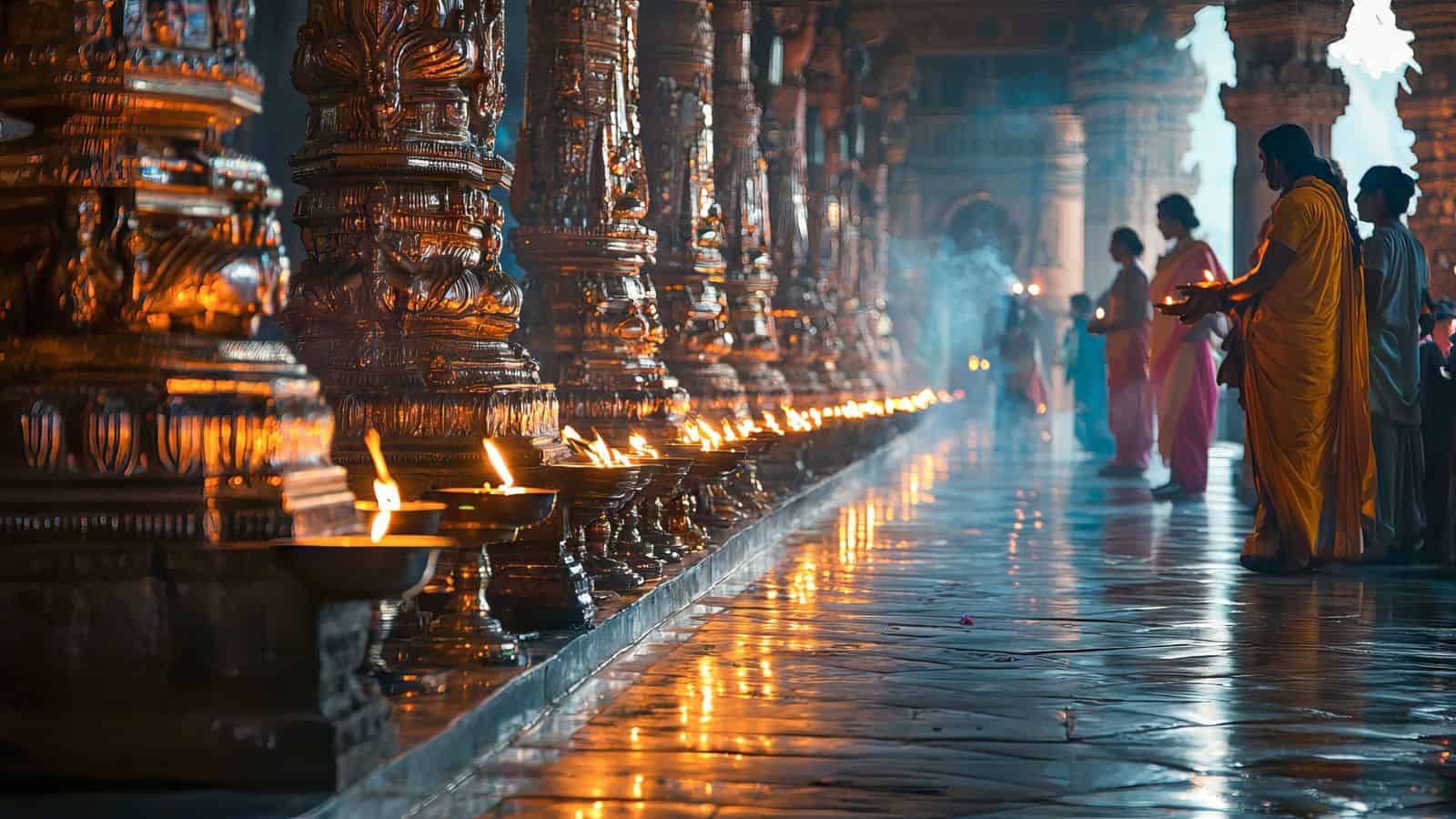
There’s a reason we’re tempted to ask who founded every religion.
Founders make history easy to understand.
Jesus leads to Christianity. Muhammad receives the Quran and establishes the early Muslim community. Siddhartha Gautama becomes the Buddha and teaches a path that develops into Buddhism. Guru Nanak begins the line of Sikh Gurus.
Those are powerful stories with identifiable human beings at their center.
But not every religion began with somebody standing in front of a crowd and announcing something new. Some emerged from civilizations. Some grew out of older traditions. Some developed through rituals nobody can confidently date to a beginning. Some absorbed local beliefs for centuries. Others became recognizable as a single “religion” only after outsiders or later practitioners began grouping diverse traditions together.
Hinduism may be the clearest living example. Judaism developed around foundational figures without having one simple founder. Shinto emerged from Japanese religious life without a prophet announcing its beginning. Ancient Greek and Roman religions evolved along with their societies. Indigenous traditions can be so deeply connected with a people and place that separating “religion” from culture creates an artificial distinction.
Maybe the surprising question isn’t why some religions don’t have founders. It’s why we’ve come to expect every religion to have one.
You may want to read: What Happens After Death? How the World’s Religions Give Surprisingly Different Answers