
Religious Festivals With Origins Far Stranger Than Their Modern Celebrations Suggest
Brightly colored powder fills the air. Families light lamps and candles. Children receive gifts. People gather around tables covered with special foods. Streets fill with music, dancing, costumes, and celebrations that have been repeated for generations.
But some of the world’s most familiar religious festivals began with stories that are far stranger, darker, or more complicated than their modern celebrations suggest.
A cheerful spring festival may preserve ancient stories about a demon and a miraculous rescue. A celebration filled with lights may remember a military victory and the rededication of a temple. A holiday associated with exchanging gifts may have roots in a season of fasting, prayer, or remembrance of the dead.
And sometimes the surprise is that a festival doesn’t have one neat origin at all. Traditions that appear timeless may have developed gradually, combining religious stories, seasonal customs, local practices, and centuries of change.
Here are 10 religious festivals whose histories reveal much more than their familiar celebrations.
1. Holi’s Colorful Celebrations Have a Much Darker Story Behind Them
Holi is famous for its explosion of color. In many communities, people throw colored powders, splash water, gather with friends and family, and celebrate the arrival of spring. Photographs of the festival are among the most instantly recognizable images of Hindu celebration.
But behind the cheerful clouds of color is a story involving a demon king, a dangerous fire, and a child whose devotion could not be destroyed.
One traditional account tells of Prahlada, a devotee of Vishnu whose father, the powerful Hiranyakashipu, demanded worship for himself. Prahlada refused. His aunt Holika, associated with a protective power against fire in versions of the story, attempted to destroy him by sitting with him in flames. Instead, Prahlada survived and Holika perished.
The bonfires associated with Holika Dahan, observed before the main color celebrations in many communities, recall the triumph of devotion and good over destructive arrogance. Other Holi traditions connect the festival with Krishna, Radha, springtime playfulness, and regional customs. What looks like one giant party actually brings together several layers of religious storytelling.
2. Diwali Doesn’t Celebrate the Same Event Everywhere
Diwali is often called the Festival of Lights, and the name fits. Homes glow with lamps, candles, and decorations. Families gather, sweets are exchanged, and celebrations can fill entire neighborhoods with light.
But ask what Diwali commemorates and you won’t get just one answer.
In many Hindu traditions, Diwali is associated with Lakshmi, the goddess of prosperity and good fortune. In parts of northern India, it also recalls Rama’s return to Ayodhya after exile and the defeat of Ravana. Other regions emphasize different stories, including Krishna’s defeat of Narakasura.
Diwali is one festival name containing several different sacred histories.
The differences extend beyond Hinduism. Jains associate Diwali with Mahavira’s liberation, or nirvana. Sikhs commemorate Bandi Chhor Divas around the same period, remembering the release of Guru Hargobind from imprisonment along with other captives, although the observances have distinct religious meanings.
The lamps are familiar. The stories behind them depend on who’s lighting them.
3. Hanukkah Began With a Revolt, Not Simply a Miracle of Oil
Hanukkah is widely recognized through menorahs, candles, dreidels, and foods fried in oil. In some households, gifts have also become part of the celebration.
But the holiday’s historical background involves warfare, religious persecution, and a struggle over the Temple in Jerusalem.
In the second century BCE, the Maccabean revolt challenged Seleucid rule and policies that threatened Jewish religious practice. After the rebels regained control of the Temple, they rededicated it, giving Hanukkah its name, which means dedication.
The famous story of a small supply of consecrated oil lasting eight days appears in later rabbinic tradition and became central to the holiday’s popular meaning. The familiar candle-lighting celebration therefore carries both a history of political and religious struggle and a later tradition about miraculous light.
Hanukkah also isn’t the Jewish equivalent of Christmas, despite their proximity on the modern calendar. Its importance within Jewish religious life and its historical development are quite different.
4. Vesak Celebrates the Buddha’s Life—and Reminds Followers That Nothing Lasts
Vesak is one of Buddhism’s most important festivals, observed in many Buddhist communities around the world. Depending on the tradition, it commemorates the Buddha’s birth, enlightenment, and passing into final nirvana, sometimes bringing these events together in one observance.
Celebrations can include temple visits, offerings, lanterns, prayers, generosity, and acts of kindness. In some countries, streets and temples are decorated with elaborate lights and colorful displays.
Yet the underlying message isn’t simply a birthday celebration.
Vesak can bring together the beginning of the Buddha’s life, the moment of his awakening, and his final passing away. That gives the festival a meaning very different from a holiday focused only on a religious founder’s birth.
The celebration also reflects Buddhist teachings about impermanence. Even the Buddha’s physical life came to an end. What remains central is the path he taught and the possibility of liberation from suffering.
The lights and festivities may be beautiful, but the religious story includes aging, death, awakening, and the limits of ordinary existence.
5. Nowruz Is Older Than Many People Realize—and Isn’t Exclusively Religious
Nowruz, the Persian New Year, is celebrated around the spring equinox across Iran and many communities in Central Asia and beyond. Families clean their homes, prepare special foods, visit relatives, and arrange symbolic objects associated with renewal and good fortune.
It can look like a cheerful seasonal celebration, but its history reaches deep into the ancient Iranian world.
Nowruz has long-standing associations with Persian culture and pre-Islamic Iranian traditions, including Zoroastrian religious history. Over centuries, however, it became a celebration shared by people of different religions and cultural backgrounds.
Nowruz is a remarkable example of a festival that outlived enormous religious and political changes without losing its place in people’s lives.
The UNESCO account of Nowruz highlights its connection with renewal, family gatherings, shared meals, and community traditions across multiple countries. Its customs vary widely, which is part of what makes the celebration so enduring.
A festival associated with the ancient arrival of spring continues to bring together communities whose religious identities may otherwise differ dramatically.
6. Obon Turns a Summer Festival Into a Reunion With the Dead
asik604 via 123 RF
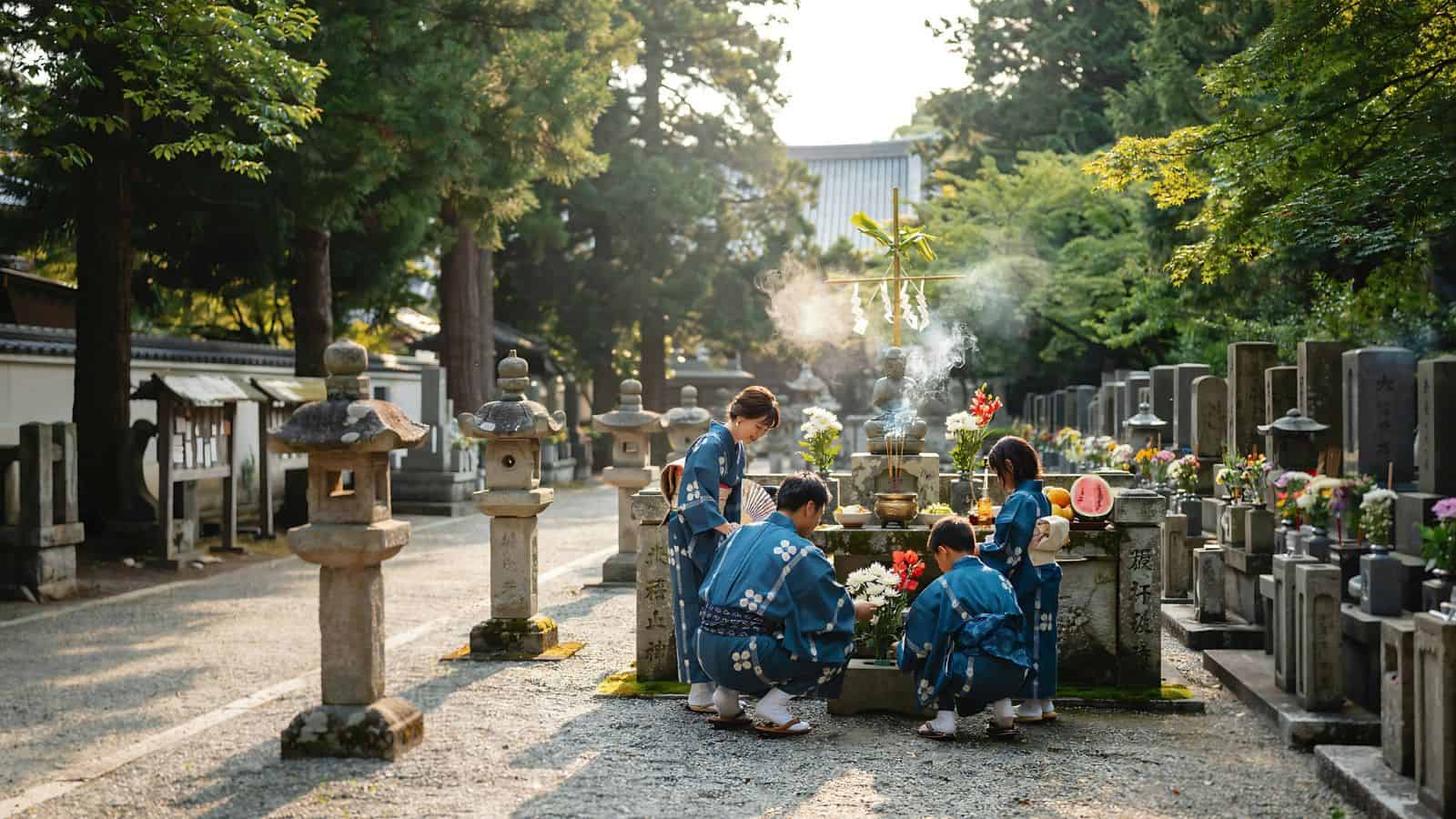
In Japan, Obon can include lanterns, dancing, family gatherings, and visits to ancestral graves. To outsiders, some celebrations may look like lively summer festivals.
But Obon’s deeper meaning concerns the dead.
The festival developed through Buddhist traditions of honoring deceased family members, influenced by older Japanese ancestor-related practices. One important Buddhist story concerns the disciple Maudgalyayana, known as Mokuren in Japanese, who seeks to help his suffering mother in the realm of hungry ghosts.
Obon traditions vary by region and community, but many involve welcoming ancestral spirits, making offerings, cleaning graves, and eventually symbolically sending the spirits on their way.
What looks like a festival of lanterns and dancing can also be a family reunion that includes people who are no longer alive.
The dancing itself, often called Bon Odori, has developed many regional forms. Some are festive and social, while others retain stronger connections to remembrance and religious observance.
Obon is a reminder that celebrations don’t always separate joy from grief. Sometimes remembering the dead is exactly what brings a community together.
7. Easter’s Central Story Is About an Execution Followed by an Empty Tomb
Chocolate eggs, rabbits, pastel colors, and spring decorations dominate the commercial image of Easter in many countries.
But Christianity’s central Easter story is far more dramatic.
According to the New Testament, Jesus was crucified under Roman authority, buried, and raised from the dead. Christians understand the resurrection as a decisive event in God’s victory over sin and death. Easter is therefore not simply a celebration of spring or the return of warmer weather.
The most important Christian festival centers on the claim that a man executed by the Roman state returned from the dead.
Easter also has a complicated relationship with Jewish Passover because the New Testament places Jesus’ final days in the context of the Passover season. Christian observances developed over time, including Holy Week, Good Friday, Easter vigils, and different ways of calculating the festival’s date.
The familiar eggs and rabbits have varied historical connections with seasonal and folk customs, but popular claims that Easter was simply copied wholesale from one ancient pagan festival are not supported by clear historical evidence.
The modern holiday combines religious observance with traditions that developed in different places and periods.
8. Día de los Muertos Is About Keeping a Relationship With the Dead
Bright marigolds, decorated skulls, candles, photographs, favorite foods, and colorful altars make Mexico’s Día de los Muertos instantly recognizable.
It’s sometimes mistaken for a Mexican version of Halloween.
That misses the point.
Día de los Muertos developed through a complex interaction between Indigenous Mexican traditions and Catholic observances associated with All Saints’ Day and All Souls’ Day. Its modern forms vary by region, family, and community.
The central idea isn’t that death should be frightening. It’s that the dead remain part of the family’s story.
Families may prepare ofrendas, or offerings, with photographs and foods associated with deceased relatives. Cemeteries become places of gathering and remembrance. Humor and playful imagery can coexist with grief, affection, and religious devotion.
Rather than treating death as something that must always be hidden or spoken about solemnly, the festival makes room for memory, celebration, and continuing bonds with loved ones.
Its imagery is colorful, but its emotional center is deeply human.
9. Christmas Didn’t Always Look Anything Like Modern Christmas
Christmas seems so familiar that it’s easy to imagine Christians have always celebrated it with decorated trees, gifts, festive meals, and images of a baby in a manger.
They haven’t.
The earliest Christians didn’t leave evidence of celebrating Jesus’ birth in the same way many Christians celebrate Christmas today. The December 25 observance became established in parts of the Christian world centuries after Jesus lived, and historians continue to discuss the reasons for the date’s selection.
The holiday also absorbed customs from many places and periods. Christmas trees became particularly associated with German-speaking Europe. Gift-giving traditions developed through several influences, including stories of Saint Nicholas. Modern images of Santa Claus took shape much later.
Christmas feels ancient because it combines old religious stories with customs that became familiar at very different moments in history.
That doesn’t make the holiday meaningless or inauthentic. It means religious festivals evolve as communities find new ways to express old beliefs.
The celebration a modern family recognizes as Christmas would look astonishing to many Christians from the first few centuries of the religion.
10. The Chinese Spring Festival Is Also a Time to Honor Ancestors and Sacred Traditions
Lunar New Year celebrations are famous for family reunions, red decorations, fireworks, special foods, and the hope of good fortune in the year ahead.
But the Chinese Spring Festival isn’t merely a secular New Year’s party.
Its traditions developed through centuries of Chinese religious and cultural life, including ancestor veneration, household rituals, offerings, and ideas about harmony, fortune, and the renewal of the year. Practices vary across regions and families, and modern celebrations don’t necessarily require participants to identify with one particular religion.
According to UNESCO’s description of the Spring Festival, customs can include offerings to heaven, earth, and ancestors alongside family meals, visits, decorations, and public celebrations.
A holiday that looks like a fresh beginning is also deeply concerned with remembering the generations that came before.
That combination is part of its power. Families welcome a new year while honoring their history, maintaining relationships, and passing traditions to children who may grow up in very different circumstances from their grandparents.
Why Religious Festivals Change Without Losing Their Meaning
Religious festivals often survive precisely because they can carry more than one layer of meaning.
Holi brings together spring celebrations and stories of devotion overcoming evil. Diwali contains different sacred histories across several religious communities. Hanukkah remembers a struggle over Jewish worship and a later tradition about miraculous oil. Obon and Día de los Muertos keep relationships with the dead visible. Easter and Christmas combine central Christian beliefs with customs that developed over many centuries.
The familiar celebration is often only the outermost layer of a much older story.
That’s why looking for the one original meaning of every festival can be misleading. Some traditions developed from several sources. Others changed as religions spread across cultures. A few survived even as the dominant religions around them changed.
What makes them enduring isn’t that every detail has remained identical for thousands of years. It’s that families and communities keep finding reasons to gather, remember, celebrate, and pass something on.
The next time you see a festival filled with lights, flowers, music, food, or colorful decorations, there’s a good chance the most interesting part isn’t what you can see.
It’s the story people are remembering while they celebrate.
You may also want to read: 10 Religious Traditions That Are Much Older Than Most People Realize