The brutal parenting strategy that keeps penguins alive
Behind the cuddly image lies a hard biological truth: penguin parenting is governed less by love than by unforgiving math.
Penguins are often introduced to us as symbols of gentleness. They waddle. They huddle. They appear devoted and cooperative, standing patiently in frozen landscapes while caring for their young. Children’s books portray them as earnest and kind. Documentaries soften their struggles with swelling music and narration that emphasizes loyalty, endurance, and family. Over time, these images harden into expectation. Penguins become shorthand for innocence in a harsh world.
But penguins are not gentle creatures navigating hardship with soft hearts and good intentions. They are pragmatic animals shaped by scarcity, pressure, and environments where hesitation kills. Their behavior looks comforting only when viewed from a distance. Up close, penguin colonies are loud, chaotic, competitive, and often violent. Parenting decisions are driven not by emotion, but by calculation. Adults fight. They steal. They abandon. They make tradeoffs that would horrify us if we insisted on judging them by human moral standards.
None of this makes penguins cruel. It makes them successful.
Understanding penguins honestly means letting go of the version that exists to make us feel better. Survival in extreme conditions does not reward tenderness for its own sake. It rewards strategy. Penguins endure because they are willing to do what survival demands, even when it looks harsh to human eyes.
Penguins Fight Because Resources Are Scarce, Not Because They Are Mean
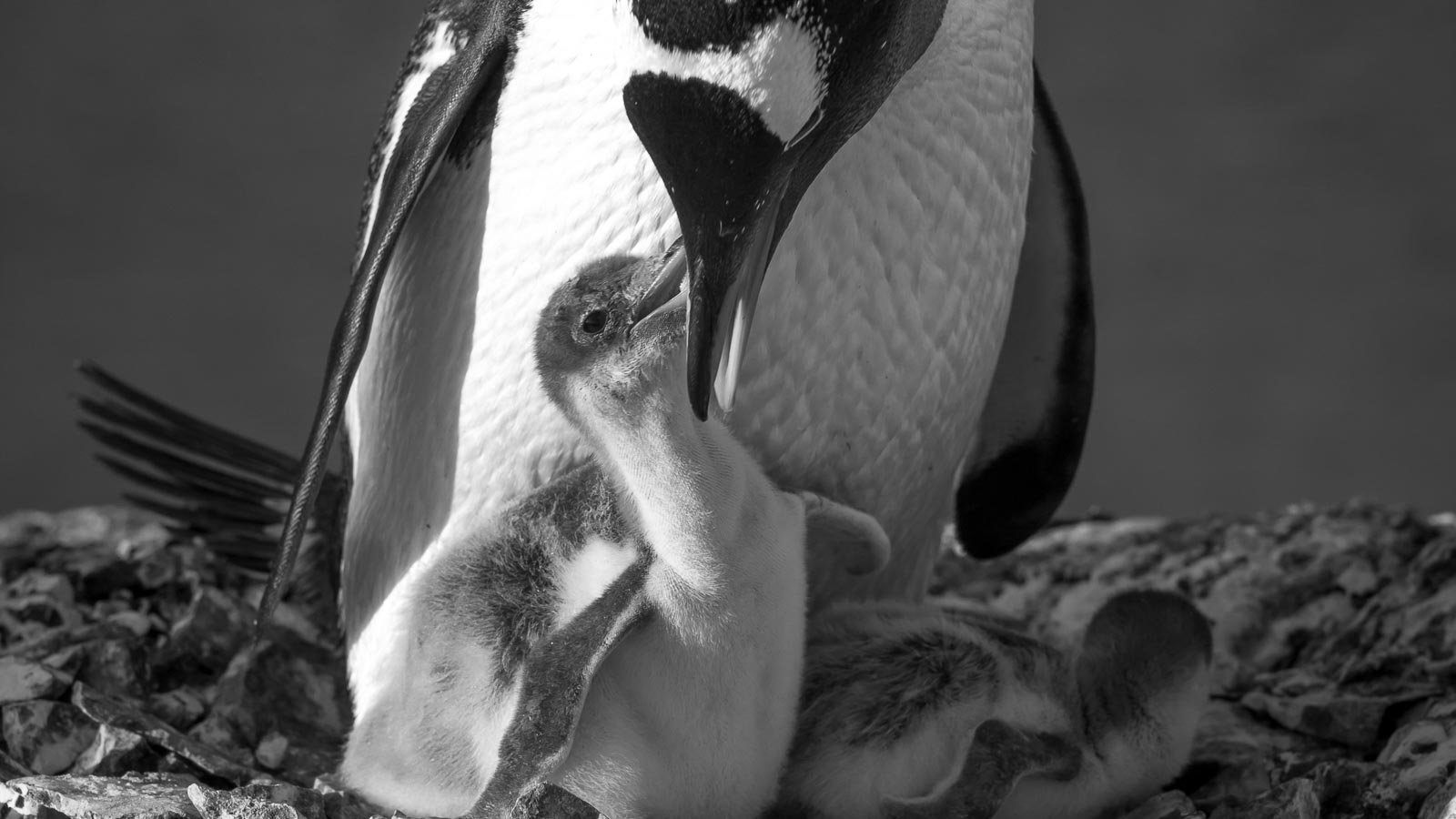
A penguin colony is not a peaceful village. It is a densely packed, highly competitive environment where thousands of individuals are trying to meet the same basic needs at the same time. Nesting space is limited. Building materials are scarce. Access to food depends on timing and physical condition. Every advantage matters.
One of the most misunderstood penguin behaviors is aggression over stones. In species that build nests, stones are not decorative. They are insulation. They elevate eggs above ice melt and flooding. A well-built nest can mean the difference between a viable chick and a lost breeding season. Penguins do not politely gather loose stones and hope for the best. They steal them. Relentlessly.
Stone theft often involves physical confrontation. Penguins peck, shove, and scream at each other. They watch for moments of distraction and seize opportunities. This behavior has been framed as comical or naughty, but it is neither. It is a rational response to limited resources. A penguin that refuses to compete risks losing its offspring before it ever hatches.
Aggression extends beyond nesting materials. Penguins defend territory, challenge intruders, and establish dominance within crowded colonies. These interactions look chaotic to outsiders, but they follow predictable patterns. Boundaries are enforced because boundaries reduce constant conflict. Violence is not random. It is functional.
Humans often struggle with this reality because we equate aggression with moral failure. In nature, aggression is a tool. Penguins use it efficiently, then move on. There is no lingering resentment, no grudge holding. The goal is not cruelty. The goal is survival.
Penguin Parenting Is Built on Cold Math
Penguin parenting decisions are shaped by energy budgets. Every adult has a limited amount of time, strength, and stored fat. Every foraging trip carries risk. Every additional day without food weakens both parent and chick. There is no room for idealism.
When conditions are good, penguins invest heavily in their offspring. They take turns fasting and foraging. They guard eggs and chicks diligently. They endure brutal weather to shield their young. This is the version of penguin parenting we like to celebrate.
But when conditions deteriorate, the calculus changes.
Food shortages, shifting ice, delayed breeding seasons, or unexpected storms can turn a manageable season into a deadly one. In these moments, penguins do not cling to every chick at all costs. They reassess. A weak chick may be abandoned. A second chick may be allowed to perish so the stronger one can survive. These decisions are not made out of indifference. They are made because attempting to save everyone often kills everyone.
From a human perspective, this feels ruthless. From a biological perspective, it is restraint. Penguins that overextend themselves reduce their own survival odds and compromise future breeding opportunities. Evolution favors those who make hard decisions early rather than emotional decisions late.
This is not a failure of care. It is care shaped by reality.
Abandonment Is Not Failure in the Wild
One of the most uncomfortable truths about penguin parenting is that abandonment can be adaptive. Humans tend to frame abandonment as the ultimate moral wrongdoing. We associate it with neglect, selfishness, and harm. In the wild, abandonment is sometimes the least harmful option available.
A penguin that continues investing in a doomed chick risks starvation. Starving parents cannot care for any offspring, present or future. By disengaging from a failing investment, a penguin preserves its ability to breed again under better conditions.
This behavior is not unique to penguins. It appears across species that face unpredictable environments. What makes penguins unsettling is that their abandonment is visible. Colonies are open. Loss happens in public. There is no hiding.
Documentaries often soften this reality, focusing on successful chicks and devoted parents. The abandoned ones are rarely lingered on. When they are shown, narration tends to frame their deaths as tragic anomalies rather than integral parts of survival strategy.
But penguins are not failing when they walk away. They are responding accurately to the limits of their environment.
Group Living Does Not Mean Harmony
Penguins are social animals, but social does not mean cooperative in the way humans imagine. Colonies exist because group living offers advantages. Predator detection improves. Finding mates becomes easier. Certain tasks are shared indirectly through synchronized behavior.
What colonies do not offer is emotional safety.
Penguin colonies are noisy, stressful places. Individuals are constantly jostling for space. Chicks wander and get lost. Adults misidentify offspring. Mistakes happen. Violence erupts quickly and subsides just as fast.
This environment rewards clarity, not kindness. Penguins must assert themselves clearly to avoid constant harassment. A penguin that appears weak invites aggression. A penguin that fails to defend space loses access to critical resources.
Humans romanticize community as inherently nurturing. Penguin colonies remind us that community is often functional before it is comforting. Cooperation exists, but it is enforced by rules and boundaries rather than goodwill.
Why Humans Need Penguins to Be Gentle
The softening of penguins is not accidental. Humans are drawn to animals that allow us to believe survival can be kind. Penguins stand upright. They appear orderly. They seem to cooperate rather than dominate. They fit neatly into stories about family, loyalty, and perseverance.
We want penguins to be gentle because gentleness reassures us. It suggests that strength does not require hardness. That endurance does not demand sacrifice. That love alone can carry us through harsh conditions.
The reality threatens that comfort. Penguins survive because they are willing to make decisions that feel morally uncomfortable. They prioritize viability over sentiment. They enforce boundaries. They accept loss as part of life.
By insisting on a gentle narrative, we strip penguins of their true strength. We turn them into mascots rather than survivors.
What Ruthless Survival Teaches Us About Respect
Respecting penguins does not mean projecting our values onto them. It means understanding the conditions they navigate and the strategies they use to endure them. Their success lies not in purity or kindness, but in accuracy. They read their environment honestly and respond accordingly.
There is something quietly profound about that.
Penguins do not waste energy pretending conditions are better than they are. They do not cling to ideals that endanger survival. They adapt, adjust, and endure.
They do not need our sentimentality. They deserve our understanding.
Why The World Loves Wombats

With fewer than 350 northern hairy-nosed wombats left in the wild, International Wombat Day is as much about survival as it is about celebration.
When people think of Australia’s wildlife, kangaroos and koalas usually come to mind first. Yet another remarkable creature deserves equal celebration. The wombat, with its sturdy body, curious nature, and surprisingly fascinating biology, has earned its own holiday. International Wombat Day on October 22 is a chance to shine a spotlight on this burrowing marsupial and to recognize why it has captured hearts far beyond its native range. Learn more.