This Armored Mammal Is Vanishing Because of Its ‘Superpower
With up to 200,000 taken from the wild each year, the pangolin’s evolutionary superpowers have made it both a marvel of nature and the centerpiece of a global trafficking crisis.
Pangolins look like something dreamed up for a sci‑fi movie: small, shy mammals wrapped in flexible armor made of overlapping keratin scales, the same material in your fingernails and hair. They live in parts of Africa and Asia, shuffling through forests and savannas at night to hunt almost nothing but ants and termites.
When threatened, they curl into a tight ball, turning that armor into a living shield that can be nearly impossible for a predator to bite through. That same remarkable armor, however, is one big reason pangolins have become the world’s most trafficked mammal, targeted for their scales and meat on an industrial scale.
What makes pangolins so unusual
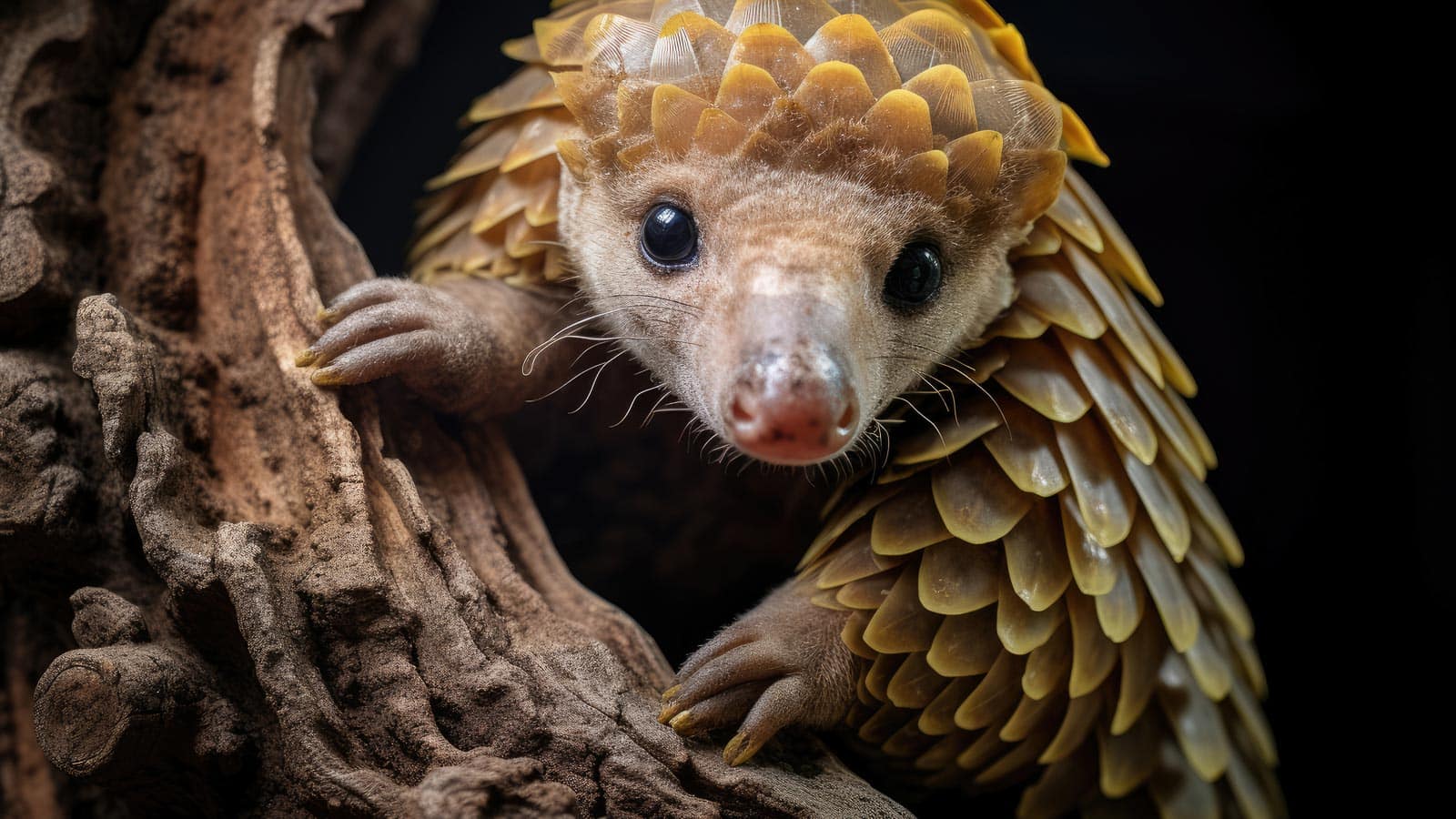
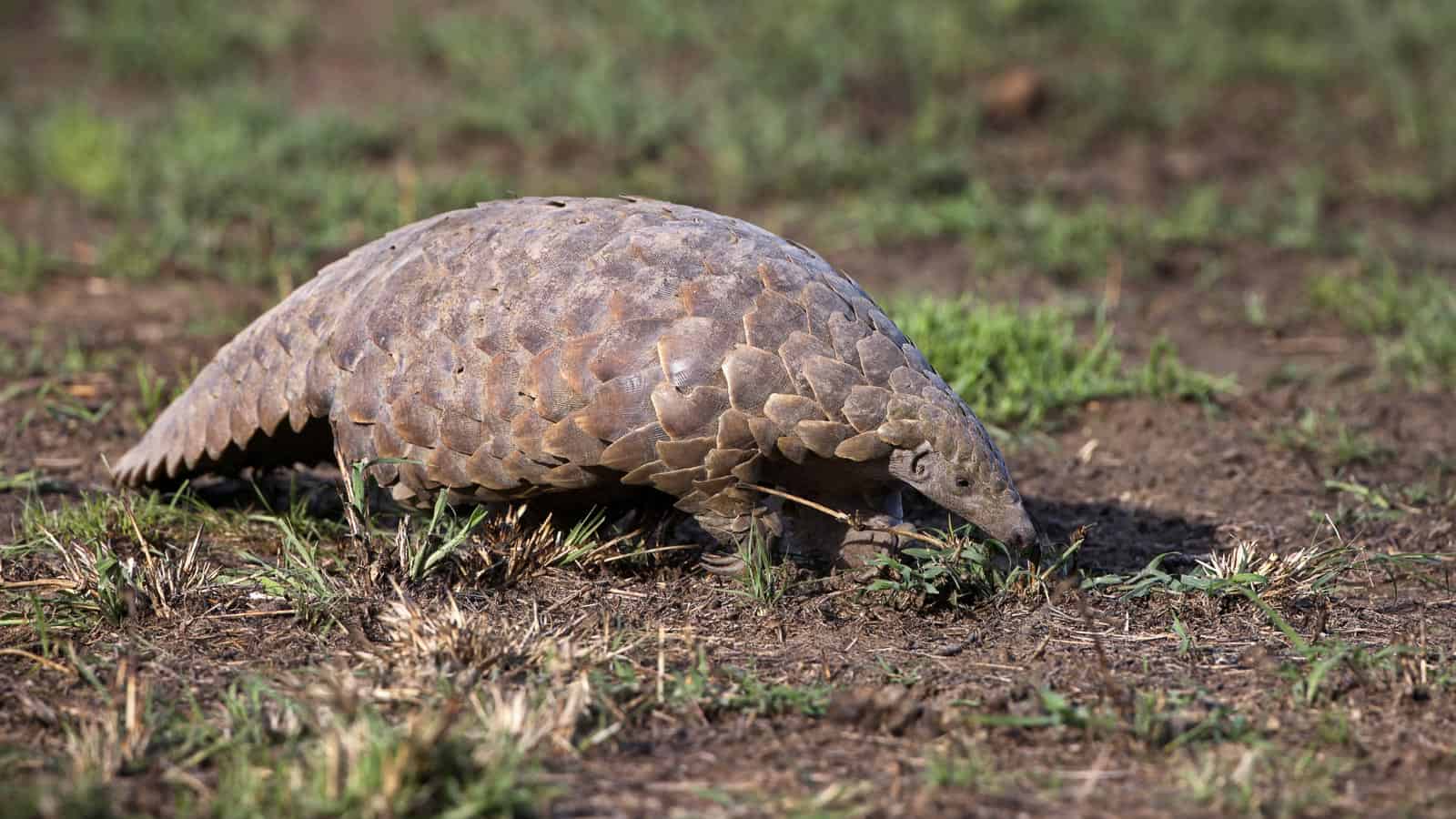
Pangolins are the only mammals on Earth covered in true scales instead of fur, giving them a pinecone or artichoke‑like silhouette as they walk. Those scales are not decorative: they’re tough, overlapping plates that can make up around 20 percent of the animal’s body weight, forming a flexible coat of armor from nose to tail. When danger appears, a pangolin tucks its soft belly in, wraps its long tail around its body, and becomes a tight, clanking ball that can shrug off bites from lions or leopards.
They are also almost completely toothless and largely silent, relying on smell and touch more than sight or sound as they move through their territories. Instead of chewing, pangolins swallow their food whole, then rely on a muscular, grinding stomach—helped along by swallowed pebbles—to break down the tough exoskeletons of their insect prey. This combination of armor, stealth, and specialized digestion has allowed eight known species of pangolins to carve out niches across two continents, from forest floors to savanna burrows.
The “tape‑measure” tongue superpower
One of the pangolin’s strangest superpowers is hidden inside its chest: an absurdly long, sticky tongue anchored near the sternum rather than the throat. In some species, the tongue can stretch longer than the animal’s entire body, snaking deep into ant nests and termite mounds that claws and jaws could never fully reach. Large salivary glands coat this tongue in gluey mucus, turning it into a living flypaper that can pull out thousands of insects during a single night of foraging.
Because pangolins lack teeth, the entire feeding system is tuned for speed and efficiency: dig, flick the tongue in and out dozens of times per minute, swallow, and move on. Over millions of years, natural selection has favored pangolins with longer tongues, stickier saliva, and stronger claws, transforming them into highly specialized pest‑control machines for the ecosystems they live in. By vacuuming up ants and termites, pangolins help keep insect populations in check and quietly support the health of forests, farms, and even nearby human communities.
Shy night workers that shape their ecosystems
Pangolins are mostly nocturnal and solitary, spending their days tucked into burrows, hollow trees, or dense vegetation. At night, they shuffle out and follow scent trails to insect hotspots, using their strong foreclaws to tear into soil, rotting logs, and hardened termite mounds. The pits and burrows they create don’t just close up when they leave; they become ready‑made shelters and micro‑habitats for other animals, from reptiles and small mammals to invertebrates that take advantage of the disturbed ground.
Because pangolins are so secretive, even in places where they still survive, local people may go years without seeing one in the wild. That elusiveness has made them hard to study, leaving basic questions about exact population sizes unanswered even as trafficking pressures grow. What researchers do know is that these quiet insect hunters are more than curiosities: they are ecosystem engineers whose disappearance would leave a subtle but important hole in the web of life.
From living armor to trafficking target
The same scales that protect pangolins from natural predators offer little protection against people armed with snares, guns, and global shipping routes. International watchdogs and conservation groups estimate that around 200,000 pangolins are taken from the wild each year and that about one million were trafficked over the past decade to feed demand for their meat and scales. Their scales are used in certain traditional medicines and high‑end fashion items, while their meat can be sold as a luxury dish in some markets.
All eight species of pangolins are now considered threatened with extinction, with several facing steep population declines of 30 to 40 percent or more over just a few generations. In response, pangolins were given the highest level of protection under the Convention on International Trade in Endangered Species in 2017, and the United States has moved to list multiple species under the Endangered Species Act to tighten import and trade restrictions.
Despite these protections, enforcement remains a major challenge, and seizures of pangolin scales in Africa and Asia still involve shipments representing thousands of animals at a time.
How people are fighting for pangolins
Conservationists and governments are trying to tackle the crisis from several angles: cracking down on trafficking networks, improving law enforcement, rescuing and rehabilitating seized animals, and working with communities to reduce poaching.
New global assessments warn that pangolins are “on the brink,” but they also highlight success stories where better patrols, public outreach, and targeted rescue efforts have saved individual animals and disrupted smuggling routes. Sanctuary and rehabilitation centers in parts of Africa and Asia now specialize in caring for confiscated pangolins, which are notoriously difficult to keep in captivity because of their specialized diets and stress sensitivity.
World Pangolin Day, held every year on the third Saturday in February, has become a rallying point for this work. On that day, schools, zoos, NGOs, and online communities share pangolin stories, art, and educational resources to build public awareness and support. Organizations encourage people to avoid buying products that contain pangolin parts, support reputable wildlife charities, and amplify accurate information about these animals so myths and demand don’t continue to drive poaching.
Why pangolins matter
Pangolins may not be as famous as elephants or tigers, but their story captures a global tension between fascination and exploitation. They show how an animal’s greatest evolutionary strengths, such as armor‑like scales, a hyper‑specialized tongue, and elusive habits, can become vulnerabilities in a world of high demand and organized trafficking.
Saving pangolins means more than protecting one odd, endearing mammal; it means defending the health of the forests and grasslands that depend on them, and challenging the global wildlife trade networks that threaten many other species as well.
Disclosure: This article was developed with the assistance of AI and was subsequently reviewed, revised, and approved by our editorial team.
Like our content? Be sure to follow us on MSN and Newsbreak
Tigers In Trouble: 11 Urgent Facts You Should Know About These Endangered Big Cats
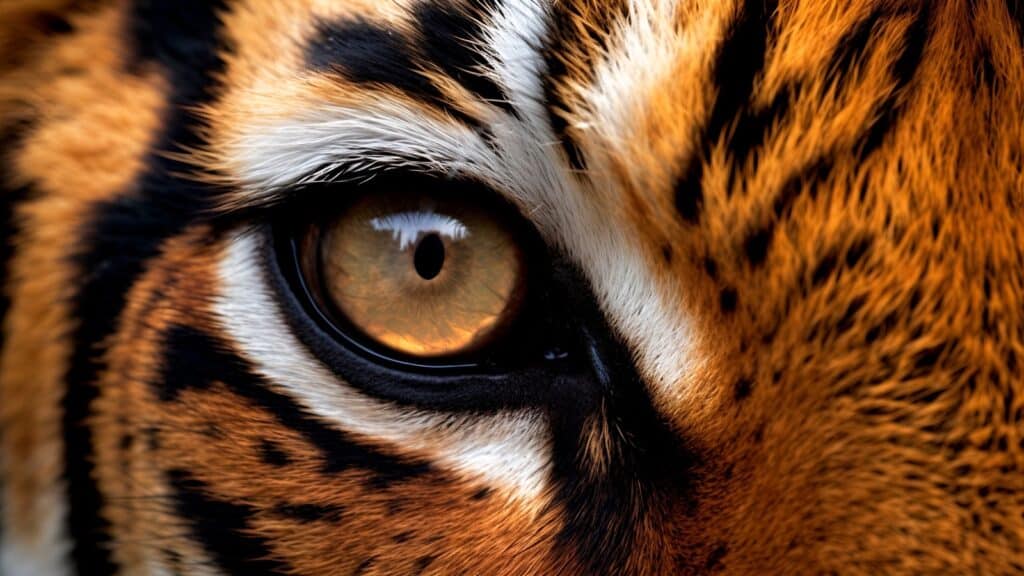
Tigers are among the most majestic and powerful animals on Earth, but their survival is hanging by a thread. Once roaming freely across much of Asia, their numbers have plummeted due to habitat loss, poaching, and human conflict. Here’s what you need to know about how many kinds of tigers are left, where they live, and what is being done to save them. Learn more.