What dogs mean when they place their paws on you
When your dog gently drops a paw on you during a quiet moment, they’re usually trying to tell you something in the sweetest way they know how.
Dog owners frequently experience the familiar, heartwarming sensation of a warm paw resting heavily on an arm or leg while enjoying a quiet evening sitting on the living room couch. This direct physical contact serves as a primary communication tool for canines trying to relay important messages, emotional states, or immediate desires to human companions without using verbal language.
People often wonder exactly what profound thoughts or simple requests run through a furry friend’s mind during these peaceful, silent moments of physical connection. Understanding these incredibly subtle canine gestures helps successfully bridge the interspecies communication gap and ultimately deepens the lifelong emotional bond between humans and their dedicated canine counterparts.
Seeking Affection and Physical Connection
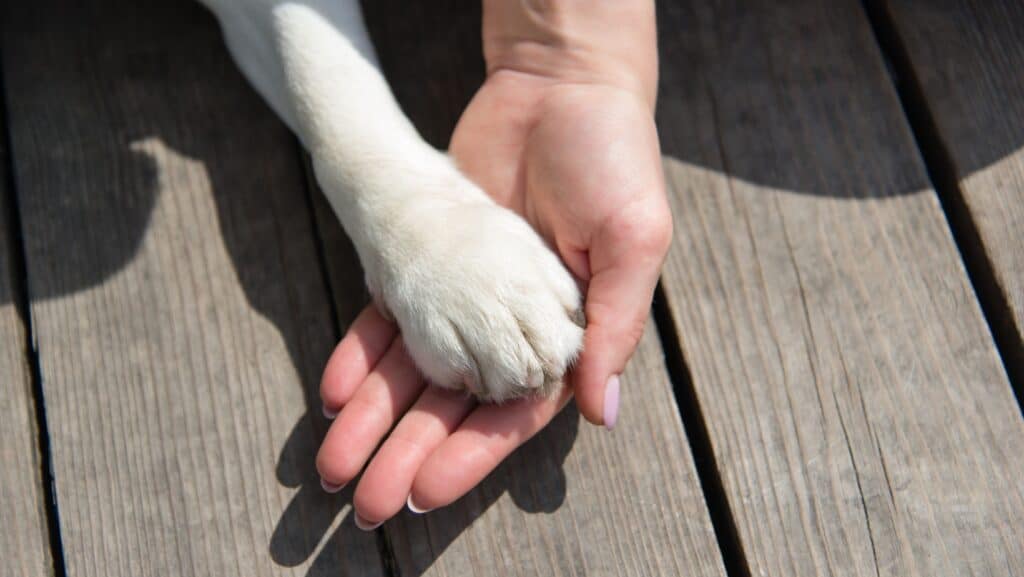
Canines naturally crave deep physical touch as an essential biological way to build lasting trust and visibly show pure love to their favorite human family members. A gentle, lingering paw resting on an owner’s hand often mirrors a genuine human hug and serves as a very direct, undeniable request for physical petting, scratching, or rubbing.
According to the American Pet Products Association 2025 survey, an impressive 68 million American households own a dog and regularly experience these incredibly tender, stress-relieving moments in their own living rooms.
This specific comforting behavior naturally releases positive, mood-boosting hormones in both the loyal pet and the loving human owner to quickly create a mutual feeling of deep, lasting relaxation.
An observant owner might clearly notice the dog gazing softly and adoringly into human eyes while firmly pressing a paw against bare skin to actively strengthen this powerful emotional attachment. Responding enthusiastically with a gentle ear rub completely validates the animal’s vulnerable feelings and positively reinforces the wonderfully loving relationship shared with a furry best friend.
Communicating Anxiety or Deep Insecurity
A clearly trembling, hesitant paw placed heavily on a human lap during a massive thunderstorm or a loud neighborhood fireworks display universally signals a clear, desperate plea for immediate comfort and physical protection.
Frightened dogs instinctively look directly to their trusted, calm owners for vital reassurance whenever they suddenly feel completely overwhelmed by surprisingly loud noises or incredibly unfamiliar environmental changes.
Smithsonian Magazine says a comprehensive 2020 study widely published in Scientific Reports definitively found that 72.5 percent of typical domestic dogs exhibit noticeable anxiety-related behaviors that require extremely careful human management.
Caregivers will most likely observe severely flattened ears, wide eyes, and a tightly tucked tail actively accompanying this specific, fear-driven type of desperate physical touch. Speaking softly in a highly reassuring, calm voice and offering incredibly slow, methodical strokes straight down a shaking canine’s back can significantly reduce the animal’s immediate stress levels during these intensely frightening, unpredictable moments.
A consistently steady, unwavering human presence acts as a powerful emotional anchor that safely helps the pet successfully process their overwhelming fear without totally panicking.
Demanding Immediate Attention or Playtime
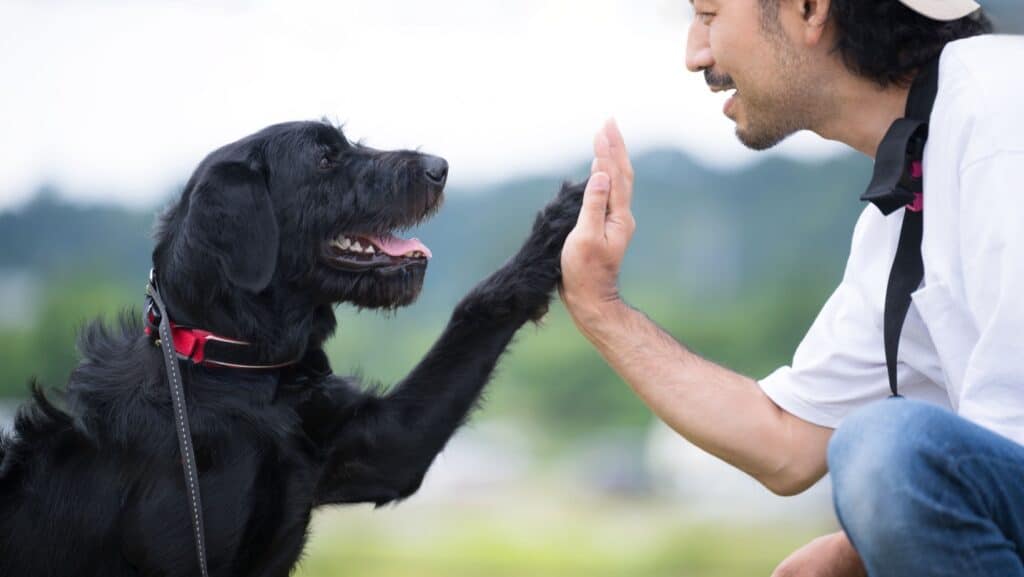
Dogs frequently use their strong paws as a remarkably persistent physical mechanism to actively interrupt a current daily activity and purposefully redirect a human’s completely divided focus back to them.
If an energetic pet repeatedly smacks an owner’s forearm while the person stares mindlessly at a phone screen, the dog is strongly suggesting that someone immediately initiate a highly fun, engaging game.
A revealing Forbes Advisor pet survey recently showed that 51 percent of modern dog owners consider their pet a true family member who rightfully demands regular, dedicated engagement.
These highly demanding, attention-seeking physical smacks usually come perfectly paired with a rapidly wagging tail and an incredibly excited physical posture clearly ready to enthusiastically fetch a favorite squeaky toy.
Ignoring this highly specific type of persistent pawing often leads to a rapid escalation in annoying behavior like gentle, frustrated vocalizations or a wet, cold nose forcibly nudging right under a typing hand. Providing just a few dedicated minutes of active, focused playtime usually completely satisfies their immediate biological need for interaction and successfully prevents any further physical pestering.
Expressing Hunger or Requesting Resources
Many intelligent pets quickly learn very early in life that simply touching a human leg often directly results in a highly delicious food reward or a wonderfully fresh bowl of cold water. A hungry dog persistently pawing at a person’s leg while the individual silently eats a delicious dinner is simply, directly begging for an incredibly small taste of whatever smells so amazingly appetizing.
A report by the American Psychiatric Association specifically notes that 86 percent of dedicated owners feel their dogs massively improve their overall mental health, which makes it incredibly difficult for people to totally resist these adorable food requests.
They might also dramatically place a heavy paw on an empty, clean food bowl and then immediately touch a passing foot to clearly indicate that their expected mealtime is officially, unacceptably overdue.
Total consistency in a human caregiver’s daily response will definitely determine whether this highly food-motivated pawing ultimately becomes a cute, manageable quirk or a highly frustrating, obnoxious daily habit.
Firmly redirecting the pet to their correctly designated feeding area safely helps establish completely clear household boundaries while still politely acknowledging the animal’s highly intelligent physical communication.
Offering an Apology or Showing Submission
Social canines naturally practice highly effective appeasement behaviors to entirely avoid unnecessary conflict and actively maintain peaceful harmony within their immediate, highly valued human social groups.
If a caregiver just sternly scolded a guilty pet for destructively chewing a nice leather shoe, an incredibly slow, gentle paw placed carefully on a human knee serves as the dog’s distinct version of a deeply sincere apology.
A fascinating report by Washington State University researchers prominently highlighted how interacting closely with dogs significantly lowers human stress levels, which logically helps owners successfully forgive these minor, annoying transgressions extremely quickly.
This highly submissive, gentle physical gesture almost always involves a significantly lowered head and completely averted, soft eyes to clearly communicate that they totally respect human authority in the shared household.
Openly acknowledging this sweet peace offering with a highly soft sigh and a gentle, forgiving pat happily confirms that the owner fully accepts the sincere apology and quickly restores the delicate relationship balance.
Stubbornly holding onto unnecessary anger completely confuses the sensitive animal because the dog has already clearly offered the absolute highest form of respectful canine submission physically available to them.
Signaling Physical Pain or Discomfort

Sometimes, a normally quiet dog will paw at someone absolutely relentlessly because they are silently experiencing an unseen underlying medical issue that desperately requires immediate, focused human assistance.
A hurting pet holding up a visibly sore paw or gently resting the limb on an owner’s resting leg while quietly whimpering might definitely have a sharp, painful thorn stuck deep in a sensitive pad. Approximately 25 percent of all dogs suffer from underlying joint pain conditions that strongly trigger these physical appeals for human help.
Caregivers must carefully inspect the specifically offered, sensitive limb for any obvious, concerning signs of unusual swelling, minor cuts, or dangerous foreign objects tightly hidden between the furry toes.
If the careful physical examination reveals absolutely nothing obviously wrong, but the strange, persistent behavior continues unabated, a much deeper, unseen internal issue might clearly be causing the animal highly significant, constant distress.
Promptly scheduling a thorough diagnostic appointment with a trusted local veterinarian remains absolutely the safest, most responsible way to properly address any completely unexplained pain signals a beloved dog communicates strictly through physical touch.
Like our content? Be sure to follow us.