Why the bonnet debate among black men and boys has sparked a bigger cultural conversation: 12 talking points
The term bonnet derives from Old French bonet, originally referring to a type of cloth rather than the shape of the headgear itself. Historically, these brimless caps were functional staples across various cultures, from the Scottish Blue Bonnet worn by working-class men to the silk-lined versions used in the 18th century to preserve elaborate hairstyles.
In the context of the Black diaspora, the bonnet transitioned from a domestic necessity to a cultural flashpoint.
The core of this friction is anchored in a 2023 study by Dove, which reveals that Black women’s hair is 2.5 times more likely to be perceived as unprofessional, creating a defensive suit of armor mentality that has now trickled down to the younger male demographic.
The Death of the Private-Public Boundary

The modern obsession with indoor attire appearing in public spaces isn’t just a trend; it’s a structural shift in how Gen Z views the sanctity of personal time. Historically, the bonnet lived behind closed doors, a tool of the nighttime routine.
This visibility challenges the Victorian-era distinction between the private and public self. While critics argue that wearing a bonnet to the grocery store signals a lack of discipline, proponents suggest that the “always-on” nature of social media has eroded the need for a curated public facade.
If a person is constantly viewed through a digital lens, their physical location matters less than the authenticity of their state. This is a refusal to perform for a society that often demands a high aesthetic tax from marginalized bodies just to be considered presentable.
Why the Durag passes the test and not the Bonnet

Gender coding is the invisible hand guiding this controversy. The durag, despite being a compression tool for waves, was successfully rebranded as hyper-masculine by 1990s hip-hop icons like LL Cool J and 50 Cent. The bonnet, conversely, remains tethered to the maternal and the domestic.
While formal census data on headgear is still catching up to the culture, the current social friction reflects a massive shift: the durag has achieved a legacy status that the bonnet is only beginning to fight for. This arbitrary distinction ignores the mechanical reality: a bonnet is often superior at protecting locs, twists, or loose curls, whereas a tight durag would flatten or frizz them.
By wearing the bonnet, young men are effectively de-gendering hair health. They are prioritizing the integrity of their $200 hair appointment over the fragile social expectation that a man must only wear “hard” accessories. It’s a quiet rebellion against the idea that caring for oneself is inherently feminine.
The Respectability Tax: Who Still Pays It?

For the Boomer and Gen X generations, looking the part was a survival strategy. This extra effort was required to minimize the threat perceived by the white gaze.
Professor Randall Kennedy of Harvard Law School has written extensively on respectability politics as a tool for social advancement, but younger generations are finding the ROI (Return on Investment) of this strategy diminishing.
In a labor market where remote work has normalized sweatpants and tech-bro hoodies, the demand that Black boys maintain a formal grooming standard feels like a double standard. Data from the 2023 Economic Policy Institute shows that the wage gap persists regardless of professional presentation, leading many to conclude that the shield of respectability is actually a sieve.
Why pay the tax when the benefits of the civilization it buys are increasingly inaccessible?
Selective Outrage and the 2005 NBA Legacy

Memory is short in the world of fashion, but the 2005 NBA dress code serves as a vital case study for the current bonnet debate. Former Commissioner David Stern famously banned durags, chains, and oversized jerseys, a move widely interpreted as an attempt to sanitize the league’s image for white viewers.
Today, the same people who protested that ban often find themselves policing the bonnet. This creates a fascinating contrarian loop: the rebel of 2005 has become the “warden” of 2026. The 2005 ban didn’t stop the durag; it merely made it a symbol of defiance.
By framing the bonnet as a distraction or inappropriate, older generations are inadvertently using the same playbook that once marginalized them two decades ago. This cycle suggests that the objection isn’t to the garment itself, but to the loss of control over the group’s public narrative.
Functional Strength vs. Fashionable Labels

Citing the principles of functional health over traditional mass indexes, the bonnet is a tool for hair composition. Just as an athlete uses a lifting belt to protect their spine, a person with textured hair uses a bonnet to protect the cuticle from friction.
Cotton is a hydrophilic fiber, meaning it is water-loving. In textile science, cotton’s moisture regain (the amount of water it absorbs from the air or surfaces) is approximately 8.5%, whereas silk and high-grade satin have a much lower friction and absorption coefficient.
People who call it ugly are valuing form over function. This mirrors the debate in fitness where functional strength is often disparaged by those who prefer the aesthetics of bodybuilding.
The Ghetto Double Standard and Aesthetic Mining

The sting of the bonnet debate is sharpened by the ‘trend-ification’ of Black functional items. Sociologist Tressie McMillan Cottom has argued that status can be bought, but prestige is often reserved for those who don’t have to fight for it. When a Black man wears a bonnet, it is often labeled as lazy or ratchet.
However, when luxury brands like Gucci or Marc Jacobs feature head wraps or silk hair cocoons retailing for $400, the fashion world calls it avant-garde. ‘Exposing Racism in Fashion: How Black Women Navigate Societal Beauty Standards’ (DePauw University) research study confirms that when Black models wear protective styles, they are often framed through tokenism or exoticism, essentially highlighting their race as a brand rather than a chic aesthetic choice.
This disparity creates a protective gatekeeping instinct within the community. If you are going to be ridiculed for a practice, you naturally resent seeing that same practice become a costume for someone else.
The Social Media Algorithmic Friction

The bonnet debate became viral because the algorithm prioritizes conflict-heavy content. Researchers at Yale, led by Molly Crockett, found that for every additional word of moral outrage in a tweet/post, the probability of it being retweeted or shared increases.
This creates a skewed reality where it seems like everyone is arguing about bonnets, when in fact it is a niche conversation amplified by a machine that profits from the older-generation vs. younger-generation divide. This digital echo chamber makes the stakes feel higher than they are.
Many young men are doing it because they saw a “How to maintain your locs” video that suggested it. The debate is a product of the medium, not necessarily a reflection of a deep-seated cultural war.
The Financial Cost of Good Hair

Hair care is an economic sector, not just a grooming habit. The average Black man with locs or twists spends roughly $1,200 to $2,500 annually on maintenance, including professional retwists and specialized oils.
In an economy where the cost of living is rising and the middle class is shrinking, protecting one’s assets becomes paramount. If a $10 bonnet prevents a $200 frizzy-hair disaster, then wearing it in public is a rational economic choice.
Those who demand the bonnet be removed for optics are essentially asking the wearer to risk their financial and temporal investment for the comfort of the observer’s eyes. It is a debate between economic pragmatism and social performance.
Breaking the Hyper-Masculine Mold

The 1990s gave us the tough guy archetype, but the 2020s are defined by the soft life. Mintel reports that more than half of U.S. men now use facial skincare, marking a staggering 68% increase from 2022. This data confirms that modern man is no longer allergic to the mirror; he is an active participant in a ritualized maintenance economy once coded exclusively as feminine.
The bonnet is a symbol of this transition. By prioritizing silk’s soft texture and gentle care for their hair, young men are rejecting the rugged, unprocessed look once mandated for Black masculinity.
It is a contrarian stance against the historical expectation that Black men must always be battle-ready or hardened by the environment. The bonnet is, in many ways, a crown of self-care.
The Sleepwear Fallacy
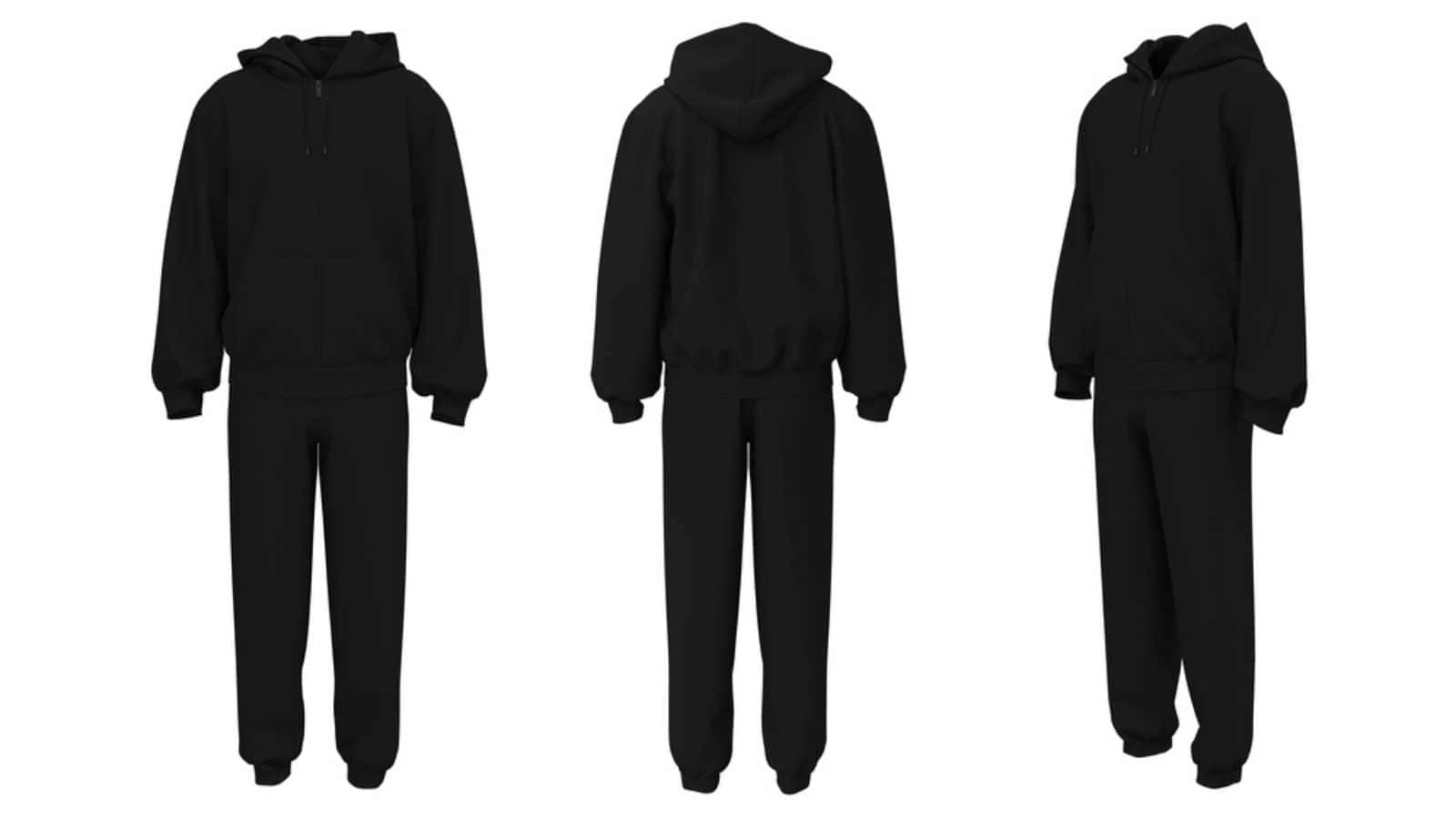
A common argument is that a bonnet is considered pajamas and, therefore, disrespectful to the public. However, the definition of leisurewear has been in flux since the 1920s. Coco Chanel famously brought pajama pants into the mainstream as daywear, and today, athleisure is a $300 billion global industry.
The debate here is: Who gets to define the boundary of the bedroom? If a man can wear a $150 pair of designer joggers that are essentially sweatpants to a nice restaurant, the objection to the bonnet can’t be about slouchiness.
It’s about the type of slouchiness. This point argues that the sleepwear label is a moving target used specifically to police items associated with Black grooming, while other forms of comfort wear are given a pass.
Cultural Gatekeeping as a Defense Mechanism

“Why do you care if I wear it?” is the common refrain of the outsider. The answer lies in the historical trauma of caricature. From the Mammy archetypes of the Jim Crow era to modern digital Blackface, Black cultural symbols have been used to mock the community.
A 2023 study on Collective Psychological Ownership (published in Social and Personality Psychology Compass) explores how marginalized groups develop an exclusive claim over their cultural markers in response to perceived threats of dispossession or mockery.
The community is overprotective of the bonnet because they know that once it becomes a mainstream trend, the original meaning: the protection of the person and the hair, will be lost in the ‘costume’ of the fashion world.
Generational Amnesia

The very people who fought for the right to wear head coverings in the 90s are now the ones most likely to scoff at a boy in a silk cap. This is a classic case of generational amnesia.
Once a group gains a certain level of social acceptance (the durag is now sold in high-end pharmacies and worn on Vogue covers), they often begin to police the next iteration of rebellion to prove they are civilized. This is the ultimate nice rebel paradox: the radical of yesterday is the conservative of today.
The bonnet debate is simply history repeating itself. In ten years, the bonnet will likely be normalized, and the bonnet-wearers will be arguing with their children about whatever new protective tool emerges next.
Key Takeaway

The bonnet debate reflects deeper tensions around identity and respectability. What appears to be a small grooming choice actually connects to long-standing pressures on Black communities to maintain a polished public image to counter stereotypes.
Generational attitudes toward presentation are diverging. Older generations often view strict grooming standards as a survival strategy, while younger men question whether those expectations still provide meaningful social protection.
Gender coding fuels much of the controversy. Durags were culturally reframed as masculine through artists like LL Cool J and 50 Cent, while bonnets remain associated with femininity despite serving similar hair-protection purposes.
Social media amplified a niche habit into a cultural flashpoint. Platforms such as TikTok tend to promote conflict-driven discussions, making the bonnet issue appear larger and more polarized than everyday behavior suggests.
At its core, the conversation is about control over cultural meaning. From workplace discrimination debates linked to policies like the CROWN Act to fashion industry trends, the bonnet has become a symbol in broader discussions about who defines respectability, masculinity, and cultural expression.
Like our content? Be sure to follow us