
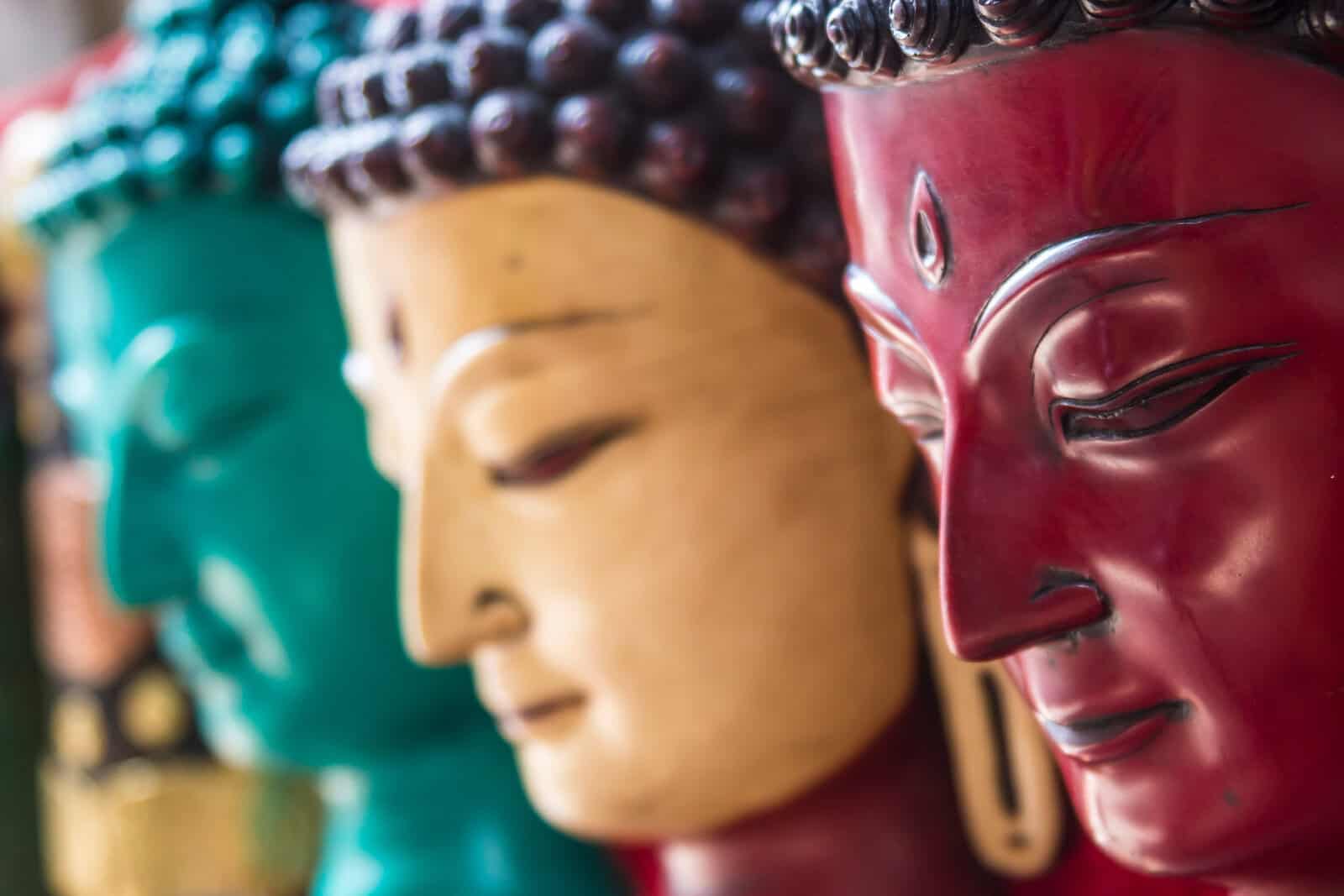
10 Ancient Religious Communities That Are Somehow Still Here
Imagine a religious community that was already ancient when Christianity began. Its members have watched empires rise and fall, survived invasions, changed languages, crossed continents, and endured periods when their traditions seemed unlikely to survive another generation.
Now imagine that people still gather to perform its rituals today.
Some of the world’s oldest religious communities aren’t preserved only in museums or history books. They’re living communities whose members still pray, celebrate, and pass their traditions to their children.
A few are enormous, with hundreds of millions of followers. Others are so small that their entire population could fit inside a modest sports arena. Some have remained connected to the same sacred landscapes for centuries, while others survived only because their ancestors left home.
The most remarkable part isn’t that these religions stayed exactly the same. They didn’t. Their beliefs, institutions, languages, and practices evolved over time. What survived was a living chain of religious identity connecting generations across extraordinary stretches of history.
Here are 10 religious communities whose continued existence is more surprising than most people realize.
1. The Samaritans Still Worship on the Mountain They Consider Sacred
Most people know the Samaritans from the New Testament story of the Good Samaritan. Far fewer realize that the Samaritans are still a living religious community.
Their traditions are rooted in the ancient Israelite religious world, and they preserve their own version of the Torah. Unlike Jews, who regard Jerusalem as the location of the ancient Temple, Samaritans identify Mount Gerizim as the central sacred place chosen by God.
The extraordinary part is that a religious disagreement from the ancient world is still reflected in the worship of a living community today.
Samaritans continue to celebrate Passover with distinctive ceremonies on Mount Gerizim, including the ritual sacrifice of lambs. Their religious calendar, priesthood, and sacred traditions preserve features that make their community unusually important to historians of biblical religion.
Their population fell dramatically over the centuries, reaching only a small number of families in the modern era. Today, the community numbers roughly a thousand people, concentrated principally around Mount Gerizim and in Holon, Israel.
The Samaritans are not simply Jews who follow a different custom, nor are they a vanished biblical people. They are a distinct religious community whose history developed alongside Judaism and whose traditions remain alive.
2. Zoroastrians Still Keep Sacred Fires Burning
Zoroastrianism was once deeply connected with the political and religious life of ancient Iran. Its teachings, associated with Zarathustra, concern truth, moral choice, purity, and devotion to Ahura Mazda.
The religion’s history stretches back into the ancient Iranian world, although scholars disagree about exactly when Zarathustra lived and how its earliest traditions developed.
What makes Zoroastrian survival remarkable is the distance between its former prominence and its present size.
After the Arab conquest of the Sasanian Empire, Zoroastrianism gradually lost its position as Iran’s dominant religion. Some communities remained in Iran, while others migrated to India and became known as Parsis.
Zoroastrian fire temples remain important places of worship. Fire is not worshipped as a god; it serves as a powerful symbol associated with purity, truth, and divine light.
Today, Zoroastrians live in India, Iran, and diaspora communities across the world. Their numbers are comparatively small, but their prayers, rituals, and communal institutions preserve a religious inheritance linked to one of antiquity’s great civilizations.
A sacred fire can be extinguished in a particular temple. Keeping the religious tradition alive across centuries is a much larger achievement.
3. Jewish Communities Have Survived Repeated Exile and Displacement
Judaism’s roots reach back into the ancient Israelite world, making it one of the oldest continuously practiced religious traditions.
But the Judaism practiced today isn’t simply an unchanged copy of religion in ancient Israel. The destruction of the Second Temple in Jerusalem in 70 CE profoundly affected Jewish religious life, and rabbinic traditions developed institutions and practices that allowed Jewish communities to continue without the Temple’s sacrificial system.
One of Judaism’s most extraordinary achievements is that it survived the loss of the central sanctuary around which so much ancient worship had revolved.
Synagogues, prayer, Torah study, religious law, family observances, and communal institutions helped sustain Jewish identity across widely separated populations. Jewish communities developed in the Middle East, North Africa, Europe, and eventually throughout the world.
The histories of those communities include periods of flourishing alongside expulsions, forced conversions, discrimination, and catastrophic violence, including the Holocaust.
Yet Jewish religious life continued through extraordinary geographic and cultural changes. The Hebrew calendar, Sabbath observance, festivals, and study of sacred texts helped connect communities that might otherwise have had little in common.
The continuity is remarkable precisely because Judaism adapted. Its survival wasn’t dependent on every generation living in the same place or worshipping in exactly the same way.
4. Hindu Traditions Connect Modern Worshippers With Ancient India
Hinduism is often described as one of the world’s oldest living religions. That’s broadly reasonable, but it requires an important qualification: Hinduism isn’t one single institution founded on one identifiable date.
Its roots lie in the religious traditions of ancient South Asia, including Vedic practices that developed over thousands of years. Later Hindu traditions incorporated diverse devotional movements, philosophical schools, temple worship, regional customs, and sacred literature.
The remarkable part is that ancient religious ideas and rituals remain part of the everyday lives of hundreds of millions of people.
Vedic hymns are still recited. Hindu families continue to perform rituals associated with life events and festivals. Deities such as Shiva and Vishnu remain central to major devotional traditions, even though the historical development of their worship is complex.
Some practices have deep historical continuity, while others emerged or changed substantially in later periods. Modern Hinduism also includes movements that have spread far beyond South Asia.
That combination of continuity and transformation is precisely what makes Hindu traditions so fascinating. A religious inheritance can remain recognizably connected to antiquity without preserving every belief or practice in its original form.
5. Jain Communities Have Preserved an Ancient Commitment to Nonviolence
Jainism developed in ancient India and is associated especially with Mahavira, traditionally regarded as the twenty-fourth Tirthankara.
Its teachings emphasize liberation from the cycle of rebirth through ethical discipline, spiritual knowledge, and the reduction of karmic bondage. Nonviolence, or ahimsa, is central to Jain religious life.
Few living religious traditions have maintained such a demanding and distinctive emphasis on avoiding harm to living beings.
Many Jains follow vegetarian diets, and religious ascetics may observe especially strict practices designed to minimize injury to animals, insects, and other forms of life. Jain temples, pilgrimage sites, philosophical writings, and family traditions preserve an extensive religious heritage.
Jainism has also survived periods of political change, shifting patronage, and competition with larger religious traditions in South Asia. Its communities remain relatively small compared with the Hindu and Buddhist populations surrounding them.
Yet Jain contributions to Indian philosophy, ethics, commerce, art, and architecture have been substantial.
The community’s survival demonstrates that a religion doesn’t need to become a global majority to maintain a highly developed religious culture over many centuries.
6. Buddhist Communities Still Follow a Path Taught Around 2,500 Years Ago
Buddhism began in ancient India with Siddhartha Gautama, the Buddha, whose teachings addressed suffering, impermanence, ethical conduct, and the possibility of liberation.
Over the following centuries, Buddhist traditions spread across Asia and developed into remarkably diverse religious communities.
A Buddhist monk in Thailand, a Zen practitioner in Japan, and a Tibetan Buddhist nun may follow very different practices while recognizing a shared religious inheritance.
Theravada Buddhism became influential in Sri Lanka and much of Southeast Asia. Mahayana traditions developed across East Asia, while Vajrayana traditions became especially important in Tibet and Himalayan regions.
Their scriptures, rituals, philosophies, and institutions aren’t identical. Some emphasize monastic discipline, others devotional practices, meditation, or elaborate ritual systems.
The survival of Buddhism is therefore not the survival of one unchanging religious institution. It’s the endurance of a family of traditions that have repeatedly adapted to new languages, cultures, and political circumstances.
Buddhism also experienced severe decline in much of its Indian homeland, even while flourishing elsewhere. That history shows how a religion can nearly disappear in one region while becoming deeply rooted in another.
7. The Mandaeans Preserve an Ancient Baptismal Tradition
The Mandaeans are among the least familiar surviving religious communities of the Middle East.
Their religious traditions developed in late antiquity and place extraordinary importance on ritual purification through immersion in flowing water. John the Baptist is a revered figure in their religious literature, although Mandaean beliefs differ fundamentally from Christian teachings.
For Mandaeans, baptism isn’t simply a one-time ceremony marking entry into the religion. It can be a repeated act of purification throughout religious life.
Their sacred texts, ritual specialists, and distinctive religious language preserve a tradition with deep roots in the religious world of Mesopotamia.
Historically concentrated in Iraq and Iran, Mandaean communities have faced serious pressures from violence, discrimination, and displacement. Many families have emigrated to countries including Australia and nations in Europe and North America.
The challenge is not merely preserving written beliefs. Mandaean rituals require knowledgeable religious leaders and appropriate ceremonial conditions, including access to flowing water.
Their survival illustrates how vulnerable a small religious community can become when the people, places, and institutions needed for its practices are scattered.
8. The Coptic Church Preserves a Christian Heritage From Ancient Egypt
Christianity reached Egypt in the early centuries of the religion and developed into one of the most important centers of Christian thought and monastic life.
The Coptic Orthodox Church traces its religious heritage to this ancient Egyptian Christian tradition, traditionally associating its beginnings with Saint Mark.
Coptic Christians preserve a form of Christian identity that developed in Egypt long before Islam became the country’s dominant religion.
Coptic liturgical traditions retain the Coptic language, which represents a later stage of the ancient Egyptian language, although Arabic is widely used in everyday life and in many church settings.
The community has experienced periods of flourishing, theological conflict, discrimination, and persecution across its long history. Its monasteries, churches, religious calendar, and liturgy preserve important links with early Christianity.
Coptic Christianity also demonstrates how religious identity can remain tied to a particular civilization even as the surrounding culture changes.
The Egypt of the pharaohs, the Egypt of late antiquity, and modern Egypt are profoundly different societies. Yet elements of the country’s ancient linguistic and religious history continue within Coptic Christian life.
9. The Armenian Apostolic Church Survived the Loss of Kingdoms and Homeland
Armenia is traditionally recognized as the first kingdom to adopt Christianity as a state religion, conventionally dated to the early fourth century.
The Armenian Apostolic Church became central to Armenian religious and cultural identity, especially after the development of the Armenian alphabet in the fifth century helped make scripture and religious literature accessible in Armenian.
For Armenians, religious continuity became one of the ways a people preserved its identity through centuries of foreign rule and displacement.
Armenian communities experienced repeated political upheavals, invasions, and migration. The Armenian genocide during the First World War devastated communities within the Ottoman Empire and contributed to the creation of a large worldwide diaspora.
Yet Armenian churches, monasteries, religious schools, and community institutions continued to preserve language, worship, and historical memory.
The Armenian Apostolic Church belongs to the Oriental Orthodox family of churches, whose theological and historical development differs from that of Eastern Orthodoxy and Roman Catholicism.
Its endurance shows how religious institutions can become essential to a community’s survival when political independence and secure residence in ancestral lands are repeatedly threatened.
10. The Assyrian Church of the East Preserves an Ancient Christian Tradition Far From Rome
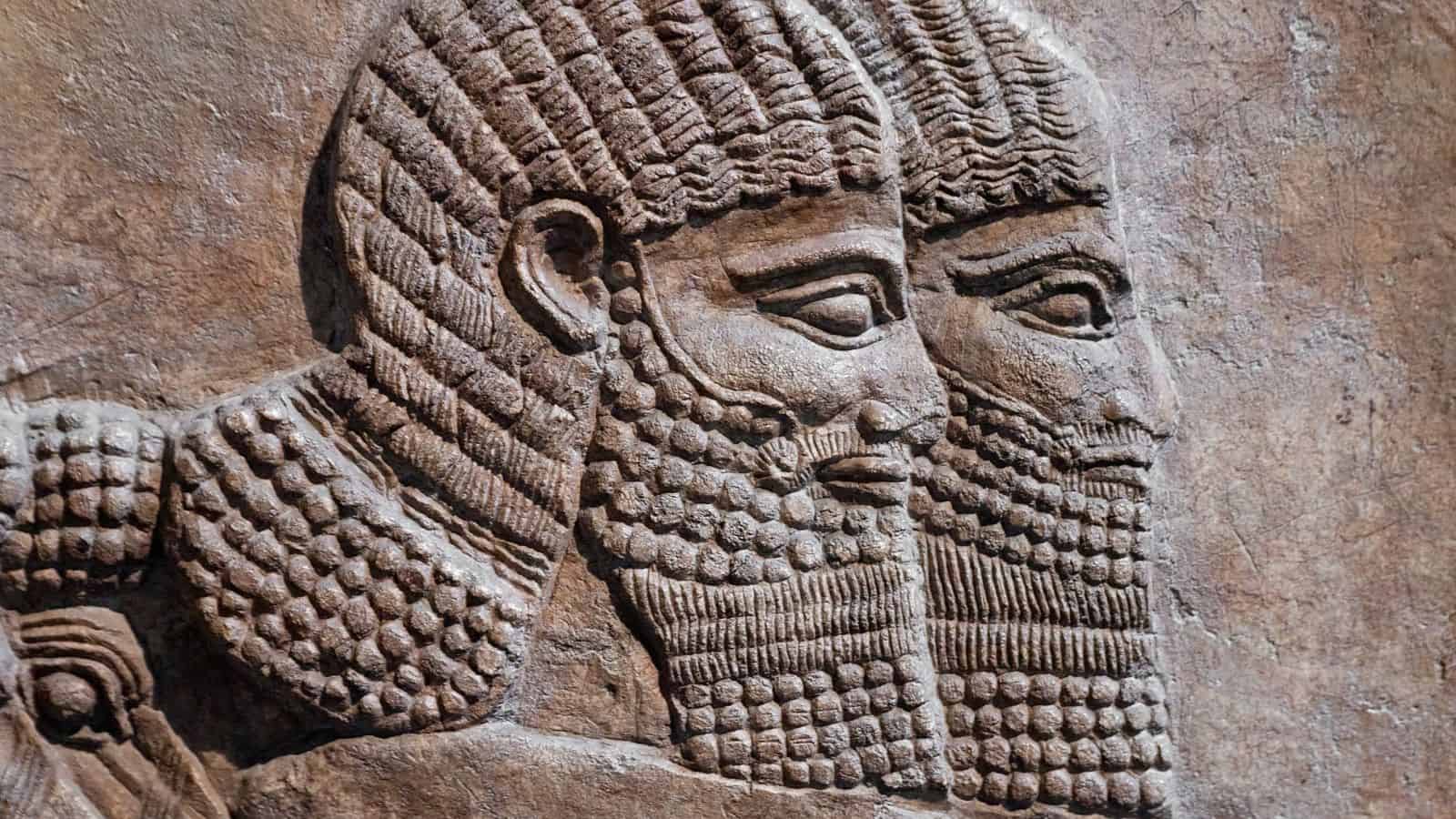
image credit kmiragaya via 123RF
Many people imagine early Christianity spreading outward from Jerusalem mainly toward Rome and Western Europe.
But Christianity also developed powerful communities to the east, in Mesopotamia and the Persian world.
The Church of the East became a major Christian tradition whose missionaries traveled along trade routes into Central Asia and as far as China. Its liturgical heritage developed in Syriac, a form of Aramaic closely related to the language world of early Christianity.
Long before modern globalization, Christians connected with this tradition were worshipping across an enormous stretch of Asia.
The Assyrian Church of the East is one of the surviving churches associated with that historical tradition. Its history includes periods of extraordinary expansion as well as devastating persecution, political upheaval, and demographic decline.
Today, Assyrian Christian communities live in the Middle East and in diasporas around the world. Their liturgy, ecclesiastical traditions, and cultural identity preserve a link to Christianity’s ancient eastern development.
The church’s story challenges a common assumption that Christian history is primarily European. Some of Christianity’s oldest surviving communities developed in places that many modern readers rarely associate with the religion’s early centuries.
How Do Religious Communities Survive for Thousands of Years?
The obvious answer might be that they preserve their beliefs.
But that isn’t enough.
Sacred writings matter, as do rituals and religious institutions. Yet these communities also survived because families taught children, leaders adapted to new circumstances, and believers found ways to rebuild after war, exile, discrimination, and political collapse.
The Samaritans preserved a tiny religious community centered on Mount Gerizim. Zoroastrians survived in Iran and India after losing their former political prominence. Jewish communities maintained religious identity across continents. Hindu, Jain, and Buddhist traditions continued through centuries of intellectual and cultural change. Ancient Christian communities preserved distinctive liturgies and languages even as the societies around them transformed.
The secret to religious survival isn’t refusing to change. It’s preserving enough continuity that each generation can recognize what it has inherited.
That continuity can be fragile. A community may survive for thousands of years and still face serious threats today. Small populations, displacement, declining language use, and the loss of religious specialists can place ancient traditions at risk.
But the very existence of these communities reveals something extraordinary about human history.
A religion can outlast the empire that once supported it. It can survive the destruction of its most important sanctuary. It can cross oceans, change languages, and rebuild itself after catastrophe.
And centuries later, someone can still light a sacred fire, recite an ancient prayer, or gather with family for a ritual their ancestors would recognize.
You may also want to read: 6 ancient religions and belief systems that predate Christianity
You may also want to read: 10 Religious Traditions That Are Much Older Than Most People Realize