
10 famous scientists who were also devout believers
The story of science looks very different when you realize that faith has often been a motive force rather than an obstacle to discovery.
Science and faith are frequently portrayed as bitter enemies in contemporary culture, yet history tells a surprisingly different story about this complex relationship. It turns out that many of the brilliant minds who shaped our understanding of the universe were actually driven by deep and unshakeable spiritual convictions. From cracking the code of our DNA to mapping the distant stars, belief has often been the fuel for discovery rather than a roadblock.
Many of us might be surprised to learn that the “war” between science and religion is a relatively new concept that would have baffled the pioneers of the scientific revolution.The following individuals prove that looking for evidence in nature does not require you to lose your faith in the divine.
Isaac Newton
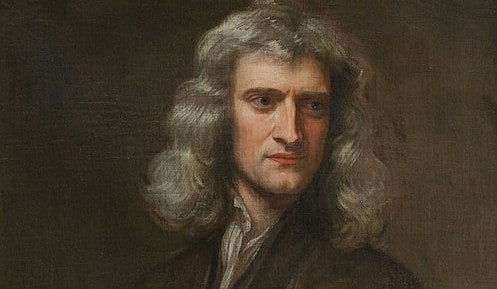
Most of us know him for the falling apple and the laws of motion, but Newton actually wrote far more about theology than he ever did about physics or math. He spent decades studying biblical prophecy and firmly believed that his scientific work was a vital means of understanding the Creator’s specific design. He saw the universe as a riddle.
Recent analysis suggests that he wrote on religious subjects, viewing the cosmos as a cryptogram set by the Almighty for humanity to solve. His deep faith did not hinder his science; rather, it provided the very framework he needed to seek order in the chaos. He died believing his work honored God.
Francis Collins
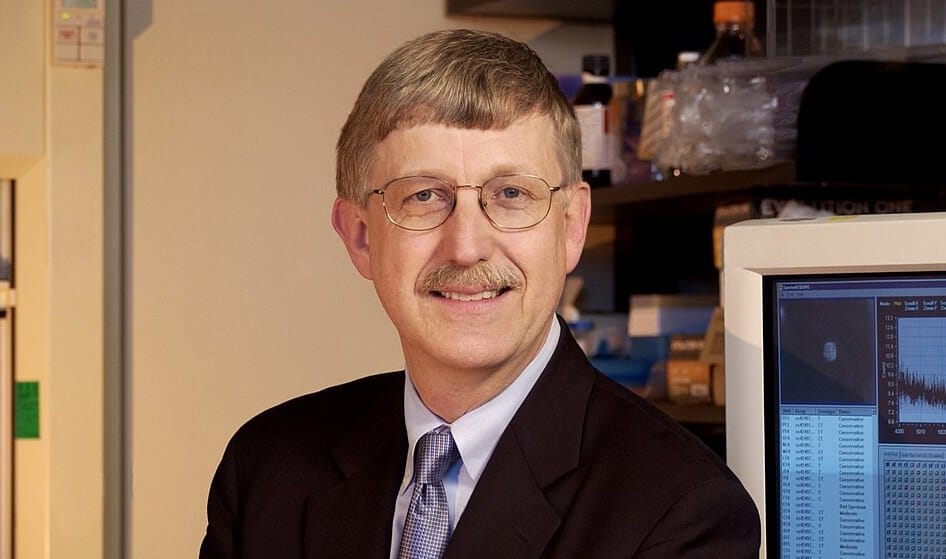
It is easy to assume top-tier geneticists are all skeptics, but a Pew Research Center poll found that 51% of scientists believe in some form of deity or higher power. As the leader of the Human Genome Project, Collins mapped the blueprint of humanity while maintaining his strong Christian faith. He wrote The Language of God.
He famously described the experience of unravelling the human genome as catching a glimpse of God’s instruction book for life, a moment that brought him to his knees. Collins argues that science asks the “how” questions while religion answers the “why,” making them complementary partners rather than rivals. He continues to advocate for this harmony.
Georges Lemaître
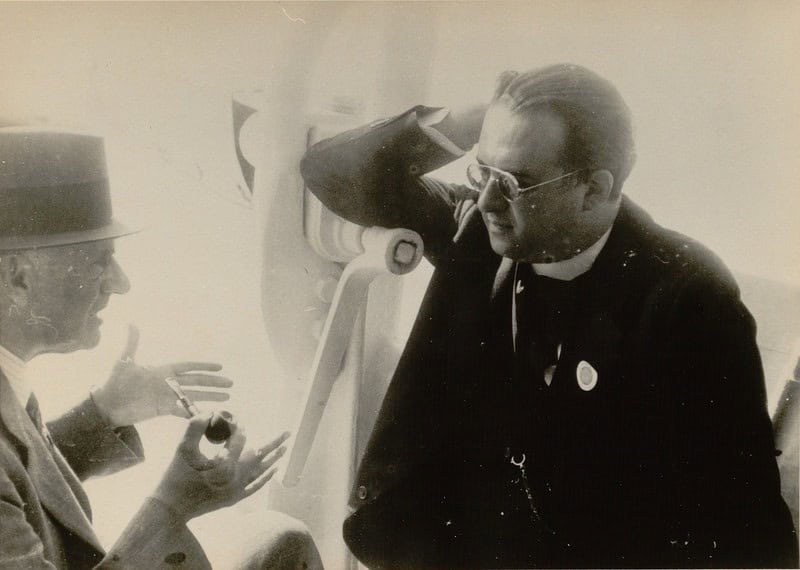
It surprises many folks to learn that the Big Bang theory was actually proposed by a Catholic priest who wore his clerical collar with absolute pride. Lemaître famously corrected Einstein’s mathematics and argued that the universe’s beginning aligned perfectly with the concept of divine creation. He was a professor of physics.
He never saw a conflict between his equations and his scripture, famously noting that there were two paths to truth that ultimately led to the same destination. His work reminds us that being a person of the cloth does not mean you have to check your brain at the door. He changed cosmology forever.
Gregor Mendel
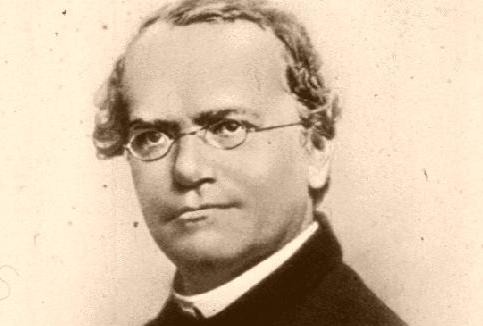
Long before we had high-tech labs, an Augustinian friar was busy counting peas in a monastery garden and discovering the fundamental laws of genetics. Mendel’s careful observation of plant traits laid the groundwork for modern biology, even as he led a quiet life of prayer. He founded a new science.
He is often called the father of modern genetics, proving that a secluded life dedicated to faith can still produce earth-shattering scientific breakthroughs. It is ironic that the man who explained how life adapts was a humble servant of the church who died without knowing his fame. His work was rediscovered later.
Johannes Kepler
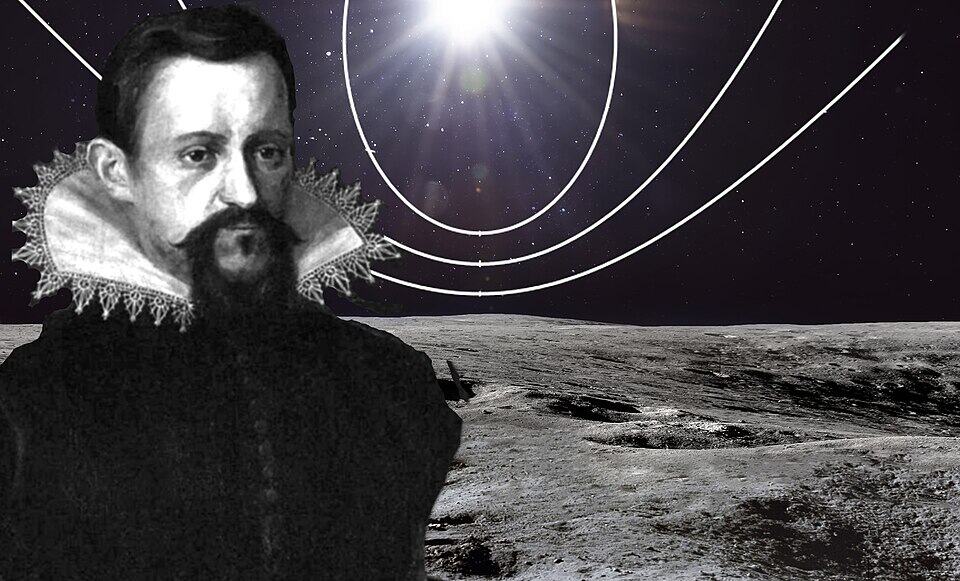
Kepler did not just want to determine how the planets moved; he wanted to understand the musical harmony he believed God had built into the solar system. He famously described his scientific process as “thinking God’s thoughts after Him,” viewing astronomy as a sincere form of worship. He discovered three major laws.
His discovery of elliptical orbits transformed our understanding of the cosmos, yet he considered his theological writings as important as his star charts. For Kepler, the mathematical precision of the universe was undeniable evidence of an intelligent architect behind it. He trusted in a rational God.
Michael Faraday
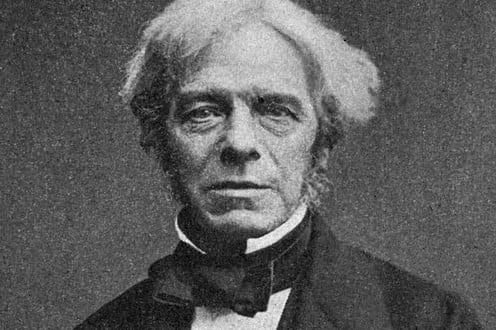
According to historical data analyzed by Baruch Shalev, between 1901 and 2000, more than 65% of Nobel Prize laureates identified as Christians, a statistic that aligns with Faraday’s legacy. The man who gave us the electric motor belonged to a small Christian sect called the Sandemanians and preached sermons regularly. He was a self-taught genius.
He refused to produce chemical weapons for the British government during the Crimean War because he felt it violated his Christian morals and teachings. Faraday saw the laws of nature as the laws of God, and he pursued them with a humble curiosity that defined his career. He died a poor man.
Arthur Compton
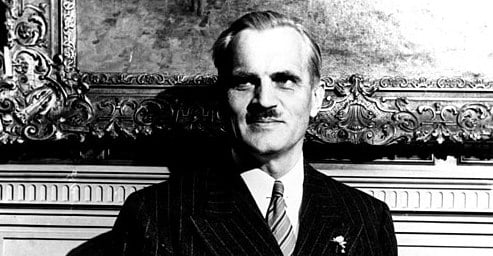
This Nobel Prize winner did not just dabble in physics; he was a deacon who actively guided discussions on the intersection of science and religion. Compton won the Nobel Prize for the “Compton Effect,” which demonstrated the particle nature of electromagnetic radiation and revolutionized physics. He championed free will.
A 2015 study by sociologist Ecklund, involving 10,000 Americans, found that religious scientists were more likely to view science as a means of helping people. Compton embodied this, arguing that science is the glimpse of God’s purpose in nature and that our actions matter. He saw no conflict.
Guglielmo Marconi
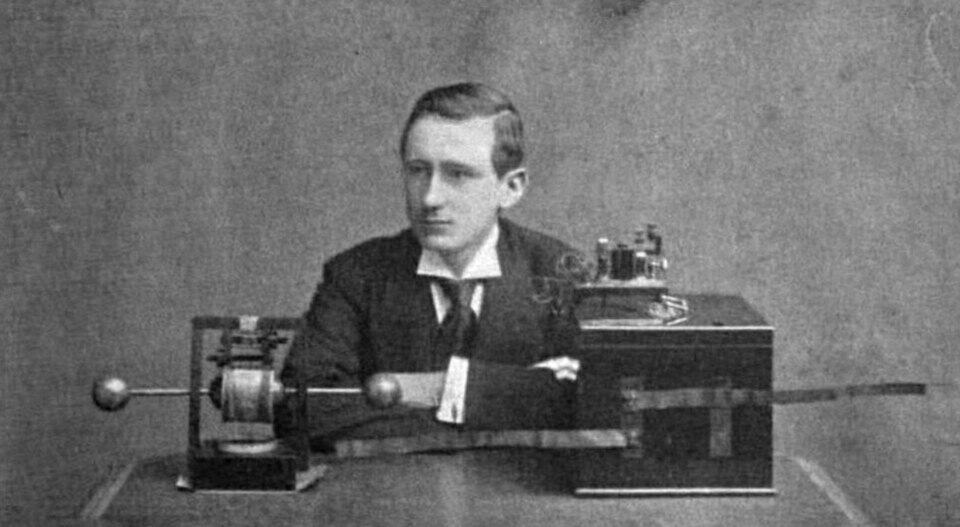
The inventor of the radio was not just a tech wizard but also a deeply committed Catholic who saw his invention as a tool for peace. Marconi believed that radio waves could save lives and bring humanity closer together, a purpose he felt was divinely inspired. He connected the world.
He broadcast the first radio message across the Atlantic, yet he remained humble about his abilities, attributing his success to forces beyond himself. In his view, science was capable of clearing away the mysteries of the universe to reveal the Creator’s handiwork. He served his church faithfully.
Werner Heisenberg
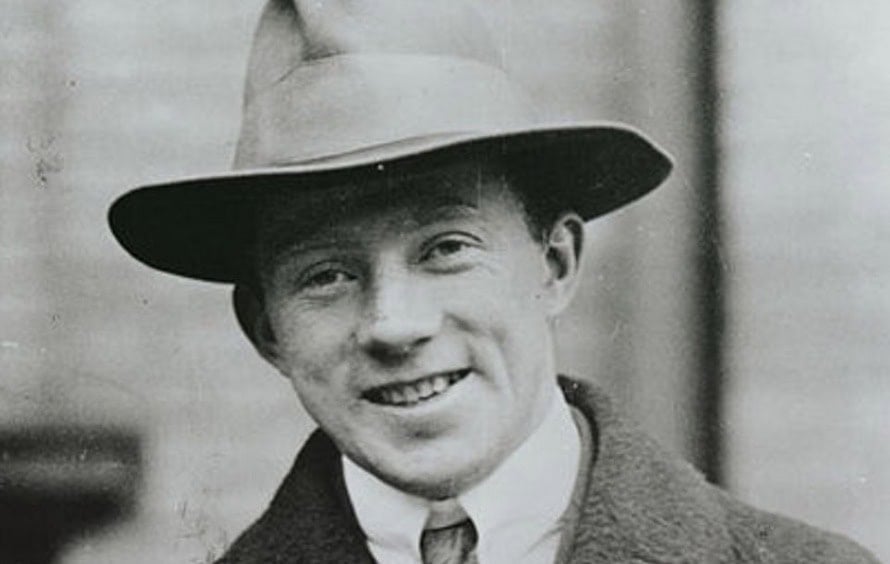
Heisenberg, a giant of quantum mechanics, famously stated that while the first gulp of science makes you an atheist, God waits at the bottom of the glass. His uncertainty principle shook the foundations of physics, yet he found stability in his spiritual worldview during turbulent times. He won the Nobel Prize.
According to NCSE, nearly 40% of scientists believe in a personal God or a higher power, a number that has remained stable. Heisenberg believed that the order inherent in the subatomic world pointed to a central order in the universe itself. He wrote on philosophy too.
Mary Kenneth Keller
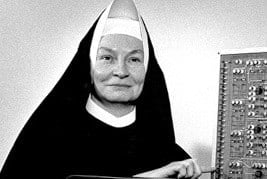
She was the first woman to earn a PhD in computer science in the US and also happened to be a Roman Catholic nun. Sister Keller helped develop the BASIC programming language, believing that information was a service that should be accessible to everyone. She broke huge barriers.
Population Education data indicate that over three-quarters of the global population identifies with a religious group, suggesting that the pool of future scientists remains spiritually diverse. She saw the computer as a tool to expand the human mind, which she viewed as a gift to be cultivated. She taught until she died.
15 Things Women Only Do With the Men They Love

The 15 Things Women Only Do With the Men They Love
Love is a complex, beautiful emotion that inspires profound behaviors. We express our love in various ways, some universal and others unique to each individual. Among these expressions, there are specific actions women often reserve for the men they deeply love.
This piece explores 15 unique gestures women make when they’re in love. From tiny, almost invisible actions to grand declarations, each tells a story of deep affection and unwavering commitment.





.jpg?uselang=en#Licensing)


