
10 major debates that split the Christian world
Christian history is less a straight line than a family argument that keeps resurfacing at reunions, long after everyone has forgotten how it started.
Imagine a massive family reunion where half the room refuses to speak to the other half because of a disagreement that started a thousand years ago. That is essentially the history of the church, a long saga of theological arguments and power struggles that turned brothers into strangers.
It is wild to think that minor differences in wording or political loyalties could cause rifts that last for centuries. We tend to view these historical splits as dry textbook facts, but they were real fights involving real people who believed they were saving the faith’s soul.
The Great Schism Of 1054
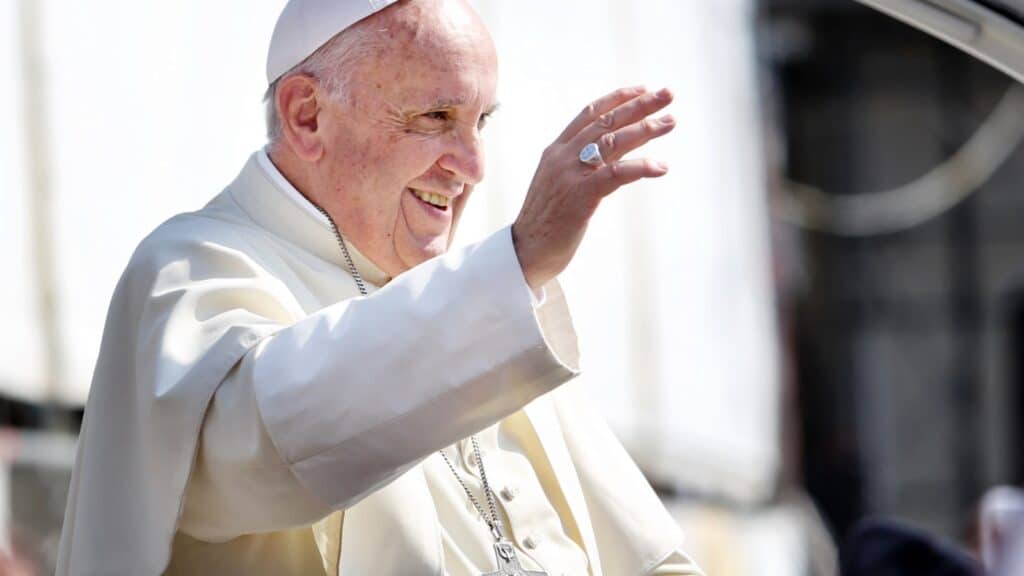
It all came to a head when the Pope in Rome and the Patriarch in Constantinople decided they had finally had enough of each other. They dramatically excommunicated one another, creating a divide between Western Catholicism and Eastern Orthodoxy that remains visible today.
Cultural differences had been simmering for a long time, with the West speaking Latin and the East speaking Greek. According to a 2017 Pew Research Center report, there are now approximately 260 million Orthodox Christians worldwide, a massive group rooted in this ancient separation.
The Church Of England Breakup

King Henry VIII really wanted a male heir, and he was willing to flip the entire religious order of his country to get one. When the Pope refused to annul his marriage to Catherine of Aragon, Henry simply declared himself the head of the church and fired the Pope.
It sounds like a soap opera script, but this decision founded the Anglican Communion and permanently separated England from Roman Catholic authority. While theology eventually caught up, the initial split was driven by one man’s personal life and political ambition rather than big spiritual differences.
The Council Of Chalcedon Split
Back in the year 451, church leaders gathered to figure out the specific nature of Jesus, specifically how he could be both human and divine. The debate got so heated that it caused the first major fracture in church history, separating the Oriental Orthodox churches from the rest of the pack.
Churches in Egypt and Ethiopia rejected the council’s definition, sticking to their own understanding of Christ’s nature. This ancient division shows that Christians have been arguing over the fine print of theology for almost as long as the religion has existed.
The Anabaptist Radical Reformation

While Luther was shaking things up, another group decided he had not gone nearly far enough in cleaning up the church. The Anabaptists rejected infant baptism, arguing that only adults could make a conscious choice to follow Jesus, which made them enemies of both Catholics and fellow Protestants.
They were fiercely persecuted for their beliefs, often hunted down or drowned in a cruel mockery of their baptismal practices. Despite the violence they faced, their legacy survives today in groups like the Mennonites and Amish, who prioritize peace and separation from society.
The Great Methodist Divide
We are watching a major historical schism unfold in real time within the United Methodist Church. Over the last few years, thousands of congregations have disaffiliated due to deep disagreements over certain inclusions and marriage rites.
The numbers are truly massive and represent one of the largest denominational fractures in American history. As of early 2024, United Methodist News reported that more than 7,600 churches had officially left the denomination, representing about a quarter of their total congregations.
The Russian Orthodox Split Of 2018
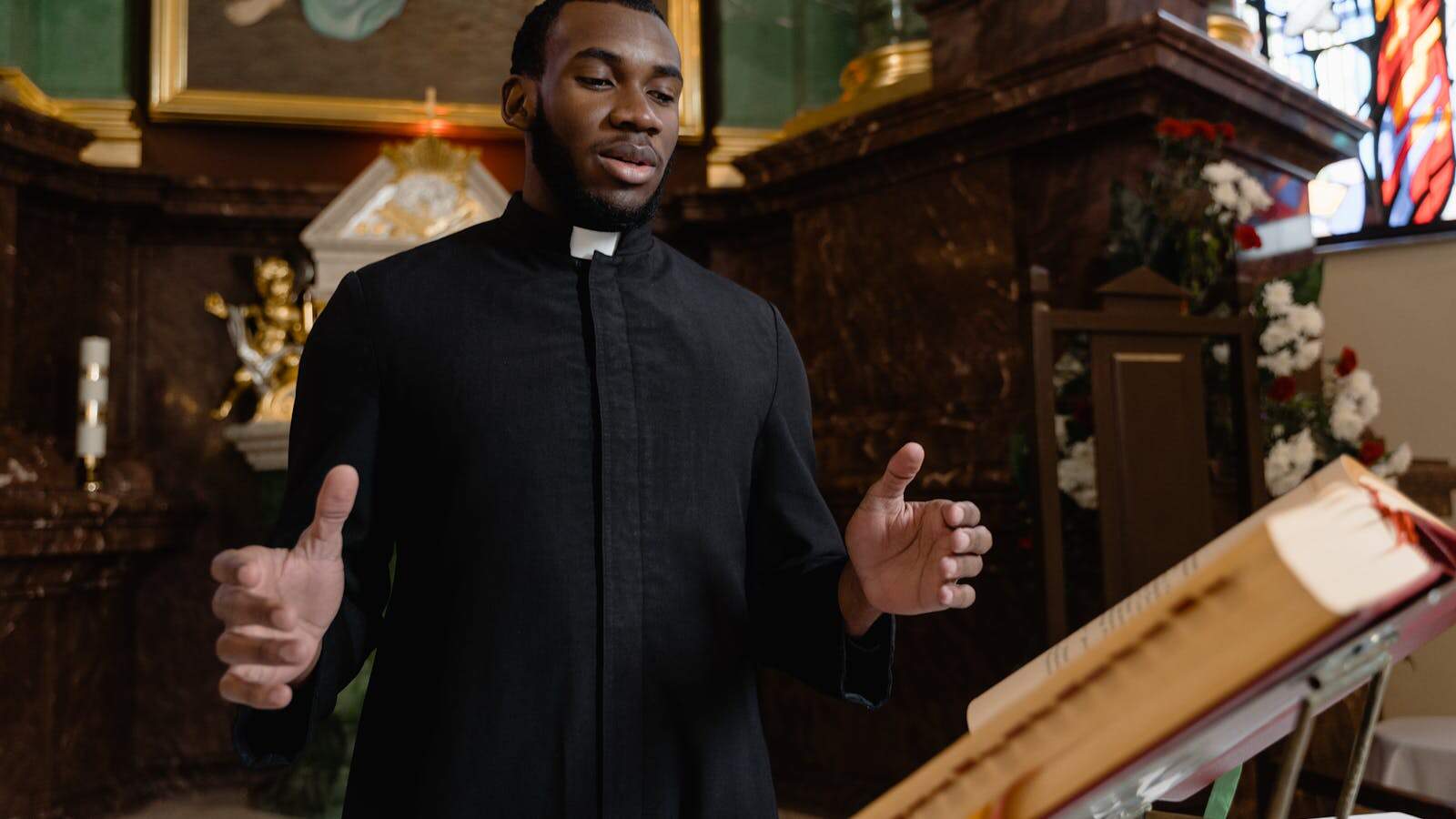
Political borders often bleed into religious life, and nowhere is that clearer than in the recent break between the Russian Orthodox Church and the Ecumenical Patriarchate. The conflict erupted when the Patriarch in Constantinople granted independence to the Orthodox Church of Ukraine, infuriating Moscow.
This ended centuries of religious unity and turned a spiritual matter into a heavy geopolitical standoff involving national sovereignty. It is a stark reminder that church leadership is often deeply entangled with the actions and ambitions of secular governments.
The Fundamentalist Modernist Controversy

In the early 20th century, American Protestantism cracked under the pressure of new scientific theories and biblical criticism. Conservatives doubled down on traditional dogmas while modernists sought to adapt the faith to contemporary science, sparking fierce public battles such as the Scopes Monkey Trial.
This era birthed the modern subculture of fundamentalism and set the stage for the culture wars we still see on cable news. A 2025 Pew Research study found that 49% of Americans seldom or never attend religious services, a trend of disengagement that partly stems from these endless internal ideological wars.
The Azusa Street Revival

Sometimes a split happens not because people leave, but because a new explosion of energy creates something totally different. In 1906, a revival in Los Angeles sparked the Pentecostal movement, emphasizing miracles and speaking in tongues in a way most churches had never seen.
Mainstream denominations viewed these emotional services with skepticism and often rejected participants. Today, Pentecostalism is the fastest-growing religious movement on Earth, with the Gordon-Conwell Theological Seminary estimating that there are 635 million Christians worldwide who identify as Pentecostal or Charismatic.
The Southern Baptist Conservative Resurgence
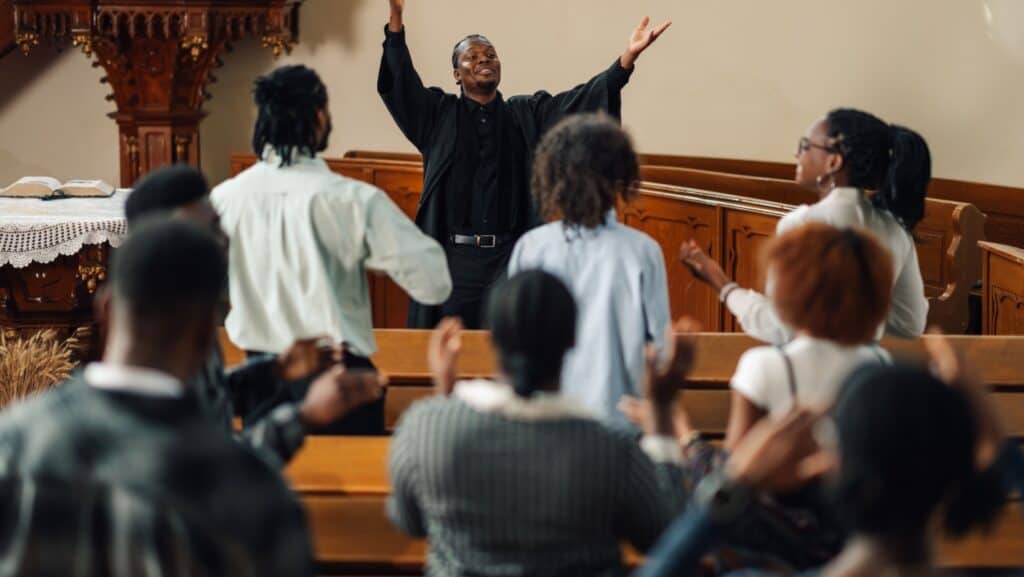
During the late 1970s and 80s, a strategic movement swept through the Southern Baptist Convention, sharply pulling the denomination to the right. Leaders systematically replaced moderate professors and seminarians with staunch conservatives to enforce strict theological uniformity across their institutions.
This was not just a minor adjustment; it was a total overhaul that alienated moderates and reshaped the political identity of American evangelicals. Data from the Public Religion Research Institute shows that white evangelical Protestants now make up just 13% of the population, a shrinking demographic that solidified its identity during this tumultuous era.
The Protestant Reformation In 1517

Martin Luther did not intend to start a whole new branch of religion when he walked up to that church door in Wittenberg with a hammer. He just wanted to debate the sale of indulgences, but his questions sparked a wildfire that burned through Europe and changed Western history.
This movement shattered the idea of a single, unified church in the West and empowered local rulers who sought to break away from Rome. The Gordon-Conwell Theological Seminary estimates that there are now over 45,000 distinct Christian denominations, a staggering number that traces back to this moment.
15 Things Women Only Do With the Men They Love

The 15 Things Women Only Do With the Men They Love
Love is a complex, beautiful emotion that inspires profound behaviors. We express our love in various ways, some universal and others unique to each individual. Among these expressions, there are specific actions women often reserve for the men they deeply love.
This piece explores 15 unique gestures women make when they’re in love. From tiny, almost invisible actions to grand declarations, each tells a story of deep affection and unwavering commitment.




_-_NARA_-_542015_-_Restoration.jpg?uselang=en#Licensing)