
10 Religious Relics People Have Searched for—or Fought Over—for Centuries
Somewhere beneath an ancient city, according to believers, there may be an object that once stood inside Solomon’s Temple. In Turin, millions have looked at a piece of linen some believe wrapped the body of Jesus. In Spain, a cathedral displays a chalice connected by tradition to the Last Supper. Elsewhere, fragments said to come from the cross, bones attributed to saints, and objects connected with prophets have attracted pilgrims for centuries.
Relics occupy a strange place between faith, history, archaeology, and legend. Some have remarkably well-documented histories. Others suddenly appear centuries after the people or events they’re supposedly connected with. A few have inspired archaeological expeditions and scientific tests. Others became so politically important that rulers fought to possess them.
The question isn’t simply whether every relic is authentic. Often, nobody can prove that. The more interesting question is why human beings have spent so much time searching for physical objects connected with the sacred.
Here are 10 religious relics—or long-sought sacred objects—whose stories became almost as fascinating as the objects themselves.
1. The Ark of the Covenant May Be the World’s Most Famous Missing Religious Object
According to the Hebrew Bible, the Ark of the Covenant was a sacred chest associated with the tablets of the covenant and the presence of God. It accompanied the Israelites during important moments in their early history and eventually stood in the innermost sanctuary of Solomon’s Temple in Jerusalem.
Then it disappeared from the biblical story. Babylonian forces destroyed Jerusalem and the First Temple in the sixth century BCE, but surviving accounts don’t clearly tell us what happened to the Ark. That silence created one of history’s great religious mysteries.
Later traditions filled the gap. Second Maccabees says the prophet Jeremiah hid the Ark in a cave, where it would remain concealed until a future restoration. Ethiopian Orthodox tradition maintains that the Ark eventually came to Ethiopia, where a sacred object identified with it is guarded at the Church of Our Lady Mary of Zion in Aksum. Other theories have placed it beneath Jerusalem, elsewhere in the Middle East, and even in locations far beyond anything supported by strong historical evidence.
No verified discovery has resolved the mystery. That’s precisely why the Ark remains so powerful: unlike a relic sitting behind glass, the world’s most famous sacred chest might still be somewhere—or it might have been destroyed more than 2,500 years ago.
2. The Shroud of Turin Has Been Studied More Than Almost Any Piece of Religious Cloth
The Shroud of Turin is a linen cloth bearing the faint front-and-back image of a man who appears to have suffered injuries consistent with crucifixion. For centuries, believers have wondered whether it could be the burial cloth of Jesus.
Its known historical trail becomes much clearer in medieval Europe than in first-century Jerusalem, immediately creating a major problem for claims of authenticity. Radiocarbon testing published in 1988 dated samples of the cloth to the medieval period, roughly the 13th or 14th century. Supporters of authenticity have challenged aspects of that testing and proposed explanations involving contamination, repairs, or sampling, while other researchers remain convinced the medieval dating is strong evidence against the cloth having wrapped Jesus.
The image itself continues to fascinate researchers. The Shroud isn’t simply a conventional painted portrait, and arguments over precisely how the image formed have helped keep the debate alive.
The Catholic Church has never required Catholics to believe the Shroud is Jesus’ authentic burial cloth. Its power instead comes from the possibility. If it is medieval, it remains an extraordinary devotional object. If it were ever convincingly shown to be from first-century Judea and connected with a crucified man, the historical implications would be enormous.
That uncertainty is why people are still arguing about a piece of linen centuries after it first entered the clear historical record.
READ: Early Christian practices that would feel radical in churches today
3. The Holy Grail Became Famous Long After the Last Supper
Few sacred objects have generated more legends than the Holy Grail. In modern imagination, it’s usually the cup Jesus used at the Last Supper, perhaps also connected with Joseph of Arimathea and the blood of Christ.
The surprising part is how late much of that familiar story appears.
The Grail enters medieval literature centuries after Jesus. Early Grail stories didn’t even present the object in exactly the form most people now recognize. As medieval romances developed, the Grail became increasingly connected with Christian symbolism, the Last Supper, Christ’s blood, and the adventures of King Arthur’s knights.
Several objects have subsequently been identified as possible Grails. One of the most famous is the Holy Chalice preserved in Valencia Cathedral in Spain. Its upper cup is ancient, although establishing an unbroken historical chain connecting it with Jesus is another matter entirely.
The Grail demonstrates how relic traditions can grow. An object begins in literature, acquires increasingly specific religious associations, becomes connected with real artifacts, and eventually feels as though it has always been part of Christian history.
The search for the Grail is therefore partly a search for an object and partly a search through the evolution of a legend.
4. Pieces of the “True Cross” Spread Across the Christian World
According to Christian tradition, Jesus was crucified outside Jerusalem and his cross remained associated with the site. Centuries later, a powerful tradition developed that Helena, mother of the Roman emperor Constantine, discovered the True Cross during a pilgrimage to Jerusalem in the fourth century.
Fragments said to come from that cross eventually spread through Christian churches across Europe and beyond. Possessing even a tiny piece of the True Cross could transform a church into an important pilgrimage destination.
The enormous number of claimed fragments eventually inspired jokes that there was enough “True Cross” wood to build a ship. That exaggeration is itself misleading; studies of surviving fragments have suggested the total amount isn’t remotely as enormous as the famous joke implies. The real problem is provenance: demonstrating that a particular splinter of ancient wood came from the cross used to execute Jesus is extraordinarily difficult.
Yet authenticity wasn’t the only thing that gave relics power. Medieval Christians could regard physical contact with a holy person or event as spiritually significant. A tiny fragment therefore wasn’t merely an archaeological souvenir. It created a physical connection between a distant church and Christianity’s central story.
For believers who traveled hundreds of miles to see such objects, that connection could matter more than the kind of laboratory verification modern audiences expect.
5. John the Baptist Apparently Has More Than One Claimed Head
John the Baptist was executed by beheading according to the New Testament, creating exactly the kind of story likely to produce later relic traditions.
It did.
Over the centuries, different churches and locations have claimed possession of John’s head or portions associated with it. Damascus, Rome, Amiens, and other places became connected with relic traditions involving John. His supposed bones have likewise appeared in multiple locations.
That doesn’t necessarily mean medieval Christians were all knowingly inventing relics. Relic histories could become extraordinarily complicated. Objects were divided, transferred, hidden during wars, rediscovered, misidentified, duplicated, or accompanied by competing local traditions. A church might sincerely preserve an object whose supposed history had already become unreliable centuries earlier.
John’s relics reveal one of the central difficulties of the entire subject. Religious communities often cared deeply about preserving physical connections with holy figures, but they lived long before DNA testing, modern archaeological documentation, or standardized provenance records.
By the time modern science asks, “Can you prove whose bone this is?” the chain of evidence may have been broken for a thousand years.
6. The Buddha’s Relics Helped Spread Buddhism Across Asia
Relic devotion isn’t uniquely Christian.
According to Buddhist tradition, after the Buddha died and entered parinirvana, his cremated remains were divided among different groups. Later traditions describe the emperor Ashoka redistributing relics and constructing stupas associated with them across his realm.
Whether every detail of those accounts can be historically verified is another question, but relics became extraordinarily important in Buddhist religious life. Stupas containing or symbolically associated with the Buddha’s remains became destinations for reverence and pilgrimage.
As Buddhism spread, relic traditions traveled with it. Teeth, bones, ashes, hair, and other objects attributed to the Buddha became associated with temples and kingdoms across Asia. Sri Lanka’s Temple of the Tooth in Kandy, for example, houses what tradition identifies as a tooth of the Buddha and became closely connected with political legitimacy and kingship.
That last point matters. A relic can be spiritually important and politically powerful at the same time. If possessing a sacred object suggests divine favor or legitimate rule, controlling the relic means controlling far more than an old piece of bone.
READ: Ancient sources outside the Bible that mention Jesus or his followers
7. The Prophet Muhammad’s Relics Became Treasured Despite Islamic Concerns About Veneration
Islam strongly emphasizes worship of God alone, which can make the existence of relic traditions surrounding Muhammad surprising to outsiders.
Yet across Islamic history, objects believed to have belonged to or touched the Prophet have been preserved and revered. Traditions developed around hairs from Muhammad’s beard, clothing, sandals, weapons, footprints, and other possessions.
The Ottoman sultans became famous custodians of sacred relics associated with Muhammad and other prophetic figures. Objects preserved today at Istanbul’s Topkapı Palace include items traditionally connected with the Prophet, although establishing the authenticity of individual artifacts through modern historical methods can be difficult.
Muslim attitudes toward relic veneration have never been uniform. Some traditions have regarded physical objects associated with Muhammad as sources of blessing, while reformist movements have sometimes criticized relic practices out of concern that they can blur the distinction between honoring a prophet and directing devotion toward something other than God.
That disagreement is itself revealing. Religious relics don’t merely create debates between believers and skeptics. They can produce intense disagreements inside the religion about what legitimate reverence should look like.
8. The Spear That Pierced Jesus Became a Relic With Multiple Claimants
The Gospel of John says a Roman soldier pierced Jesus’ side with a spear after the crucifixion. Later Christian tradition eventually gave the soldier the name Longinus, and the weapon became known as the Holy Lance or Spear of Destiny.
Several objects have been claimed as that spear or as containing part of it. One famous example is preserved in Vienna among the imperial regalia of the Holy Roman Empire. Another tradition surrounds a lance discovered at Antioch during the First Crusade in 1098.
The Antioch story shows how dramatically a relic could affect history. Crusaders trapped and desperate inside the city were told that the Holy Lance had been revealed through a vision. A spearhead was subsequently unearthed, and belief in the discovery helped inspire the demoralized crusading army.
Whether the object was authentic, planted, sincerely misidentified, or something else remains debated. What isn’t debatable is the effect belief in it could have.
Sometimes a relic’s historical power doesn’t depend on whether modern historians think it was genuine. It depends on whether the people holding it believed it was.
9. The Menorah From the Second Temple Really Was Carried Away—Then It Vanished
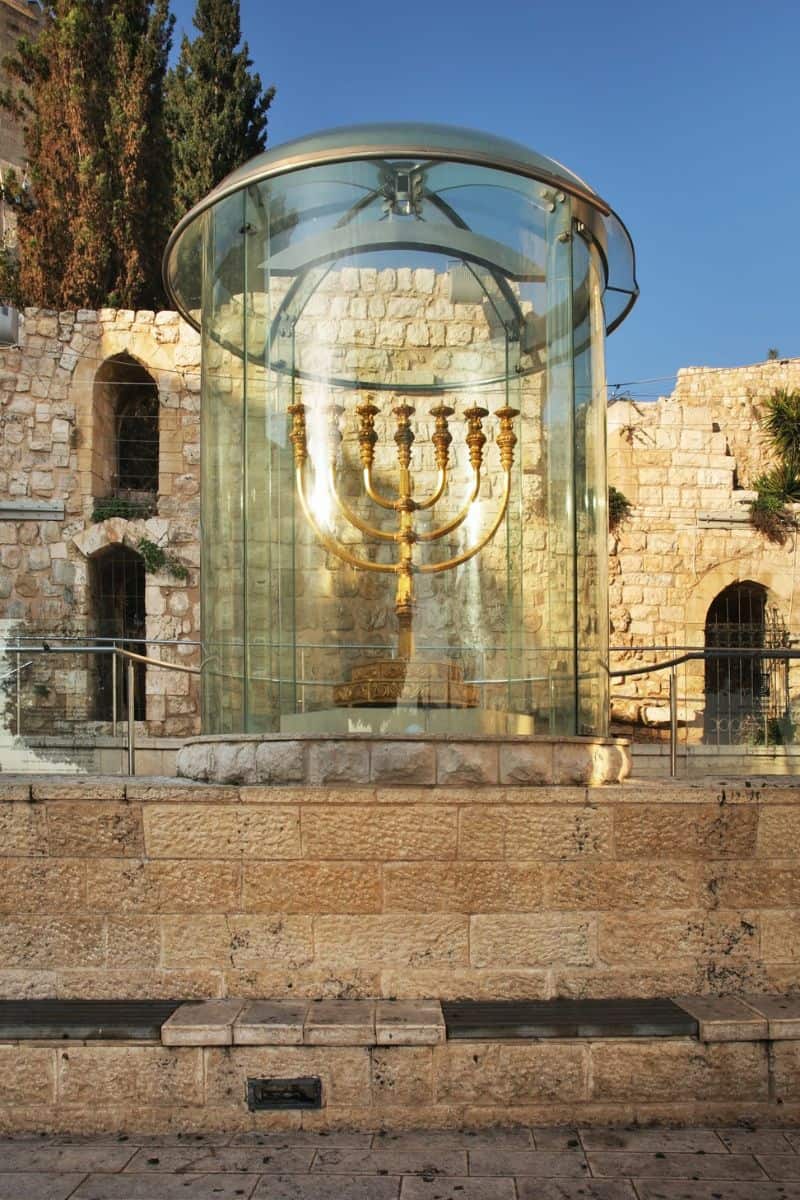
Unlike many legendary relic stories, we have unusually strong evidence for what happened to Jerusalem’s famous Temple menorah at one crucial moment.
Roman forces destroyed the Second Temple in 70 CE. The Arch of Titus in Rome famously depicts Roman soldiers carrying sacred spoils from Jerusalem, including a large seven-branched menorah.
Then the trail becomes murkier.
Ancient sources indicate that Temple treasures were displayed in Rome, but later wars and political upheavals complicate their fate. The Vandals sacked Rome in the fifth century and carried treasures to Carthage. Byzantine forces later conquered the Vandal kingdom, and historical accounts describe Jewish Temple vessels among the recovered treasures.
What happened after that is uncertain.
Modern legends sometimes claim the menorah remains hidden beneath the Vatican, but there is no credible evidence establishing that claim. The more responsible answer is less satisfying: an object we know existed and know the Romans carried away eventually disappears from the reliable historical record.
That’s almost more tantalizing than a purely legendary relic. The menorah isn’t an object historians doubt ever existed.
The mystery is where it went.
10. Relics Reveal How Badly Humans Want the Sacred to Leave Something Behind
Why would someone travel hundreds of miles to look at a tooth, a fragment of cloth, a piece of wood, or a metal spear?
Because abstract belief isn’t always enough.
Relics make sacred history physical. They allow believers to imagine standing inches from something touched by a prophet, saint, Buddha, martyr, or event that otherwise exists only in texts and traditions.
That’s why relics can become controversial. The more spiritually important an object becomes, the greater the incentive to possess it, steal it, duplicate it, challenge it, protect it, or build an institution around it. Medieval cities competed for relics because pilgrims brought prestige and money. Rulers collected them because sacred objects could reinforce political authority. Religious communities guarded them because losing a relic could mean losing part of their identity.
Modern science changed the questions we ask. We want carbon dates, DNA, archaeological context, documented provenance, and an uninterrupted chain of custody. Ancient and medieval believers often approached the objects through very different assumptions.
Some famous relics may eventually prove authentic. Some almost certainly aren’t what tradition claims. Others will probably remain impossible to verify.
But the persistence of relics tells us something even without solving their mysteries. Human don’t merely want to hear that sacred history happened. They want something they can touch.
The Mystery Is Part of the Power
The Ark may have been destroyed. The Shroud may be medieval. The Grail may belong more to literature than archaeology. A bone displayed as a saint’s may never be scientifically identifiable.
Yet uncertainty hasn’t killed these stories.
In some cases, it has made them stronger. A missing object invites a search. A disputed relic invites an argument. A fragment with an uncertain past allows faith, skepticism, history, and imagination to collide around something small enough to hold in your hand.
That’s why humanity keeps searching for sacred objects long after the people connected with them are gone.
Finding one would seem to collapse the distance between then and now.
You may want to read: 10 Ancient Religions That Once Flourished but Nearly Disappeared