11 ways women can spot pressure tactics before it’s too late
Pressure doesn’t always look like a demand; often, it looks like a favor with a hidden price tag or an urgent deadline you never agreed to. Research published in Social Indicators Research shows that having a sense of financial and emotional control is actually more important for your well-being than how much money you have in the bank.
When that control is chipped away, your health and happiness take a direct hit. Scientists like Bruce McEwen have found that chronic stress from high-pressure environments can even impair the part of your brain responsible for memory. This means that spotting these tactics early is more than relationship advice; it is protecting your physical brain and your future.
If you feel like you are losing your “epistemic autonomy”, that basic ability to trust your own judgment, you aren’t crazy. You are likely being managed.
Real power comes from recognizing the “pause” between a person’s pressure and your own response. Here is how to spot the invisible lines being crossed before the trap snaps shut.
Persistent Guilt-Tripping

Guilt is a heavy weight, and some people use it like a professional athlete uses a jump shot. Therapist Liza Gold defines this as the intentional manipulation of your emotions to make you feel bad about your choices. It is a tool designed to change your thoughts or actions by making you feel like you owe someone something.
In close relationships, this tactic thrives because the manipulator knows you actually care about their feelings. They use your empathy against you. You might hear sarcastic remarks like, “I guess you’re finally paying attention to me,” or “I do so much for you, so the least you could do is this.” These aren’t just complaints; they are subtle ways to keep you in a state of emotional debt.
If you find yourself constantly apologizing for things that aren’t your fault, take a step back. A healthy partner or friend communicates their needs directly without making you feel like a “bad” person for having your own life. Trading past hurts as currency for future favors is a major red flag that someone is pressuring you into compliance.
Isolation from Support

Isolation often starts as the ultimate compliment. A partner might say they can’t go a single day without seeing you or insist that your friends don’t “truly understand” the special bond you share. This flattering over-attachment is a classic pressure tactic designed to sideline your hobbies, family, and self-care.
Over time, these subtle suggestions turn into actual obstacles. Maybe they “accidentally” need the car when you have plans, or they suddenly get sick right when you’re headed out for a girls’ night. These barriers are meant to make it harder for you to maintain an external perspective.
Abusers and controllers use isolation to ensure they have constant access to you. By cutting off your support network, they eliminate the voices that might point out their bad behavior. If you feel like your world is shrinking until only one person remains in the center, you are being trapped.
Gaslighting Doubts
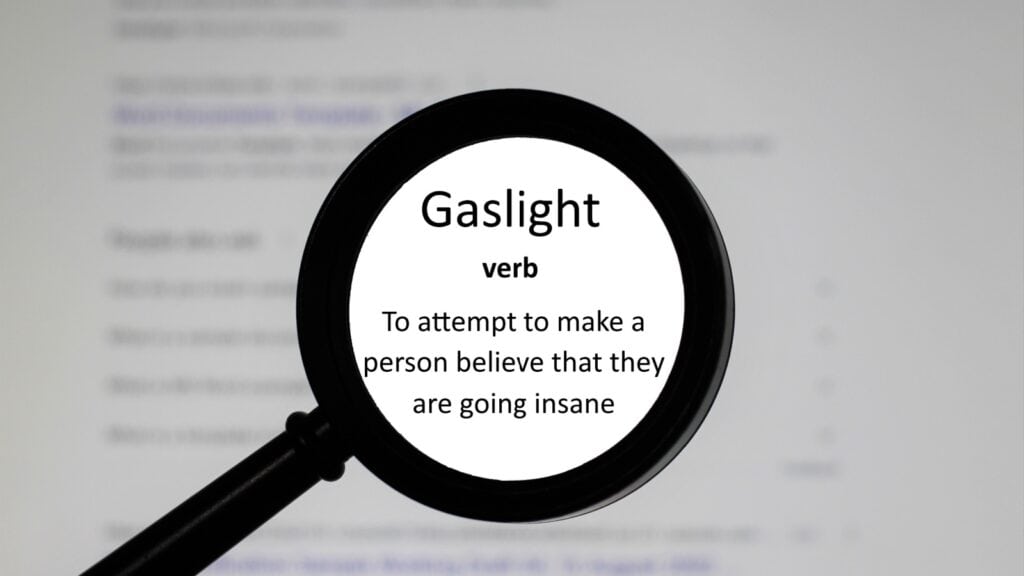
Gaslighting is a slow-burning tactic that erodes your trust in your own memory and perception. It often involves sustained denial and misdirection. You might hear phrases like “that never happened” or “you’re just being too sensitive” until you start doubting your own eyes.
Take the case of Rachel, a senior architect who started keeping a secret journal of conversations just to prove to herself she wasn’t losing her mind. Despite being an expert at work, she began second-guessing her professional calculations due to constant invalidation at home.
This works because our brains are wired to prioritize the reality of people we trust over our own experiences. Chronic stress from this dynamic causes “brain fog” and makes reasoning difficult. If you feel the need to record conversations just to feel sane, the pressure has already reached a dangerous level.
Rushed Commitments

Speed is the best friend of a manipulator. By rushing you into exclusivity or a big life change, a partner can bypass the natural evaluation phase where you would normally spot red flags. This is often called “emophilia,” where the thrill of love masks a lack of real compatibility.
A study shows that 90 percent of the rebound relationships fail within three months. These rushed bonds are more likely to involve jealousy, infidelity, and eventually, total emotional burnout.
If someone is steamrolling the pace of your relationship, ask yourself why. Real connection builds gradually through shared challenges, not through heavy texting and future-planning in the first week. If you feel pressured to say “I love you” or move in before you’re ready, slow down.
Financial Control Attempts

Money is a primary tool for coercion. A person might try to micromanage the spending or demand oversight of your accounts under the guise of “helping” with a budget. However, a study of over 1,400 adults shows that feeling in control of your money is a massive predictor of well-being.
When someone else dictates your finances, your resilience drops. You become less likely to pursue your own goals and more likely to bow to their pressure because you feel you have no other choice. This “external locus of control” makes you incredibly vulnerable.
Financial autonomy is a safety net. If a partner makes you feel guilty for spending your own money or hides information about shared assets, they are pulling on the strings of your independence. Protecting your financial agency is a non-negotiable part of a healthy life.
Monitoring Behaviors

What starts as “checking in” can quickly turn into a digital shadow. Frequent calls at work or demanding to know exactly who you are with are signs of excessive control. This behavior is often masked as concern, but it is actually an insult to your autonomy.
Insisting on picking you up from every meeting or friend’s house might seem romantic at first. In reality, it can be a way to track your movements and limit your professional and social networking. It shows a fundamental lack of trust from the other person.
Monitoring almost always progresses into something more pathological if it isn’t stopped early. Denial is a key part of this; they will claim they aren’t keeping tabs even while they interrogate you about a five-minute delay. Trust your instincts when you feel watched.
Victim Playing

Some people avoid accountability by making everything “someone else’s fault.” This is a defense mechanism where they dramatize their pain to hijack your empathy. If their boss, their ex, and the entire world are “against them,” you are seeing a pattern.
This victim mentality functions as a subtle pressure strategy. By exaggerating their helplessness, they trigger your natural urge to fix things. You end up sacrificing your own needs or staying silent about their bad behavior because you don’t want to “hurt” them.
When someone repeatedly insists they have no control over their life, they are shifting all responsibility onto you. This “poor-me” routine is designed to keep you on their side and under their thumb. Real vulnerability looks like taking ownership, not making excuses.
Boundary Oversteps

A boundary is not a suggestion. If you say “no” or express discomfort and the person keeps doing it, that is an intentional violation. They might try to play it off as a “misunderstanding” or claim they simply forgot, but repeated overstepping is a choice.
Mocking your limits is another soft-pressure tactic. If you are told you are “too sensitive” or that “someone else wouldn’t care” about a boundary, you are being conditioned to doubt your own standards. This is how overstepping becomes normalized in a relationship.
Your body often signals these violations before your mind does. Feeling anxious, sweaty, or “off” when someone is near can be a physical sign that your space is being invaded. Treat a repeated “no” as proof of pressure and a signal that it might be time to walk away.
Excessive Jealousy

Jealousy is often romanticized, but excessive jealousy is actually a tool for control. It pushes women to limit their own lives just to soothe a partner’s insecurity. This “fear-driven” jealousy sounds like “I’m scared to lose you,” but it acts like a cage.
Unhealthy coping looks like accusations, withdrawal, or blaming you for “making” them jealous. These responses block any real intimacy and force you to alter your behavior—like cutting off friends, just to avoid a fight. It turns your world into a series of trust tests.
Healthy couples treat insecurity as a shared problem to be solved with teamwork. Pressure tactics skip the teamwork and go straight to demands. If your integrity is constantly being questioned despite your honesty, the jealousy is being used as leverage, not love.
Conditional Affection

Conditional love is affection that is withheld unless you meet a specific standard. It sends the message that you are only lovable when you “behave correctly” or meet someone’s needs. This mimics the childhood experience of earning love through performance or grades.
This tactic creates intense shame and chronic anxiety. Your nervous system starts treating neutral events, like a delayed text, as a major threat because you feel you must “earn” back the connection. You end up overperforming just to feel safe again.
In romantic dynamics, this looks like a partner withdrawing emotionally when you make a mistake or during times of high stress. If you feel you have to avoid saying “no” just to maintain harmony, your relationship is based on compliance rather than authentic connection.
Future Faking Promises

Future faking is the art of selling a dream to buy your compliance today. A person might paint a vivid picture of a shared house, a dream vacation, or a life-long commitment to keep you from addressing the problems happening right now. It is a way to bypass your current boundaries by dangling a carrot that never arrives.
In romantic dynamics, this looks like equating love with perfection or future productivity. During times of stress, such as a job loss, the manipulator might withdraw affection as a form of punishment. This reinforces shame and makes you work even harder to “earn” back the dream they promised.
Attachment research shows that this pattern fosters anxious or avoidant attachments. You might find yourself anticipating their needs or over-performing just to keep the peace. If the conversation always shifts to a “someday” that never comes when you bring up a “today” problem, you are being pressured to stay silent.
Key Takeaways

- When affection is used as a reward for obedience, it erodes your self-worth over time.
- The ultimate goal of all these pressure tactics is to limit your autonomy through guilt, money, or the silent treatment.
- Financial control equals emotional vulnerability.
- The moment you start trusting your “gut” over their narrative, you begin to reclaim your power.
Disclaimer – This list is solely the author’s opinion based on research and publicly available information. It is not intended to be professional advice.
Like our content? Be sure to follow us.