12 classic Boomer phrases you’ll hear at restaurants
A Zagat survey found that Americans eat out roughly 5.9 times per week, which means restaurants are among the few spaces where every generation still physically occupies the same room.
No algorithm sorts you by age cohort. No feed curates who sits at the next table. The result is a dining room that doubles as a generational fault line, and nowhere does that tension surface more reliably than in the phrases that leave a boomer’s mouth between sitting down and settling the check.
None of these phrases exists in a vacuum. They carry the full weight of a generation raised on predictable menus, laminated prices, diner-booth intimacy, and a service culture that treated the customer’s comfort as the organizing principle of the meal.
That world largely no longer exists, and the phrases persist anyway, sometimes as genuine grievance, sometimes as reflex, and occasionally as the most medically sound thing anyone at the table has said all evening.
“Back in my day, you could get a full meal for a dollar.”

Lunch at a diner in 1965 cost about $1.25. A comparable plate at an American casual dining chain today runs $17 to $22 before tax and tip.
The problem is that the dollar figure gets cited without the accompanying fact that the median household income in 1965 was $6,900 annually, and a $1.25 lunch consumed roughly 0.018% of yearly earnings. Today’s equivalent meal at $18 against a median household income of $74,580 costs 0.024% – meaningfully higher, but not the apocalyptic gap the sentiment implies.
The phrase still carries weight, though, and not purely from selective memory. Restaurant margins have genuinely tightened for consumers. Between 2020 and 2023, menu prices rose 8.3% in a single year, the sharpest jump since 1981, according to the National Restaurant Association.
Boomers were also the first American generation to eat out regularly as a childhood norm, raised during the postwar suburban restaurant boom when Howard Johnson’s and Denny’s were novelties, not habits. The emotional reference point is real, even if the math is romanticized.
“Is the manager here? I’d like to speak with someone.”

The phrase has become cultural shorthand for a certain kind of consumer posture, one that treats service workers as intermediaries between the customer and institutional power. What makes it particularly loaded in a restaurant context is that the server being bypassed usually has less job security, fewer benefits, and no union protection than the manager being summoned, yet the customer almost always walks away satisfied while the server absorbs the social aftermath.
Older consumers often bypass frontline employees and escalate complaints directly to management or regulatory authorities. This behavior typically stems from a preference for formalized procedures, a lower tolerance for confrontational peer-to-peer negotiations with service staff, and a desire to ensure their concerns are officially documented.
Younger diners, by contrast, tend to either say nothing and leave a one-star review or address the server directly. Neither approach is flawless, but the managerial escalation pattern carries a specific dynamic, the implicit belief that a problem isn’t real until someone with a title acknowledges it. Restaurants have increasingly trained managers to de-escalate these encounters fast because studies show a resolved complaint can generate stronger brand loyalty than a transaction that went smoothly from the start.
“We don’t need to look it up, I know what I want.”

The laminated menu used to be a fixed map. You memorized it on the third visit and ordered without looking by the fifth. That muscle memory became a point of pride – and for a generation that grew up without algorithmic suggestions, it also represented self-sufficiency. Knowing what you want, unprompted, was a social signal.
The QR code menu, which became nearly universal in U.S. restaurants post-2020, dismantled that completely. You can’t memorize a menu that changes seasonally, rotates by day-part, or redirects to a landing page that loads differently on iOS versus Android.
By 2022, no more than half of U.S. restaurants had adopted QR menus, either partially or fully. Diners over 65 report discomfort or frustration with QR-based ordering. Decision fatigue and scrolling through 47 items on a small phone screen genuinely impairs the quality of a choice compared to scanning a single laminated page.
“Do you have decaf? I can’t do caffeine this late.”
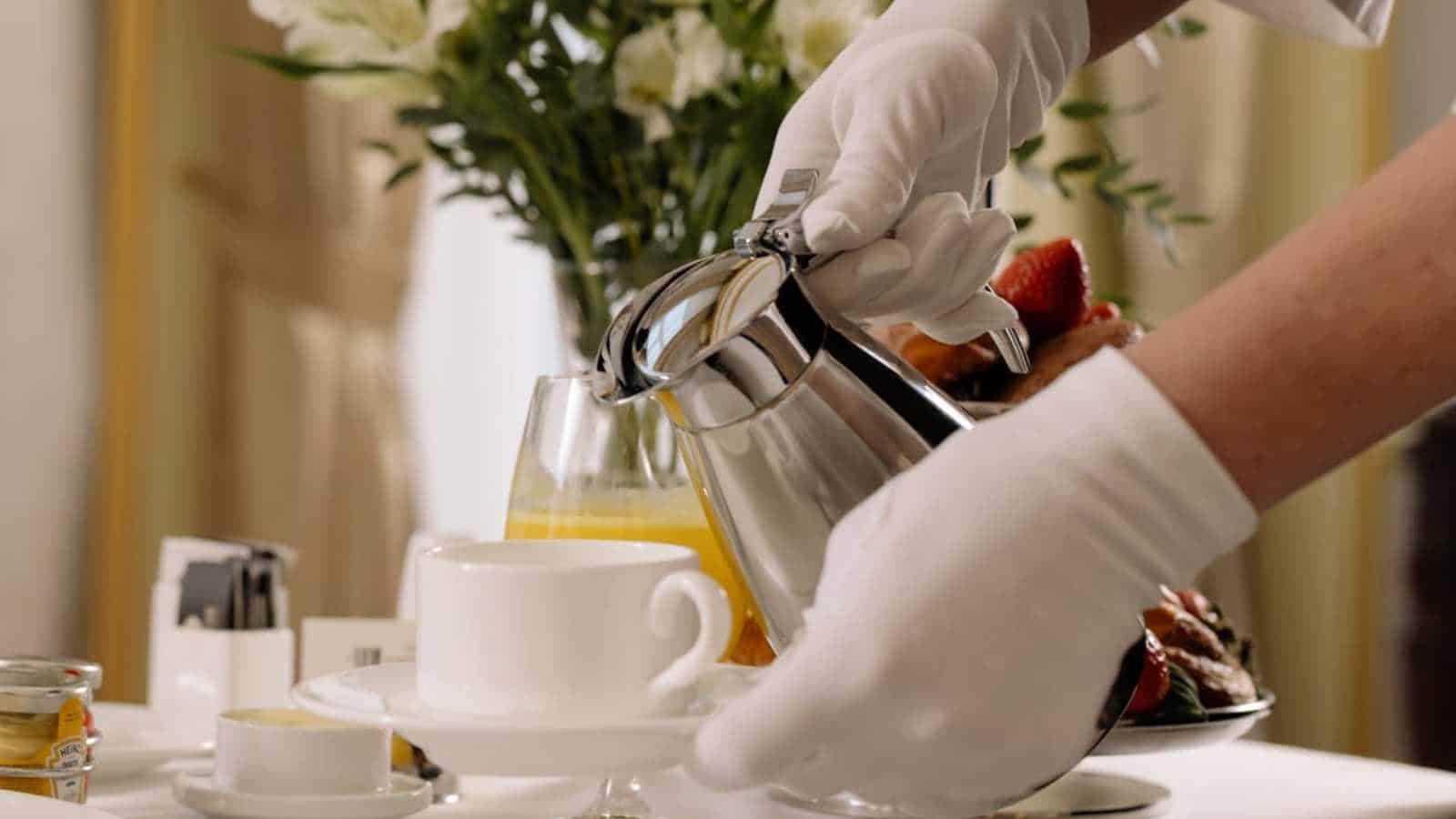
Decaf has a branding problem. For decades, it occupied the sad corner of the coffee menu – ordered apologetically, served in a different pot, occasionally confused with regular by an overworked server. But the phrase itself is one of the more medically self-aware things the boomer generation says at dinner, and it’s usually dismissed more than it deserves.
Caffeine’s half-life in the human body is five to seven hours, meaning a 3 p.m. espresso is still 50% active in your bloodstream at 8 p.m. In adults over 60, hepatic caffeine metabolism slows further, extending the half-life to as long as 10 hours. Sleep architecture also changes meaningfully with age, and adults over 65 are disproportionately affected by late caffeine intake compared to younger cohorts.
The irony is that the same generation mocked for ordering decaf at 7 p.m. is the one that worked decades of jobs where sleeping well wasn’t culturally valued, the same group that bragged about running on four hours and a pot of black coffee at 45. Asking for decaf at dinner may be one of the few genuine concessions that generation makes to its own biology. The server is still refilling the pot from the wrong carafe half the time, though.
“Can you ask the chef to make it plain? No sauce, nothing fancy.”
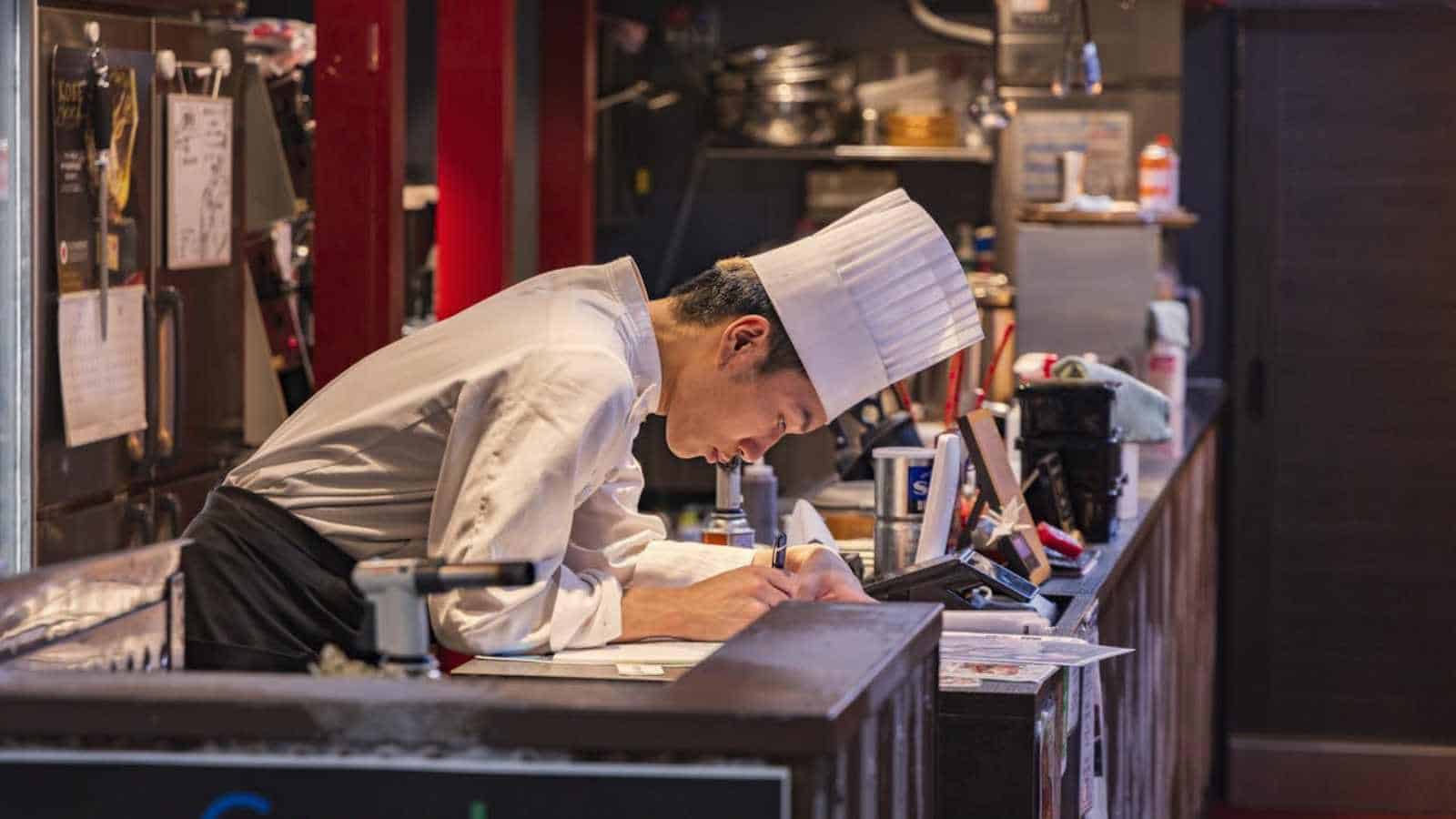
Plain ordering has a longer cultural history than the current narrative about picky eaters suggests. The postwar American palate was deliberately engineered toward uniformity. Chain restaurants standardized food to serve a mobile, middle-class population that had just moved from cities to suburbs, and the cultural reward was predictability. You ordered a burger; it came like a burger. Sauce was extra. Elaboration was a problem for a foreign restaurant.
Burger King hit 3,000 stores in 1982 and 5,500 by 1989. KFC had 5,800 stores by 1983. McDonald’s had roughly 7,000 U.S. locations by the mid-1980s. All of them built their menus around customization-down rather than customization-up – you removed things, you didn’t add them.
Asking for a plate with no sauce, no garnish, no drizzle is behaviorally consistent with that training. The tension arises in restaurants where the chef’s preparation is the point, where the beurre blanc isn’t a topping but the technique itself, and stripping it apart dismantles what the dish is.
“Split the check? We used to just figure it out.”

The arithmetic of splitting a check among six people, three of whom drank, one of whom ordered the salmon, was never actually simple. It was just performed with more tolerance for imprecision. Someone slightly overpaid. Someone was slightly underpaid.
Nobody said anything because the social cost of speaking outweighed the financial cost of being short a few dollars. That system worked because cash was universal, and exact change was a shared social inconvenience everyone absorbed without pulling out a calculator.
Digital payments have removed the imprecision but also the social friction that bound them together. Venmo requests following a restaurant dinner are now genuinely common. For boomers who built social bonds partly through the looseness of group economics – the round-buying, the over-tipping, the casual reciprocity – the precision of itemized digital splitting reads as a kind of social coldness.
Splitting to the cent is not the equivalent of communal eating; it is shared logistics. Whether that distinction matters at a table of coworkers in their thirties having lunch on Thursday is another question entirely.
“The portions used to be so much bigger here.”
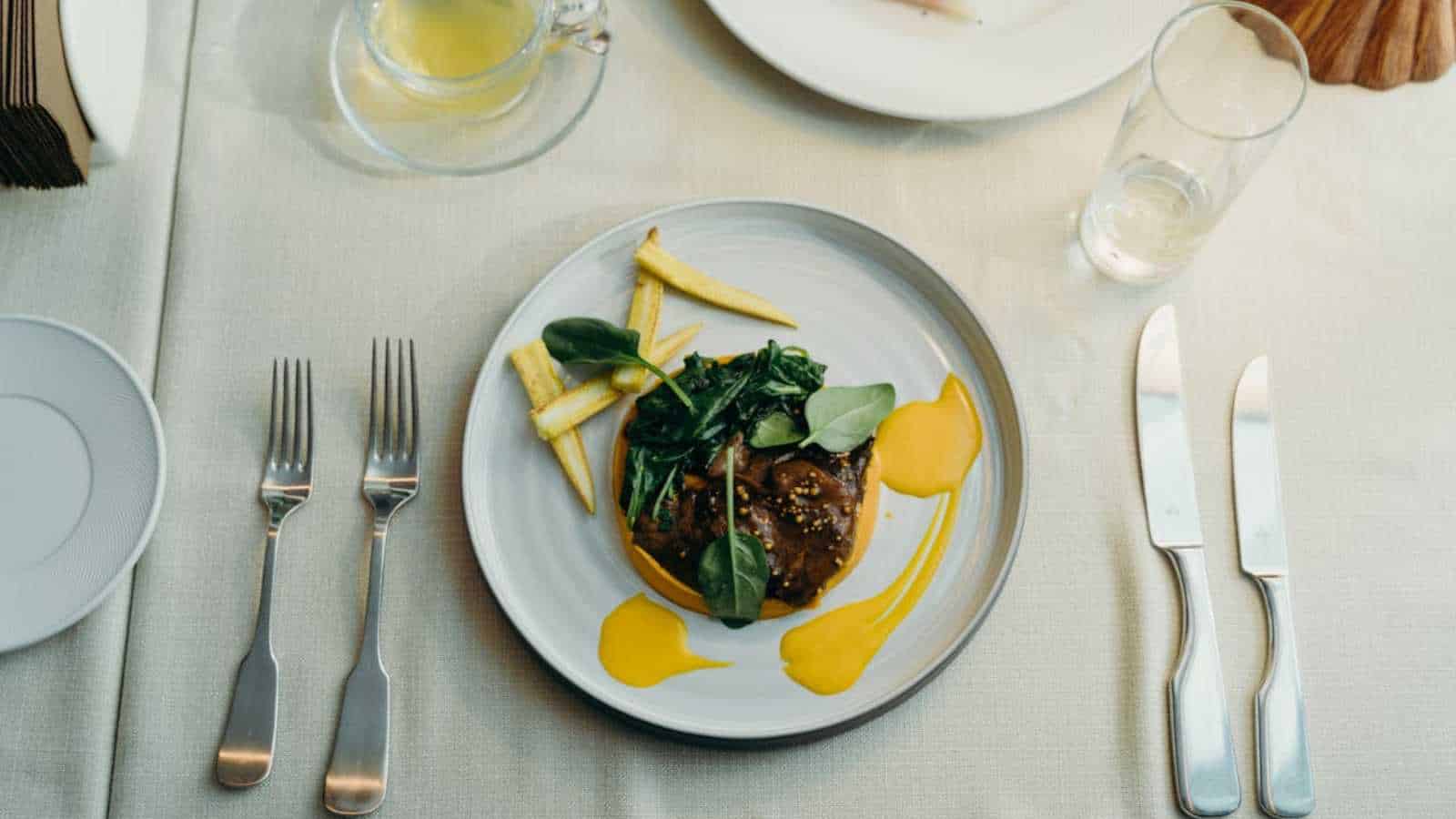
They were. Restaurant portion sizes in the United States grew substantially from the 1970s through the early 2000s. A standard plate of spaghetti and meatballs that served 500 calories in 1970 routinely served 1,000 by 2000.
Those larger portions were one driver of the doubling of obesity rates among American adults between 1980 and 2000, per CDC surveillance data. The restaurant industry’s portion contraction since the mid-2000s – partly regulatory, partly cost-driven, partly public health-responsive – is one of the less-celebrated aspects of a genuine shift in how food is served commercially.
What complicates the straightforward narrative is price: portions shrank while prices rose, partly because food costs increased and partly because shrinkflation is a documented industry practice. So the boomer at the table is simultaneously right that the plate is smaller and right that it costs more, but the preferred conclusion, that the restaurant has simply gotten worse, papers over about four decades of public health literature on why that change occurred.
“Just give me a real cup of coffee, not that foam stuff.”

Espresso-based drinks entered the American mainstream dining scene as status objects before becoming preferences. For boomers whose coffee identity formed in the diner era, the foam, the micro-bubbles, and the ceramic tulip-shaped vessel are aesthetic impositions on a beverage that was perfectly functional in a porcelain mug.
Filter coffee, the standard drip-brewed version boomers grew up drinking, has a different extraction profile than espresso. It produces lower concentrations of cafestol and kahweol, the two diterpene compounds in coffee associated with increases in LDL cholesterol, because paper filters trap them.
Research has proven that filtered coffee is associated with lower cardiovascular mortality than unfiltered or espresso-based preparations. That is not a reason to be rude to the barista, but it is a reason to take the preference seriously rather than dismiss it as a generational inability to enjoy a cortado.
The diner’s cup of coffee has, quietly, a better cardiovascular profile than the $7 oat milk latte. That fact rarely surfaces in these conversations.
“Why is the music so loud? We can’t hear ourselves think.”

Restaurant acoustics became a documented public health issue somewhere between artisanal tile floors, open ceilings, and the design aesthetic that treats ambient noise as evidence of energy. The average sound level in trendy urban restaurants in the United States ranges from 80 to 90 decibels.
This range is classified by the Occupational Safety and Health Administration as requiring hearing protection for sustained occupational exposure beyond two hours. People are eating dinner in spaces where, by federal workplace standards, workers would need earplugs.
Among adults over 65 who experience natural high-frequency hearing loss beginning around age 60, the problem is neurologically specific. The brain’s ability to isolate one conversation from background sound degrades significantly with age, making loud restaurants disproportionately exclusionary for older diners.
A competing view suggests that restaurant operators deliberately cultivate noise as social proof, the auditory equivalent of a packed room signaling desirability. At 85 decibels, people order defensively, defaulting to familiar items, shortening their stays. Loud restaurants are running a losing game with their own acoustics.
“We always leave 15%. That’s what you tip.”
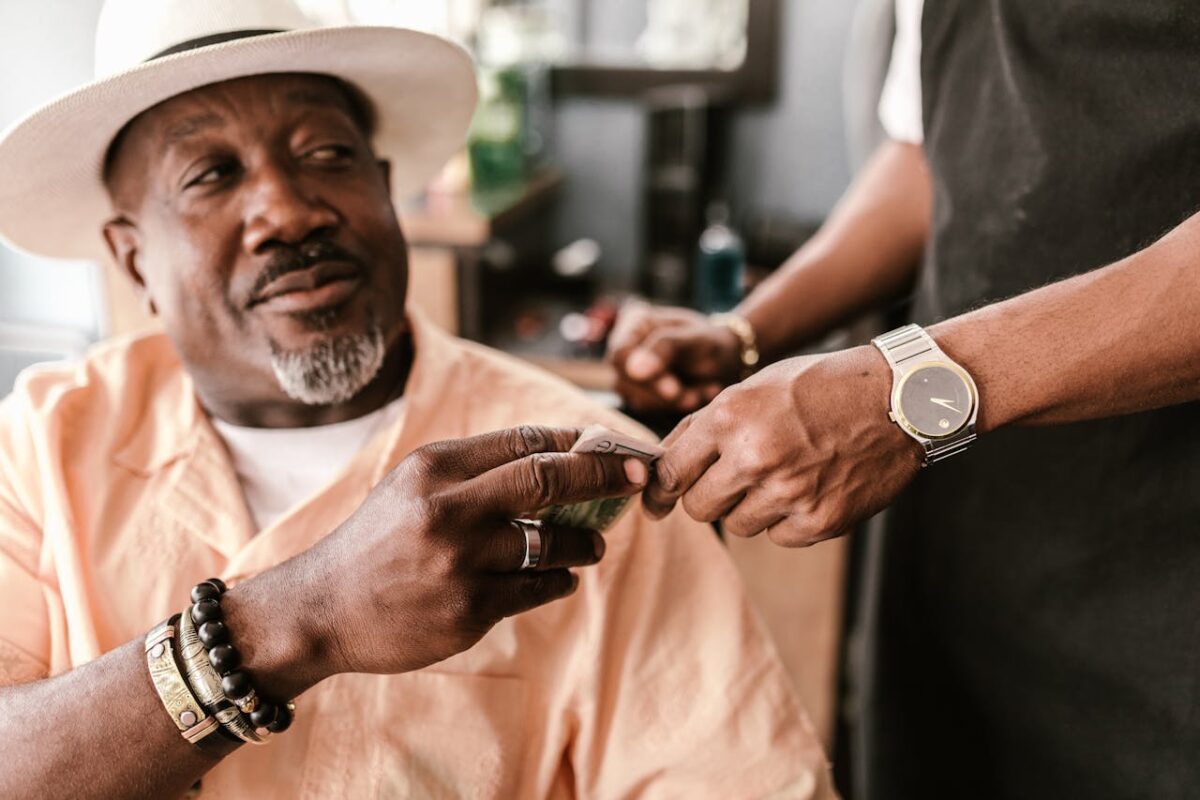
The 15% gratuity standard originated from the mid-20th-century American service industry and was essentially institutionalized by the 1960s. It was also calculated against a check that looked different from today’s – no mandatory service fees, no credit card processing surcharges passed to the consumer, no tipping prompts on the tablet that start at 20% and consider 18% an insult.
The baseline has shifted, but the calculation persists unchanged. The average American tip at full-service restaurants has risen because social norming via digital POS systems shifted the anchor upward, and many diners simply tap the middle option.
Tipped restaurant workers in the U.S. are legally paid a federal minimum wage of $2.13 per hour in states that allow the tip credit, a rate unchanged since 1991, per the Department of Labor.
A 15% tip on a $60 check is $9, which is meaningful in isolation, but in the context of a server managing six tables, absorbing kitchen errors, and working without guaranteed earnings, it becomes something else. Stiffing on 5% because the food took longer than expected places a wage penalty on a worker who typically had no control over the kitchen.
“We’ll wait for a booth; we don’t like tables.”
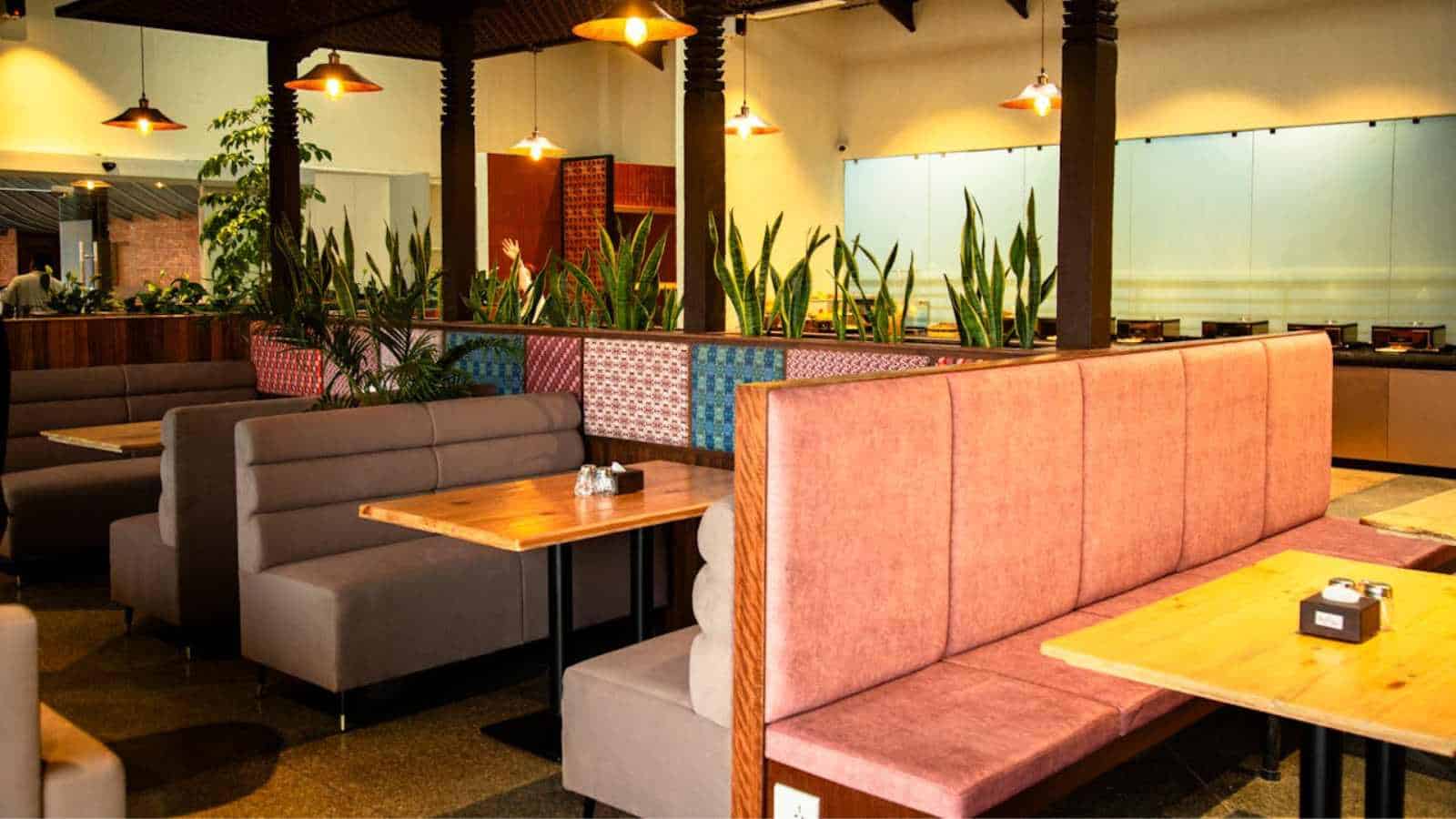
Booths provide fixed back support that a freestanding chair rarely matches, create a partial acoustic enclosure that softens the noise of a busy dining room, and remove the low-grade discomfort of being visible from multiple directions at once.
For a generation that grew up treating restaurant outings as deliberate occasions rather than casual transactions, the booth also carried a specific social meaning: it was the architecture of a private conversation in a public room.
A couple occupying a six-person booth on a Friday night removes that table from rotation for the entire service window, creating gaps that ripple through the host stand’s entire seating math. Some restaurants have installed two-tops with high backs as a quiet compromise – the enclosure effect without the capacity loss. Whether the boomer at the door registers that design concession or simply asks for a booth anyway is a question the front-of-house already knows the answer to.
“Excuse me, we’ve been waiting longer than that table.”

Waiting without activity distorts time perception sharply; ten minutes of standing near a host stand with nothing to look at registers closer to eighteen in the mind of the person standing there, and once another table gets seated first, the distortion compounds. Perceived unfairness accelerates subjective time, as pain does; it makes every additional minute feel punitive rather than neutral.
What the phrase actually encodes is a fairness complaint wearing the clothes of timing. The implicit claim is that preferential treatment occurred, that whoever manages this room made a choice, and it was the wrong one. That belief is almost never accurate, either.
A host at a busy dinner service is managing party size, table availability, server rotation, and reservation holds simultaneously, and the couple who walked in five minutes before a four-top gets seated because a four-top opened, not because anyone ranked them lower.
Older diners tend to vocalize this faster and more directly than younger ones, partly because decades of dining out have built a strong internal clock around pacing, and partly because the expectation of being attended to – promptly, visibly, without having to wonder – was simply how restaurants operated in the era that shaped their habits.
Key takeaways

- The boomer instinct to order plain, wait for a booth, and pay 15% flat is not stubbornness for its own sake – it is decades of conditioning from a food industry that was specifically engineered to reward exactly that behavior.
- Several of these phrases are more defensible than they appear: decaf at dinner is neurologically sound, filtered drip coffee carries a measurably better cardiovascular profile than espresso, and the noise complaint is backed by federal workplace safety thresholds.
- Perceived wait times at restaurants are almost always longer than actual wait times, and fairness complaints are rarely about the clock – they are about the feeling of being ranked.
- The 15% tip standard was built for a check that no longer exists, against a labor law that has not changed since 1991.
- Portion sizes did shrink, prices did rise, and the boomer observing both at dinner is factually correct on the surface – what gets omitted is four decades of public health rationale for why the industry made that shift.
Disclaimer – This list is solely the author’s opinion based on research and publicly available information. It is not intended to be professional advice.
Like our content? Be sure to follow us