12 reasons the AI boom is becoming a climate risk for Big Tech
The AI boom is starting to look less like a clean digital revolution and more like a massive construction race against heat, storms, power shortages, and rising climate costs. For years, artificial intelligence was sold mostly as software: smarter chatbots, faster search tools, automated coding, image generators, and productivity apps. Now the physical reality behind it is becoming impossible to ignore.
Behind every AI answer is a chain of data centers packed with power-hungry chips that must be cooled around the clock. As Europe faces punishing heat and the United States sees data centers spreading into new markets, Big Tech is confronting a hard question: what happens when the infrastructure powering AI is itself vulnerable to the climate pressures it may help intensify?
The boom is colliding with extreme weather

Reason 1: Data centers are being built in a hotter world. AI systems need enormous computing power, and that power produces heat. Even in normal weather, data centers use major amounts of energy just to keep servers cool. During heatwaves, that cooling burden rises at exactly the moment homes, businesses and cities are also blasting air conditioning.
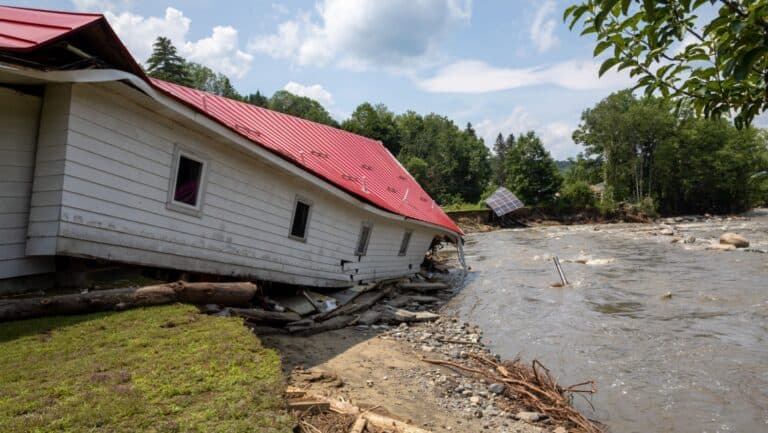
Reason 2: Severe weather is no longer a side issue. Zurich’s construction insurance portfolio has seen severe weather become a leading source of losses for U.S. data center builders, according to the source material. That matters because data centers are not small buildings. A single project can represent billions of dollars in exposed assets, with large rooftops, cooling towers, HVAC systems, and energy equipment at risk from hail, high winds, flooding, or wildfire smoke.
Reason 3: New sites may carry hidden climate risks. As established hubs such as Northern Virginia become crowded and expensive, companies are moving into frontier markets, including West Texas, Tennessee, Wisconsin, and Ohio. Cheaper land can look attractive on a spreadsheet, but some of these areas bring tornado, hail, wind, drought, or heat risks that are harder to price when the land was previously underdeveloped.
The grid is becoming the pressure point

Reason 4: AI needs power when the grid is already strained. Extreme heat stresses the same electrical system that data centers depend on. When temperatures spike, air conditioners increase demand across entire cities. At the same time, AI facilities may need even more electricity to keep chips from overheating. That creates a dangerous overlap: data centers need more power when the grid has less room to spare.
Reason 5: Local blackouts are becoming a concern. The source material points to Turin, Italy, where intense heat reportedly placed underground cables under thermal stress and contributed to repeated blackouts. Add a large data center load to that kind of system, and the risk becomes more serious. The concern is not only whether a tech company can keep servers online, but whether surrounding communities may feel the pressure through outages, upgrades, or higher power costs.
Reason 6: Data center demand is growing too fast to treat as ordinary growth. The International Energy Agency has projected that global data center electricity use could more than double by 2030. In the United States, federal research has estimated that data centers used about 4.4% of total U.S. electricity in 2023 and could rise sharply by 2028. For Big Tech, that means AI expansion is no longer just a product strategy. It is becoming a powerful strategy.
The business risk is getting harder to hide

Reason 7: Insurers are watching more closely. Climate risk analytics firm First Street recently found that 79% of global data center capacity faces elevated acute climate hazards, including flooding, extreme winds, and wildfires. That finding changes the financial conversation. If insurers see a data center as more vulnerable, coverage can become more expensive, more limited, or harder to secure.
Reason 8: Climate risk threatens the capital behind AI. The AI buildout is being funded by enormous spending from Big Tech, infrastructure investors, lenders, and private capital. But if weather damage, downtime, insurance costs, and grid constraints increase, the economics become less predictable. In plain terms, the risk is not just that a storm knocks out a facility. It is that climate exposure makes the entire AI infrastructure boom more expensive to finance.
Reason 9: Investors are looking beyond growth headlines. AI remains one of the most powerful business stories in the world, but shareholders are also watching whether companies can manage the costs behind that growth. Goldman Sachs has forecast a major surge in data center power demand by 2030. That kind of growth can create opportunity, but it also raises questions about margins, energy contracts, emissions pledges, and whether communities will accept more facilities.
Big Tech’s fixes are not a free pass

Reason 10: Better cooling helps, but it does not erase the problem. Nvidia has said that newer AI servers can operate with cooling liquid at 45 degrees Celsius, and that raising chiller temperatures can reduce cooling energy costs. That is important because small efficiency gains can matter at hyperscale. Still, more efficient cooling does not eliminate the larger climate issue if total AI demand continues to rise faster than efficiency improves.
Reason 11: Companies are redesigning data centers for a harsher climate. Microsoft has said its data centers are designed with site selection, redundant systems, and real-time monitoring to help manage extreme heat and severe weather. Johnson Controls has also seen customers begin to add a “climate change factor” to cooling specifications. That shift is telling. Climate adaptation is moving from a sustainability talking point into engineering paperwork.
Reason 12: The public debate is catching up to the physical reality. Communities are not only asking what AI can do. They are asking what it costs. Data centers can bring investment, construction jobs and tax revenue, but they can also raise concerns about electricity demand, water use, noise, land use and pressure on local infrastructure. That makes the AI boom a neighborhood issue, not just a Silicon Valley issue.
The climate question AI can no longer avoid

The central tension is not that AI should stop or that data centers are automatically bad. The issue is that the industry is expanding at a speed that may outrun the power grids, planning systems, and climate assumptions built for an earlier era. Big Tech is racing to build the infrastructure of the future while depending on electrical systems and weather models that are being tested in the present.
The companies that win the next phase of AI may not simply be the ones with the best models or the fastest chips. They may be the ones that can secure cleaner power, build in safer locations, cool servers more efficiently, protect communities from grid stress, and prove that digital growth can survive a more volatile climate.
Key takeaways

The AI boom is becoming a climate risk for Big Tech because artificial intelligence now depends on massive physical infrastructure that must operate through heatwaves, storms, power shortages and rising insurance costs. The future of AI will be shaped not only by software breakthroughs but by whether the industry can build responsibly in a warming world.
Disclaimer – This list is solely the author’s opinion based on research and publicly available information. It is not intended to be professional advice.
Like our content? Be sure to follow us.