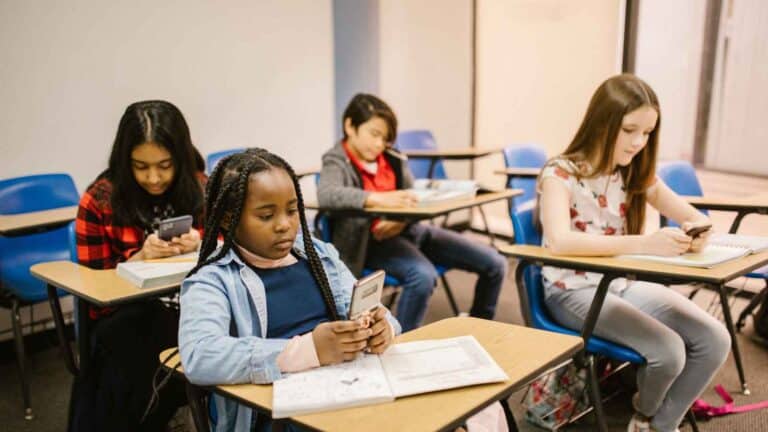
12 school subjects that have disappeared from classrooms
American schools did not drop these subjects in one dramatic purge; they squeezed, renamed, and digitized them until many students barely recognized them. The National Center for Education Statistics reports that in 2019, public high school graduates earned an average of 28.01 credits, yet academic courses claimed 74.6% of those credits while career and technical education claimed just 9.9%. Curriculum professor Paul Fitchett traces part of this shift to “a narrowing of the curriculum starting in the ’90s,” when schools placed greater weight on standards and tested subjects.
For this list, “disappeared” means a subject lost its familiar place as a stand-alone class, changed its name, merged with another course, or retreated into a specialized elective. Some schools still offer every item here, but national trends show that fewer students encounter the traditional versions their parents or grandparents knew.
Cursive handwriting and penmanship

Schools once devoted regular classroom time to letter formation, spacing, posture, pen control, and cursive writing. The Common Core standards launched in 2010 without a cursive requirement, and many districts quickly shifted that time toward keyboarding and test preparation. The story now includes a surprising reversal, though: by 2026, at least half of the states had adopted cursive instruction after its sharp post-Common Core decline.
The comeback involves more than nostalgia for fancy signatures. Research with young children found that self-generated handwriting activated parts of the developing reading system more strongly than typing or tracing did, while another study found that handwriting practice helped adults develop motor and symbolic representations of letters. I would not replace laptops with ink bottles and feather quills, but a few minutes of handwriting practice hardly sounds like educational malpractice.
Traditional home economics

Traditional home economics combined cooking, nutrition, household budgeting, sewing, child development, sanitation, and consumer skills in one practical course. Schools now place much of that material under family and consumer sciences, culinary arts, health, or personal finance. Even with the broader label, public high school graduates earned only 0.41 family and consumer sciences credits on average in 2019, equal to just 1.4% of all credits.
Author and home economics historian Danielle Dreilinger argues that “home is more inclusive than family,” since every student manages food, clothing, money, and living space regardless of family structure. I agree with that logic because adulthood gives everyone grocery bills and laundry, yet it provides absolutely no helpful tutorial screen. Schools preserved pieces of home economics, but they often removed the one class that connected those pieces into a usable guide for daily life.
Industrial arts and woodshop
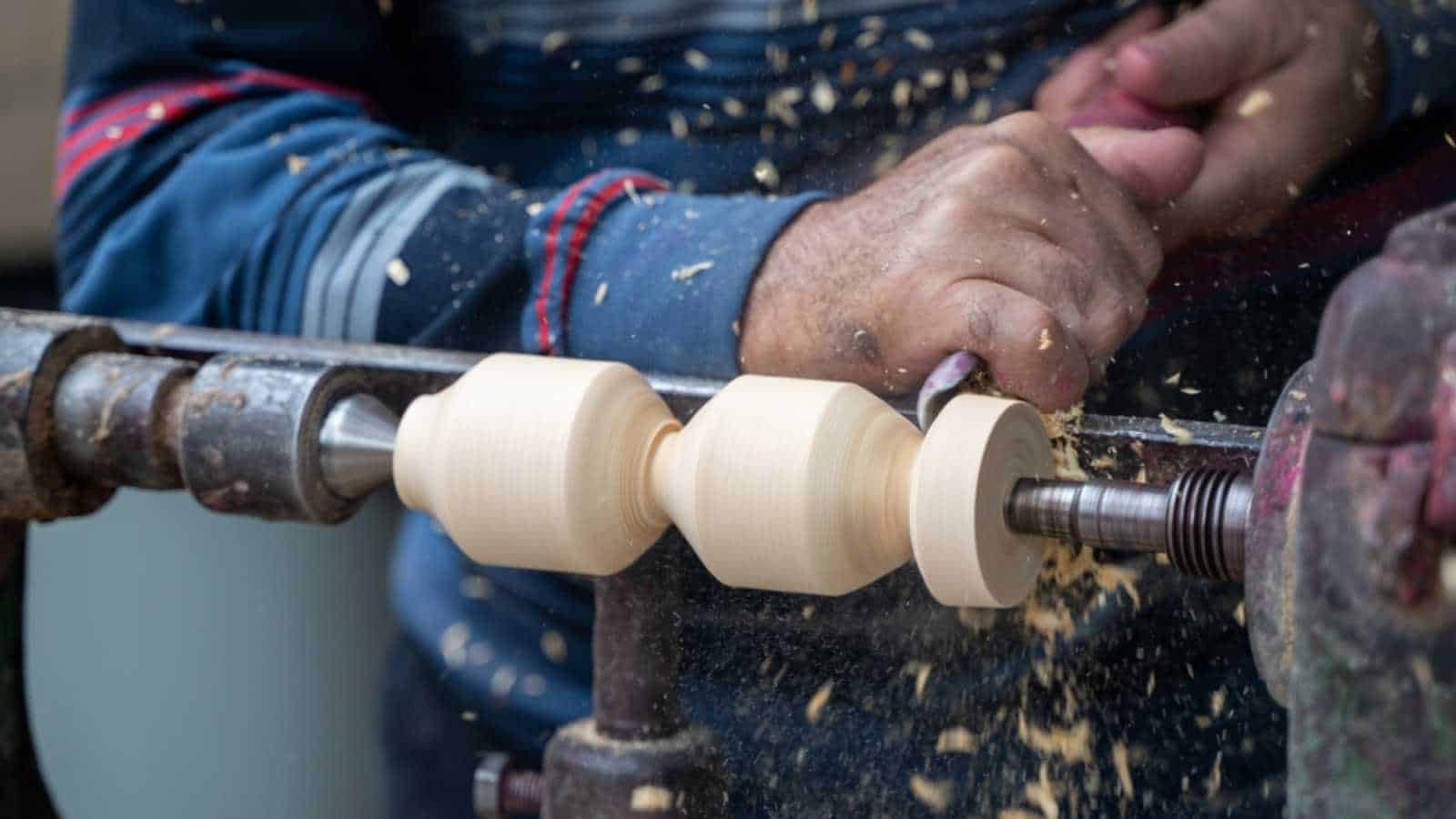
Industrial arts once gave large numbers of students direct experience with woodworking, metalworking, machinery, electrical systems, measurement, and tool safety. By 2009, however, only 3.9% of public high school graduates earned any industrial arts credit, and graduates averaged only 0.04 credits in the subject across the country. Those numbers show just how far the traditional shop class had moved from the center of the American high school schedule.
Modern career and technical programs now teach many of the same skills through construction, engineering, robotics, manufacturing, and mechanical repair. In 2019, graduates averaged 0.16 credits in construction, 0.15 in manufacturing and technology, and 0.13 in mechanical repair and operation. The new courses often use better technology and connect more directly to careers, but fewer students receive universal exposure to the basic pleasure of building something that does not require a password reset.
Stand-alone typing class

Typing class once trained students to sit properly, use the home row, build speed, and produce clean business documents without staring at their fingers. Federal education reports once classified introductory typing and word processing as general labor-market preparation. By 2019, graduates earned only 0.16 computer-literacy credits on average, accounting for a tiny 0.6% of all high school credits.
Schools often assume that children who use phones and tablets already understand keyboards, but texting with two thumbs does not equal touch typing. Researchers who followed 62 children through an online typing course analyzed more than 1 million keystroke intervals, showing that skilled typing develops through structured practice rather than digital osmosis. Students still type constantly, yet many classrooms no longer teach the technique as a dedicated skill.
Latin as a mainstream language

Latin still appears in classical schools and some college-preparatory programs, but it has lost the broad position it once held in American language education. In 2000, 4% of high school graduates earned Latin credit; that share slipped to 3.7% in 2009 and 2.7% in 2019. During the same year, 70% of graduates earned Spanish credit, so schools clearly shifted language offerings toward languages that students could use in immediate conversation.
That choice makes practical sense, but Latin taught more than a collection of dramatic phrases for courtroom scenes. It helped students examine grammar, scientific terminology, legal vocabulary, and the roots of English words. Should every teenager spend four years translating Caesar? Probably not, but the subject’s retreat removed one route into close reading and language structure, especially for students outside selective or privately funded schools.
Full-year civics
Many students still study government, but fewer encounter the old full-year civics course that focused on institutions, constitutional rights, local government, elections, public debate, and civic responsibility. A national policy review found that 38 states required a stand-alone high school civics course, yet only six required a full year. The same review noted that 44% of school districts had reduced social studies instructional time over the previous two decades.
States have started pushing back against that decline. Lawmakers introduced more than 200 civics-related bills across 43 states during the period covered by the 2022 review, including proposals for middle-school courses, civic projects, and diploma recognition. How can students evaluate a campaign promise, follow a city budget, or understand a court ruling when schools treat civics like a short chapter that everyone reaches three days before summer vacation?
Geography as its own subject

Geography often survives inside social studies, but many schools no longer give it a separate teacher, textbook, or place on the schedule. The 2018 National Assessment of Educational Progress tested about 12,900 eighth graders and reported an average geography score of 258, three points below the 2014 result. The 2018 score also showed no significant improvement over the first national geography assessment in 1994.
That stagnation matters because geography involves more than identifying Kansas on a blank map. Students use it to understand migration, trade, voting patterns, climate, natural resources, urban growth, and international conflict. Schools often bury those ideas inside history courses, but teachers rarely find enough time to teach them deeply when English and math consume larger blocks of the day.
School-run driver’s education
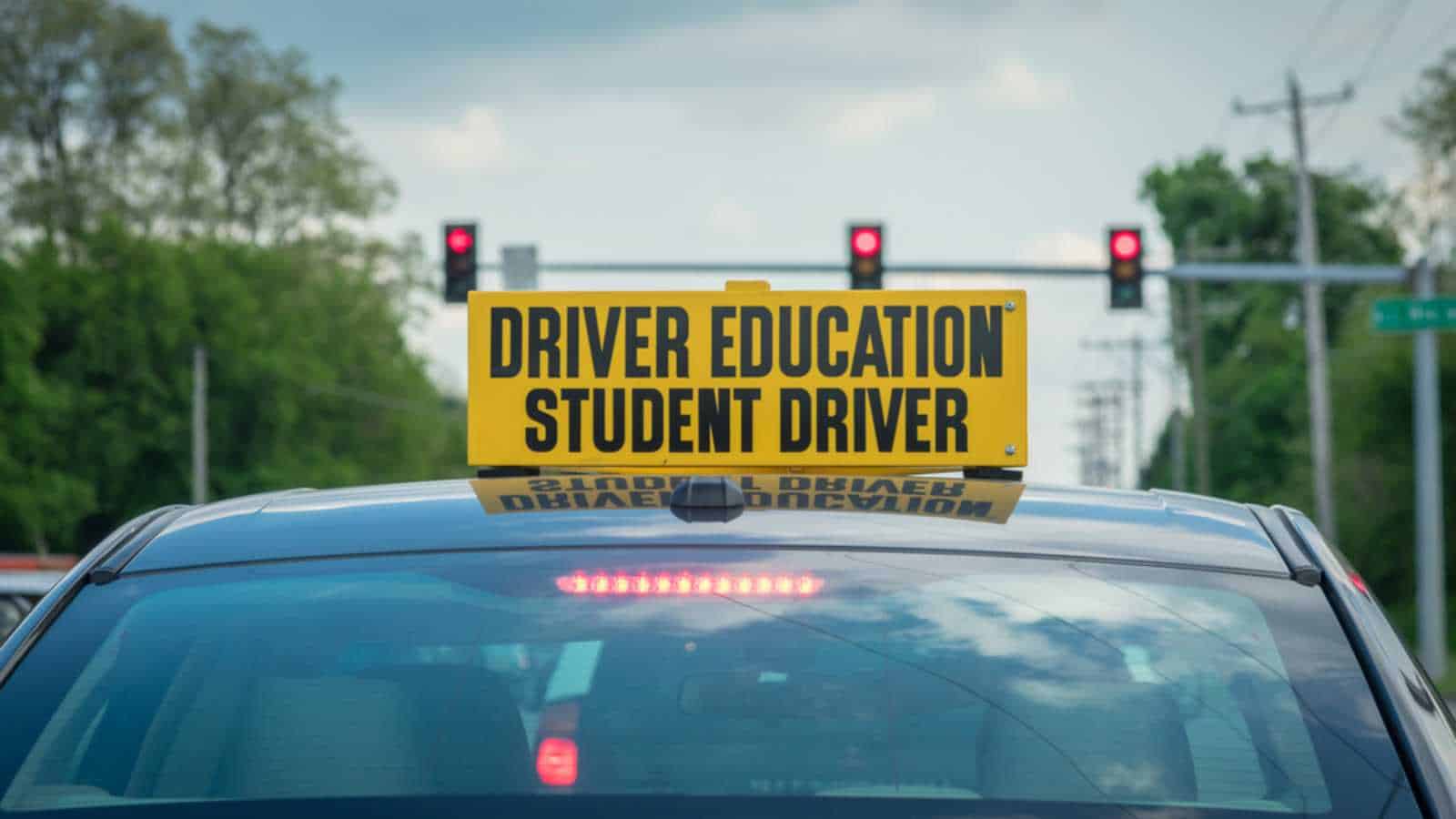
Many American high schools once treated driver’s education as a normal part of the school day, complete with classroom instruction, simulators, and supervised driving. A National Highway Traffic Safety Administration review found that most programs had left public schools either wholly or partly and moved to weekends, summer sessions, private driving schools, or parent-led instruction. The review also found only about 17 state supervisors overseeing driver education programs nationwide.
That shift turned a widely available school subject into a service that often depends on family time, access to a vehicle, and the ability to pay commercial fees. Wealthier teenagers can usually find another route to instruction, while students from lower-income families may struggle to obtain equal practice. Schools saved money, certainly, but they also outsourced one of the riskiest skills teenagers learn. What could possibly go wrong with that arrangement?
Bookkeeping and office practice

Schools once offered bookkeeping and office-practice classes that taught students how to maintain ledgers, prepare invoices, balance accounts, file documents, and handle business correspondence. Software now completes much of the repetitive work, and high schools have shifted toward broader business, entrepreneurship, and finance courses. In 2019, graduates averaged only 0.08 credits in finance and 0.16 credits in office-support subjects.
The replacement trend now favors personal finance rather than traditional commercial bookkeeping. In 2024, the Council for Economic Education reported that 35 states required personal-finance coursework for graduation, up by 12 states from 2022, although only 15 required a semester-long stand-alone course. CEE President Nan J. Morrison said such requirements create “equity and possibility,” and that sounds far more useful than asking students to memorize ledger columns without explaining credit scores, taxes, or loan interest.
Mechanical drawing and manual drafting

Mechanical drawing once required students to work with T-squares, compasses, triangles, rulers, lettering guides, and enormous sheets of paper. Schools now teach computer-aided design, engineering design, or 3D modeling when they offer the subject at all. The Bureau of Labor Statistics says modern drafters use software to turn engineers’ and architects’ ideas into technical drawings, and the occupation paid a median annual wage of $65,380 in 2024.
Public high school graduates earned an average of 0.26 credits in engineering and design in 2019, so the underlying skill has not disappeared completely. Digital tools improve accuracy and let students revise designs quickly, but manual drafting trained patience, visualization, measurement, and precision without an undo button. The drafting career survived; the pencil-sharpening, paper-smudging classroom version largely did not.
Sewing and textile skills

Sewing once occupied a major part of home economics, and students learned how to repair clothing, read patterns, choose fabrics, measure accurately, and operate a sewing machine safely. In 2019, public high school graduates earned an average of just 0.03 credits in textiles and furnishings, equal to only 0.1% of all credits. Few national statistics capture disappearance more neatly than a figure that nearly rounds itself out of existence.
Fashion programs and family and consumer sciences courses still teach these skills in some districts, but most students never encounter them. That loss encourages a replace-rather-than-repair culture and removes an accessible introduction to design, manufacturing, and creative problem-solving. A teenager can edit a video, build a digital avatar, and perhaps code a game, yet one loose button may still trigger an emergency call to a relative or a hurried YouTube search.
General agriculture and nature study

Schools once introduced more students to gardening, soil, weather, animal care, conservation, and local ecosystems through agriculture or nature-study lessons. In 2019, public high school graduates earned an average of 0.27 credits in agriculture and natural resources, just 1% of all credits. Urbanization, graduation requirements, staffing limits, and crowded timetables pushed general exposure aside, while specialized agricultural programs concentrated the subject among interested students.
Agricultural education itself now shows impressive strength where schools support it. The National FFA Organization counted 1,042,245 student members in 9,407 chapters in 2025, and 92% of its programs offered agriscience while 71% offered advanced agriscience or biotechnology. Agriculture did not die; it evolved into a strong career pathway, but millions of students outside those programs may finish school without learning how food systems, soil, water, and weather shape everyday life.
Key takeaway

These 12 school subjects followed a remarkably similar path. Schools rarely erased the underlying knowledge completely; instead, they merged it into broader courses, restricted it to career programs, replaced manual methods with software, or sacrificed it when tested subjects demanded more time. Students gained access to coding, digital design, robotics, and newer career pathways, but they often lost common exposure to practical skills that connected classrooms with homes, communities, workplaces, and civic life.
The best solution does not require schools to recreate a 1950s timetable, complete with typewriters and suspicious-looking cafeteria gelatin. Schools can combine the strongest older lessons with modern tools: cursive alongside keyboards, budgeting alongside accounting software, hand tools alongside robotics, and geography alongside digital mapping. The real question is not whether every old subject deserves a comeback; it is whether students lose something valuable when useful knowledge no longer receives a class of its own.
The central pattern remains clear: many of these subjects survived, but schools stopped giving them a recognizable place on the timetable.
Disclaimer – This list is solely the author’s opinion based on research and publicly available information. It is not intended to be professional advice.
You May Also Like: 10 Strict School Rules From the ’80s That Wouldn’t Fly Today
Like our content? Be sure to follow us