
Sacred Places Where More Than One Religion Claims the Same Ground
A wall can be a place of prayer to one religion, a remnant of a destroyed sanctuary to another, and part of a sacred landscape claimed by several faiths at once. A mountain can belong to no one legally yet still be so holy to millions of people that climbing it would feel like an act of desecration.
Some of the world’s most sacred places are sacred to more than one religion—and that can make them places of remarkable connection, intense disagreement, or both. Jerusalem is the most famous example, but it’s far from the only one. Across Asia, the Middle East, and beyond, religions that developed centuries apart sometimes ended up revering the same mountains, cities, caves, tombs, and buildings.
Sometimes the explanation is simple: one religion grew out of another and inherited its sacred geography. In other cases, later religions adopted places that were already holy. Occasionally, entirely different traditions arrived at the same landscape for very different reasons. The result is a religious map where boundaries overlap far more than most people realize.
1. Jerusalem May Be the Most Religiously Contested City on Earth
Few places demonstrate the power of shared sacred geography better than Jerusalem. Judaism, Christianity, and Islam all attach extraordinary importance to the city, but they do so for different reasons.
For Jews, Jerusalem is inseparable from the First and Second Temples and from centuries of longing for Zion. The Western Wall is associated with the retaining structures of the ancient Temple Mount complex and has become one of Judaism’s most important places of prayer. Christians connect Jerusalem with the final days of Jesus’ life, his crucifixion, burial, and resurrection. Muslims know the elevated sanctuary as al-Haram al-Sharif, home to the Dome of the Rock and Al-Aqsa Mosque and traditionally associated with Muhammad’s Night Journey.
The same few acres can therefore contain sacred history for three religions followed by billions of people. That helps explain why arguments over Jerusalem are never merely arguments over real estate. Archaeology, theology, memory, national identity, and politics are layered almost literally on top of one another.
2. One Jerusalem Site Is Connected With Both the Jewish Temples and Muhammad’s Night Journey
The Temple Mount/Haram al-Sharif is particularly extraordinary because different religious histories converge on essentially the same elevated platform.
Jewish tradition identifies the area with the location of the ancient Temples in Jerusalem, making it Judaism’s holiest site. The surviving Western Wall below became an especially important place of Jewish prayer over the centuries.
For Muslims, the same compound is one of Islam’s holiest sanctuaries. The Dome of the Rock stands over the rock associated in Islamic tradition with Muhammad’s miraculous Night Journey and ascent toward heaven, while Al-Aqsa Mosque gives the wider sanctuary enormous religious importance.
This isn’t simply a case of two religions happening to build important structures in the same neighborhood. The sacred claims themselves overlap. That makes the site spiritually powerful and politically explosive in a way few places on Earth can match.
You may want to read: Religions That Don’t Have a Single Founder—and How They Began Instead
3. The Cave of the Patriarchs Is Sacred to Jews, Muslims, and Christians
In Hebron stands a monumental complex associated with some of the most important figures in biblical tradition.
The site is traditionally identified with the Cave of Machpelah, the burial place of Abraham and Sarah, Isaac and Rebekah, and Jacob and Leah. For Jews, these are foundational patriarchs and matriarchs of Israel. Christians inherit the same figures through the Hebrew Bible. Muslims revere Abraham—Ibrahim—as a major prophet and connect him with their own sacred history.
The building itself reflects centuries of changing rule and religious use. It has functioned in different periods under Jewish, Christian, and Muslim authorities, and today the complex contains spaces used by both Jews and Muslims.
Abraham is often called the father of the Abrahamic religions. At Hebron, that family connection becomes physical geography. Different faiths don’t merely tell stories about the same man. They come to the same place because they believe his body lies there.
4. A Tomb Associated With King David Also Became Connected With Jesus
Mount Zion in Jerusalem provides another example of how sacred places accumulate meanings.
A site traditionally identified as the Tomb of David has long attracted Jewish devotion, although historians and archaeologists debate whether the biblical King David was actually buried there. In the same building complex is the traditional location of the Upper Room, or Cenacle, associated by Christians with the Last Supper.
The connection became even more complicated over time as Christians, Jews, and Muslims all developed relationships with the site. Control changed hands, traditions evolved, and the building acquired layers of religious meaning that don’t necessarily correspond neatly with archaeological certainty.
Sacred geography doesn’t always wait for historians to settle what happened at a site. Once generations have prayed somewhere, remembered sacred figures there, and built traditions around it, the place can become religiously important regardless of whether archaeology can verify every claim.
5. Mount Kailash Is Sacred to Four Religious Traditions
Far from Jerusalem, one mountain in Tibet demonstrates that overlapping sacred geography isn’t uniquely Abrahamic.
Mount Kailash is revered in Hinduism, Buddhism, Jainism, and the Bön tradition. The reasons differ, but the mountain occupies an extraordinary place in the religious imagination of all four.
For many Hindus, Kailash is associated with Shiva and Parvati. Tibetan Buddhists connect the mountain with sacred cosmology and tantric traditions. Jains associate it with the liberation of their first Tirthankara, Rishabhanatha, while Bön traditions have their own sacred connections with the mountain.
Pilgrims traditionally perform a kora or circumambulation around Kailash rather than climbing it. Different religious communities may even circle the mountain in different directions.
Millions of people can disagree about what a mountain means while agreeing that the mountain itself is sacred. That may be one of the most remarkable forms of religious coexistence: the landscape is shared even when the stories aren’t.
6. Bodh Gaya Began With the Buddha but Became Sacred Across Buddhist Traditions
Bodh Gaya in India is traditionally associated with the place where Siddhartha Gautama attained enlightenment beneath the Bodhi tree and became the Buddha.
That makes it one of Buddhism’s most sacred locations.
But “Buddhism” isn’t one single uniform tradition. Theravada, Mahayana, Tibetan, Zen, and other Buddhist communities developed across different cultures, languages, countries, and historical periods. Their rituals, scriptures, artistic traditions, and theological emphases can differ dramatically.
At Bodh Gaya, those differences converge.
Monasteries representing Buddhist communities from countries including Thailand, Japan, Bhutan, Tibet, Sri Lanka, Myanmar, and others surround the sacred area. Pilgrims who might worship very differently at home find themselves drawn to the same spot because they share the story of what happened there.
A sacred place can unite different branches of a religion even when centuries of history have pulled those branches apart.
7. Varanasi Is Primarily Hindu—but Other Religions Have Deep Connections Nearby
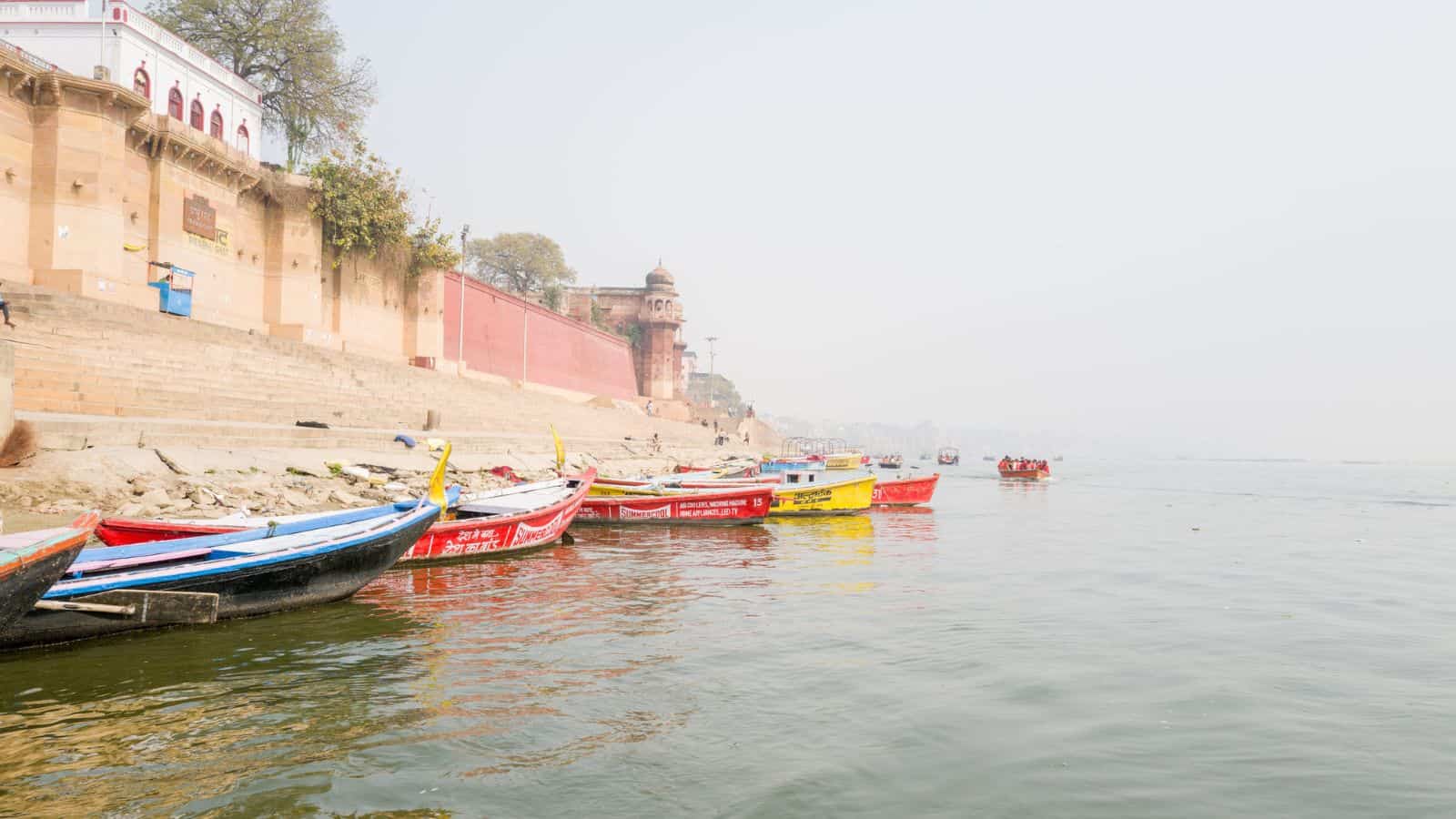
Varanasi is one of Hinduism’s most sacred cities. Pilgrims come to bathe in the Ganges, worship at temples, perform rituals, and—in some cases—spend their final days near the river in the hope of a spiritually significant death.
But the wider religious landscape isn’t exclusively Hindu.
Nearby Sarnath is one of Buddhism’s most important pilgrimage sites because Buddhist tradition identifies it as the place where the Buddha delivered his first sermon after enlightenment. Jain traditions also connect important figures with the Varanasi region.
This creates a fascinating religious geography in which sacred histories overlap without necessarily claiming the exact same shrine.
One region can become holy for completely different reasons to people following completely different paths. For Hindus, the Ganges and the sacred city dominate the landscape. For Buddhists, a short journey leads to the place where the Buddha first taught the Dharma.
You may want to read: What Happens After Death? How the World’s Religions Give Surprisingly Different Answers
8. Adam’s Peak Has Several Religions Arguing Over Whose Footprint Is on Top
Sri Lanka’s Adam’s Peak—Sri Pada—is famous for a footprint-shaped impression near its summit.
The fascinating question is whose footprint it is.
Buddhist tradition identifies it with the Buddha. Hindu traditions have associated it with Shiva. Muslim and Christian traditions historically connected it with Adam, imagining the biblical first man standing there after leaving Eden.
Everyone can see the same mark. The religious story changes depending on who’s looking at it.
Pilgrims have climbed the mountain for centuries, and the site demonstrates how a natural feature can become incorporated into several sacred histories. The footprint doesn’t need to change shape for the meaning to change around it.
That’s one of the recurring patterns of shared holy places: religions don’t always disagree about whether something is special. Sometimes they disagree about why it’s special.
9. Shared Shrines Can Survive Even When Religions Disagree About Almost Everything Else
Religious boundaries are often portrayed as hard lines: this shrine belongs to these people, that temple belongs to those people, and believers remain on their own side.
History is considerably messier.
Across parts of the Mediterranean, Middle East, Balkans, and South Asia, local communities have sometimes visited the same shrines, tombs, springs, caves, and holy figures despite officially belonging to different religions. Muslims and Christians have occasionally revered the same local saints or visited the same healing sites. Hindus and Muslims in South Asia have sometimes participated in devotional cultures surrounding particular Sufi shrines.
These practices don’t mean theological differences disappeared. A Christian and Muslim visiting the same shrine could understand what was happening in very different ways.
Ordinary religious life has sometimes crossed boundaries that official theology keeps carefully separated. People may share a belief that a place heals, protects, blesses fertility, or answers prayers without agreeing on much else.
10. Shared Sacred Places Can Unite People—or Make Conflict Much Harder to Solve
It would be comforting to conclude that shared holy places naturally bring religions together.
Sometimes they do.
A shared shrine can become a meeting place. Pilgrims can encounter people from traditions they might otherwise rarely see. A mountain revered by several religions can become a symbol of common responsibility. Sacred geography can remind believers that their histories have never been completely separate.
But shared sacred places can also create the opposite effect. If two communities believe the same piece of ground is central to their identity, there may be no obvious way to divide it without someone feeling that something irreplaceable has been taken away.
That is part of what makes Jerusalem so difficult. You can’t simply move a holy site somewhere more convenient. A sacred place matters because that particular place is connected with a particular story.
Sacred Geography Doesn’t Respect the Boundaries on Our Maps
Modern maps make religion look tidy. Countries have borders. Buildings have owners. Neighborhoods have names. Sacred history is rarely so cooperative.
Religions grow out of one another, encounter one another, replace one another, borrow from one another, and sometimes tell completely different stories about the same patch of ground. A sanctuary becomes a church. A church becomes a mosque. A tomb acquires several identities. A mountain becomes holy to four traditions that don’t even agree about what happened there.
The most interesting sacred places may be the ones where nobody gets the story entirely to themselves.
Those places reveal something easy to miss when religions are studied separately. For thousands of years, believers haven’t lived in isolated theological worlds. They’ve walked the same roads, climbed the same mountains, buried their dead in the same cities, and looked toward the same sacred landscapes.
Sometimes they fought over them.
Sometimes they shared them.
And sometimes they did both.
You may want to read: 10 Religious Ideas That Changed Dramatically Over the Centuries