12 Ways AI May Be Expanding Workloads Instead of Reducing Them
‘’The factory of the future will have only two employees, a man and a dog. The man will be there to feed the dog. The dog will be there to keep the man from touching the equipment.’’- Warren Bennis.
Even though Warren Bennis imagined a factory dominated by machinery, notice one thing: human labor remains constant in both scenarios. The man is still there: feeding the dog, overseeing the equipment, maintaining control. The machinery didn’t erase human involvement; it simply shifted its form.
Those who swallowed the more sensational narratives about AI freeing us from work were often seduced by a surface-level fantasy. They wanted to believe in effortless liberation rather than grappling with the deeper reality: technology rarely removes labor, it redistributes it, reshapes it, and sometimes magnifies it.
The Review and Correction Burden

The seductive speed of LLMs often masks a grueling reality. When an AI generates a 2,000-word report in thirty seconds, the task often shifts from writing to carefully reviewing and correcting the output. As Ethan Mollick, an associate professor at Wharton and a prominent voice on AI integration, often notes, these systems are prodigious, confident hallucinators.
You aren’t just checking for typos; you are hunting for hidden logic errors that look perfectly rational at a glance. Research from the Stanford Institute for Human-Centered AI (HAI) suggests that as users become more reliant on these tools, their ability to spot subtle errors actually diminishes; a phenomenon known as automation bias.
This creates a psychological tax on the worker, who is constantly second-guessing the machine. Paradoxically, starting from a blank page is often more linear and mentally cohesive than untangling a web of AI-generated plausible nonsense.
Expectations of More Output

In his classic work The Mythical Man-Month, Fred Brooks argued that adding manpower to a late software project makes it later. A modern corollary is emerging: adding AI to a workload simply expands the horizon of what is considered done.”
If AI helps a graphic designer create five logos in the time it used to take to make one, the client doesn’t say, “Great, go home early.” They say, “Now show me fifty variations by tomorrow.” This is the Jevons Paradox applied to white-collar labor: as a resource (in this case, basic cognitive output) becomes more efficient to produce, the demand for it increases exponentially.
A 2024 study by the Upwork Research Institute found that 77% of employees using AI say the tools have decreased their productivity and increased their workload due to soaring expectations. Management sees a magic button and assumes infinite scalability, forgetting that every piece of AI output still requires human distribution, strategy, and accountability.
We are running faster just to stay in the same place, trapped in a cycle where efficiency gains are immediately cannibalized by higher quotas.
AI Requires Detailed Instructions

“Garbage in, garbage out” has evolved into “Vagueness in, uselessness out.” The emergence of prompt engineering as a pseudo-profession highlights a hidden time-sink: the labor of translation.
To get a truly useful result, a worker must spend significant time decomposing a complex business goal into a series of hyper-specific, iterative instructions. It’s a form of mental mapping that didn’t exist five years ago.
The quality of the answer depends entirely on the precision of the question, yet in a corporate setting, this precision takes time that isn’t accounted for in project timelines. While enthusiasts claim that natural language is the new coding language, they ignore that it is inherently ambiguous.
Time spent aligning the AI to the user’s specific intent often equals or exceeds the time saved during the generation phase.
Extra Verification for Accuracy

The stakes for accuracy have never been higher, yet the tools we use are fundamentally probabilistic rather than deterministic. When an AI cites a legal precedent or a medical study, it isn’t looking it up but predicting the next likely word. This necessitates a secondary workflow of aggressive fact-checking.
The rise of AI-generated pink slime news sites shows how easily misinformation can be scaled. In a professional setting, this means a researcher who used to trust their own verified notes must now treat every AI-generated claim as a potential lie. It’s a reversal of the traditional workflow.
Instead of gathering facts to build a conclusion, we are given a conclusion and must work backward to find the facts that (hopefully) support it. Sometimes rigorous verification sharpens workers and makes them more critical, but in reality, for most, it’s a verification treadmill.
You are essentially doing the work twice: once to generate the idea, and once to ensure that the “expert quotes” the AI provided aren’t actually beautiful hallucinations from a non-existent book.
Tool Fragmentation

Rather than a single unified intelligence, teams often juggle a patchwork of tools: one for transcription, one for image generation, one for coding, and another for internal data analysis. Each of these requires its own login, its own API management, and its own specific “personality” for prompting.
Cognitive scientists often cite that it takes the human brain an average of 23 minutes to return to deep focus after a distraction; switching between four different AI interfaces to complete a single task is a recipe for fragmented attention.
We are seeing the Software-as-a-Service (SaaS) explosion of the 2010s on steroids. While vendors promise seamless integration, the reality is a messy process of downloading a CSV from one AI, cleaning it, and uploading it to another. This logistical overhead is the digital duct tape holding modern workflows together, and it is exhausting.
Training and Learning Curves
In the 19th-century folk tale of John Henry, the steel-driving man dies trying to outwork a steam drill. The present-day workers are no longer just using the tool; they are also expected to learn how to program, troubleshoot, and update it as it continually evolves.
The rate of versioning in AI, moving from GPT-3.5 to 4 to 4o to Claude 3.5 Sonnet, is so rapid that the learning phase of work never actually ends. This is “Continuous Upskilling,” but without the corresponding downtime to actually master the craft.
A 2023 IBM report estimated that 40% of the global workforce will need to reskill due to AI over the next three years. This is an ongoing tax on an employee’s mental bandwidth. You are no longer only performing your job; you are also expected to test, evaluate, and adapt to tools that are still evolving.
The originality of human work is being sidelined by the originality of just trying to figure out how the new update changed the UI.
Data Preparation Work

AI is a hungry beast that only eats five-star meals. For an organization to truly benefit from custom AI, its internal data must be pristine, structured, and tagged. Most corporate data, however, is a data swamp: a mess of disorganized PDFs, outdated spreadsheets, and contradictory Slack threads.
The hidden workload here is the janitorial phase. Before the AI can provide insights, a human (or a team of them) must spend weeks or months cleaning and labeling the data. Data scientists often cite the 80/20 rule: 80% of their time is spent cleaning data and only 20% is spent analyzing it.
AI has just made the 80% more urgent without giving a solution. We are becoming librarians for machines, filing away digital papers so the intelligent system can find them, a task that feels decidedly unintelligent and deeply monotonous.
Oversight and Governance Requirements
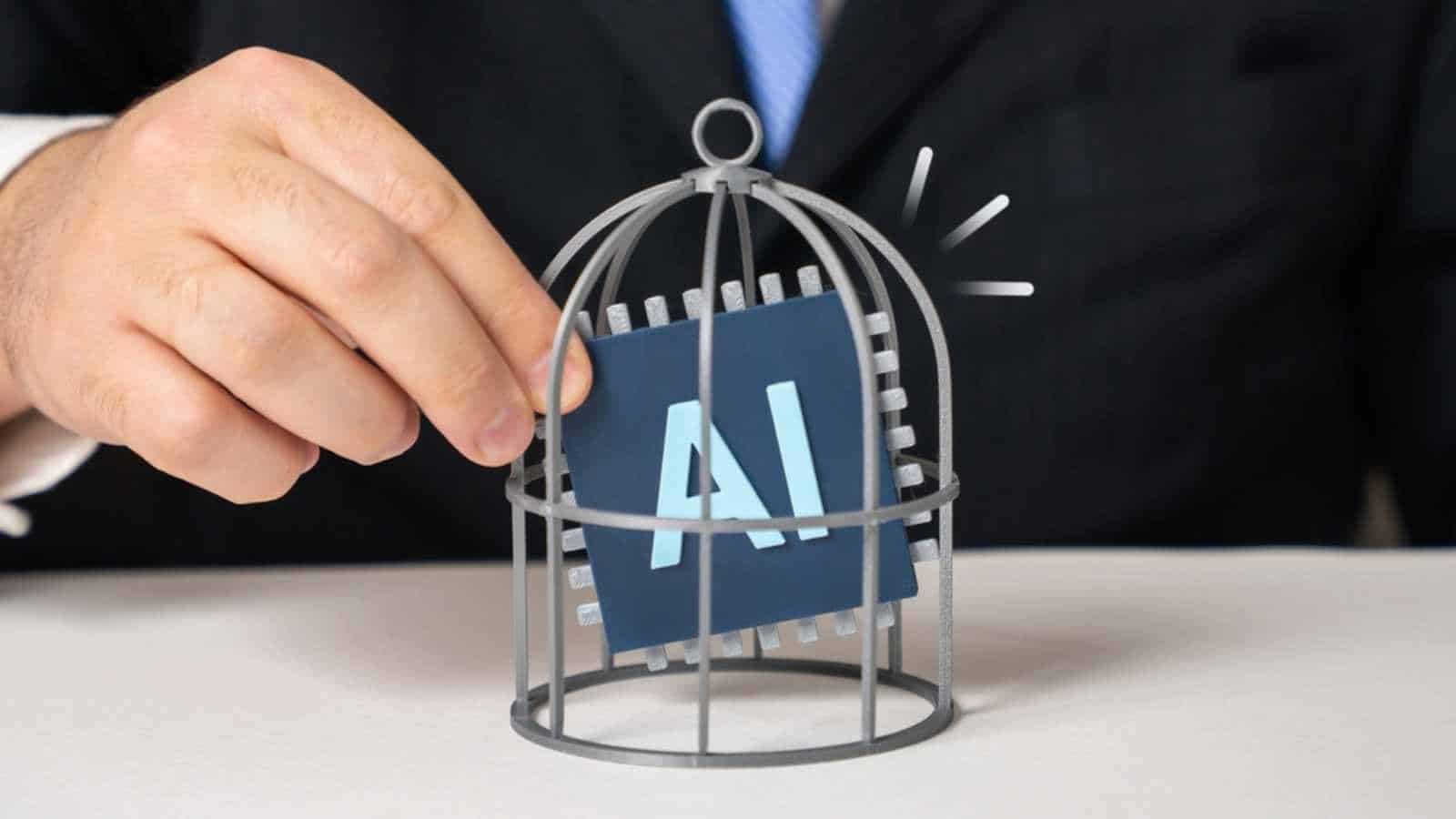
As AI enters the workflow, so does the compliance officer. Every AI-generated output must now be scrutinized through the lens of copyright infringement, bias, and data privacy. This has birthed a new layer of administrative bureaucracy.
In the EU, the AI Act is setting a precedent for how strictly these tools must be monitored. For the average worker, this means more forms to fill out, more risk assessment meetings, and more boxes to check before a project can see the light of day. We’ve added a “Governance Tax” to creativity.
While these checks are essential to prevent disasters, like an AI chatbot promising a customer a $1 car, they represent a significant expansion of the non-work tasks that fill a 40-hour week. Transparency is key here: the tool that was supposed to liberate us has instead required the construction of a digital cage to keep it safe.
Increased Communication and Coordination

If it takes ten seconds to generate ten ideas, you now have ten ideas that need to be discussed. AI has lowered the cost of creation so much that we are drowning in options. This leads to analysis paralysis and an explosion of internal meetings.
When everyone on a team can generate a comprehensive strategy in minutes, the bottleneck shifts from production to selection. We are spending more time on Zoom calls debating which AI-generated path to take than we ever spent actually walking it.
The more drafts we produce, the more people need to look at them. Ironically, the machine’s speed is slowing the human element of the business, as we struggle to filter the sheer volume of noise we’ve enabled.
Rising Customer Expectations

Customers now expect 24/7, instantaneous, and hyper-personalized service. Because they know businesses use AI, their patience for a 24-hour turnaround has evaporated. This puts an immense on-call pressure on human workers.
When the AI fails, or the query becomes too complex for a bot, the human is expected to step in with the same lightning speed the customer has been conditioned to expect. We are being held to machine standard time.
A study from Zendesk suggests that over 70% of customers expect AI to improve their experiences; when it doesn’t, the backlash falls squarely on the human support staff who are already overwhelmed by the volume of tickets AI was supposed to solve.
The “Draft Explosion” Problem

Quantity has a quality all its own, but in AI, quantity is often just clutter. Because generating “Version A” through “Version Z” is nearly free, we produce them all. This creates a massive review debt.
Managers who used to review one solid draft from a direct report are now being asked to pick the best one from five AI-assisted options. It’s a shift from creation to curation, but curation is an exhausting cognitive task.
As the philosopher Jean Baudrillard might have suggested, we are creating a simulacrum of productivity where the sheer volume of stuff obscures the fact that we aren’t actually moving forward.
We are effectively making more hay just because the hay-making machine is faster, regardless of whether we have a barn big enough to store it.
Maintenance and Updates

These tools aren’t “set it and forget it.” Prompt libraries need updating, API connections break, and models drift, a phenomenon where an AI’s performance degrades over time or its style changes unexpectedly after an update.
A research study, How Is ChatGPT’s Behavior Changing over Time?, documented how GPT-4’s ability to solve math problems changed significantly over just a few months.
This means the workflows you built in March might be broken by June. We have become system maintainers, constantly tinkering with the plumbing of our AI tools to ensure they still work as intended. It’s a permanent state of under construction that prevents us from ever reaching a flow state in our actual careers.
Key takeaways
- AI shifts work rather than eliminating it: Human involvement remains constant, with labor redistributed to oversight, verification, and coordination rather than being removed.
- Output speed drives higher expectations: Faster AI-generated results often lead to increased quotas, more iterations, and greater pressure on employees.
- Verification and governance create hidden workloads: Ensuring accuracy, compliance, and ethical use of AI adds layers of review and administrative tasks.
- Tool fragmentation and maintenance tax: Juggling multiple AI platforms, updates, and integrations fragments attention and requires constant system upkeep.
- Data preparation and decision overload intensify work: Cleaning messy data, selecting among AI-generated drafts, and managing customer expectations expand cognitive load rather than reduce it.
Like our content? Be sure to follow us