13 American universities with beautiful campuses
The first time you see an American college campus, it feels less like a school and more like you’ve wandered onto a movie set built just for thinking big thoughts.
As an outsider looking in, the American university campus feels like a distinct architectural genre, a sprawling set piece where higher education meets Hollywood grandeur. While universities in Europe or Asia often blend seamlessly into the bustling city streets, American colleges frequently stand as their own self-contained villages, offering a level of manicured perfection that seems almost dreamlike to a foreign observer.
It is fascinating to see how these institutions prioritize aesthetics, understanding that a stunning environment often correlates with academic inspiration and student well-being. From the Gothic towers that rival Oxford to the sun-drenched coastal lawns of California, these campuses offer a visual feast that makes the long flight over completely worth it.
Berry College
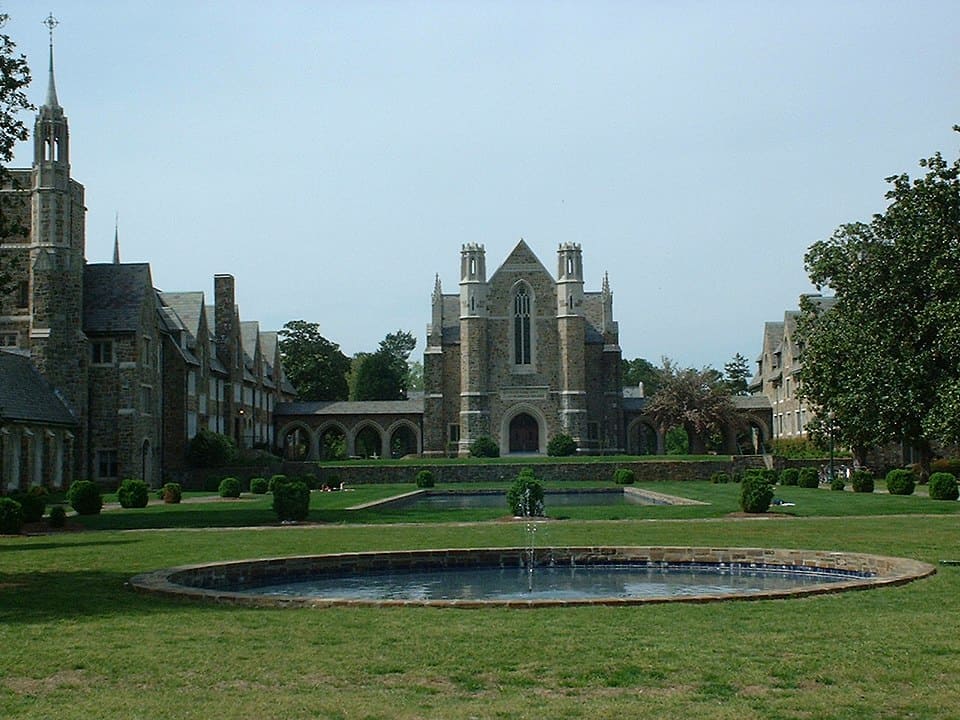
Located in Georgia, this institution holds a claim to fame that is difficult for a European mind to comprehend: it possesses the largest contiguous college campus in the world. Spanning a massive 27,000 acres, the grounds encompass forests, meadows, and mountains, making it feel more like a national park than a school.
The sheer scale of the natural beauty here is overwhelming, offering students endless opportunities for hiking and reflection between classes. The English Gothic-style buildings, funded by Henry Ford, sit elegantly against this wild backdrop, creating a contrast that is both regal and rugged.
Stanford University
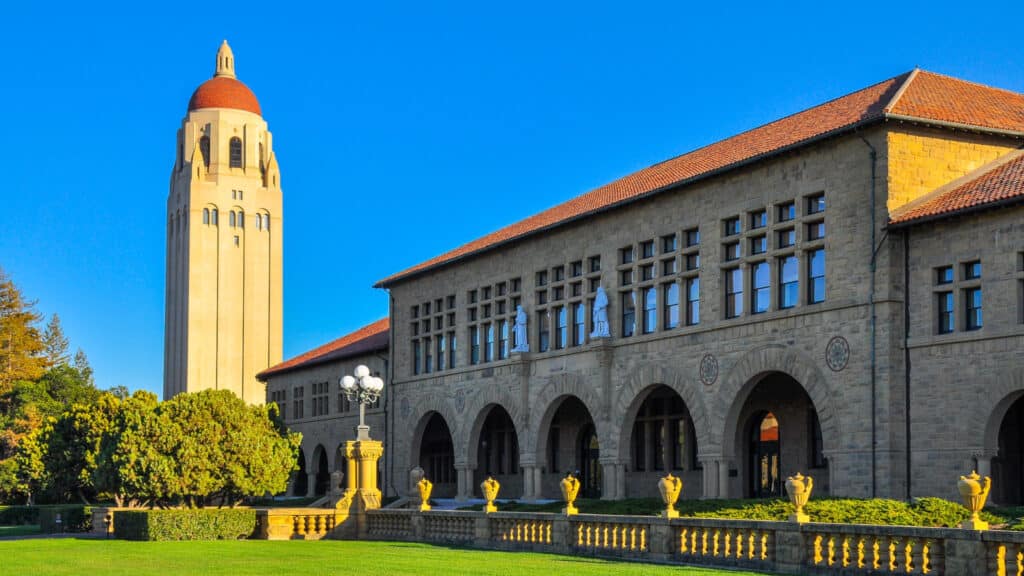
Stanford greets visitors with a distinctive “Mission Revival” architectural style that feels quintessentially Californian, featuring sandstone walls and red-tiled roofs. The entrance via Palm Drive is nothing short of cinematic, leading your eye straight to the mosaicked facade of Memorial Church.
Beyond the aesthetics, the campus is a functioning city, managing its own massive infrastructure to support a bustling population of innovators. You might be interested to know that there are over 10,400 bikes on the campus on a normal weekday, highlighting a culture that values movement and open air.
Princeton University

If you are looking for the dark academia vibe often romanticized in literature, this New Jersey campus is the ultimate destination. Walking through its stone arches and ivy-covered courtyards feels like stepping onto a movie set, yet the history here is undeniably real and palpable.
The university maintains these stunning grounds with resources that are staggering to contemplate, ensuring every gargoyle and garden is preserved. To support its operations and vast facilities, the university’s endowment ended the 2024 fiscal year at a monumental $34.1 billion.
Pepperdine University

Perched on the hills of Malibu, Pepperdine offers views of the Pacific Ocean that are so distracting I wonder how students manage to study at all. The Mediterranean-style architecture, with its white stucco and red tiles, perfectly complements the blue water and golden sunshine.
The connection to the environment here goes beyond just the view; the university actively engages with its sunny, windy location in practical ways. Demonstrating a commitment to the landscape, 50% of Pepperdine’s energy comes from renewable sources, blending sustainability with its scenic location.
University Of Virginia

This campus stands apart because it is the only university in the United States designated as a UNESCO World Heritage Site. Designed by Thomas Jefferson, the “Academical Village” centers on the Rotunda and emphasizes a sense of shared community that still resonates today.
The layout is intentional and intimate, forcing interaction between students and faculty in a way that feels surprisingly modern despite its age. Jefferson’s original vision of a learning village remains intact, proving that thoughtful design can bridge the gap of centuries.
Kenyon College

Tucked away in Ohio, Kenyon feels like a secret garden of collegiate Gothic architecture hidden within a dense forest. The highlight is the Middle Path, a gravel walkway that serves as the central artery of the campus, where you are bound to run into everyone you know.
The isolation here is a feature, not a bug, fostering a tight-knit community that lives and learns together in a beautiful bubble. Reflecting this immersive environment, 100% of students live on campus, creating a residential experience that is rare in many other parts of the world.
Duke University

The West Campus of this North Carolina university is dominated by the soaring Duke Chapel, which looks like it was airlifted directly from medieval Europe. The Collegiate Gothic architecture here is imposing and majestic, utilizing local stone that comes in seventeen distinct shades of blue and gray.
It creates an atmosphere of serious academic pursuit, yet the surrounding Duke Forest offers a lush, green counterpoint to the stone structures. Walking these grounds, you get a sense of weight and permanence that commands respect from the moment you arrive.
University Of Notre Dame

The Golden Dome is the iconic beacon of this Indiana campus, shining brightly atop the Main Building and visible from miles away. The campus is a masterclass in classic collegiate design, featuring vast quadrangles and the famous “Touchdown Jesus” mural overlooking the stadium.
It strikes a balance between religious reverence and spirited American sports culture that is fascinating to witness as an outsider. The meticulously kept lawns and lakes provide a serene setting that seems to quiet the mind, regardless of your faith.
Sewanee: The University Of The South

Sitting atop the Cumberland Plateau in Tennessee, Sewanee is often referred to as “The Domain” by its students and faculty. The 13,000-acre campus offers breathtaking bluff views and a Gothic revival aesthetic that rivals the most ancient British boarding schools.
There is a tradition here where professors wear academic gowns to class, adding a layer of Harry Potter-esque charm to the already magical setting. It is a place where the grandeur of nature meets the formality of tradition in a way that feels utterly timeless.
Rice University

Located in the heart of Houston, Texas, Rice surprises you with its distinctive Byzantine-influenced architecture and heavy use of brick and marble. The campus is an arboretum, with thousands of oak trees forming a green canopy that shields you from the intense urban heat.
This abundance of nature is not just for show; it plays a critical role in the well-being of the student body. According to a 2024 National College Health Assessment, 30% of students surveyed said anxiety negatively affected their performance, making these green sanctuaries more vital than ever.
University Of Washington

In Seattle, this university offers one of the most spectacular springtime displays you will ever see when the cherry blossoms bloom in the Quad. The contrast of the pink flowers against the red brick buildings is breathtaking, drawing visitors from all over the city.
On a clear day, the campus offers a view of Mount Rainier that frames the university in the context of the Pacific Northwest’s rugged beauty. It is a setting that reminds you constantly of the power of nature, even while you are engaged in high-tech research.
Bryn Mawr College

This Pennsylvania college is arguably the birthplace of the Collegiate Gothic style in America, setting the template for many others on this list. The stone buildings are characterized by their intricate masonry and arched windows, designed to evoke the scholarly prestige of Cambridge.
The campus is intimately scaled, feeling more like a private estate than a public institution, which adds to its charm. Recent University of Michigan research from 2025 suggests that students at smaller schools like this often report better mental health than those at massive state universities.
Lewis & Clark College

Perched on a hill overlooking Portland, Oregon, this campus feels like it was carved directly out of a temperate rainforest. The buildings, including the stunning Frank Manor House, are surrounded by towering fir trees and lush ferns that stay green year-round.
It is the ideal location for those who want their education to be physically connected to the natural world. The seamless integration of classrooms and forest paths encourages an active lifestyle, grounded and deeply Pacific Northwestern.
Like our content? Be sure to follow us.