13 ways corporate buying is changing America’s economy
As of early 2026, BlackRock’s assets under management (AUM) have grown to approximately $14.04 trillion, a figure so vast it defies traditional comparison. To put that in perspective, the total U.S. stock market capitalization is roughly $69 trillion.
This means a single firm now oversees capital equivalent to one-fifth of the entire American equity landscape.
From the index funds in your 401(k) to the power grid’s infrastructure and the suburban homes on your block, the decision-making power of global capital is being funneled through a shrinking number of boardrooms.
We are living in an era where the market is no longer a chaotic sea of individual actors, but a highly coordinated ecosystem governed by the internal logic of a few massive pillars.
The Death of the Starter Home

During the 2021-2022 housing rush, institutional investors didn’t just participate; they dominated, snapping up one out of every four single-family homes in cities like Phoenix and Atlanta. Data from the John Burns Real Estate Consulting group highlights a shift where “build-to-rent” communities are replacing the traditional “buy-to-live” model.
Invitation Homes and similar companies present a different perspective: they provide high-quality housing in desirable school districts that might otherwise be out of reach for renters. They emphasize the flexibility they offer to a workforce seeking mobility, freeing people from the constraints of a thirty-year mortgage.
Whether this is a service or a trap depends on whether you view a home as a sanctuary or a yield-bearing asset. The reality is that for the first time in American history, a generation is competing for shelter against a computerized algorithm that never sleeps and never needs to move for a job.
Efficiency vs. The Soul of the Local Shop

Roll-ups are the silent predators of the service economy. Your local veterinarian, the one who knows your dog’s name, suddenly sells to a private equity firm that owns 400 other clinics. This is the era of the general ledger for local businesses.
Firms like Shore Capital or JAB Holding Company seek fragmented markets: car washes, dentists, even funeral homes, to centralize costs. The hook here isn’t just growth; it’s the elimination of the “inefficient” owner-operator.
Expert Eileen Appelbaum, co-author of Private Equity at Work, notes that while these acquisitions professionalize management, they often lean on aggressive debt that can lead to bankruptcy if the market dips.
Is the trade-off worth it? You might get a slicker booking app and standardized pricing, but you lose the person-to-person accountability that defined the American Main Street for a century. We are trading the friction of local personality for the smooth, cold surface of corporate scale.
Killing the Competition in the Cradle

Regulators call them killer acquisitions, a term popularized by researchers Cunningham, Ederer, and Ma. The strategy is simple: find a startup with a brilliant idea and buy it before it becomes a threat. If you kill the rival before they grow up, your throne remains safe.
Meta’s acquisition of Instagram is the textbook case, but the practice has moved into the realm of biotech and AI. While the FTC under Lina Khan has attempted to block these nascent competitor buyouts, the sheer volume of capital makes it a game of Whac-A-Mole.
Many founders want to be bought. They view the Big Tech exit as the ultimate reward for innovation. Without the promise of a billion-dollar buyout from a giant, venture capital might stop flowing into risky new ideas altogether.
We are left with a paradox: the very companies that claim to drive innovation might be the ones ensuring nothing truly new ever survives long enough to challenge them.
The New Feudalism of the American Acre

Agriculture is trading tractors for spreadsheets. While the public focuses on a few high-profile billionaires owning land, the real story is the institutionalization of the American Midwest. According to USDA data, about 30% of U.S. farmland is now owned by non-farmers who rent it out. This isn’t just a change in ownership; it is a change in philosophy.
Organizations like the Teachers Insurance and Annuity Association (TIAA) manage massive portfolios of cropland because, as the old saying goes, they aren’t making any more of it. These buyers view land as a gold with a coupon, a store of value that also pays an annual rent.
This perspective emphasizes that this capital is essential for modernizing irrigation systems and building resilience against climate volatility. At the same time, the cost of entry for a 25-year-old farmer has become prohibitively high, effectively reviving a tenant-farmer dynamic where those who cultivate the land face little prospect of ownership.
The Monopsony Power of the Big Box

Scale is a double-edged sword that cuts deepest at the supply chain level. When a single retailer holds the power to make or break a manufacturer, they essentially become a private regulator. This is a monopsony, a market with many sellers but only one massive buyer.
If a dominant retailer demands a 10% price cut, the supplier doesn’t negotiate; they find a way to cut 10% from their own labor or material costs. A famous study by economist Jerry Hausman suggested that while this concentration saves consumers billions at the register, it creates ghost towns by hollowing out domestic manufacturing.
The everyday low price is a subsidy paid for by the erosion of the middle-class factory job. It is a brilliant, ruthless machine that prioritizes the consumer’s wallet over the worker’s paycheck, proving that in a corporate-led economy, you are often your own worst enemy.
The Illusion of Choice in the Grocery Aisle

Walk down any supermarket aisle, and you will see a hundred different colorful boxes. It looks like a vibrant marketplace, but it is actually a carefully curated gallery owned by about ten companies.
Mergers in the food and beverage sector have reached a point where four firms control the vast majority of the beef, poultry, and pork markets. The University of Missouri’s Food and Agricultural Policy Research Institute has tracked how this concentration enables firms to maintain high prices even as their own input costs decline.
The defense for this consolidation is food security: the idea that only massive, integrated systems can feed 330 million people efficiently. But when a single processing plant in the Midwest shuts down, the entire national supply chain shudders. We have traded the resilience of a diverse ecosystem for the fragile efficiency of a few massive pillars.
Acquisitions in the Age of Surveillance Capitalism

The most expensive thing a corporation can buy in 2026 isn’t a factory; it is your attention and the data it generates. When a software giant buys a professional networking site or a fitness tracking app, they aren’t just buying code.
They are buying a digital twin of your life. Shoshana Zuboff, in her work The Age of Surveillance Capitalism, describes this as the behavioral futures market.
By owning the platforms where you work, exercise, and socialize, a handful of firms can predict and eventually nudge your spending habits. This argument suggests that data enables a world without friction, where the products you need appear before you even realize you want them.
But the cost of this convenience is the disappearance of digital off-ramps. You are no longer simply the customer; you have become the inventory, constantly refined and sold to the highest bidder.
The Logistics Land Grab and the Grey Gold Rush

The map of the American suburb is being rewritten by the demand for last-mile delivery. Industrial real estate, once the dusty corner of the investment world, is now the most contested asset class in the country.
Large firms are buying up warehouses and aging malls to convert them into high-tech fulfillment centers. This logistics-centric geography means that in many ZIP codes, the largest employer is no longer a school or a hospital, but a windowless concrete box.
Data from Prologis suggests that vacancy rates for these hubs reached historic lows in the mid-2020s, driving up land values and, by extension, property taxes for surrounding residents.
While this creates thousands of entry-level jobs, it also traps cities in a warehouse economy that offers little upward mobility. We have traded the local shopping center for a high-speed conveyor belt that runs through the heart of the community.
The Private Equity Stethoscope
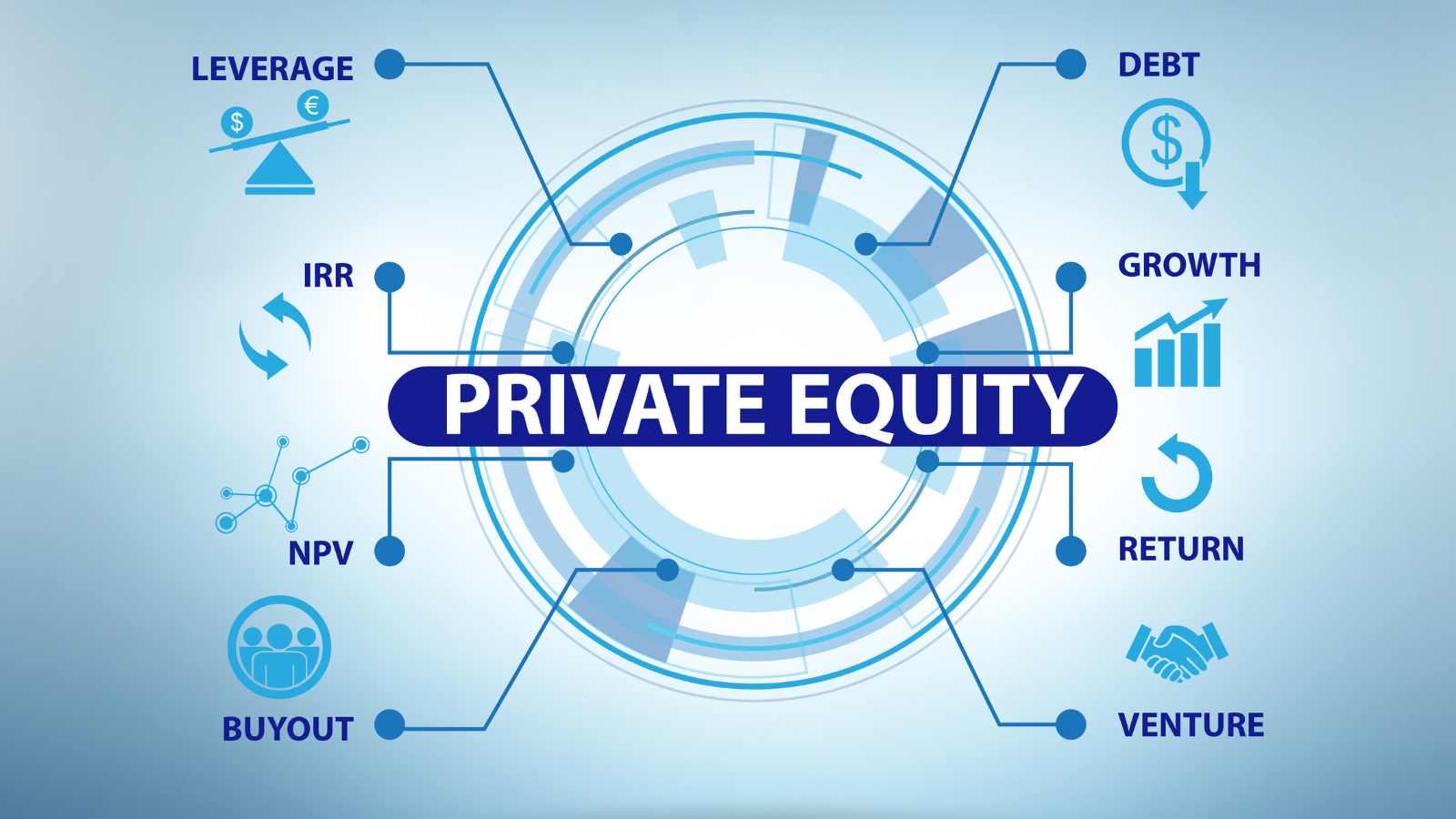
Medicine is undergoing a fundamental change in who is behind the mask. In the last decade, private equity firms have spent billions acquiring dermatology practices, emergency rooms, and radiology groups. The goal is multiple expansion, buying many small practices and selling the consolidated group for a massive profit.
A study published in The BMJ (British Medical Journal) found that private equity acquisitions often lead to higher patient costs and shorter time spent with each patient.
These firms provide the capital necessary for advanced life-saving technology that small practices simply cannot afford. However, when a hospital’s primary metric is EBITDA (Earnings Before Interest, Taxes, Depreciation, and Amortization) rather than patient outcomes, the Hippocratic Oath faces a significant challenge from fiduciary duty.
The Cultural Vault Under Lock and Key

Control of the American imagination is now a game of high-stakes mergers. A single media giant acquiring a legendary studio goes beyond buying movies; it means seizing the nation’s cultural DNA.
These deals, such as the $71 billion acquisition of 21st Century Fox, allow a few boardrooms to decide which stories get told and which are buried in the vault, reducing competition for new content.
This consolidation creates a monoculture in which risks are rarely taken with original ideas, favoring the endless recycling of existing intellectual property.
While this scale enables massive, high-budget productions that entertain millions worldwide, it narrows the gate for independent voices. Our shared myths and legends are increasingly the proprietary property of a few global conglomerates.
The Stock Buyback Loop: Reinvestment vs. Retrenchment
One of the most significant purchases a corporation makes today is its own stock. In 2023 and 2024, U.S. companies spent nearly $1 trillion on share buybacks.
By reducing the number of shares available, the company increases the value of the remaining stock, a move that directly benefits shareholders and executives whose pay is tied to stock performance.
William Lazonick, an economics professor at UMass Lowell, argues that this practice hollows out the American corporation by diverting funds away from worker training and long-term research.
The supporting view, however, is that buybacks are a sign of a healthy company returning value to the people who funded it. It is a debate between short-termism and long-term stability, and currently, the short-term market gains are winning.
The Digital Silk Road of Procurement

Global trade is no longer just about ships and ports; it is about the software platforms that manage them. A few dominant firms now control the digital marketplaces where global manufacturers bid for contracts. These platforms use AI to optimize supply chains, but they also give their owners a God’s-eye view of global commerce.
If a firm sees that a particular component is in high demand, it can move to acquire the supplier before anyone else. This creates a new form of digital mercantilism. It is highly efficient and has helped lower the price of electronics and clothing, but it also creates a fragile system.
If the platform goes down or the algorithm makes an error, the flow of essential goods can stop globally in an instant.
The Privatization of the Public Horizon

Infrastructure: the roads we drive on, the pipes that carry our water, and the grids that power our homes are moving onto the private balance sheet.
Large asset managers like BlackRock and Macquarie have raised hundreds of billions for infrastructure-specific funds.
As public budgets tighten, cities are selling or leasing their assets to these firms to get a quick cash infusion. For the firm, it is the ultimate moat; people cannot simply stop using water or electricity. This provides investors with a guaranteed, inflation-protected return.
For the citizen, it means that the cost of basic survival is now subject to a profit margin. We are moving toward a future where public service is a misnomer, replaced by a permanent lease on the foundational elements of modern life.
Key Takeaway

Concentration of Capital: A handful of firms, such as BlackRock, with $14 trillion in assets, now control capital equivalent to a fifth of the U.S. stock market, centralizing decision-making across finance, infrastructure, and housing.
Housing Transformation: Institutional investors dominate the single-family home market, creating build-to-rent communities that offer flexibility but pit renters against algorithms, challenging traditional homeownership.
Corporate Consolidation: Private equity and roll-ups are professionalizing management in local businesses and healthcare, but this often prioritizes efficiency and profit over personal service, worker security, and patient outcomes.
Market Control & Innovation: Big tech and dominant retailers wield monopsony power and killer-acquisition power, shaping supply chains, pricing, and innovation while limiting competition and reinforcing fragile systems in groceries, logistics, and startups.
Privatization & Cultural Centralization: Public goods, farmland, infrastructure, and cultural assets are increasingly controlled by a few global firms, creating a digital and physical ecosystem where convenience, entertainment, and even survival come at the cost of independence, diversity, and long-term societal resilience.
Like our content? Be sure to follow us