9 Historical Events So Bizarre They Defy All Logic and Reason
“We spend a great deal of time studying history, which, let’s face it, is mostly the history of stupidity.” The legendary physicist Stephen Hawking dropped that truth bomb, and the stats back him up. You might assume history follows a logical path, but the “psychological fossil record” reveals a trend of absolute chaos.
We are talking about a reality where a 35 mph wave of molasses crushed buildings like cardboard, where trained soldiers fired 10 bullets for every single bird they managed to hit in a war against emus, and where 95 out of 159 students in one school were struck down by a laughing sickness that lasted nearly two years.
This listicle doesn’t just recount facts; it analyzes the moments where logic left the building. I’ve compiled the data, the expert opinions, and the sheer absurdity into one list. So, grab a coffee (maybe not schnapps, as you’ll see later), and let’s discover the history that your textbooks were too embarrassed to include.
The 1904 St. Louis Olympic marathon
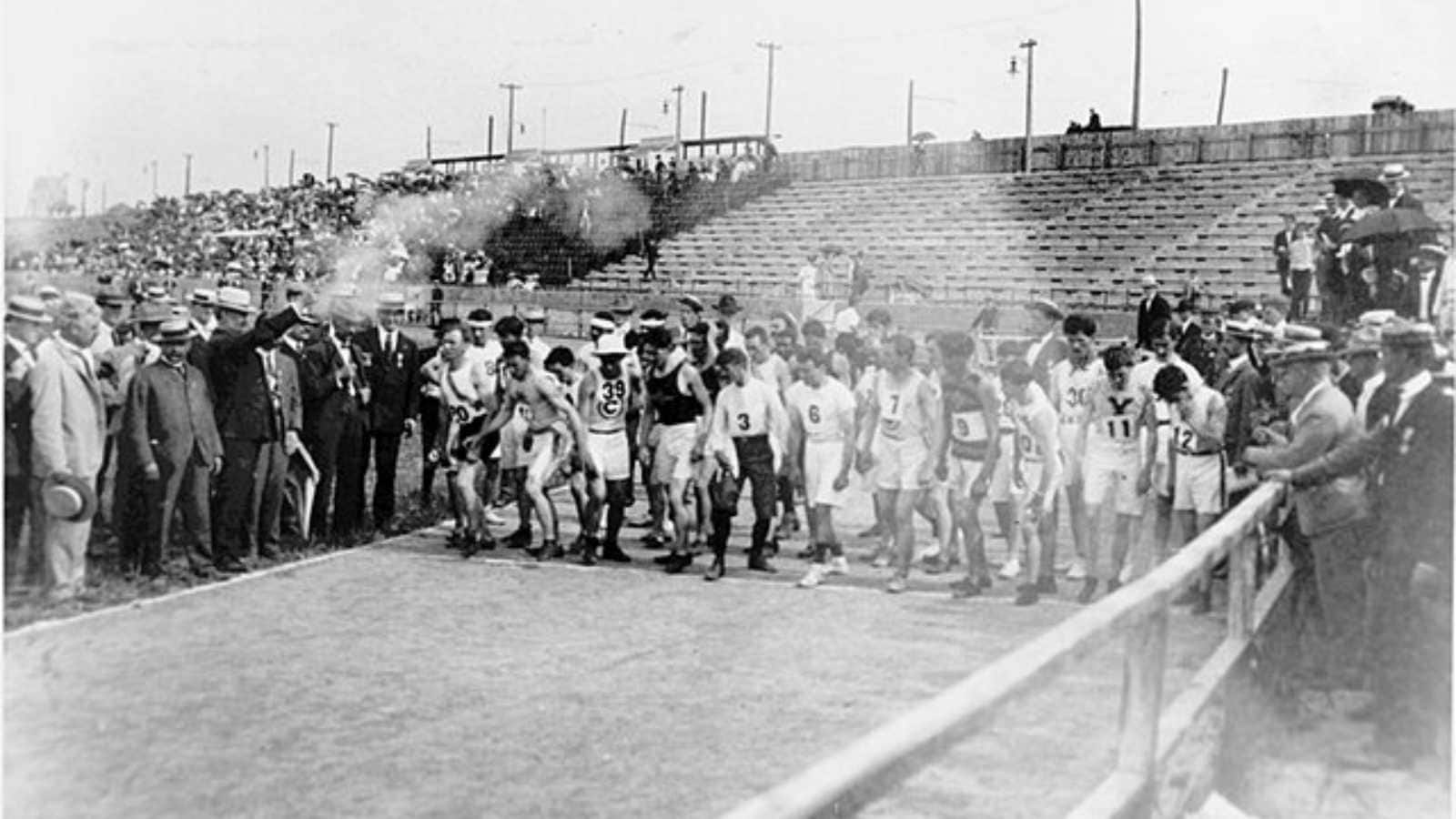
If you think modern sports scandals are wild, they have nothing on this absolute train wreck of a race. Organizers ran the event on dusty dirt roads in 90°F heat while purposefully withholding water to test “purposeful dehydration,” a sadistic theory held by chief organizer James Sullivan. The result? A near-mass casualty event where the winner, Thomas Hicks, only crossed the finish line because his handlers dragged him there while feeding him a toxic cocktail of strychnine, egg whites, and brandy.
The rest of the field fared even worse in this comedy of errors. One runner, Félix Carvajal, stopped to eat rotten apples and took a nap mid-race, yet still finished fourth; another competitor, Len Taunyane, ran for his life after a pack of feral dogs chased him a mile off course. We can’t forget the guy who hitchhiked in a car for 11 miles and tried to claim the gold medal as a “joke”. IMO, this remains the most dangerous, unregulated sporting event in history.
The Great Emu War of 1932
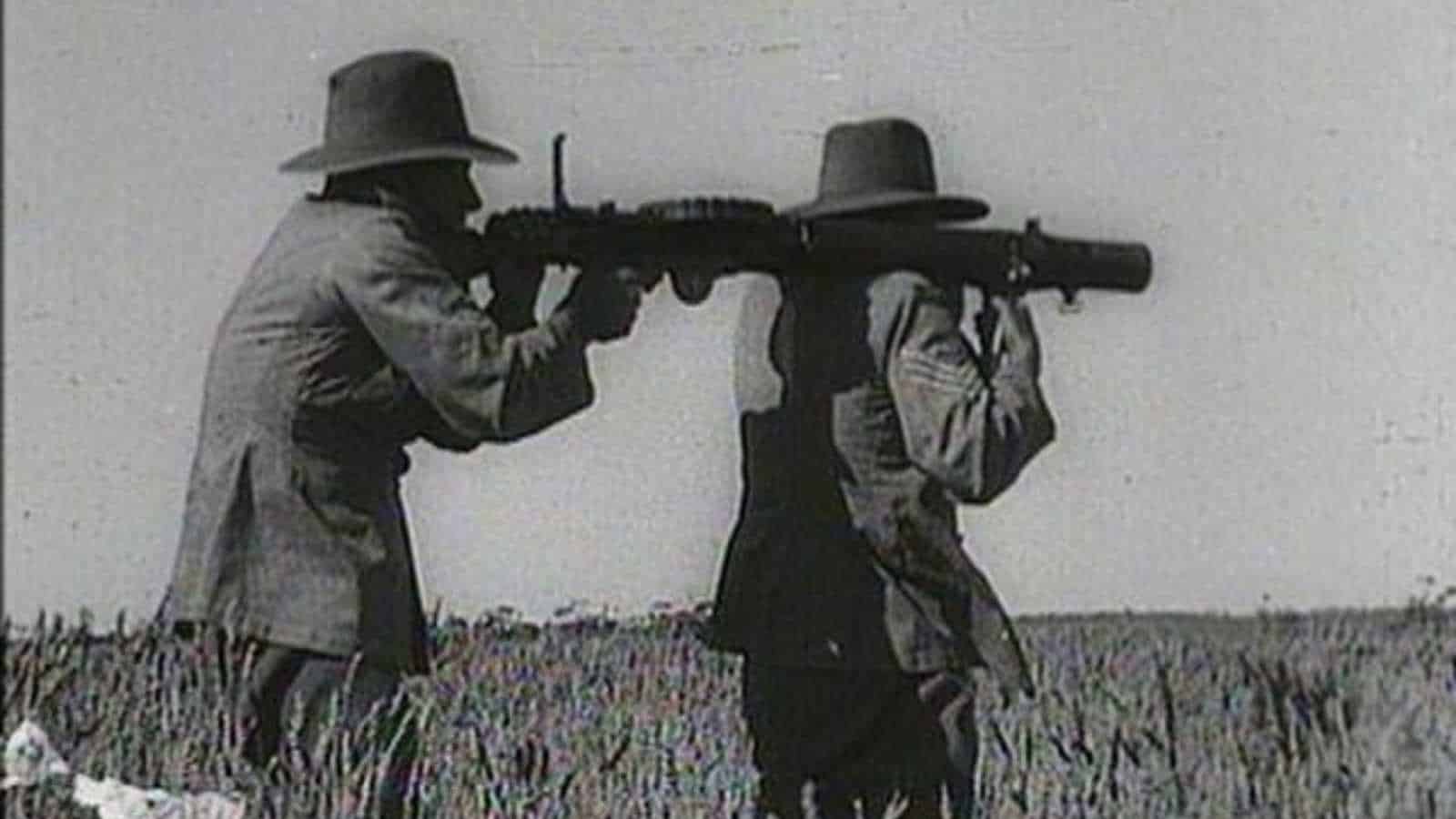
Australia once declared war on birds, and the birds won. Facing a plague of 20,000 emus destroying wheat crops in Western Australia, the government sent Major G.P.W. Meredith and a team of soldiers armed with Lewis machine guns to mow them down. Meredith expected an easy victory, but the emus adopted guerrilla tactics, splitting into small groups and outrunning the soldiers’ trucks over rough terrain.
The military burned through 2,500 rounds of ammunition in the first week to kill only a handful of birds, leading to a humiliating retreat. Major Meredith later admitted defeat with a begrudging respect for his enemy, stating, “If we had a military division with the bullet-carrying capacity of these birds it would face any army in the world… They can face machine guns with the invulnerability of tanks”. Imagine explaining to your superiors that you lost a war to flightless poultry?
The dancing plague of 1518
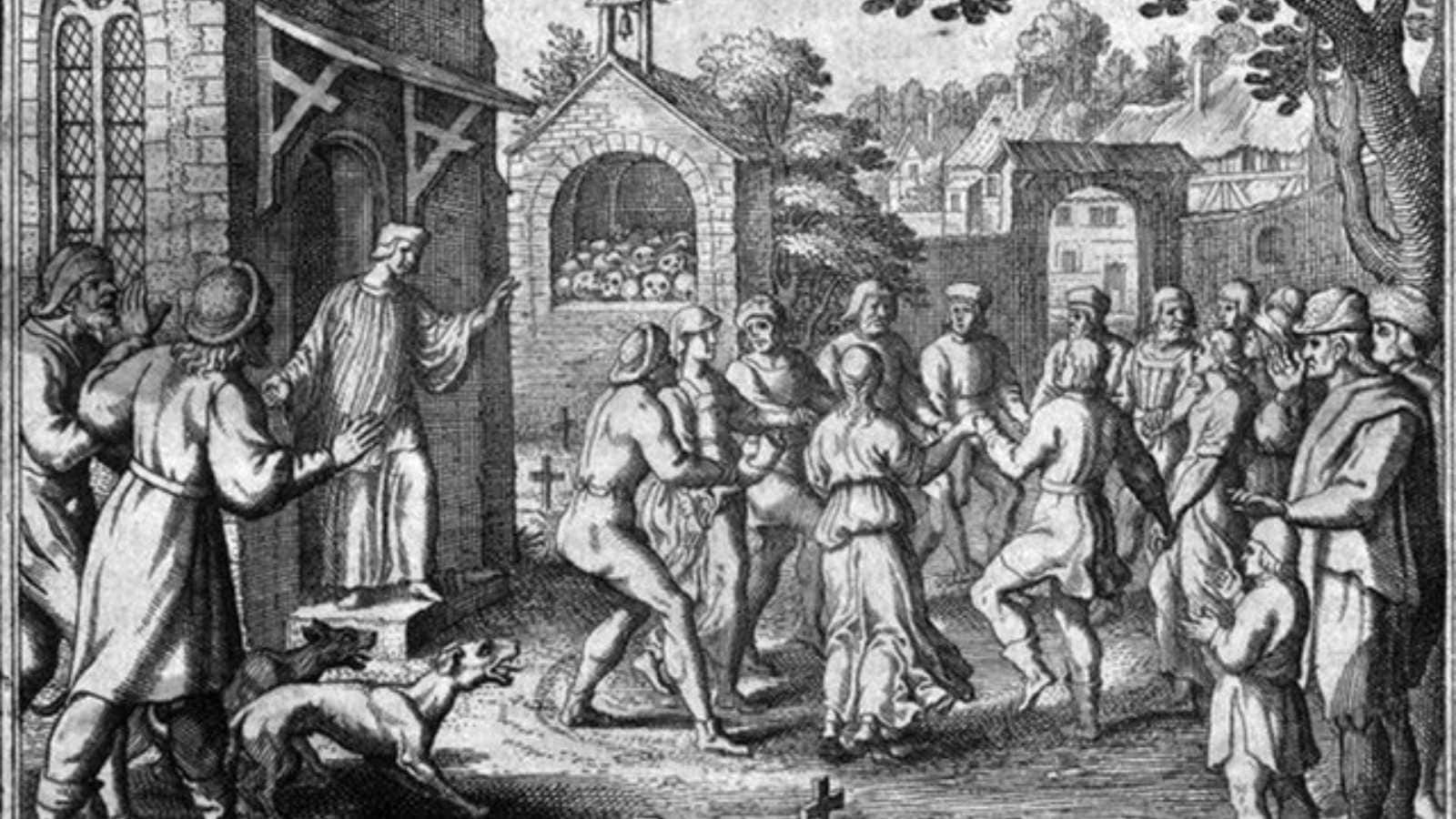
In July 1518, a woman named Frau Troffea stepped into a street in Strasbourg and began to dance fervently, not for joy, but out of compulsion. She didn’t stop for days, and within a week, 34 others joined her; by month’s end, the crowd swelled to 400 people who literally danced until they collapsed from exhaustion or died of heart attacks and strokes. Authorities blamed “hot blood” and, defying all logic, built a stage and hired musicians to encourage them to “dance it out,” which only made the contagion spread faster.
Experts now attribute this horror to mass psychogenic illness triggered by extreme famine and stress, combined with a local fear of St. Vitus, a saint believed to curse sinners with dancing. Watching hundreds of people writhe in a trance while hired bands played upbeat music sounds like a scene from a horror movie, but for the people of 1518, it was a terrifying reality.
The Boston molasses flood of 1919
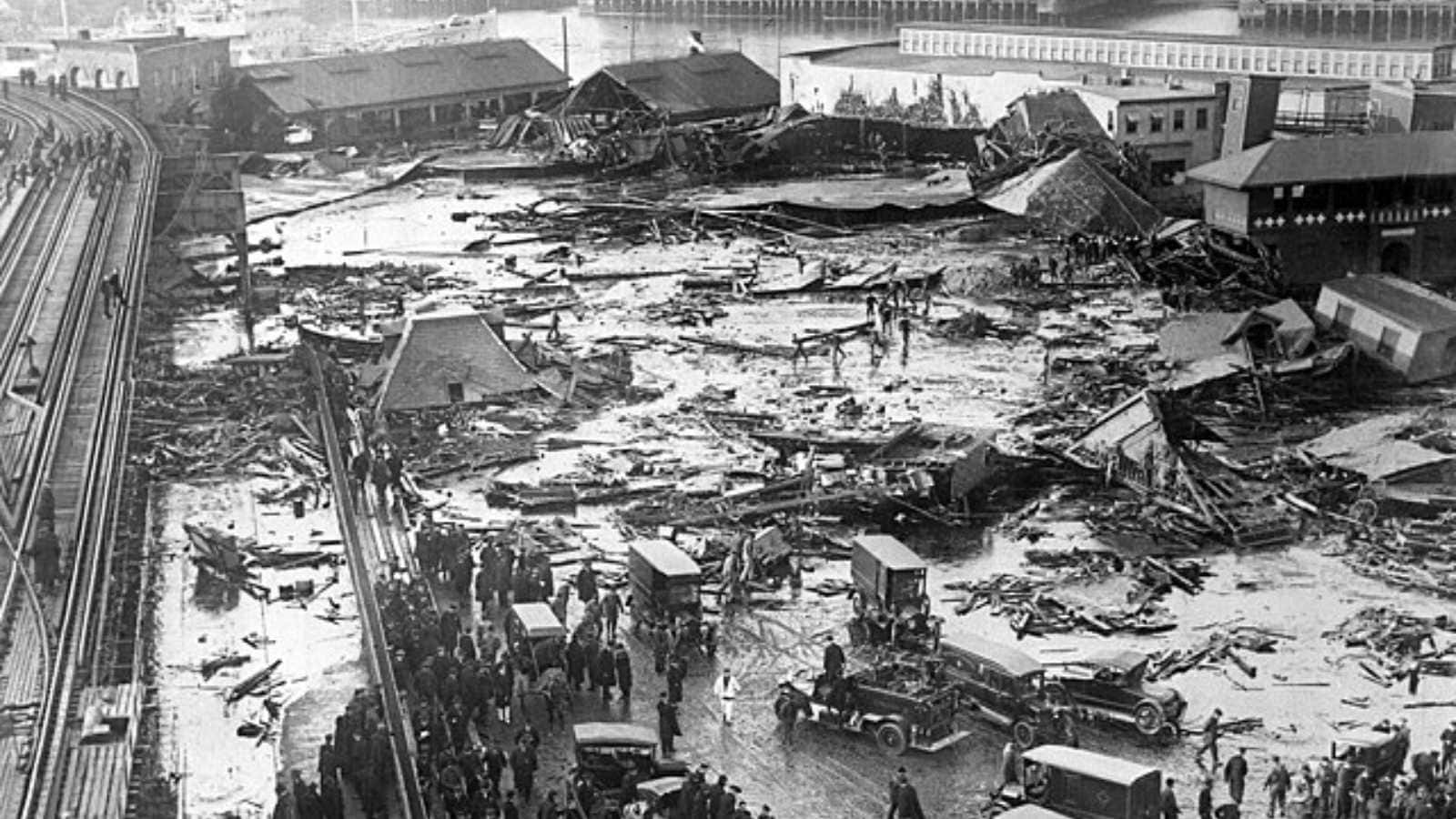
We usually associate industrial disasters with fire or explosions, but Boston faced a “sticky tsunami.” On an unseasonably warm January day, a massive storage tank burst, unleashing 2.3 million gallons of molasses that surged through the North End streets. This wasn’t a slow creep; the wave reached heights of 15 feet and traveled at 35 mph, smashing buildings off their foundations and snapping steel train tracks like twigs.
The aftermath looked like a nightmare, with rescuers struggling through waist-deep goo that hardened in the winter cold, trapping horses and humans alike. Twenty-one people died and 150 suffered injuries in the disaster. Survivors reported a “sweet scent” that lingered over the city for decades, a haunting olfactory reminder of the time the streets ran brown with syrup.
Operation Acoustic Kitty
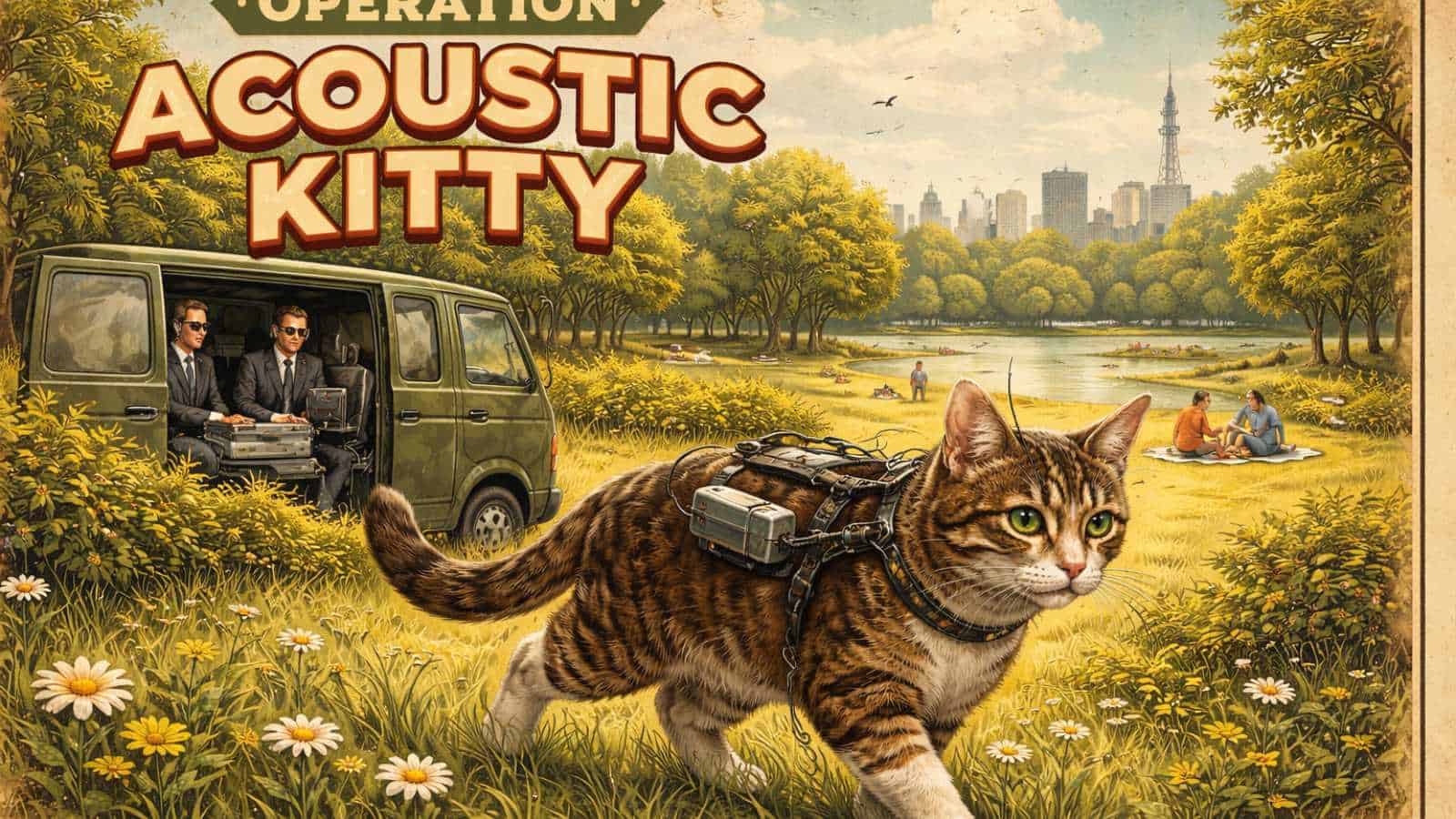
During the Cold War, the CIA spent five years and approximately $20 million trying to turn a domestic cat into a living surveillance device. Engineers surgically implanted a microphone in the cat’s ear canal, a transmitter in its skull, and wove an antenna into its tail, creating a cyborg feline designed to eavesdrop on Soviet agents on park benches.
The result? Cat owners won’t be surprised to hear that the cat refused to follow orders, wandering off to find food instead of spying. During its first official field test, a taxi reportedly hit and killed the cat moments after agents released it. The agency eventually scrapped the program, admitting in a heavily redacted memo that “the program would not lend itself in a practical sense to our highly specialized needs”.
The Cadaver Synod of 897
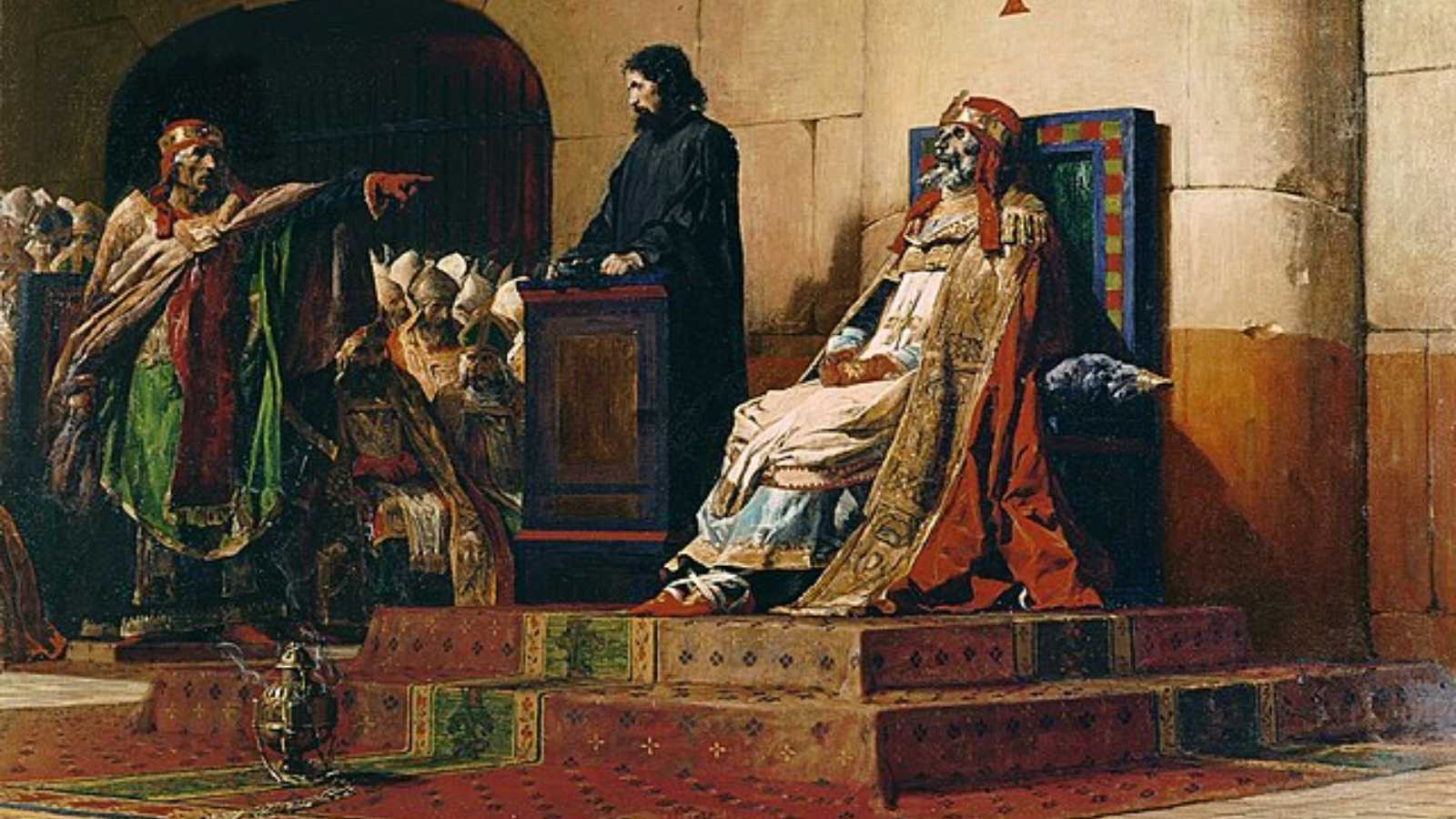
Petty politics reached a new low when Pope Stephen VI decided to put his predecessor, Pope Formosus, on trial, seven months after Formosus had died. Stephen ordered the corpse dug up, dressed in papal vestments, and propped up on a throne to face charges of perjury and illegal accession. A deacon even had to stand next to the rotting body to answer on its behalf (talk about a bad internship).
Unsurprisingly, the court found the corpse guilty. Stephen ordered the three fingers of Formosus’s right hand (used for blessings) cut off, and they tossed the body into the Tiber River. The public outrage was so severe that a mob eventually overthrew Stephen VI and strangled him in prison, proving that even in the Dark Ages, people drew the line at screaming at a dead guy.
The Battle of Karánsebes
In 1788, the Austrian army, roughly 100,000 strong, accidentally fought a battle against itself, resulting in massive casualties without a single Ottoman soldier present. It started when hussars (cavalry) bought a bunch of schnapps from local travelers and refused to share it with the infantry, leading to a fistfight and a gunshot.
In the darkness and drunken confusion, someone shouted “Turci!” (Turks!), causing a panic that spread through the multi-ethnic army, where language barriers turned deadly. German officers shouted “Halt!”, which non-German soldiers mistook for “Allah!”, tricking the artillery commander into firing on his own troops. The army retreated in disgrace, leaving the town open for the actual Ottomans to take two days later.
The Tanganyika laughter epidemic

Laughter is usually the best medicine, but in 1962, it became a debilitating contagion for the people of Tanganyika (now Tanzania). It started with three students at a girls’ boarding school and spread until 95 of the 159 students were laughing uncontrollably, forcing the school to close. The “laughter”—which was actually closer to hysterical crying and screaming—spread to nearby villages, affecting over 1,000 people and lasting for roughly 18 months.
Medical experts like Christian Hempelmann describe this as a textbook case of mass psychogenic illness caused by the immense pressure and stress of the country’s recent independence and rigid school expectations. It just shows that the human brain has a breaking point, and sometimes that break looks like a joke that never ends.
The Erfurt latrine disaster
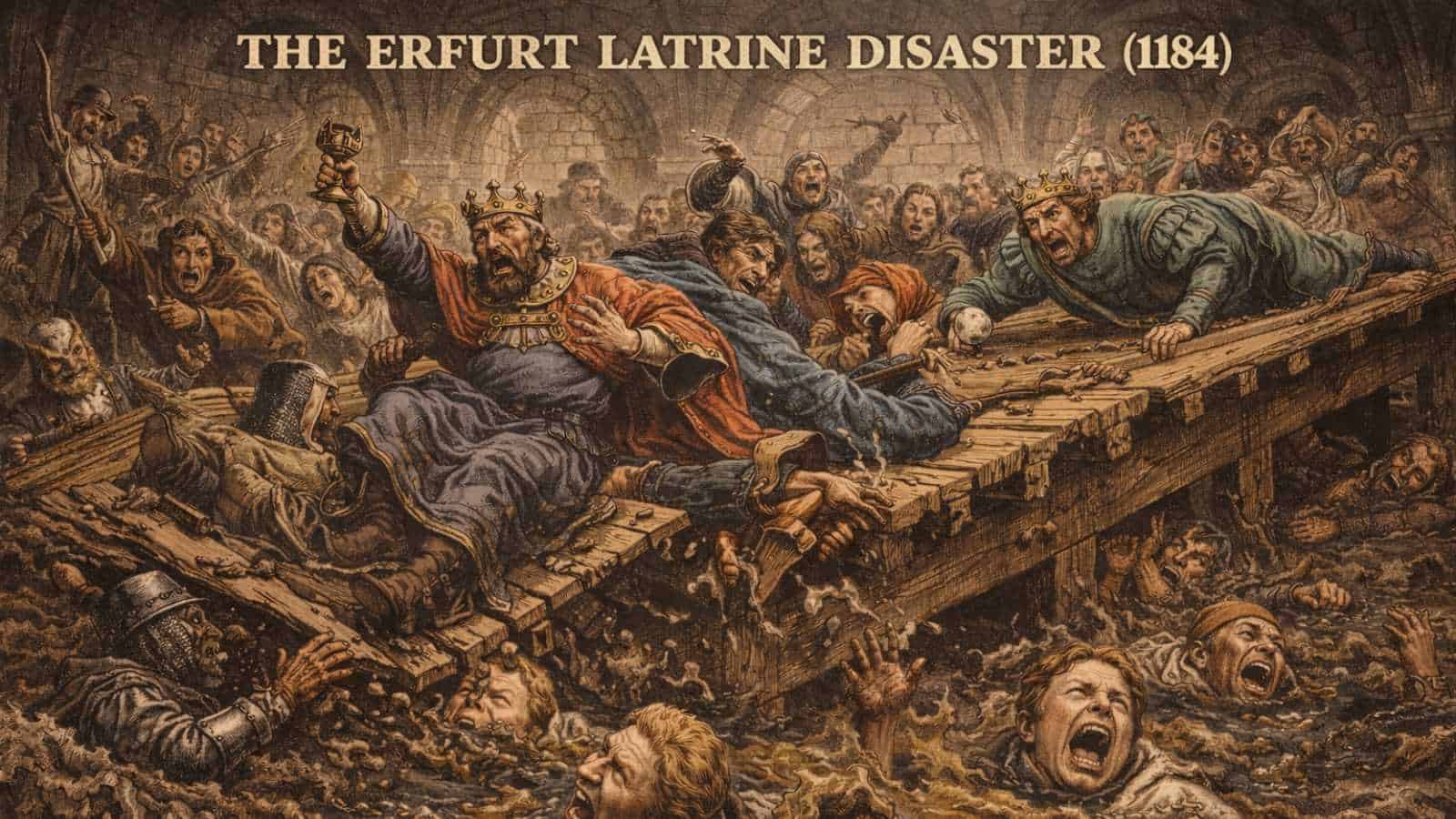
This event is the definition of a “crappy situation.” In 1184, King Henry VI called a meeting of nobles in Erfurt to settle a land dispute, gathering dozens of high-ranking counts and bishops in the second-floor provost’s hall of St. Peter’s Church. The wooden floor, unable to hold the weight of so many men in chainmail, collapsed.
The nobles crashed through the first floor and plunged directly into the monastery’s massive cesspit below, where roughly 60 of them drowned in liquid human waste or suffocated from the fumes. King Henry only survived because he was sitting in a stone window alcove when the floor gave way. It remains the most undignified tragedy in royal history.
Key Takeaway
History isn’t just a list of dates; it’s a testament to human error, biological weirdness, and sheer bad luck. Whether it’s drowning in molasses or losing a war to birds, these events remind us that logic often takes a backseat to chaos. So, next time you mess up at work, just remember: at least you didn’t accidentally shell your own army over a bottle of schnapps.
FYI: No cats were harmed in the writing of this article, unlike in the 1960s.
Disclosure: This article was developed with the assistance of AI and was subsequently reviewed, revised, and approved by our editorial team.
20 of the Worst American Tourist Attractions, Ranked in Order

20 of the Worst American Tourist Attractions, Ranked in Order
If you’ve found yourself here, it’s likely because you’re on a noble quest for the worst of the worst—the crème de la crème of the most underwhelming and downright disappointing tourist traps America offers. Maybe you’re looking to avoid common pitfalls, or perhaps just a connoisseur of the hilariously bad.
Whatever the reason, here is a list that’s sure to entertain, if not educate. Hold onto the hats and explore the ranking, in sequential order, of the 20 worst American tourist attractions.