What to do if you spot a coyote in your yard
Urban wildlife research shows coyotes now occupy nearly every major North American city, making human-coyote encounters a predictable part of modern suburban life.
Coyotes are increasingly common in suburbs and cities, and seeing one trot through your yard can be unnerving, especially if you have kids or pets. Urban wildlife studies show coyotes now live in metropolitan areas across North America, from Chicago and Los Angeles to Toronto, often moving through neighborhoods at night. Fortunately, most encounters can be managed safely if you stay calm, make smart choices, and avoid un)intentionally inviting them back.
The goal is not to panic or try to eliminate every coyote, but to “teach” them that your yard is not a place to linger or hunt. As the Humane Society of the United States explains, coyotes that are consistently hazed, scared away using loud, assertive tactics, are less likely to become bold or approach people. Here’s what wildlife agencies and biologists recommend you do, step by step.
Stay Calm and Assess the Situation

First, take a breath and quickly evaluate what is happening: Is the coyote just passing through, or is it lingering, hunting, or acting oddly? Most coyotes seen in neighborhoods are doing what biologists call “transiting”; moving quietly along fence lines, roads, or greenbelts to reach food or shelter.
The Humane Society notes that “seeing a coyote in the neighborhood is not necessarily cause for alarm” if the animal appears healthy and wary of people. However, if it is watching pets, circling, approaching people, or looks injured or disoriented, you should move quickly to the next steps and consider contacting local animal control.
Bring Children and Pets Inside Immediately

If you spot a coyote in or near your yard, calmly but promptly bring children and pets indoors. Small dogs and outdoor cats are at the highest risk, especially at dawn and dusk when coyotes are most active.
The Washington Department of Fish and Wildlife advises you to supervise pets outside and to keep cats indoors. This reduces conflicts with coyotes and other wildlife. Most pet attacks occur when animals are off‑leash or left unattended in yards. This highlights the importance of direct supervision.
Use “Hazing” to Scare the Coyote Away
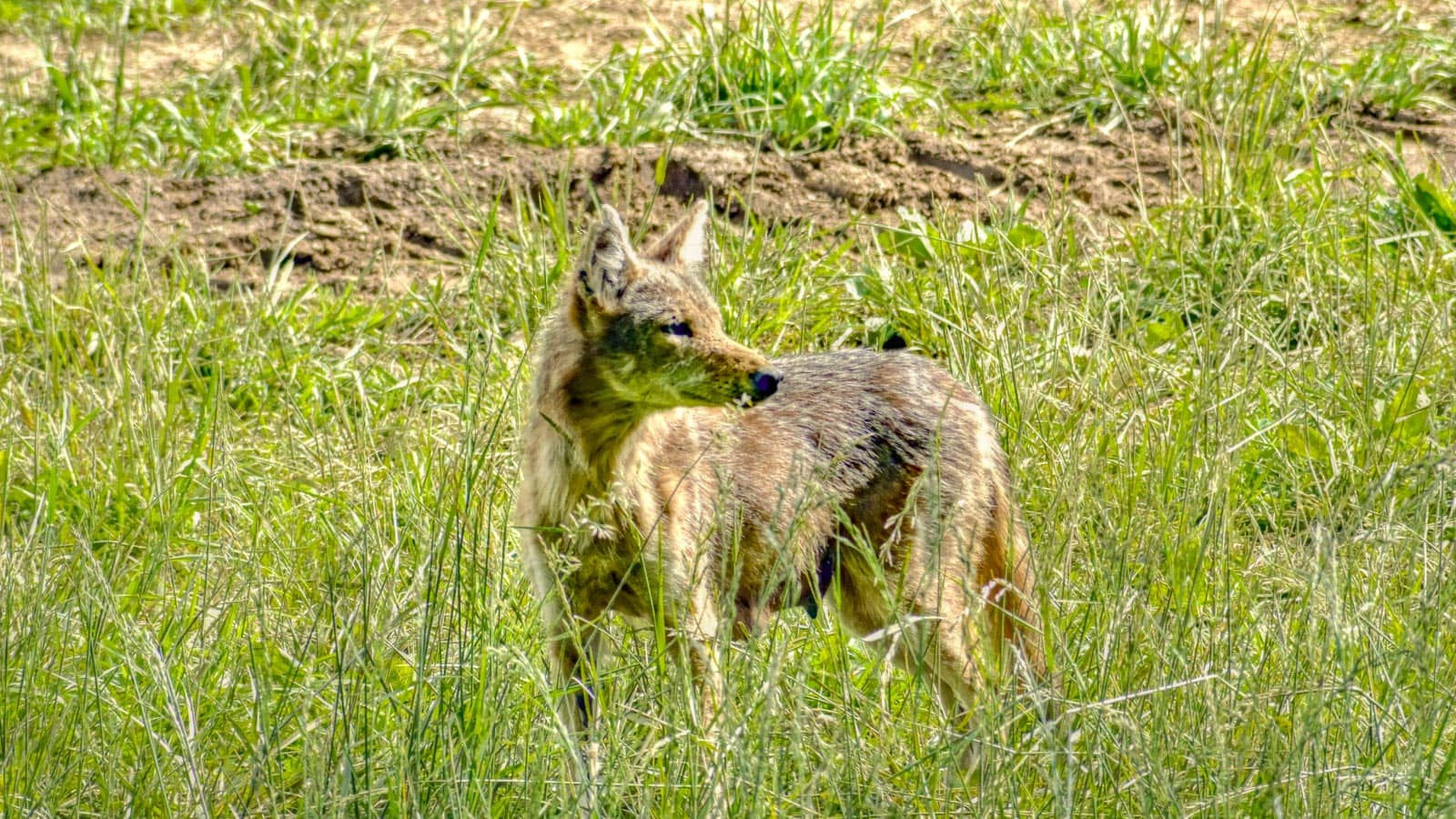
Once your family and pets are safe, experts recommend using coyote hazing, deliberate, loud, human behavior that makes coyotes uncomfortable and encourages them to leave. This can include:
- Yelling or clapping loudly
- Waving your arms or a jacket
- Blowing a whistle or an air horn
- Throwing small objects like sticks or stones near (not directly at) the coyote
Hazing is an effective method for reshaping coyote behavior because it reinforces a natural fear of people. Communities that consistently haze coyotes see fewer bold animals and fewer conflicts, since coyotes learn that residential areas are not safe places to linger.
Don’t Run or Turn Your Back

Even though coyote attacks on adults are very rare, running can trigger a chase response in predators and is strongly discouraged. Project Coyote, a coalition of scientists and wildlife advocates, advises people to “stand your ground, make yourself big, and be loud” until the coyote retreats.
The same principle applies to wolves and big cats: moving calmly and confidently away while facing the animal reduces the chance of pursuit. If a coyote doesn’t leave right away, continue hazing, pick up small children, and slowly move toward safety. Never turn your back and sprint.
Remove Food Sources from Your Yard

Coyotes are opportunistic omnivores, and human‑associated food sources are one of the biggest reasons they hang around homes. Studies of urban coyotes show they commonly eat garbage, pet food, compost, fallen fruit, and rodents attracted by bird feeders.
Wildlife agencies recommend the following steps to “de‑buffet” your yard:
- Secure trash in wildlife‑resistant containers
- Bring pet food and water dishes inside at night.
- Clean up fallen fruit and spilled birdseed.
- Feed pets indoors whenever possible.
Neighborhoods with unsecured garbage and outdoor feeding stations are more likely to experience conflicts with coyotes. Removing easy meals is one of the most effective long‑term strategies to encourage coyotes to move elsewhere.
Protect Pets with Fences and Supervision

Physical barriers can help, but standard fences are not foolproof. According to A-Z Animals, coyotes can jump or climb fences up to about 6 feet, and some sources report individuals clearing even higher obstacles. Wildlife agencies often recommend fences at least 6 feet tall with a coyote roller or outward‑angled extension at the top to reduce climbing.
Even with fencing, experts stress that small pets should not be left unattended outside, especially at dawn, dusk, and night. Many pet depredations occurred in backyards where animals were left alone outside. Supervision, leashes, and avoiding retractable leashes that allow pets to wander are key parts of prevention.
Never Feed Coyotes On Purpose or by Accident

Feeding coyotes, whether intentionally or through accessible trash and pet food, is one of the fastest ways to create dangerous, habituated animals. Project Coyote summarizes it bluntly: “A fed coyote is a dead coyote,” because animals that lose their fear of people are more likely to be involved in conflicts and ultimately killed.
ResearchGate links aggressive behavior to feeding or regular access to human food sources. Local ordinances in many cities now prohibit feeding wildlife, including coyotes, precisely because data show that hand‑outs dramatically increase risk for people, pets, and the animals themselves.
Know When to Call Animal Control or Wildlife Authorities

Most sightings don’t require emergency action, but some do. Contact authorities if a coyote repeatedly approaches people, appears sick or severely injured, attacks pets, or is being fed by neighbors. Many states and provinces have online reporting tools or hotlines for nuisance or aggressive coyotes.
Research by ResearchGate on urban coyote management suggests that “targeted removal” is most effective when it focuses on specific problem animals rather than broad, random trapping. Reporting on behavior provides wildlife professionals with the data they need to decide whether education, hazing programs, or direct intervention is appropriate in your area.
Teach Kids Simple Coyote Safety Rules

Children don’t need to be terrified of coyotes, but they do need clear, simple instructions. Humane education programs recommend teaching kids to: never approach or feed wildlife; never run toward or away from a coyote; and to tell an adult right away if they see one.
Project Coyote suggests a child‑friendly version of hazing: stand tall, wave your arms, shout “Go away coyote!” and then walk with an adult back to safety. Rehearsing these steps the way you would a fire drill helps kids remember what to do if a coyote shows up in a park, on the walk to school, or in your yard.
Understanding Coyote Behavior Can Keep You Safer

Coyotes are adaptable, intelligent animals that fill an important ecological role by controlling rodents and other small animals, even in cities. Long‑term urban studies show that direct attacks on people are rare, but conflicts rise where coyotes are fed or allowed to become too comfortable around homes.
Experts agree on the core strategy: remove food, supervise pets and kids, haze coyotes that come too close, and call authorities about truly aggressive animals. When your yard sends a consistent message, no snacks, no hiding places, and no tolerance for hanging around, most coyotes will do exactly what you want them to do: move on.
More articles you might like:
- 10 Bloodthirsty Animals That Specifically Hunt Humans To Survive
- 10 Exotic Animals You Can Legally Own As Pets
- 10 Ways To Keep Your Dog Calm During Fireworks