My Mother Became an American in 1958, But Never Voted. She Wasn’t Alone
My mother proudly became an American in 1958 after emigrating from Scotland in the early 50’s– the first in her family of 7 girls and two boys to leave the country and sail across the sea to another continent. She was 19 when she arrived the first time and she went back each time on the Queen Mary or Queen Elizabeth to bring 3 more of her siblings over a 4-year period all of whom also became US citizens. Her naturalization certificate was tucked away into a drawer along with her birth certificate, her wedding certificate and her wedding announcement from the New York Times.
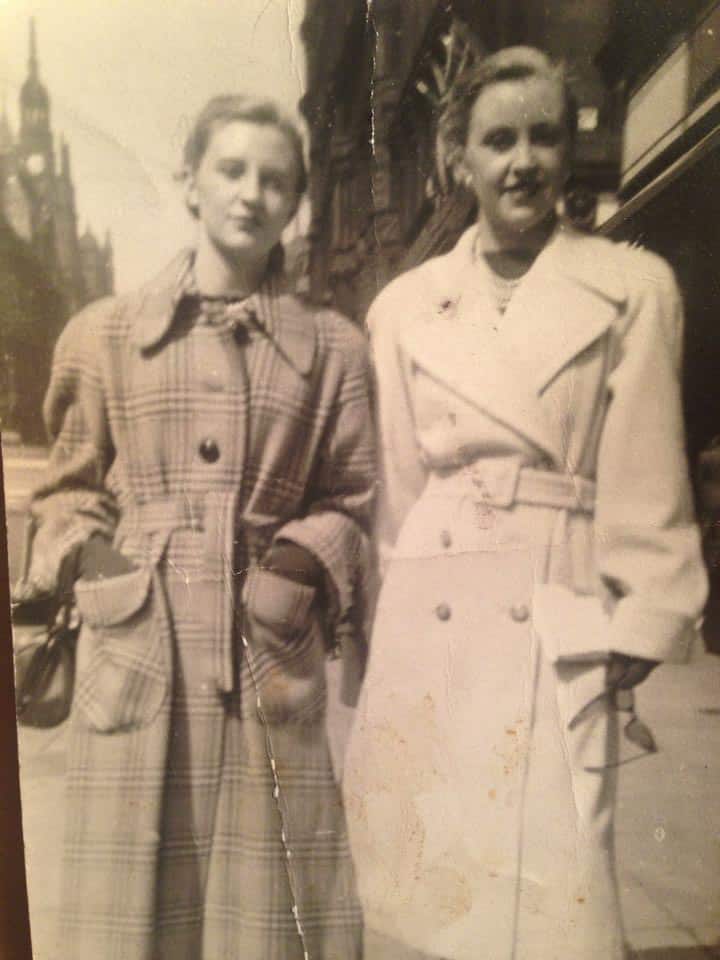
Photo credit the author.
Her new citizenship made her eligible to vote in every election from Eisenhower onward, yet she never once set foot in a voting booth.
When I became old enough to vote in my first election, in 1978, I remember asking her why she wasn’t voting. She said she didn’t have the time, she was too busy to wait on a line to cast a vote she didn’t think mattered. Later I would ask her to please register and use the voice she had no problem using in any other part of her life – only to be told she wasn’t interested in politics. As I was reflecting on this recently, I began to wonder: was she an outlier—or part of a much larger, quieter pattern among first‑generation immigrants?
One in ten voters has a story like hers
If my mother had walked into a polling place, she would have been part of a voting bloc that now makes up about one in ten U.S. eligible voters: naturalized citizens. In 2020, more than 23 million immigrants were eligible to vote in the presidential election, roughly 10% of the electorate, and the number of immigrant eligible voters had nearly doubled since 2000. Those estimates come from the Census Bureau’s American Community Survey and Current Population Survey, analyzed by the Pew Research Center, which also notes that this foreign‑born electorate has grown far faster than the U.S.‑born electorate over the same period
That means my mother’s experience—an immigrant who went through the paperwork, stood before a judge, took the oath and then disappeared from civic view—sits inside a much bigger demographic shift. The United States has not just welcomed more immigrants; it has quietly built an electorate in which millions of first‑generation Americans could, at least on paper, help decide who runs the country.
Naturalized voters show up less often than the native‑born
Here’s where my mother starts to look less like a total exception and more like the far edge of a broader pattern. Across multiple election cycles, naturalized citizens are consistently less likely than native‑born citizens to say they registered and voted. A Census working paper using the Voting and Registration Supplement to the Current Population Survey found that in 2010, 46% of native‑born citizens reported voting compared with 37% of naturalized citizens; naturalized citizens were “about half as likely” to register and substantially less likely to vote, even after accounting for social and demographic factors.
Pew’s analysis of more recent elections shows a similar gap. In 2016, 62% of U.S.‑born eligible voters said they cast a ballot, compared with 54% of foreign‑born eligible voters overall, a difference of about eight percentage points. Even as the immigrant share of the electorate has grown, that participation gap has persisted, and newer research updating the picture through 2024 still finds naturalized citizens registering and voting at lower rates than their native‑born counterparts.
My mother, in other words, wasn’t alone in sitting out elections—she was just more absolute about it. Where many naturalized citizens show up occasionally or in big presidential years, she managed to stay on the sidelines for decades.
Older, foreign‑born, and on the sidelines

Age is another place where her story intersects with the data. By the time I was old enough to notice she wasn’t voting, she was already in the demographic that now dominates the naturalized electorate: older adults. A 2024 Pew short read notes that about 58% of immigrant eligible voters are 50 or older, compared with 46% of U.S.‑born voters, and just 8% of immigrant eligible voters are under 30, compared with 22% of the U.S.‑born electorate.
Other research suggests that those older naturalized citizens may be some of the hardest to engage. A 2025 study of nativity and voter participation from 2010–2024 finds that, even as naturalized citizens become a larger share of the electorate—at least 13% by 2024—the registration and turnout gaps between foreign‑born and native‑born citizens remain. The authors highlight age, education, and racial/ethnic composition as key differences, and argue that structural and institutional barriers continue to limit full political incorporation.
My mother naturalized in the late 1950s and aged into a cohort of immigrants who often lacked tailored outreach, language‑sensitive information, or even a clear cultural script for what voting should mean to a woman who grew up pledging loyalty to another flag. The statistics don’t tell me why she stayed home, but they do suggest she was living inside a set of broader pressures that made participation less likely, not more.
Women, men, and who feels invited in
When I picture my mother ignoring election day, I also picture my father—American‑born—never missing one. That private gender gap echoes what researchers have seen, though the data for naturalized citizens are more limited than for the electorate overall. General turnout studies have long found that women in the U.S. vote at equal or slightly higher rates than men, but the Census analysis of naturalized citizens points to nativity itself as a strong predictor of lower registration and voting, even when gender is included among the controls. In 1996 and 2010, for example, naturalized citizens were significantly less likely to register and to vote than native citizens, regardless of other demographics.
Giving people the right to vote is not the same thing as making them feel invited, equipped, and wanted in the voting booth.
That means my mother’s decision not to vote probably had more to do with being foreign‑born and socially positioned as an outsider than with being a woman per se. She belonged to an era when immigrant women—especially white European women who could “pass” more easily—were often treated as dependents of citizen husbands rather than as political actors in their own right. The data can’t break out Scottish‑born women who naturalized in 1958, but they can tell me that people like her were, statistically, less likely to be courted, registered, or counted.
Immigrants of the 1950s vs. immigrants of today
When my mother renounced the Queen and pledged allegiance to the United States, immigrants made up a smaller slice of the population and an even smaller slice of the electorate. Pew’s reconstruction of the immigrant vote shows how radically that has changed: since 2000, the number of immigrant eligible voters has grown 93%, while the U.S.‑born eligible voter population grew by just 18%.
A Census working paper tracking naturalized citizens’ voting behavior from 1996–2006 found that they were less likely to vote than native citizens in every election studied, and that the effect of nativity stayed at least as strong over that decade. More recent work extended that finding into the 2010s and early 2020s, concluding that the participation gap has persisted even as the foreign‑born electorate has expanded and debates over immigration have intensified.
So if you line up immigrants who naturalized in my mother’s era against immigrants who became citizens in the 1990s, 2000s, or 2010s, you find two big shifts happening at once: more first‑generation Americans with the right to vote, and a stubbornly enduring gap in who actually uses that right. Today’s naturalized citizens are more numerous, often more educated, and somewhat more likely to have higher incomes than their U.S.‑born counterparts, yet as a group they still participate less.
The silence we can’t measure
The question that sent me down this rabbit hole—how many first‑generation immigrants never exercise their right to vote at all—turns out to be one the data can’t answer cleanly. The Census and Pew track who says they voted in specific elections, not whether a person has voted even once in their lifetime, so there is no official percentage for “never voters” among naturalized citizens. What we do know is that in election after election, a sizable minority of naturalized citizens sit out, and that their turnout rates trail those of native‑born citizens by anywhere from a few points to nearly 10 points, depending on the year and the race.
Somewhere inside those numbers is a subset of people like my mother: citizens on paper who never once translate that status into a ballot. We can’t count them precisely, but we can see the outline they leave, a persistent participation gap, an older electorate that skews foreign‑born, and a democracy still struggling to turn naturalization into genuine political belonging.
What my mother’s blank ballot taught me
For years, I saw my mother’s refusal to vote as apathy, perhaps rooted in a deeper discomfort shaped by her curtailed formal education in postwar Great Britain and the gender bias she faced as a female. Now, seeing the data, I read it a little differently. She was part of a generation of immigrants who were welcomed into the economic and social life of the country but left largely on their own when it came to the political one, and the statistics show that many of her peers also stayed on the margins of the ballot box.
I wish she had voted, as her voice was clear, strong, compassionate and practical and if given the right encouragement and access to information she would have added her voice to the millions of other Americans who have been building this imperfect union for 250 years.
But the more I learn, the less I see her as an exception and the more I see her as a data point in a bigger, uncomfortable truth: giving people the right to vote is not the same thing as making them feel invited, equipped, and wanted in the voting booth.
Like our content? Be sure to follow us on MSN and Newsbreak
You may be interested in reading:
- Debunking immigration myths: 10 essentials for women navigating diversity
- God, Justice and the 2026 Midterms: Why More Pastors Are Running as Democrats
- Is there still hope for U.S. democracy? Experts weigh in