12 reasons travel experts say you shouldn’t put your phone in airport security bins
You’ve probably done it dozens of times: sliding your phone into a plastic security tray while juggling shoes, a laptop, and a bag of liquids. For a few seconds, your device is out of sight and out of your hands. It seems harmless, but that brief separation can cost more than you think. Thousands of electronic devices go missing at airports every year, and small, easily concealed devices like smartphones are often the first to disappear.
What’s worse, airport security is designed for speed, not supervision. Bins move quickly along conveyor belts, lines get crowded, and passengers are forced to juggle instructions from officers, their belongings, and their own attention span. In that chaotic environment, even careful travelers can lose track of their phones, or worse, expose them to security and health risks they never imagined.
By the time your phone reappears at the end of the conveyor, the risks are already stacked against you: missed alerts, misplaced data, and even the possibility of theft or contamination. Few travelers realize that these fleeting seconds can have lasting consequences, turning a routine checkpoint into a hidden minefield for your most essential device.
Phones Are Among the Most Frequently Lost or Stolen Items at Security Checkpoints
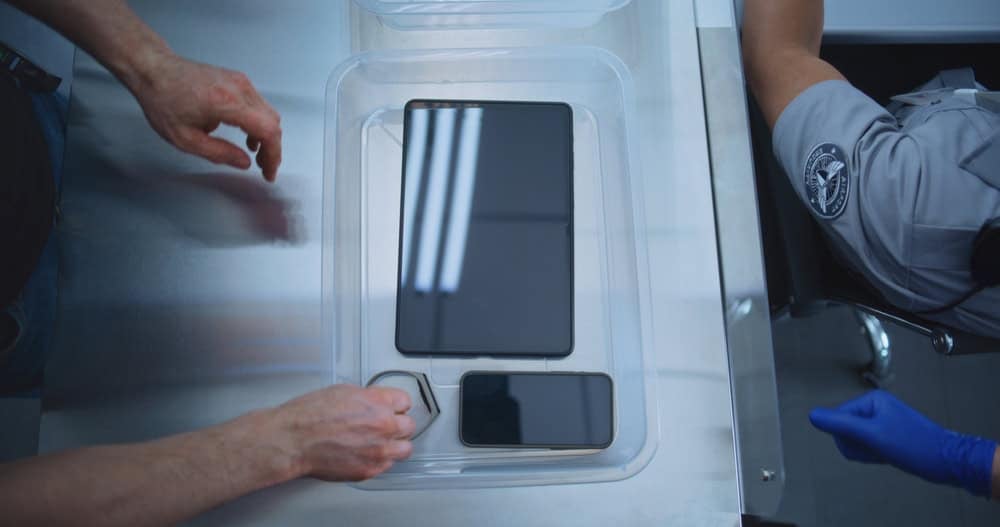
Airport security lines are built for speed, not for carefully supervising every personal item moving through the system. Once your tray enters the scanner, it becomes part of a constant flow of bins shared by dozens of passengers feeding the conveyor simultaneously.
Meanwhile, travelers themselves are briefly separated from their belongings as they pass through metal detectors or body scanners. That short gap may only last seconds, but it creates an opportunity for valuables to disappear without immediate notice.
A widely cited airport security study commissioned by Dell and conducted by the Ponemon Institute found that roughly 12,000 laptops are lost every week at U.S. airports, with security checkpoints responsible for about 40 percent of those incidents. The research focused on laptops, yet the conditions it describes- crowded lines, moving trays, and distracted passengers- apply even more strongly to smartphones. Because phones are smaller and easier to conceal, they can disappear from a tray in seconds before a traveler even reaches the end of the screening area.
Airport Security Lines Create a Perfect Environment for Distraction
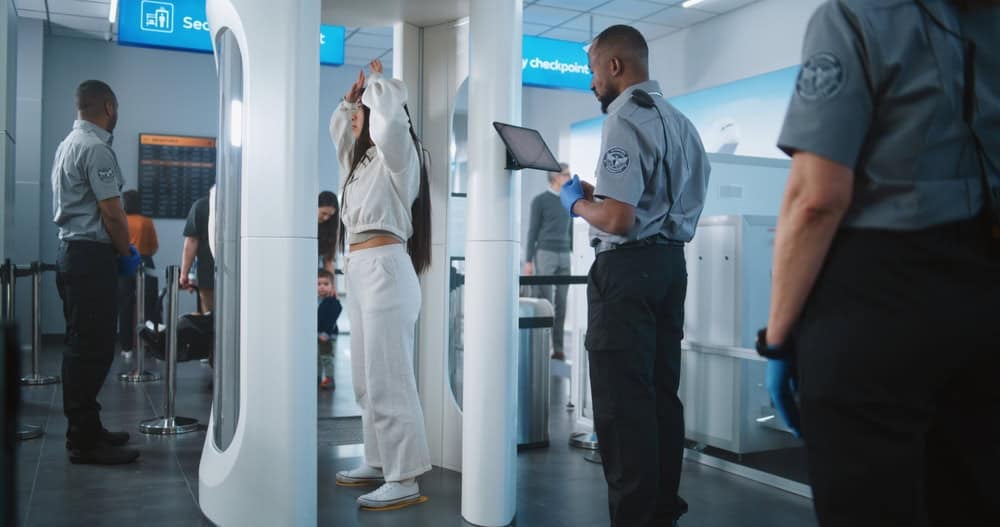
What makes airport checkpoints uniquely risky for small valuables is not just the crowd or the conveyor belt, but the task switching travelers are forced to perform in a short span of time. Psychologists have studied this phenomenon, in which the brain rapidly switches between multiple instructions and becomes less efficient with each shift.
One of the most frequently cited experiments was conducted by Joshua Rubinstein, David Meyer, and Jeffrey Evans at the University of Michigan. Their research found that when people switch between tasks, even simple ones, the brain pays a measurable switch cost, slowing reaction time and increasing mistakes. Airports replicate this exact setup. Travelers are told to remove shoes, empty their pockets, separate liquids, prepare identification, watch the scanner, and follow security staff’s instructions within seconds.
Earlier work by David E. Meyer and colleagues in experimental psychology also demonstrated that even brief task changes disrupt working memory, making it easier to overlook small details. In practice, that means a traveler may be concentrating on stepping into the body scanner while their phone, sitting loose in a tray, quietly rolls down the conveyor belt out of sight.
The Conveyor Belt Often Moves Faster Than You Do
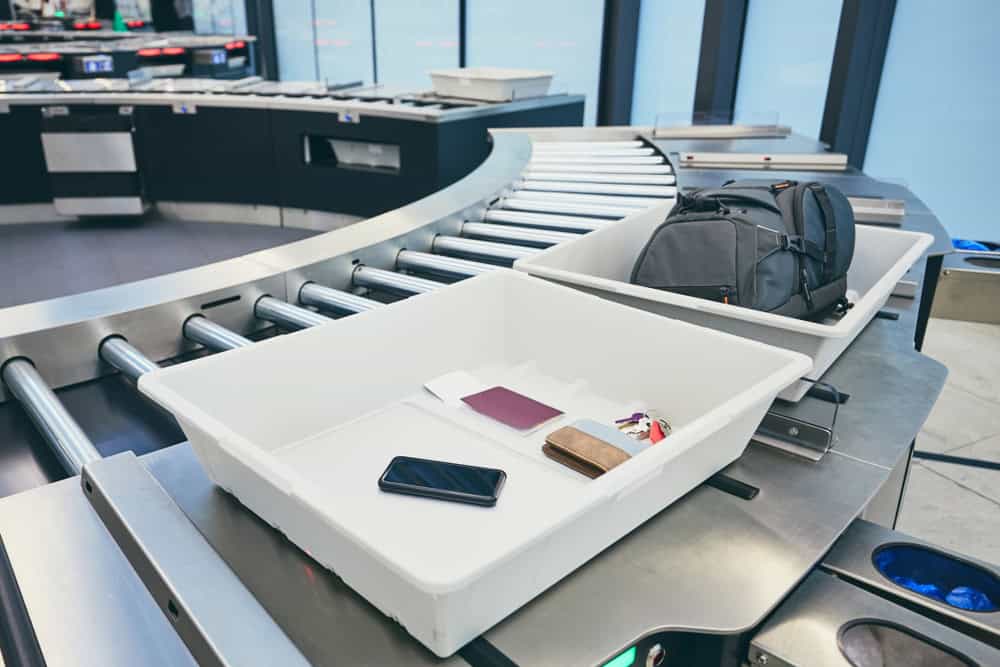
There is a small but important moment during airport screening when your belongings and your body are no longer moving together. Your tray slides forward on the conveyor belt, disappearing into the scanner, while you are asked to pause, wait, or step into a body scanner before proceeding. That separation might last only a few seconds, yet it changes the dynamics of control.
Instead of physically tracking your phone, wallet, or watch, you are trusting a fast-moving system to deliver them safely to the other side. Meanwhile, other passengers are feeding trays into the same line, creating a steady procession of nearly identical plastic bins moving in turn.
When your tray emerges, it may not be obvious which one belongs to you, especially if several look the same and arrive at the end of the belt at once. In busy airports, this moment can feel surprisingly chaotic.
Travelers rush to gather their things, security officers keep the line moving, and trays pile up quickly. In that brief rush, a small item like a phone can easily slip out of sight or be picked up by the wrong person before you even reach the collection area.
Small Electronics Are the Easiest Items to Make Disappear
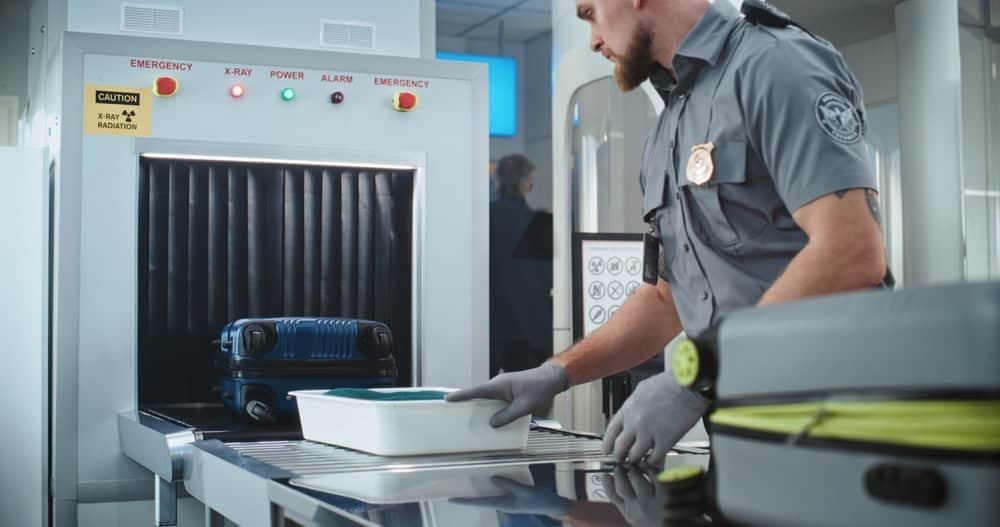
If someone were deliberately looking for something valuable in a security tray, they would not reach for the bulkiest item. They would look for the smallest one. Travel security writers have repeatedly pointed out that compact electronics are far easier to conceal than larger devices, which is why phones and earbuds tend to draw more attention than laptops.
Condé Nast Traveler often warns travelers that leaving valuables in trays creates unnecessary temptation. A laptop usually requires its own bin and is difficult to hide quickly, but a phone can be slipped into a pocket in seconds without attracting much notice in a crowded checkpoint.
That difference in size dramatically changes the risk profile. When dozens of trays move through the same conveyor at once, a phone resting alone in a bin becomes one of the easiest valuables to remove without creating suspicion.
Crowded Terminals and Peak Hours Amplify the Risk
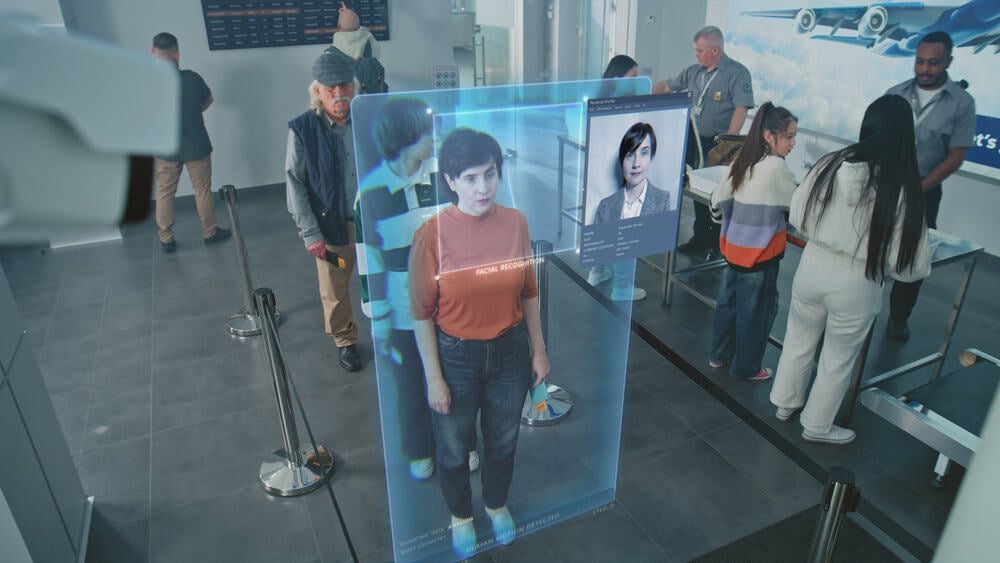
Airport traffic isn’t uniform throughout the day or year. Peak periods, such as holidays or summer travel, dramatically increase the number of passengers passing through security checkpoints.
In these conditions, even well-meaning travelers can become distracted, and small items are more likely to be misplaced or, in rare cases, stolen.
The environment itself creates subtle chaos: lines snake unpredictably, trays pile up, and conveyor belts move continuously. Awareness decreases as the brain prioritizes navigating the crowd over monitoring personal belongings.
Key points about peak-time risks:
- Passenger density: Airports like John F. Kennedy International Airport handle hundreds of thousands of travelers daily and 1200 daily flight movements, intensifying congestion.
- Staff workload: Security personnel focus on scanning efficiency rather than monitoring every tray for unattended items.
The Real Consequences of a Lost Phone

Losing a phone in an airport security tray can disrupt your entire trip. Beyond the device itself, travelers risk losing boarding passes, travel itineraries, hotel confirmations, and access to banking or authentication apps stored on the phone.
Even a brief separation from your device can spiral into logistical headaches, forcing passengers to rebook flights, reset passwords, or navigate unfamiliar airports without digital guidance. Even though a phone is smaller and, to many travellers, immaterial and replaceable, it still causes friction with itineraries.
What seems like a small oversight at the security line can cascade into a series of disruptions that affect timing, finances, and personal security. In this way, the phone’s disappearance transforms from a minor lapse into a travel emergency that underscores the importance of careful handling at every step of screening.
Security Bins Are Shared by Hundreds of Travelers
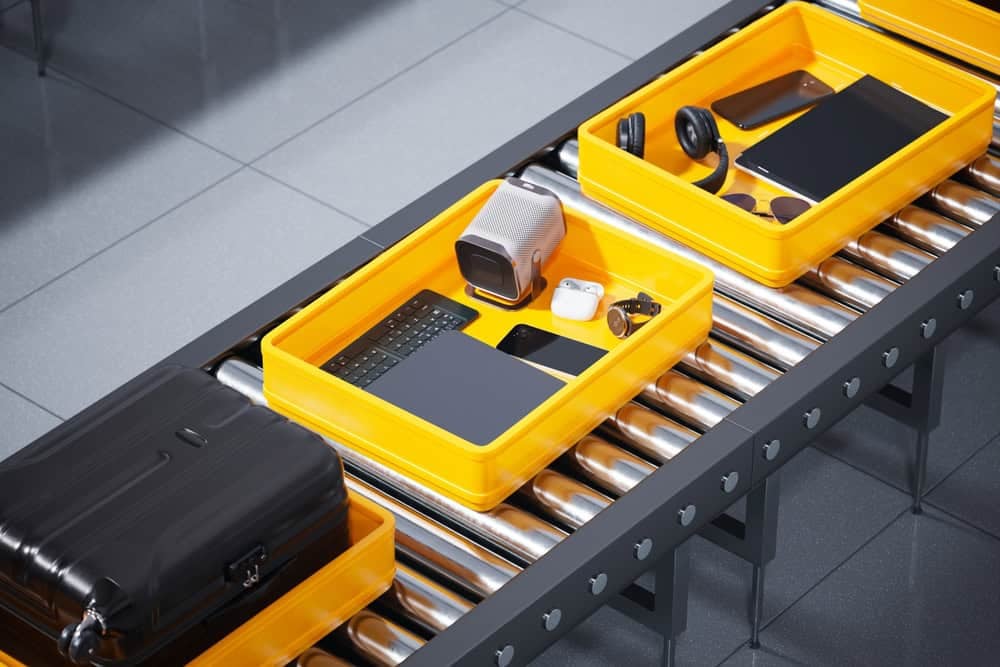
Your phone doesn’t just rest in a plastic tray surrounded by strangers’ belongings; it sits on a surface that, according to scientific research, can be a significant reservoir of respiratory viruses. A detailed study published in BMC Infectious Diseases examined surfaces and air samples at a major European airport during peak flu season to identify where viral particles tended to accumulate.
Researchers swabbed frequently touched areas, including luggage trays at the security checkpoint, and tested them for a range of respiratory viruses, including rhinovirus, coronavirus strains, adenovirus, and influenza A.
The findings were striking: security screening trays, which virtually every traveler touches, were among the sites most likely to show viral contamination. In fact, analysis found evidence of respiratory virus nucleic acid on half the swabs taken from hand‑carried luggage trays, a higher rate than many other surfaces tested in the passenger environment.
This suggests that, beyond the risk of loss or theft, the very process of placing your phone or other personal items into these communal bins exposes them to a surface that a scientific investigation identified as a transmission hotspot in an airport setting.
A Lost Phone Means Losing Your Digital Life
Modern smartphones store boarding passes, travel itineraries, bank apps, email, personal contacts, and two-factor authentication tools. Losing one at a checkpoint can create a cascading effect: access to essential accounts may be blocked, travel confirmations may become inaccessible, and even emergency communication may be compromised.
Cybersecurity experts emphasize that small lapses in handling devices in public spaces dramatically increase the risk of identity theft or unauthorized access. Travelers often underestimate how quickly a lost or stolen phone can expose sensitive data, making proactive care at security lines a matter of both convenience and safety.
Phones Can Slide Out of Trays
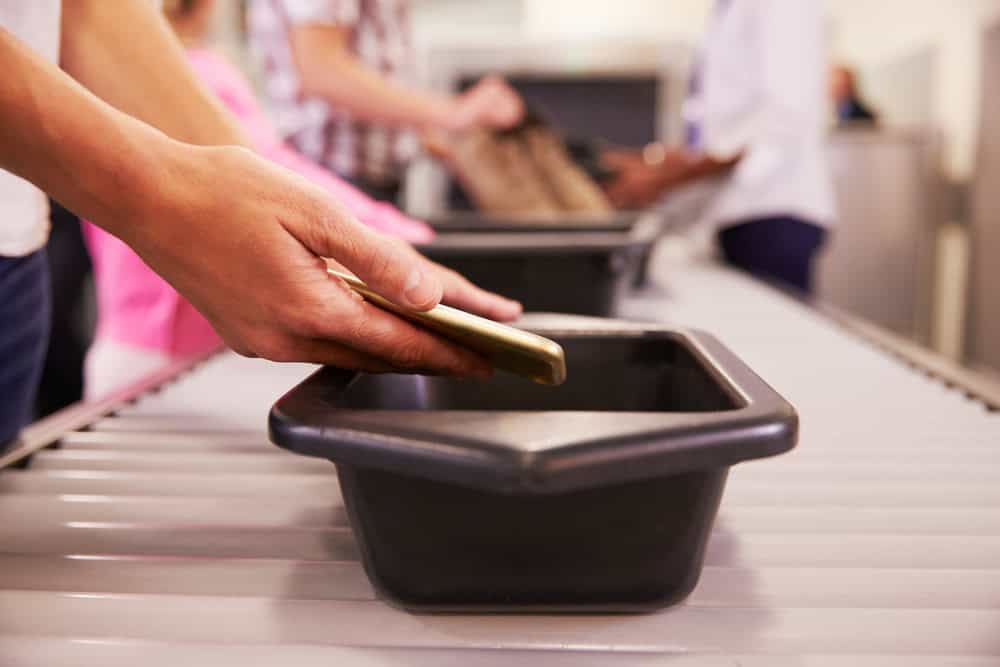
Even without theft, a phone can leave your possession simply through movement. Plastic security trays are often slightly angled, stacked, or jostled as they travel along the conveyor. A phone can easily slide off, fall between rollers, or get stuck in machinery, leaving you scrambling to retrieve it.
Frequent travelers on forums such as Reddit and travel blogs recount stories of small electronics disappearing briefly or permanently due to these physical dynamics.
The risk is compounded during busy periods, when multiple trays move quickly in close succession, making it difficult to track exactly which bin holds your device. In that moment, the simple physics of a sliding phone becomes as threatening as any external theft.
Lost Phones Aren’t Always Recovered

Many travelers assume that leaving a phone behind in a tray is a minor inconvenience, but airport lost-and-found statistics suggest otherwise. Facilities such as Heathrow Airport and Los Angeles International Airport process thousands of lost items each year, yet a significant fraction of small electronics, such as phones, never make it back to their owners.
Even when phones are recovered, personal data may be wiped or devices recycled if they remain unclaimed after a holding period. This makes a seemingly trivial oversight potentially disruptive: losing a phone can mean losing access to boarding passes, travel apps, personal contacts, and digital authentication.
The combination of a fast-moving conveyor belt, a crowded checkpoint, and the sheer volume of passengers creates a situation in which small items can quietly disappear and go unretrievable, underscoring the importance of proactive protection and vigilance.
How Airport Operations Can Put Your Phone at Risk
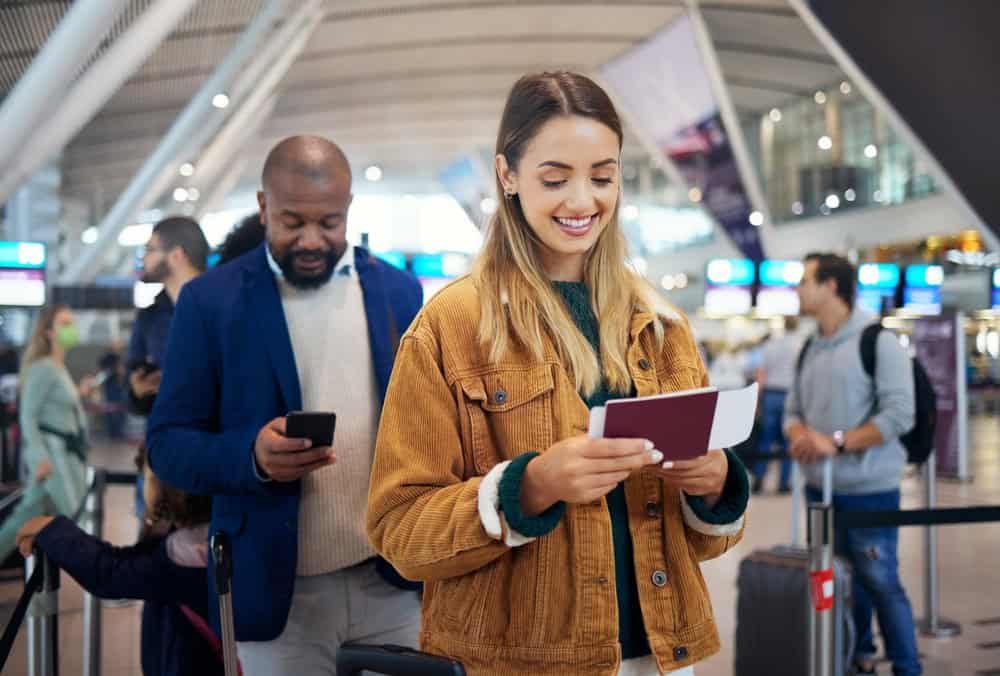
Even without theft or forgetfulness, the airport screening system can pose hazards to your phone. Security bins are moved along fast-moving conveyor belts, stacked, unstacked, and occasionally jostled by staff managing high volumes of passengers.
Operational protocols prioritize throughput and scanner efficiency over monitoring the position of individual items, creating brief but significant windows where a small device can slip, tilt, or even fall out of a tray. For instance, bins are sometimes rearranged to prevent jams or redirected to secondary screening, so a tray that began with your phone may later emerge in a different spot, confusing both passengers and staff.
These micro-movements, though unintentional, are enough to make a phone disappear temporarily or permanently if not actively monitored. Recognizing that risk shifts responsibility from the careless traveler to the complex system participant, highlighting that awareness and proactive control are critical during screening.
Experts Recommend a Safer Alternative
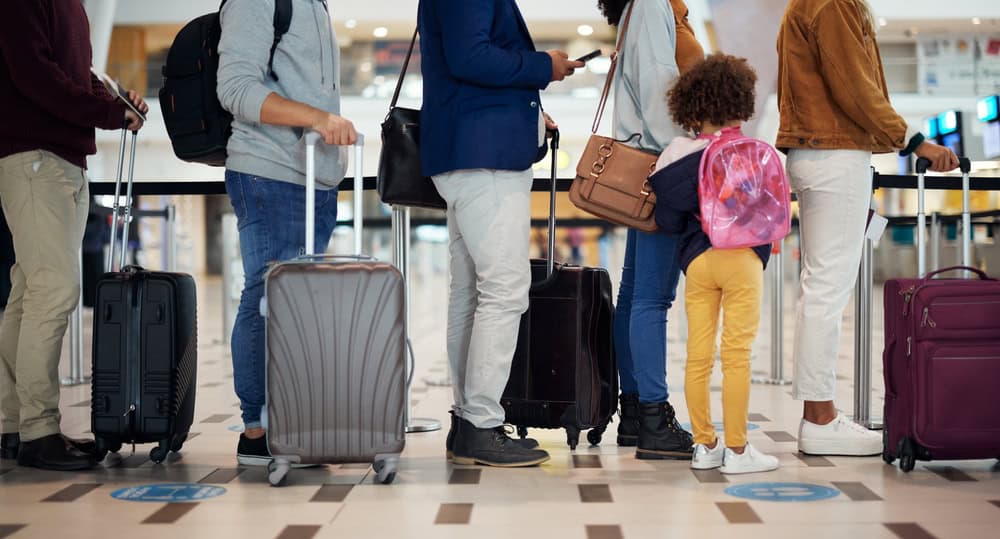
Security professionals universally advise keeping small valuables secure rather than placing them loose in a bin.
Officers from the Transportation Security Administration recommend placing phones in a zipped pocket of a carry-on bag or a secure pouch, so they can pass through the scanner while remaining in your control. This strategy reduces the risk of theft, accidental loss, or contact with contaminated surfaces.
Travel writers and security consultants echo this guidance, noting that even brief separation from a phone can create disproportionate stress and logistical problems.
By proactively controlling where your device is during screening, you maintain both safety and peace of mind, ensuring that a simple checkpoint doesn’t become a travel nightmare.
Key takeaways

- Phones in security bins are easy to lose or steal due to brief separation and crowded lines.
- Distraction and multitasking at checkpoints increase the risk of forgetting devices.
- Conveyor belts and operational handling can cause phones to slide, fall, or be misplaced.
- Shared trays expose phones to germs and viruses, increasing the risk of hygiene.
- Experts recommend keeping phones in secure pouches or zipped pockets to maintain control.
Like our content? Be sure to follow us.