Can Women Give More Than Love? 13 Things Modern Men Say Matter Even More
In modern relationships, love alone rarely resolves friction. Men and women often operate on different measurement systems: what one partner perceives as care, stability, or effort may not register as love to the other. Women frequently provide a combination of emotional labor, domestic management, and financial contribution, yet men often report needing additional signals: consistency, respect, or reliability under stress, to feel fully supported.
Sociologist Arlie Hochschild found that invisible labor: routine, ongoing work in the home, is chronically undervalued by the observer, not absent. Likewise, John Gottman demonstrated that patterns like contempt, inconsistency, and emotional volatility predict dissatisfaction far more reliably than the presence or absence of love itself.
Evolutionary psychologists and social surveys from the Pew Research Center highlight that both partners experience a scoreboard effect: each believes they are contributing more than the other, even in egalitarian households.
This is not a question of entitlement or imbalance but of interpretation. The currencies of care: admiration, stability, reciprocity, and accountability, must be perceptible to the partner receiving them.
When they aren’t, even the most consistent and supportive partner can feel underappreciated. Understanding these gaps is key to explaining why, in the eyes of many modern men, love alone sometimes seems insufficient.
Consistency That Doesn’t Collapse Under Mood or Circumstance

In the current world, characterized by volatile markets and shifting social norms, men increasingly view emotional predictability as the ultimate luxury. Marital stability is less about the heights of passion and more about the floor of daily interaction.
When a partner’s temperament swings violently based on external stress, the home ceases to be a sanctuary and becomes a secondary theater of war.
Walking on eggshells is a primary reason for emotional withdrawal. It isn’t that men demand a robotic lack of feeling; rather, they value the ability to navigate a bad day without the entire relationship structure being called into question.
Stability acts as a psychological compounding interest. As noted in classic Stoic philosophy, specifically Marcus Aurelius’s Meditations, the power of an individual lies in their ability to remain a square regardless of how they are thrown. Modern men apply this to their partners: they seek a square who remains recognizable even when life gets messy.
Respect That Survives Conflict, Not Just Peaceful Moments

The metric of respect is often misunderstood as blind compliance, but for the modern man, it is about preserving dignity in a fight.
Dr. John Gottman’s extensive research at The Love Lab found that the presence of contempt, sneering, eye-rolling, or mocking is the single greatest predictor of divorce, far outweighing the frequency of arguments themselves.
Men are particularly sensitive to character assassination in the heat of the moment. It is easy to be respectful when the bills are paid and the sun is out, but the value of a woman’s character is often measured by her ability to disagree without dehumanizing others.
Sociologist Dr. Emerson Eggerichs, author of Love and Respect, argues, based on his surveys, that respect is the primary emotional oxygen for men.
When a conflict turns into a trial of a man’s core competency or worth, the love in the room evaporates. Brutal honesty is a virtue, but without a cushion of basic regard, honesty is just a weapon that destroys long-term cooperation.
Emotional Stability Over Emotional Intensity

Emotional intensity can be exhausting; it requires constant monitoring and calibration. In contrast, emotional stability allows for a shared focus on external goals, like career or family building.
In line with the Big Five personality traits, high neuroticism in a partner is statistically associated with lower long-term relationship quality. Men often prefer a low-entropy lifestyle in their home lives. If the emotional climate is a constant roller coaster, the man often defaults to a state of stonewalling as a defense mechanism, not out of malice, but as a survival tactic to maintain his own focus.
She seeks more intensity to feel connected, and he seeks more distance to find peace. The most successful modern pairings are those in which the emotional baseline is steady enough to bear the weight of real-world crises.
Follow-Through That Makes Words Credible

Reliability is the silent engine of a relationship. Regarding relationship deal-breakers, flakiness and broken promises ranked higher than lack of shared hobbies among men aged 25–45. When a woman says she will handle a task or support a specific endeavor and then fails to do so, it creates a competency gap that erodes trust.
Trust is built through small, consistent acts of integrity. If the words “I love you” are not backed by the action of “I’ll be there,” the phrase loses its currency. Some argue that love should be unconditional, implying that mistakes shouldn’t matter.
However, the pragmatic reality of a modern partnership is that it functions like a team. If one player consistently misses their marks, the team loses confidence. Men value the peace of mind that comes from knowing they don’t have to double-check their partner’s commitments.
Clear Communication That Reduces Guesswork

Ambiguity is a massive tax on a man’s mental energy. The “guess what’s wrong” game is widely cited in counseling rooms as a source of profound resentment. Directness in romantic relationships reduces cortisol levels in humans. When a woman communicates her needs, frustrations, or desires with clarity, she removes the friction of interpretation.
Many men feel that they are set up to fail when expectations are kept hidden as tests of their devotion. This is a cognitive distortion where one partner believes, “If he loved me, I wouldn’t have to tell him.”
From a linguistic perspective, Deborah Tannen’s work in You Just Don’t Understand highlights the rift between rapport talk and report talk.
Men often appreciate the report: the facts, the needs, and the solutions. While some see directness as unromantic, the stats suggest it is actually the highest form of intimacy because it prevents the resentment that grows in the dark.
Reciprocity That Feels Measurable, Not Assumed

The invisible labor of the home is a common talking point, but there is also a visibility problem regarding male contributions that leads to a feeling of imbalance. According to Pew Research Center data, even in egalitarian households, both partners often feel they are doing more than the other. Men look for reciprocity that isn’t just about chores, but about effort.
If he is the primary protector or provider, he often seeks an equivalent weight in the emotional or domestic sphere. When the metrics are misaligned, for example, if he values financial contribution, and she provides emotional labor, both feel underpaid. The friction arises when one side assumes their contribution is so obvious that it doesn’t need to be discussed.
To avoid the scoreboarding trap, modern couples are moving toward transparent auditing of their roles. Without a clear sense that both parties are all in, the relationship eventually plateaus into a roommate dynamic marked by silent tallying.
A Peaceful Emotional Climate

Low-tension environments are a top priority for men because the cost of entry for a high-conflict home is too steep. Peace at home is the number one factor men associate with a successful life, even above salary.
If the home is a place of constant critique, high-decibel arguments, or emotional demands, it loses its function as a recovery zone. Biologically, men’s flooding threshold, the point at which the nervous system is overwhelmed by stress, tends to be reached faster during interpersonal conflict than women’s.
Therefore, a woman who can cultivate a low-reactivity environment is providing something that most men value more than any material gift. This isn’t about being submissive, but about being constructive. A peaceful home is a strategic advantage in a competitive world.
Support That Eases Real-World Pressure

For many men, love is an abstract concept, but support is tangible. In a survey, men rated a partner’s ability to offset negative emotions and provide strategic counsel during work challenges as significantly more impactful than traditional romantic displays. This is the foxhole mentality.
The figure of Penelope in The Odyssey represents more than just a waiting wife; she is the guardian of the home front, maintaining the structure while the man faces external chaos. Today, that looks like a woman who offers tactical solutions or a quiet space to recharge when the professional world is demanding.
This places an unfair burden on women to be nurturers, but the data suggest that when a man feels his partner is a true teammate in the face of external pressure, his commitment levels skyrocket. It is about the utility of the relationship: does this partnership make the world easier to face, or harder?
Admiration That Signals Value, Not Just Acceptance

There is a profound difference between being liked and being admired. In his work The Way of the Superior Man, David Deida notes that a man’s mission is often his primary driver, and he seeks a partner who recognizes its value.
Men don’t just want to be accepted for their flaws; they want to be admired for their strengths. Men who feel their wives admire them are significantly less likely to seek external validation from work or other women. It’s a psychological fuel.
If a woman loves a man but constantly corrects him or treats him like a project that needs fixing, the love feels like a cage. Admiration is the signal that he is the man for the job, whatever that job may be. When that signal is missing, the man often feels like a utility provider rather than a partner.
Boundaries That Protect the Relationship From Outside Noise
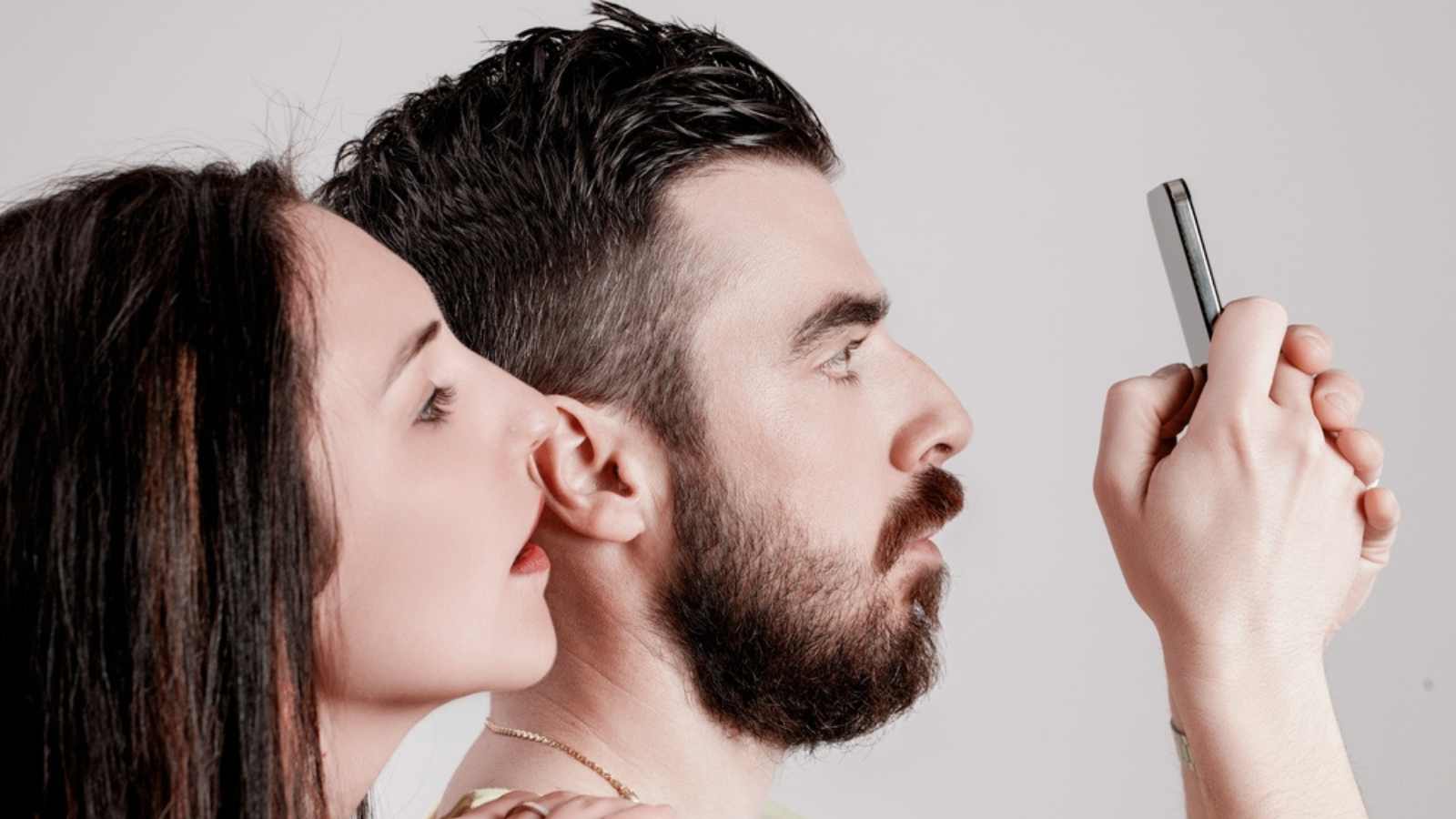
In the age of social media and oversharing, the ability to keep the relationship private is a major trust-builder.
Men often report feeling betrayed when relationship issues are broadcast to friends, family, or followers before being discussed internally.
Romantic jealousy and conflict are often exacerbated by third-party involvement on social platforms. When a woman sets firm boundaries with “the girls,” her mother, or her digital audience, it signals to the man that he is the priority.
It creates a closed loop of trust. When those boundaries are porous, the man feels exposed. Protecting the sanctity of the ‘we’ is a trait that modern men rank as essential for long-term security.
Shared Direction Instead of Parallel Lives

Chemistry can sustain a relationship for a few years, but teleological alignment, having the same end goal, sustains it for decades.
Men are often goal-oriented; they want to know where the ship is headed. If the woman is living a parallel life in which her long-term goals (where to live, how to spend money, how to raise children) differ from his, the friction eventually snaps the bond.
Those who view themselves as a single unit moving toward a common goal have much higher resilience. It’s the difference between two people walking side-by-side and two people tied together in a three-legged race.
If you aren’t in sync, someone is going to fall. Men value alignment because it reduces the need for constant negotiation and enables automated cooperation.
Accountability Without Deflection

The ability to say, “I was wrong, and I’m sorry,” without adding a “but you did X” is a trait that men find incredibly refreshing and rare. In many relationships, there is a blame-shifting culture that avoids accountability to protect the ego. However, accountability is a prerequisite for reliability.
If a man cannot trust his partner to own her mistakes, he cannot trust her to change her behavior. Psychologists refer to this as an internal locus of control. Men who are high performers in their own lives usually have little patience for victim mentality or constant excuse-making.
A partner who can hold herself to the same standard of accountability she expects from him creates a relationship of equals. It removes the parent-child dynamic that often kills sexual and emotional intimacy.
Reliability Under Stress, Not Just in Routine

The ultimate stress test for a relationship isn’t the daily routine, but the unexpected crisis: a job loss, a health scare, or a family tragedy. Although men are well known for prioritizing physical attractiveness and health in mating, they also look for cues of resilience in their partners. Can she handle the heat? When the plan fails, does she become another problem to solve, or does she become part of the solution?
Statistics on crisis-induced separation show that couples who have a functional approach to stress, focusing on the problem rather than their feelings about the problem, survive at much higher rates.
Men value a woman who is sturdy. Love is the feeling you have when things are good; reliability under stress is the proof of the partnership when things are bad. It’s the difference between a fair-weather friend and a life partner.
Key takeaways

- Love alone is rarely enough; perception of care depends on how effort is expressed and recognized.
- Invisible, ongoing labor: domestic, emotional, or financial, can go unnoticed, creating perceived imbalance even when contribution is high.
- Men often prioritize stability, respect, and accountability because these traits signal reliability under stress.
- Relationship satisfaction is driven more by consistent patterns and visible follow-through than by intensity or passion alone.
- Misalignment in recognition and weighting of contributions, rather than selfishness, explains why even highly giving partners can feel underappreciated
Disclaimer – This list is solely the author’s opinion based on research and publicly available information. It is not intended to be professional advice.
Like our content? Be sure to follow us