12 factors behind the cooling demand for plant-based meat alternatives
Plant-based meat had a singular moment. The burger that bled. The IPO that sent Beyond Meat’s stock soaring 163% on its first trading day in 2019. Bill Gates was an early backer. McDonald’s signed a partnership. Dunkin’ ran the ads. Impossible Foods landed on menus at Burger King locations across the country. For a few intense years, the industry wasn’t just selling a product – it was selling the future.
Then the numbers turned.
Dollar sales of meat and seafood alternatives dropped 12% from 2022 levels and 13% from 2021, landing at $1.2 billion in 2023. Unit sales fell further, down 19% year-on-year and 26% below 2021 figures. Those aren’t rounding errors. That’s a category in structural retreat. By the end of 2024, alternative meats posted another 2.3% year-over-year decline in sales, prompting retailers to limit their offerings and refocus on core meat products.
The industry’s believers blamed inflation, then post-pandemic normalization, and finally shifting consumer priorities. Each explanation had merit. None was sufficient on its own. The collapse of plant-based meat demand wasn’t one story – it was twelve, overlapping and compounding, each one making the next harder to recover from.
The price gap never closed, and nobody forgot it

There is a version of this story where the economics fix themselves. Economies of scale kick in, production costs fall, price parity with conventional meat arrives sometime around 2025, and the category rebounds. That version hasn’t arrived.
Plant-based meat and seafood products are often priced two to three times as much as their conventional counterparts per pound. Consumers consistently rank price as the top barrier to trying or continuing to purchase these products, and that frustration persisted even as broader food inflation began to ease in 2024.
The psychological damage of that premium runs deeper than quarterly earnings reports suggest. When shoppers absorbed routine grocery price increases during 2022 and 2023, premium categories paid a disproportionate penalty – not just because they cost more, but because spending $9 on a plant-based burger patty that underdelivered made the decision feel doubly foolish.
Plant-based meat alternatives carried a 20% price premium over beef as recently as 2023, a figure that leaves the category far from the price parity advocates have long promised. In Germany, Lidl ran a natural experiment: in 2023, the supermarket chain introduced a price-parity commitment for its private-label plant-based products, and volume sales grew 30% as a result. The demand was latent. The price was the wall.
The taste promise was made before the product was ready

The genius of early plant-based marketing was also its flaw: it promised indistinguishability. Not “pretty close.” Not “good in its own right.” The category sold itself on the claim that you wouldn’t know the difference. Consumers took that seriously. Then they ate the burger.
Among US buyers who stopped making repeat purchases, 46% cited dissatisfaction with taste as their reason, according to research from the Sensory Institute Nectar. Almost half. For a category already fighting price resistance and processing skepticism, losing half its trial base to taste is an extinction-level problem for retention.
Undesirable chemosensory perceptions – beany flavor, bitter taste, and astringency – are common by-products of plant protein processing, particularly through thermal extrusion cooking, the primary technique used to give these products a meat-like fibrous texture. Getting rid of those off-notes without introducing other artificial masking agents is a genuine technical challenge, not a marketing problem.
Systematic reviews of sensory research confirm that meat analogs consistently lack juiciness, elasticity, and firmness; the exact qualities that make animal meat satisfying to eat.
The health halo collapsed under scrutiny

Marketing leaned hard on association – plant-based implied healthy, which implied better. Consumers assumed fewer calories, lower fat, and less risk. Studies confirmed that the gap between perception and reality was wide.
Research from Montclair State University found that across five experiments, consumers significantly underestimated the calories, fat, and sodium content of plant-based meat alternatives relative to actual values, and believed these products were substantially healthier than conventional meat – a belief the evidence did not consistently support.
A survey found that over 50% of people thought plant-based meat was healthy in 2020. By 2022, only 38% did. Beyond Meat CEO Ethan Brown described that shift as one of the most disorienting moments of the company’s trajectory – watching the dream that you could have a burger that was genuinely good for your body get systematically dismantled in public.
The shift was legitimate in some respects and exaggerated in others. Some plant-based burgers have sodium levels comparable to or exceeding those of conventional processed meat and rely on saturated coconut oil for the fat that makes them feel rich on the palate. That said, the framing of these products as categorically unhealthy often flattened nuance.
Ultra-processed became a category-killer phrase

Few shifts in food culture have had more commercial consequences in the last five years than the mainstreaming of ultra-processed as a consumer concept. When the NOVA classification system (developed by Brazilian nutritional epidemiologist Carlos Monteiro) began making its way out of academic circles and into lifestyle media, it handed plant-based meat’s critics a loaded weapon.
The term ultra-processed has attached itself to plant-based meat alternatives with unusual persistence in consumer consciousness, despite being applied unevenly. Conventional meat products rarely receive the same label in everyday discourse, even when they undergo significant processing. The double standard doesn’t invalidate the concern, but it does reveal how selectively people apply it. Chicken nuggets, deli ham, and pepperoni are also processed. They don’t get the backlash.
Consumers going plant-based for health reasons and then discovering these products are heavily processed experience something close to betrayal; a red flag that overrides earlier enthusiasm.
McDonald’s pulled the plug in public, and the symbolism landed hard

The failure of plant-based meat in quick-service restaurants represented more than lost revenue. These chains were supposed to be the proof of concept; the moment plant-based went mainstream. When they started walking away, it read less like a business decision and more like a verdict.
McDonald’s expanded its McPlant test to 600 US locations in Dallas and San Francisco in February 2022. Sales that initially averaged around 500 units per week fell to approximately 20 per day at expanded locations, dropping as low as three to five per day in rural markets. McDonald’s US president Joe Erlinger eventually made the judgment official at the Wall Street Journal’s Global Food Forum: “I don’t think the U.S. consumer is coming to McDonald’s looking for the McPlant or other plant-based proteins.” The brand never reintroduced it nationally.
McDonald’s Austria became the latest market to pull the McPlant, citing declining customer demand, and chose to shift its focus to a vegetable patty made from whole vegetables rather than engineered protein. The contract with Beyond Meat expired and was not renewed.
The meat industry didn’t sit still and watch
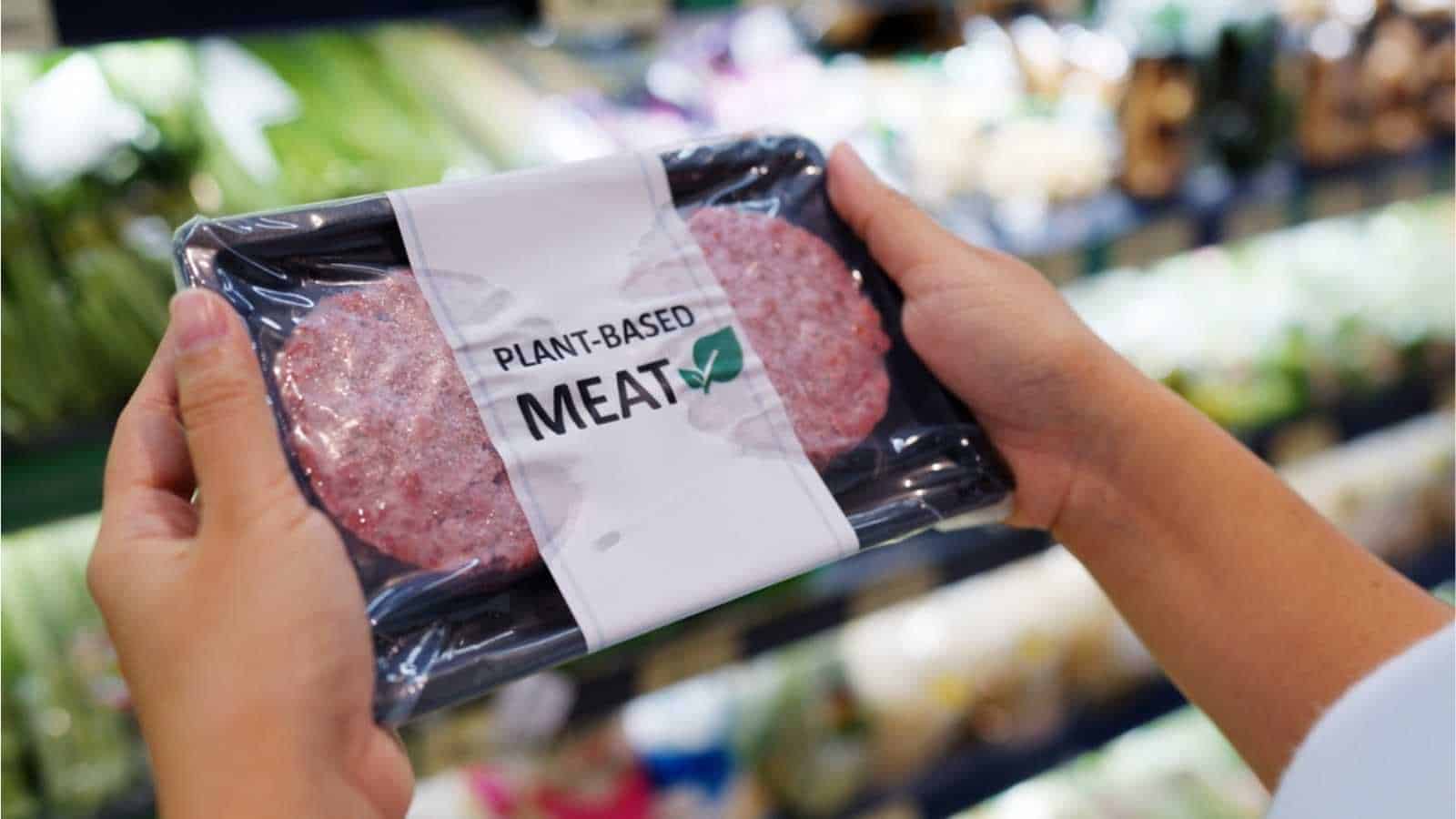
The rise of plant-based meat was the first genuine existential challenge the conventional meat industry had faced in decades. Its response was not passive.
In 2019, the Center for Consumer Freedom launched a focused campaign targeting plant-based meat, deploying full-page ads in the New York Times and Wall Street Journal under the headline “What’s hiding in your plant-based meat?” The campaign coincided almost precisely with Beyond Meat’s public market debut.
One CCF commercial placed a plant-based burger beside dog food, challenging consumers to guess which was which based on ingredient lists. A Super Bowl advertisement featured Spelling Bee participants struggling with words like methylcellulose and propylene glycol, which were framed as “chemicals” in synthetic meats. The methylcellulose claim was misleading – the FDA classifies it as safe, and it functions as an emulsifier in everything from ice cream to baked goods – but the image embedded itself in mass consciousness before fact-checkers could catch up.
This is not to say the entire consumer shift was manufactured. Many of the concerns about processing and price are real. But the speed and consistency with which those concerns attached specifically to plant-based meat, while leaving conventional processed meat largely untouched, reflects something beyond organic consumer sentiment.
Retail shelf space contracted, and contraction compounds itself
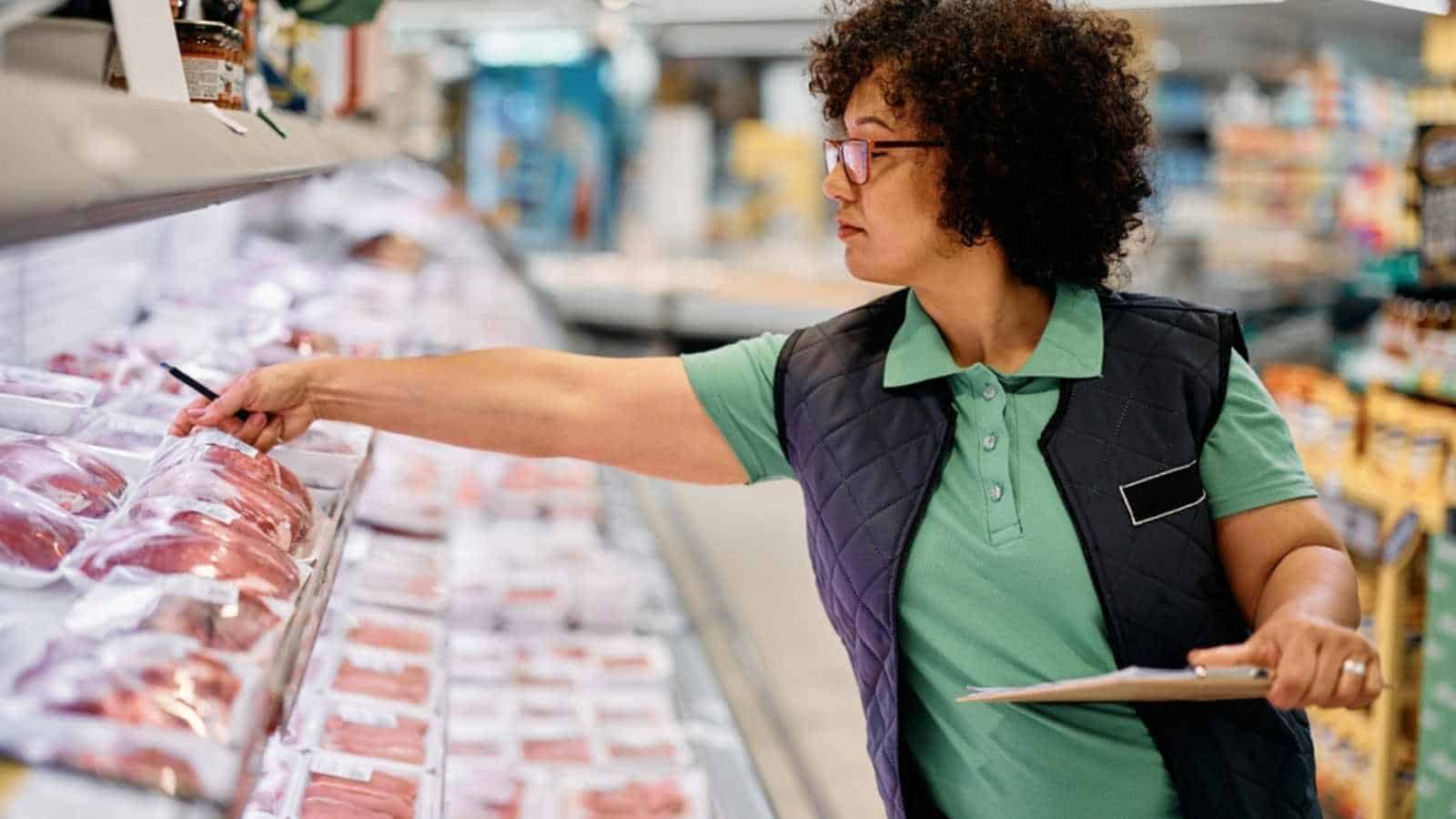
One of the underreported dynamics in this market is how shelf reduction and sales decline form a feedback loop. Retailers cut space because sales slow. Consumers find fewer options, buy less frequently, and develop weaker habits around the category. Sales slow further. More cuts follow.
Retailers reduced their refrigerated plant-based meat assortments to an average of 9.7 items per store as of April 2025, down 10.3% from April 2024 and down 31% from early 2021. That 31% reduction over four years is shrinking visibility, consumer habits, and the argument that plant-based meat is a permanent fixture of the grocery landscape rather than a trend item.
Deloitte research found that plant-based meat alternatives represent only about 2% of meat department sales, placing the category firmly in the long tail of grocery assortments. That positioning makes it vulnerable to the first round of cuts whenever retailers optimize space allocation.
The pandemic bump was a one-time event mistaken for a trend

The 2020 sales surge in plant-based meat looked, from the inside, like market validation. Consumers were experimenting with cooking at home, paying close attention to food choices, and spending freely on novelty. Grocery store plant-based sections emptied out. Waitlists appeared. Investors poured in.
In retrospect, the pandemic created a uniquely artificial set of conditions – discretionary income preserved by stimulus payments, reduced restaurant spending channeling into grocery exploration, and a moment of collective health consciousness that was always going to moderate. Sales peaked in 2020, when consumers had more discretionary income and novelty-seeking behavior was at its height. But fewer than half of Americans who tried plant-based meat during that period went on to make another purchase.
Billy Roberts, a senior food and beverage economist at CoBank, identified two major hurdles driving the decline in the plant-based meat market:
- Cost: Plant-based meat alternatives typically cost more per pound than conventional animal proteins.
- Performance: The products frequently fail to meet baseline consumer expectations for taste, texture, and overall satisfaction.
Those forecasts assumed the pandemic growth curve would continue on its pre-existing trajectory. Plant-based meat and seafood sales declined in 2023 for the second consecutive year, according to the Good Food Institute’s State of the Industry report, with Beyond Meat suffering its eighth consecutive quarter of revenue declines by early 2024. The industry was already in multi-year decline by the time analysts began revising those numbers downward.
The high-protein trend moved in the opposite direction

Plant-based meat launched into a cultural moment that seemed tailor-made for it: growing environmental awareness, rising veganism, and Instagram aesthetics built around smoothie bowls and avocado toast. Then the culture moved.
By 2023, the dominant dietary narrative had shifted toward protein maximization. Carnivore influencers gained large followings. Gym culture’s obsession with protein per gram per dollar steered consumers back toward chicken breast and ground beef.
US per capita meat consumption has continued to climb, driven predominantly by a steady surge in poultry consumption and a resilient domestic appetite for beef despite record retail prices.
The broader long-term trajectory outlines the magnitude of these American dietary habits:
- 2018 Base: Americans consumed roughly 109kg per capita.
- 2023 Milestone: Consumption reached 117kg, reflecting steady post-pandemic demand.
- 2027 Projections: Total meat and poultry disappearance is expected to reach 122kg per capita as poultry solidifies its position as the favored animal protein.
The protein optimization reframed plant-based meat as a compromise. Right or wrong, that skepticism circulated widely, and for a category already managing taste and processing concerns, doubts about its protein quality were an additional friction the industry wasn’t equipped to absorb.
The consumer who was supposed to save the category kept their options open

Market research and household panel data confirm that approximately 95% of plant-based meat and seafood buyers also purchase conventional animal meat. The category was never primarily serving vegans or vegetarians – it was serving flexitarians, omnivores reducing their meat intake rather than eliminating it. That’s where the growth was supposed to come from. It’s also where the loyalty problem lives.
NIQ data shows that only 15% of meat buyers purchase both meat and plant-based meat alternatives. The flexitarian consumer – the category’s core growth engine – maintains strong conventional meat purchasing habits alongside any plant-based experimentation.
Flexitarians don’t need to choose. They can eat a beef burger on Monday, a Beyond Burger on Wednesday, and chicken on Friday without any identity conflict or ideological discomfort. That flexibility, which made them the ideal acquisition target, also made them impossible to retain. When a product disappoints (on taste, on value, on whatever dimension matters that week), there’s no ethical commitment keeping them in the category.
The companies ran out of runway before fixing the fundamentals
Beyond Meat’s trajectory tells the industry’s story in concentrated form. The stock peaked at $235 per share in July 2019 – a valuation built on promise, momentum, and a $40 billion market size projection. By mid-2024, shares traded near $6.66, down approximately 97% from that peak.
Beyond Meat reported full-year 2023 net revenues of $343.4 million, a 18% year-over-year decline, with gross profit of $82.7 million, resulting in a gross margin of negative 24.1%. The company was losing money on every pound of product it sold, even before accounting for operating expenses.
The business model depended on a growth rate that would eventually enable economies of scale and price parity with conventional meat. When growth reversed, that model broke. Cutting prices to drive volume hurt margins that were already underwater. Raising prices to improve margins accelerated the consumer exit. The company found itself in the classic high-fixed-cost squeeze, with no obvious escape trajectory and a balance sheet accumulating pressure quarter by quarter.
The identity of the category built was always narrower than it looked
Plant-based meat marketed itself as universal; the product for everyone who cared about the planet, about health, about animals, about innovation. That framing generated extraordinary earned media and cultural momentum. It also created a brand identity so associated with specific values that large portions of the population never felt addressed at all.
Despite the category’s growth ambitions, only 15% of US households purchased plant-based meat products in 2023, down from 19% in 2022, a four-percentage-point decline in household penetration in a single year. The category wasn’t just losing existing buyers. It was failing to bring in new households even as it lost existing ones.
Consumer surveys have long shown a strong appetite for plant-based eating among younger demographics. The aspiration is real. The audience exists. The category’s challenge was never a demand for the concept; it was building products compelling enough to convert that aspiration into repeat purchase, at a price that didn’t require consumers to sacrifice anything they valued. What people say they want and what they actually keep buying have rarely been further apart.
Key takeaways
- Plant-based meat’s collapse wasn’t one problem – pricing, taste failure, processing fears, and a well-funded meat industry counter-campaign all hit simultaneously and compounded each other.
- The pandemic sales surge was mistaken for a trend. Fewer than half of Americans who tried plant-based meat during that period ever bought it again.
- The category lost its core growth audience not to conventional meat, but to beans, lentils, and whole foods – cheaper, less processed, and easier to trust.
- McDonald’s killing the McPlant in the US wasn’t just a menu decision. It was the most visible signal that the mainstream moment the industry had banked on wasn’t coming.
- The aspiration to eat less meat remains real. The problem was never the idea – it was that the products weren’t good enough, at a price consumers were willing to pay, to make the idea stick.
Disclaimer – This list is solely the author’s opinion based on research and publicly available information. It is not intended to be professional advice.
Like our content? Be sure to follow us