‘Your cities are 90% air-conditioned’: Paris official blames U.S. for deadly heat
When Audrey Pulvar, Paris’s deputy mayor for international relations, posted her Instagram message over the weekend, she was not simply venting about the weather.
She told the United States that, as the world’s second-largest emitter of greenhouse gases, it bears a significant share of responsibility for global warming and the consequences France is now experiencing, adding that American cities being “90% air-conditioned” are not unrelated to this.
The message landed in the middle of a heat wave that has already reshaped daily life across France, and it has reopened a long-simmering transatlantic argument about who owes what to whom on a warming planet.
A heat wave with a body count

The backdrop to Pulvar’s comments is not abstract. France experienced around 1,000 additional deaths last week at the height of its record-smashing heat wave, the country’s public health agency reported, with the surge especially sharp in the Paris region.
There were more than 1,200 deaths on the hottest Wednesday alone, rising to more than 1,400 deaths on each of the following two days, against a baseline rate of roughly 900 to 1,000 deaths per day in the months before the heat wave hit.
Across the continent, the World Health Organization counted more than 1,300 excess deaths since June 21, with its director general warning that European homes, workplaces and schools were not built for these temperatures.
The human toll extended beyond heatstroke. At least 40 people drowned in France while swimming in unsupervised areas trying to escape the heat, with French Prime Minister Sebastien Lecornu noting the victims were mainly young people and calling the deaths a tragic scourge.
The extreme heatwave, exacerbated by human-caused climate change, broke June and all-time records across the nation, with some areas reaching 43 degrees Celsius (109 degrees Fahrenheit).
Paris responded by banning public alcohol consumption, postponing its Pride march and closing the Louvre and Eiffel Tower early. This is the climate in which an elected Paris official chose to point a finger across the Atlantic.
Why Pulvar’s math is not wrong, even if her framing is pointed
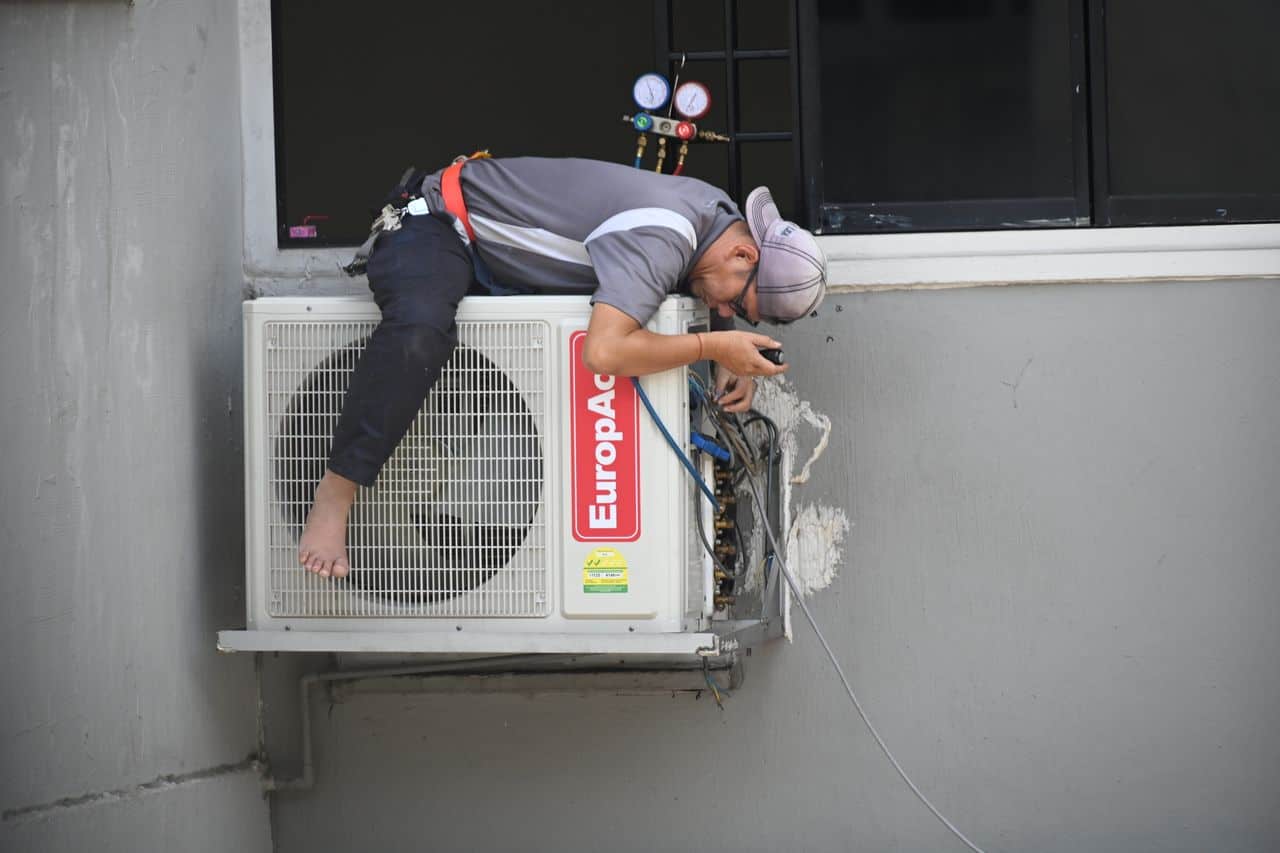
Pulvar’s specific claim about American cooling habits checks out. Nearly 90% of US homes have air conditioning, compared with around 20% across Europe, and that 90-versus-20 gap holds up across multiple recent counts, even as European demand is now accelerating.
Fewer than a quarter of French households have AC, even though usage has been climbing, from 14% of homes in 2016 to 25% by 2020. The irony Pulvar is pointing to is real: the country least equipped to cool itself is being scolded by the country whose emissions and energy habits did the most to heat the planet up in the first place.
But there’s a second irony buried in her own argument, one she does not address. Studies found that air conditioning use there could raise outside temperatures by 2 to 4 degrees Celsius, an effect that is especially pronounced in dense European cities. Air conditioners are energy guzzlers that also push heat outside, complicating Europe’s pledge to reach climate neutrality by 2050.
In other words, the very technology Pulvar is criticizing the US for overusing is also the technology that, deployed at scale, could make Parisian summers hotter in the immediate vicinity of every building that installs it. France is not choosing between air conditioning and no consequences. It is choosing between two different sets of consequences.
The bind facing households who cannot afford to wait for policy

Researchers estimate that air conditioning can cut heat-related deaths by 75%, and a Lancet study found that roughly 195,000 heat-related deaths among people over 65 were averted in 2019 due to AC adoption. For an elderly population facing a continent that recorded 85% of excess heat deaths among people aged 65 and older, the debate over emissions responsibility can feel academic next to the immediate question of how to survive August.
Paris has spent years discouraging the expansion of cooling infrastructure as a matter of climate policy, even as heat waves arrive earlier and hit harder each year. France has moved toward regulations that cap AC use in government buildings, ban it on outdoor café terraces, and require air-conditioned shops to keep their doors closed.
Those policies made sense when summers were milder. They are now colliding with a public health emergency that is killing residents in real time, and an aging population that disproportionately lacks the cooling systems that could protect it.
What this argument reveals about climate accountability
Pulvar’s broader point, that wealthy historical emitters bear outsized responsibility for a crisis falling hardest on people who did less to cause it, is not new, and it is not wrong as a matter of accounting.
She has defended Paris’s own record, arguing the city has invested in fighting air pollution and energy-efficient renovation, and suggesting that countries most responsible for the problem are poorly positioned to lecture those now searching for solutions.
That argument resonates with a familiar pattern in international climate politics: the nations that built their prosperity on a century of unrestrained emissions are often the slowest to feel the sharpest consequences, while nations with smaller historical footprints absorb disproportionate harm.
What makes this moment different is that the harm is no longer a future projection. It is a four-day stretch in which a major European capital recorded death tolls climbing by hundreds per day, an elderly population locked out of basic cooling technology, and a government caught between the emissions math it has been making for years and the immediate survival needs of its own residents.
Pulvar’s frustration with American consumption habits may be statistically defensible. But the argument over who is to blame is happening in the same week that France is urgently discovering that blame does not lower anyone’s body temperature.
Disclaimer – This list is solely the author’s opinion based on research and publicly available information. It is not intended to be professional advice.
Like our content? Be sure to follow us.