Traveling abroad? A recent State Department warning could affect your trip
Your vacation destination may be perfectly safe. Getting there could be another story.
A flight can still show “on time” on your phone while a geopolitical crisis thousands of miles away is beginning to close airspace, cancel routes, and disrupt connections. And for Americans traveling internationally in 2026, where your flight passes through may suddenly matter almost as much as where you’re going.
That’s the message behind the State Department’s July 22, 2026, Worldwide Caution, which advises Americans to exercise increased caution amid heightened tensions in the Middle East. Travelers in the region are being warned to prepare for flight cancellations, periodic airspace closures, and other disruptions, while Americans elsewhere are being advised to reconsider travel to or through the Middle East.
Travelers are already paying attention. An April International Air Transport Association survey of 6,500 travelers across 15 countries found that 86% check government travel advisories when booking, 81% are concerned about disruptions caused by geopolitical conflict, and 71% are booking closer to departure to avoid surprises.
That doesn’t mean Americans should cancel international travel. But it does mean the old routine of checking the weather, packing a passport, and heading to the airport may no longer be enough.
Before your next international trip, here’s what the State Department’s latest warning actually means, which travelers need to pay particular attention, and what you should check before you leave.
1. “Worldwide” does not mean every trip carries the same danger
The Worldwide Caution tells Americans everywhere to exercise increased caution, but it gives a stronger instruction to people outside the Middle East. They should reconsider travel to and through that region. That distinction matters because the notice does not place a weekend in Toronto in the same risk box as a connection through a Gulf airport. IATA’s April poll found that 91% of travelers still considered flying safe, and 68% said they had not changed their travel habits. Those figures capture the alert’s measured tone. The world has not closed its gates, but some routes now carry more uncertainty than the city printed at the end of the ticket.
2. The Middle East carries the heaviest part of the warning
The State Department’s live advisory table, reviewed July 27, showed three sharply different risk bands across the region. Iran, Iraq, and Lebanon sat at Level 4, “Do not travel.” Bahrain, Kuwait, Oman, Qatar, Saudi Arabia, the United Arab Emirates, and Israel, the West Bank, and Gaza were at Level 3, “Reconsider travel,” while Jordan remained at Level 2. Some countries also contain smaller areas with higher warnings. Aviation guidance adds another layer. European regulators kept active bulletins covering Jordan and four Gulf states at all altitudes through August 31. A border, airport, or flight path can change the practical risk even when two destinations look close on a map.
3. Diplomatic facilities are part of the threat map
The warning says U.S. diplomatic facilities have been targeted, including posts outside the Middle East. That is a large international footprint. A Government Accountability Office report counted 279 State Department posts staffed by about 9,000 U.S. direct-hire employees as of September 30, 2023. Recent attacks show why the language is present. A State Department cable cited by The Washington Post assessed that militia groups had carried out 292 attacks on U.S. facilities in Iraq between February 28 and March 16, 2026. That was a regional count from a short period, not a worldwide total. Travelers may still need consular help, but checking local alerts before approaching a diplomatic site can prevent a walk into a tense crowd or closed street.
4. The latest wording reaches beyond government buildings
The shift between the March 22 and July 22 alerts looks small, yet its reach is wider. The March notice warned that groups supportive of Iran could target U.S. interests or places associated with Americans. Four months later, the State Department named Iran itself and added U.S. businesses and other institutions. That moves the concern beyond embassy walls into a broader American presence overseas, though the alert does not name hotels, airports, or tourist attractions as planned targets. In a February CNN interview reported by Fortune, retired U.S. Navy Adm. James Stavridis, a former NATO supreme allied commander, warned about “conducting terrorist attacks against American diplomats, businessmen and citizens in the region and elsewhere.” His words described a possible path to retaliation, not proof of a known plot.
5. Flight disruption is central to the warning
The clearest danger may first appear on a departures board. IATA’s May aviation report found that roughly 85% of flights arriving at or leaving Gulf airports were canceled during the first seven days of March 2026. Fewer than half of the original flights were operating by the end of that month. Close to one quarter of May flights were removed compared with schedules prepared in February, and about 3% of planned summer capacity disappeared. Hassan Shahidi, president and CEO of the Flight Safety Foundation, told the Associated Press, “This is not a normal delay story. This is a conflict zone airspace story.” A closure can mean rerouting, extra fuel, missed connections, scarce seats, and an unexpected hotel bill far from home.
6. A country rating may not tell the whole aviation story
On July 27, the State Department’s live table listed Jordan at Level 2, “Exercise increased caution.” Five days earlier, the European Union Aviation Safety Agency told covered operators not to fly through Jordan’s Amman Flight Information Region at any altitude through August 31. EASA cited missile and drone attacks, air defense activity, interception risks, and falling debris. The two notices answer different questions. The State Department assesses risks facing American travelers inside a country. EASA studies dangers facing aircraft and the operators under its rules. A traveler who checks one colored country map may therefore miss a warning affecting the flight itself. Update times on embassy pages, airline notices, and airspace bulletins can matter as much as the advisory number.
7. STEP delivers six kinds of local messages
The Smart Traveler Enrollment Program sounds less dramatic than an emergency airlift, but it may reach your inbox before a crisis reaches your hotel. The State Department’s STEP page lists six message categories: security, demonstrations, health, weather or natural disasters, advisory changes, and routine consular services. Enrollment follows four steps. A traveler creates an account, registers a location and travel period, receives email updates, and changes the record when plans move. The free service can also help an embassy contact the traveler or an emergency contact. It does not guarantee rescue, transport, or evacuation. STEP gives officials a clearer line to the traveler, but the traveler still needs a safe exit plan, working phone, and access to emergency funds.
8. STEP is meant for more than vacationers
The official STEP guidance names four broad groups: tourists, business travelers, students, and residents or people staying overseas for long periods. That reaches well beyond a family taking a seven-day vacation. A semester abroad can last four months, an overseas contract may run for two years, and an expatriate family may move between several countries. STEP offers two ways to receive messages. A traveler can open a secure account that stores trip details or choose a guest subscription without creating a Login.gov account. The account becomes less useful if the listed city or dates are old. Updating a changed route takes a few minutes, but it helps prevent the wrong warning from arriving for yesterday’s location instead of tonight’s hotel.
9. Local embassy alerts can be sharper than a global notice
A global warning must speak across continents. A local embassy can name the road, port, or city where trouble is unfolding. On July 19, three days before the Worldwide Caution, a U.S. Embassy Amman alert said Jordanian authorities had evacuated two locations after receiving information about a specific and credible threat. Those locations were Aqaba’s international airport and seaport. That detail could matter to a traveler hundreds of miles from Amman or someone planning a ferry or flight through Aqaba. Local posts do not know every danger, but their messages can be narrower and newer than a worldwide page. The broad alert explains the storm. The nearest embassy may tell you which street is already wet.
10. This warning fits a pattern that has repeated three times
The July alert is the third Iran-linked Worldwide Caution issued in roughly 13 months. The State Department released earlier notices on June 22, 2025, and March 22, 2026, before updating the language again on July 22. Each notice appeared within the separate four-level advisory system. Level 1 means normal precautions, Level 2 calls for increased caution, Level 3 asks travelers to reconsider a trip, and Level 4 says not to travel. The State Department reviews Levels 1 and 2 every 12 months and Levels 3 and 4 at least every six months, with earlier changes possible. Reading the worldwide notice, country page, embassy alert, and airline update in that order creates a fuller view than any single page can provide.
11. A connection can matter as much as the destination
The small word “through” may be the most practical part of the alert. IATA counted more than 67 million of the world’s 417 million connecting passengers passing through the Middle East in 2025. About 33% of passengers traveling to or from the Asia Pacific region used a Middle Eastern connection, roughly three times the share recorded for other regions. Consider a fictional scenario: A traveler flying from Chicago to Bangkok has no plan to leave Doha airport, yet a Gulf airspace closure still breaks the journey. The final destination remains open, but the bridge to it disappears. IATA found that 84% of surveyed travelers were doing more research before departure and 71% were booking closer to the travel date. Route choice has become part of destination choice.
12. A passport is not a guaranteed evacuation ticket
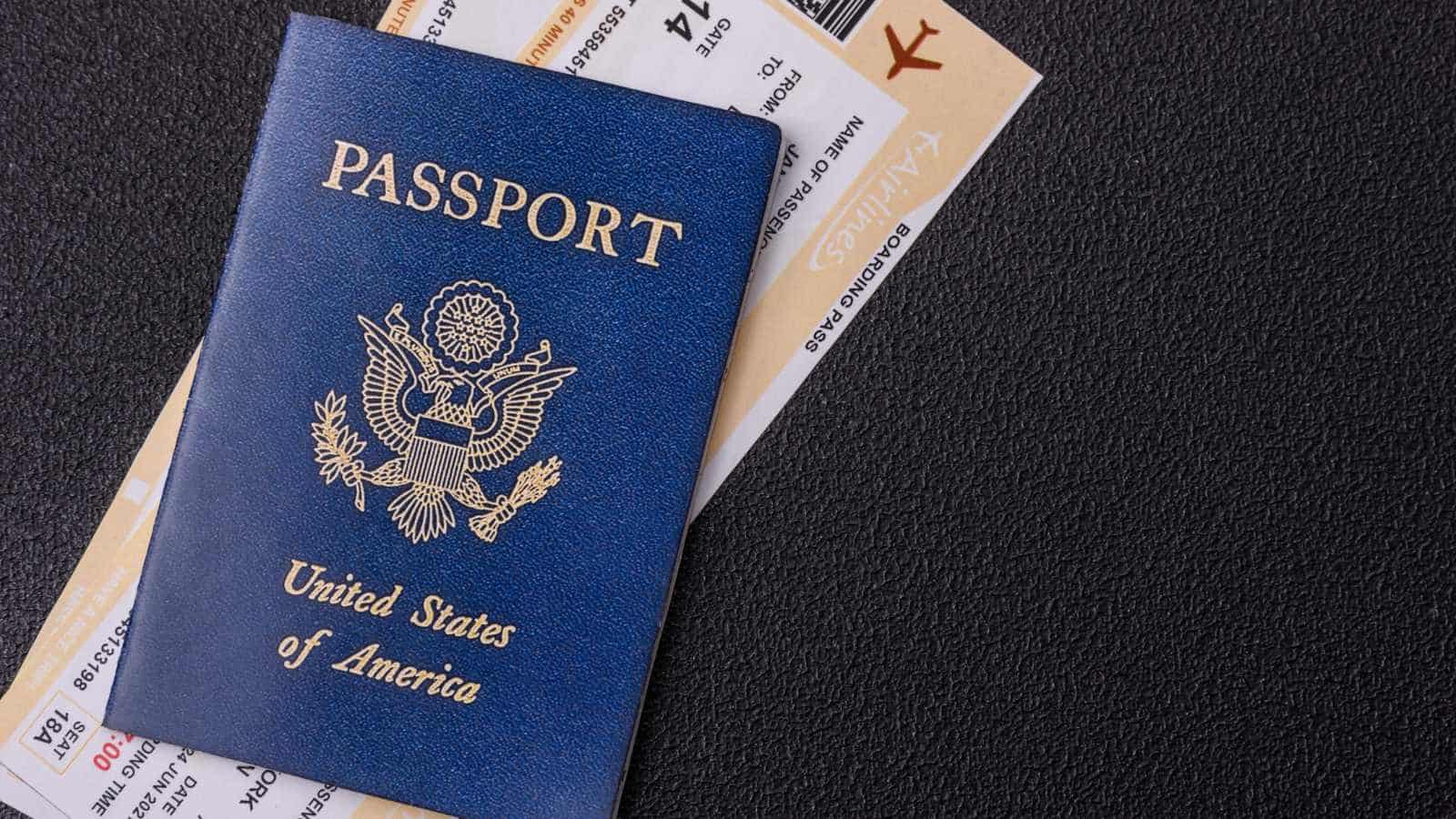
The State Department’s crisis guidance advises Americans to leave through normal commercial transport while it remains safe and available. It also recommends carrying at least five days of medication. Government-coordinated transport usually goes to a nearby safe place, not directly to the United States, and military evacuation of civilians is described as extremely rare. Most evacuees must repay the transportation cost. A debt unpaid for 30 days can receive a $50 charge plus interest, while a balance 90 days late can face a 6% annual penalty. Insurance has limits too. Suzanne Morrow, CEO of InsureMyTrip, told the Associated Press, “Acts of war and civil unrest are typically excluded because they’re unpredictable.” A passport proves citizenship. It does not reserve a seat home.
Key Takeaways
The July 22 warning does not say that all 107.7 million annual outbound trips by U.S. residents suddenly became unsafe. It says risk now travels across borders through airspace closures, American-linked locations, changing country ratings, and connections that can fail overnight. The 85% flight cancellation rate seen at Gulf airports during the first seven days of March shows how quickly a regional crisis can reach travelers headed somewhere else.
Over the next 6 to 12 months, country ratings, airline schedules, and airspace bulletins may keep changing. EASA’s current warnings run through August 31 but can be reviewed earlier, while State Department country pages can change whenever security conditions shift. A flexible route, STEP enrollment, five days of medication, emergency money, and a clear way home cannot quiet the sky. They can give a traveler room to move before it closes.
Disclaimer – This list is solely the author’s opinion based on research and publicly available information. It is not intended to be professional advice.
You May Also Want To Read:
- FTC Issues Travel Scam Warning: How to Book Your Vacation Safely
- 13 underrated cities women feel safe traveling solo
- 10 ways to survive a red-eye flight and arrive feeling human