Democrats have a problem bigger than Trump: Their own voters are losing faith
I write political articles syndicated across major news platforms, which means I spend more time than I probably should reading the comments underneath them.
Most are predictable. Some are angry. Others come from people who seem to have arrived determined to defend their side and attack the other.
But over the past year, I’ve noticed something different beneath stories about Donald Trump and the people who voted for him.
Again and again, commenters say they voted for Trump—or are considering voting Republican—not because they admire everything he says or does, but because they’ve become frustrated with the Democratic Party. They don’t understand its priorities. They don’t trust its leadership. Some say they no longer know what the party stands for.
Online comments aren’t polling, and they shouldn’t be treated as representative of the electorate. But repeated observations can raise questions worth testing against actual data. And the polling suggests the frustration may be real.
A 2026 Pew Research Center report found that Americans continued to view both the Democratic and Republican parties more unfavorably than favorably. Gallup, meanwhile, reported that a record 45% of Americans identified as political independents in 2025.
That doesn’t mean 45% of Americans are centrists or politically neutral. Many independents lean strongly toward one party. But the reluctance to adopt either party label tells us something important. For Democrats, the warning is particularly uncomfortable.
Their challenge isn’t simply that Republicans are attacking them. Republicans will always attack Democrats, just as Democrats will attack Republicans.
The deeper problem is that some Democratic voters, Democratic-leaning independents, and formerly reliable supporters appear increasingly uncertain that the party understands them—or knows how to explain what it stands for.
Republicans don’t have to become broadly popular for Democrats to lose trust.
And that may be the Democratic Party’s most consequential problem right now: it isn’t only competing against Republicans. It’s competing against disappointment inside its own coalition.
What the polling says
The simplest version of the story is that Democrats have a messaging problem.
The fuller version is more uncomfortable: Democrats may have a trust problem, a coalition problem, and a party identity problem all at once.
Start with the broadest measure. In May 2026, Pew Research Center reported that Americans continued to rate both major parties unfavorably. That matters because it complicates the familiar idea that voters are simply moving from one party to the other. Many are not embracing Republicans so much as distancing themselves from both parties.
Gallup’s long-running party identification data points in the same direction. In 2025, 45% of Americans called themselves political independents, the highest share Gallup has recorded since it began asking the question in 1988. Democrats and Republicans each accounted for a much smaller share of the public by direct identification.
That does not mean independents are truly neutral. Many lean Democratic or Republican when pressed. But the reluctance to claim a party label is still meaningful. When people stop wanting to call themselves Democrats or Republicans, that’s about more than politics. It’s a sign they’re becoming less comfortable identifying with the party itself. It reflects whether people feel comfortable saying, in effect, “these are my people.” Increasingly, many Americans do not.
What makes this especially challenging for Democrats is that much of the frustration isn’t coming from Republicans, it’s coming from Democratic voters themselves. An AP-NORC poll released in 2026 found that rank-and-file Democrats remained down on their party even after Democratic candidates had won several special elections. In other words, electoral wins did not erase a deeper sense of unease.
That is important. Parties often comfort themselves with the idea that winning cures everything. But sometimes winning a few races can conceal rather than solve underlying problems. A party can still perform well in special elections, especially when the other party is unpopular, while also losing confidence among its own voters.
The story becomes even more interesting when you look beyond party labels. Pew’s latest research shows that Americans don’t fit neatly into two political camps. Instead, they fall into several different groups that often disagree with one another—even when they usually vote for the same party. Some are strongly committed partisans. Others are reluctant supporters. Still others are alienated, skeptical, or loosely attached.
That is a difficult environment for any party. But it is especially difficult for Democrats because their coalition is unusually broad. The party is trying to hold together younger progressives, older liberals, Black and Hispanic voters, college-educated suburbanites, union households, environmentalists, moderates, and voters who mainly oppose Trump. Those groups may vote together, but they do not always speak the same political language.
This is where the party’s challenge becomes more than a matter of slogans.
A party can survive disagreement. In fact, every successful governing party contains disagreement. But it becomes much harder to function when voters cannot tell what the party’s central promise is, who its leaders are speaking for, or which faction is defining its public image.
That uncertainty creates space for insurgent movements. It also creates openings for Republicans to define Democrats before Democrats define themselves.
And perhaps most importantly, it gives disillusioned voters a reason to say: I may not like the other side, but I no longer trust this side either.
A coalition with competing priorities
Every political party has internal disagreements. In fact, healthy debate is part of a functioning democracy. The challenge comes when those disagreements become the public face of the party.
For much of the twentieth century, the Democratic Party was able to tell a relatively simple story about itself. It was the party of working families, organized labor, Social Security, Medicare, public education, and expanding economic opportunity. Its coalition included factory workers, teachers, union members, minorities, urban liberals, and many rural Democrats. Those groups certainly disagreed on policy, but they generally agreed on the party’s central mission.
Today’s Democratic coalition is far broader, and with that breadth comes a new challenge. The issue isn’t simply that the party represents many different kinds of voters. It’s that those voters increasingly want the party to focus on different problems.
Younger progressives often rank climate change, affordable housing, student debt, and racial justice among their top concerns. Older Democrats are more likely to prioritize protecting Social Security, Medicare, and access to affordable health care. Many union households place inflation, wages, manufacturing, trade, and job security near the top of the list. College-educated suburban voters frequently cite abortion rights, democratic institutions, education, and public safety as defining issues.
Even within demographic groups that are often discussed as reliable Democratic constituencies, the picture is far more nuanced than political commentary sometimes suggests.
Polling consistently finds that many Black voters continue to place a high priority on economic opportunity, affordable health care, public safety, voting rights, and reducing discrimination. But those priorities often differ by age, income, education, region, and whether voters live in urban, suburban, or rural communities. Likewise, Hispanic voters are anything but politically monolithic. Surveys regularly show inflation, the cost of living, jobs, housing, education, and health care ranking among their biggest concerns, while opinions on immigration, abortion, religion, and cultural issues vary considerably depending on family background, country of origin, generation, and geography.
The point is not that these groups disagree about everything. They don’t. The point is that they don’t all begin with the same set of priorities.
When disagreement becomes the message
That creates a communications challenge unlike the one Democrats faced a generation ago.
Different elected officials emphasize different issues. Advocacy organizations champion different causes. Activists understandably push the concerns they believe deserve greater attention. Social media amplifies the loudest voices, not necessarily the most representative ones. The result is that many voters no longer hear one clear Democratic message. They hear many different messages competing for attention.
Some voters see that as a sign of a vibrant, inclusive party. Others experience it as a lack of focus. That distinction matters.
Political scientists have spent decades studying how campaigns communicate with voters. One of their most consistent findings is surprisingly simple: the issues politicians talk about repeatedly become the issues many voters think are most important. Another is that messages tend to be more persuasive when they connect to problems people already care about. That doesn’t guarantee votes, but it helps explain why campaigns work so hard to define the conversation before their opponents do.
“The press may not be successful much of the time in telling people what to think, but it is stunningly successful in telling its readers what to think about.” – Bernard Cohen, Political Scientist speaking to his “agenda-setting theory”.
Those impressions are not always complete, and they are not always fair. But politics has never been judged solely on fairness. Parties are judged by the impression they leave.
That helps explain one of the more puzzling findings in recent polling. Americans often support many individual policies championed by Democrats while expressing far less confidence in the Democratic Party itself. The challenge, at least in part, may not be what Democrats believe. It may be that many voters no longer have a clear understanding of what the party’s central message is.
Republicans face coalition challenges of their own. Their party includes libertarians, traditional conservatives, business interests, evangelical Christians, populists, and national security conservatives, all of whom disagree on important issues. But in recent years, Republicans have generally communicated a smaller number of highly repetitive themes—immigration, inflation, crime, government spending, and cultural change. Whether one agrees with those messages or not, they have been delivered with remarkable consistency.
Democrats, by contrast, often appear to spend more time debating one another over which issues deserve the greatest emphasis and how those issues should be discussed. Internal debate is healthy and necessary. But when the debate itself becomes the dominant public narrative, voters can begin to wonder what the party stands for.
Perhaps the better question isn’t whether Democrats have moved too far left or remained too moderate. It’s whether they have become so busy speaking to different parts of their coalition that many ordinary Americans are no longer sure who the party is speaking to—or what it wants to accomplish first.
Why insurgent movements gain momentum
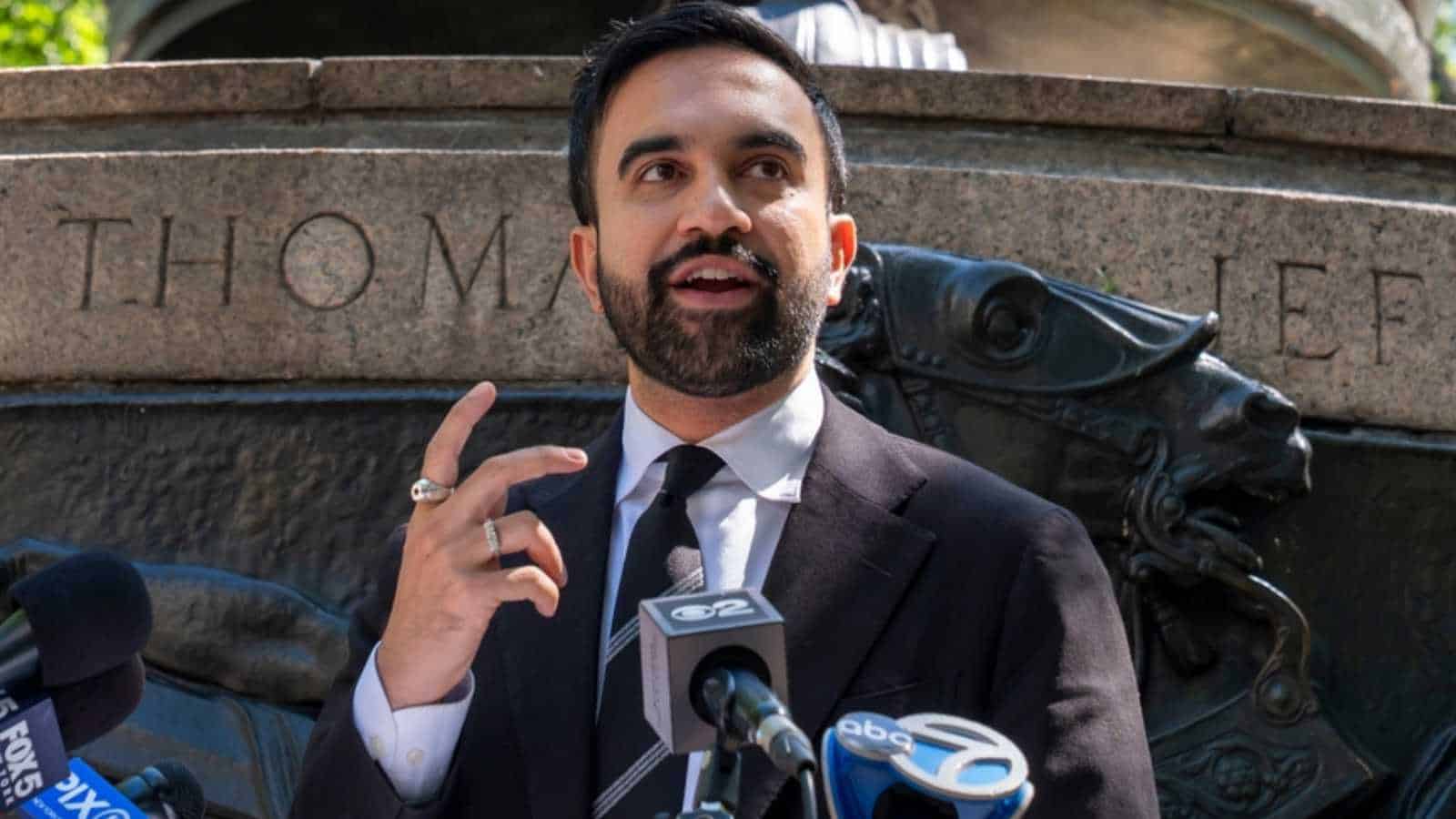
It’s tempting to view the recent rise of democratic socialist candidates as evidence that the Democratic Party is moving sharply to the left. There is certainly some truth to that. But history suggests a more interesting explanation.
Insurgent political movements often gain strength not simply because their ideas suddenly become more popular, but because many voters lose confidence in the party establishment.
That pattern has repeated itself throughout American political history.
The Tea Party emerged after many conservatives concluded that Republican leaders had become too willing to compromise on spending and the size of government. Donald Trump’s rise in 2016 reflected frustration among many Republican voters who believed party leaders had become disconnected from concerns about immigration, trade, and globalization. Bernie Sanders built a national following by arguing that establishment Democrats had grown too closely aligned with large corporations and wealthy donors. More recently, democratic socialist candidates have attracted many younger voters by presenting themselves as more willing to challenge the political status quo than long-serving Democratic leaders.
The common thread isn’t ideology. It’s dissatisfaction with leadership.
Political scientists have long observed that parties function as broad coalitions. Those coalitions inevitably produce compromise. Over time, however, compromise can begin to look like indecision. Incremental progress can begin to feel like inaction. Governing can begin to look indistinguishable from protecting the status quo.That creates an opening.
Insurgent candidates rarely begin by persuading everyone that their ideology is superior. More often, they persuade voters that they are authentic, willing to confront difficult problems, and unafraid to challenge their own party’s leadership.
Authenticity has become one of the most valuable currencies in modern politics.
Recent political science research suggests that voters increasingly reward candidates they perceive as authentic, people who appear to act consistently with their stated beliefs, even when they disagree with some of those beliefs.
That helps explain why insurgent candidates can outperform expectations. Their appeal is often less about ideology than about trust.
For Democrats, this dynamic presents a difficult balancing act.
For decades, insurgent candidates often had an advantage: they could focus on what should happen rather than what could realistically pass through a legislature. Governing is almost always messier than campaigning.
But today’s progressive insurgents are beginning to test a different proposition. Rather than simply arguing that Democratic leaders are too cautious, many are trying to demonstrate that a more ambitious style of governing is possible. Whether through aggressive housing proposals, expanded social programs, labor initiatives, or new approaches to economic policy, they are asking voters to judge them not only on their rhetoric but on their results.
A party divided over how to govern
That represents an important shift. The debate inside the Democratic Party is no longer just about messaging. Increasingly, it’s about competing theories of governance. One wing argues that durable progress comes through incremental change, broad coalitions, and political compromise. Another argues that today’s challenges require moving faster, setting more ambitious goals, and using political power more aggressively when voters provide a mandate.
That doesn’t mean either approach is guaranteed to succeed. It does mean Democratic voters are increasingly being asked to choose not simply between different policies, but between different philosophies of leadership.
That difference doesn’t make one side right and the other wrong. It does mean they are often playing different political roles.
The challenge for Democratic leaders is that voters don’t always distinguish between those roles. When frustration with the pace of change grows, calls for bolder alternatives become more attractive.
Republicans have experienced the same phenomenon. So have political parties in Britain, France, Canada, and elsewhere. Whenever large numbers of voters begin to believe that party leaders have become disconnected from their everyday concerns, movements promising more dramatic change tend to gain momentum.
Whether those movements ultimately reshape the party or fade over time depends on something deeper than ideology. It depends on whether the party can convince voters that it still understands the problems they most want solved.
That may be the real lesson of today’s Democratic Party. The rise of progressive insurgents, including candidates who identify as democratic socialists, is not simply a story about ideology. Political scientists have long observed that both major parties periodically experience insurgencies when significant numbers of voters conclude that their leadership no longer reflects their priorities.
A warning Democrats can’t afford to ignore
The Democratic Party seems to be having an increasingly public argument about who it is, what it stands for, and which voices should define it. Healthy debate is part of any political movement. Public self-destruction is something else entirely.
Political parties don’t lose because they have disagreements.
They lose when the disagreements become the brand.
History shows that political parties can survive ideological disagreements. What they often don’t survive is the appearance of being unable to lead. Voters don’t expect unanimity, but they do expect competence, clarity, and the sense that someone is actually steering the ship.
While Democrats debate one another, Republicans are governing where they hold power, appointing judges, advancing legislation, shaping election laws, and building the institutional advantages that come with winning elections. Supporters see many of those efforts as legitimate exercises of governing authority; critics argue that some changes, particularly to voting laws, make participation more difficult for certain groups. Whatever one’s view, one political reality is difficult to ignore: the party that wins elections gets to shape the rules, the courts, and the direction of the country. That is why internal division carries such a high price. It doesn’t happen in a vacuum.
Perhaps what worries me most is that Democrats sometimes seem more determined to defeat one another than to persuade the millions of Americans who aren’t firmly in either camp. Every hour spent deciding who is progressive enough, who said the wrong thing, or which faction deserves to lead is an hour not spent making the case to the voters who ultimately decide elections.
The irony is that I don’t think the Democratic Party lacks good ideas. Poll after poll shows many of its individual policies remain popular. What too many voters no longer hear is a clear, confident explanation of what those ideas add up to—or why Democrats should be trusted to deliver them.
The question isn’t whether change is coming.
The question is whether Democrats will define that change themselves, or whether frustrated voters will do it for them.
Question for readers: Do you think the Democratic Party’s biggest challenge is its policies—or its ability to communicate and unite behind them?
You may be interested in reading:
- God, Justice and the 2026 Midterms: Why More Pastors Are Running as Democrats
- The billionaire class bought the media, and now it is turning power into censorship
- Trump Hijacked America’s 250th Birthday. Corporate America Helped.