
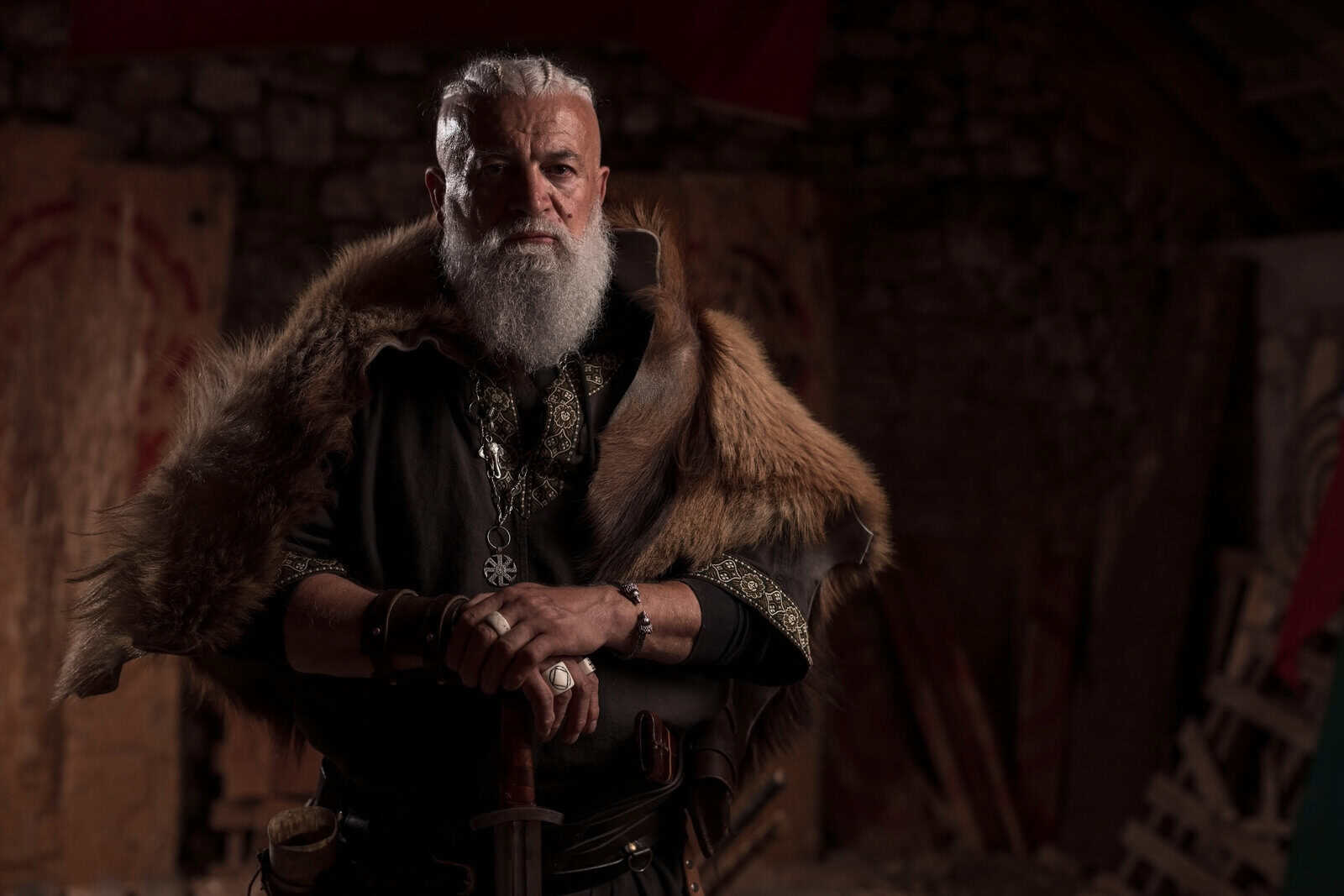
Ancient Gods You Probably Thought Nobody Worshipped Anymore
If a religion disappears for 1,000 years and people reconstruct it from ancient texts and archaeology, do you consider it the same religion—or something new?
Zeus belongs in a mythology book. Odin belongs in a Marvel movie. Isis belongs in an Egyptian museum.
At least, that’s how ancient gods are usually presented.
But some gods most people think of as relics of vanished civilizations are still worshipped today. In some cases, the worship belongs to religious traditions that never disappeared. In others, modern believers have reconstructed or revived religions after centuries of interruption.
That distinction matters. A modern worshipper of Thor isn’t evidence that an unbroken Viking religious community secretly survived for a thousand years. Meanwhile, Hindu deities worshipped in antiquity belong to living traditions with genuine historical continuity.
The result is much stranger—and more interesting—than simply saying “paganism is back.” Some ancient gods never lost their worshippers. Others disappeared from active religious life for centuries and then acquired new ones.
1. Shiva Has Been Worshipped for Thousands of Years—and Still Is
Calling Shiva an “ancient god” can sound strange because Shiva isn’t confined to ancient history.
He’s one of the most important deities in Hinduism today.
The historical development of Shiva is complicated. Scholars have long debated connections among Vedic Rudra, later Shiva traditions, and even possible earlier imagery from the Indus Valley Civilization. Claims that particular archaeological figures definitely represent Shiva remain disputed.
What isn’t disputed is the extraordinary antiquity of Shiva worship and its continued importance.
Shaivism developed into major Hindu traditions centered on Shiva as supreme deity or ultimate reality. Temples dedicated to Shiva can be found across India and far beyond it, while festivals such as Maha Shivaratri continue to attract enormous numbers of worshippers.
Shiva doesn’t need a modern revival because his worship never became merely archaeological.
That’s the first major distinction in this article. Some ancient gods were rediscovered.
Others never left.
2. Vishnu’s Ancient Worship Became a Vast Living Religious Tradition
Vishnu likewise connects the ancient religious world with the present.
Vishnu appears in Vedic literature, although his prominence and theological significance developed enormously over time. Later Hindu traditions elevated Vishnu to a central position, and Vaishnavism became one of Hinduism’s major religious streams.
Vishnu’s avatars are crucial to that story.
Rama and Krishna became among the most beloved figures in Hindu religious life, generating enormous bodies of scripture, poetry, philosophy, art, pilgrimage, festival, and devotional practice.
An ancient deity didn’t simply survive unchanged. The tradition around Vishnu expanded into one of the world’s great devotional religious cultures.
Millions of people today worship Vishnu, Krishna, Rama, and other forms associated with Vaishnava traditions. Their devotion isn’t an attempt to reconstruct a dead ancient religion from ruins.
It’s part of a living tradition that has been changing for centuries.
3. Zeus Has Worshippers Again
This is where the story changes dramatically.
Ancient Greek religion gradually disappeared as the Mediterranean world became predominantly Christian. Temples closed, sacrifices ceased, and Zeus moved from living religious worship into literature, art, philosophy, and what later generations called mythology.
But Zeus has worshippers again.
Modern Hellenic polytheists have revived religious practices centered on the gods of ancient Greece. Groups in Greece and elsewhere honor Zeus, Athena, Apollo, Aphrodite, Artemis, and other deities through prayers, offerings, festivals, and reconstructed rituals.
The extraordinary part isn’t that people are interested in Zeus. It’s that some people once again approach him as a god rather than a mythological character.
Modern Hellenism isn’t a perfectly preserved continuation of what Athenians practiced 2,500 years ago. Ancient Greek religion itself varied enormously by time and place, and modern practitioners have to reconstruct aspects of worship from literary, archaeological, and historical evidence.
But for worshippers, these gods aren’t museum pieces.
They’re gods.
4. Odin and Thor Have Moved Back From Mythology Into Worship
For many people, Thor is now inseparable from superhero movies.
Long before Hollywood, he was a god worshipped across the pre-Christian Germanic and Norse world.
Odin, Thor, Freyja, Freyr, Tyr, and other deities appear throughout surviving Norse literature and archaeology. As Scandinavia and other Germanic regions became Christian, their old religions gradually disappeared as dominant public traditions.
Centuries later, people began reviving them.
Modern Heathenry includes several contemporary religious movements inspired by pre-Christian Germanic traditions. Ásatrú is one of the best-known labels, particularly in Iceland and elsewhere in the Nordic world, although practitioners use different terms and don’t all believe or worship in identical ways.
Thor made an unusual journey: from god, to forbidden or abandoned god, to mythological character, to pop-culture superhero—and, for some people, back to god again.
Modern Heathens generally don’t claim that every ritual survived unchanged from the Viking Age. Reconstruction depends on sources such as the Poetic Edda, Prose Edda, sagas, archaeology, folklore, and comparative scholarship.
The old religion is being practiced in a new world.
5. Egyptian Gods Have Modern Worshippers Too
Ra. Isis. Osiris. Anubis. Horus.
Their names are so closely associated with pyramids, mummies, museums, and archaeology that it’s easy to forget these figures were once the focus of living religious devotion.
Ancient Egyptian religion endured for thousands of years before gradually declining under Roman rule and the spread of Christianity. Its temples eventually closed, and the ability to read hieroglyphs itself disappeared for centuries.
Yet modern religious movements have brought Egyptian gods back into worship.
Kemetic practitioners draw inspiration from ancient Egyptian religion, reconstructing prayers, offerings, rituals, ethical ideas, and relationships with Egyptian deities—often called the Netjeru in modern Kemetic communities.
Anubis isn’t merely appearing on museum walls anymore. Somewhere, someone may actually be praying to him.
As with modern Hellenism and Heathenry, this is revival rather than evidence of an uninterrupted religious institution stretching directly back to the pharaohs.
That doesn’t make it less interesting.
It makes the return itself part of the story.
6. Isis Had Already Become an International Goddess Once Before
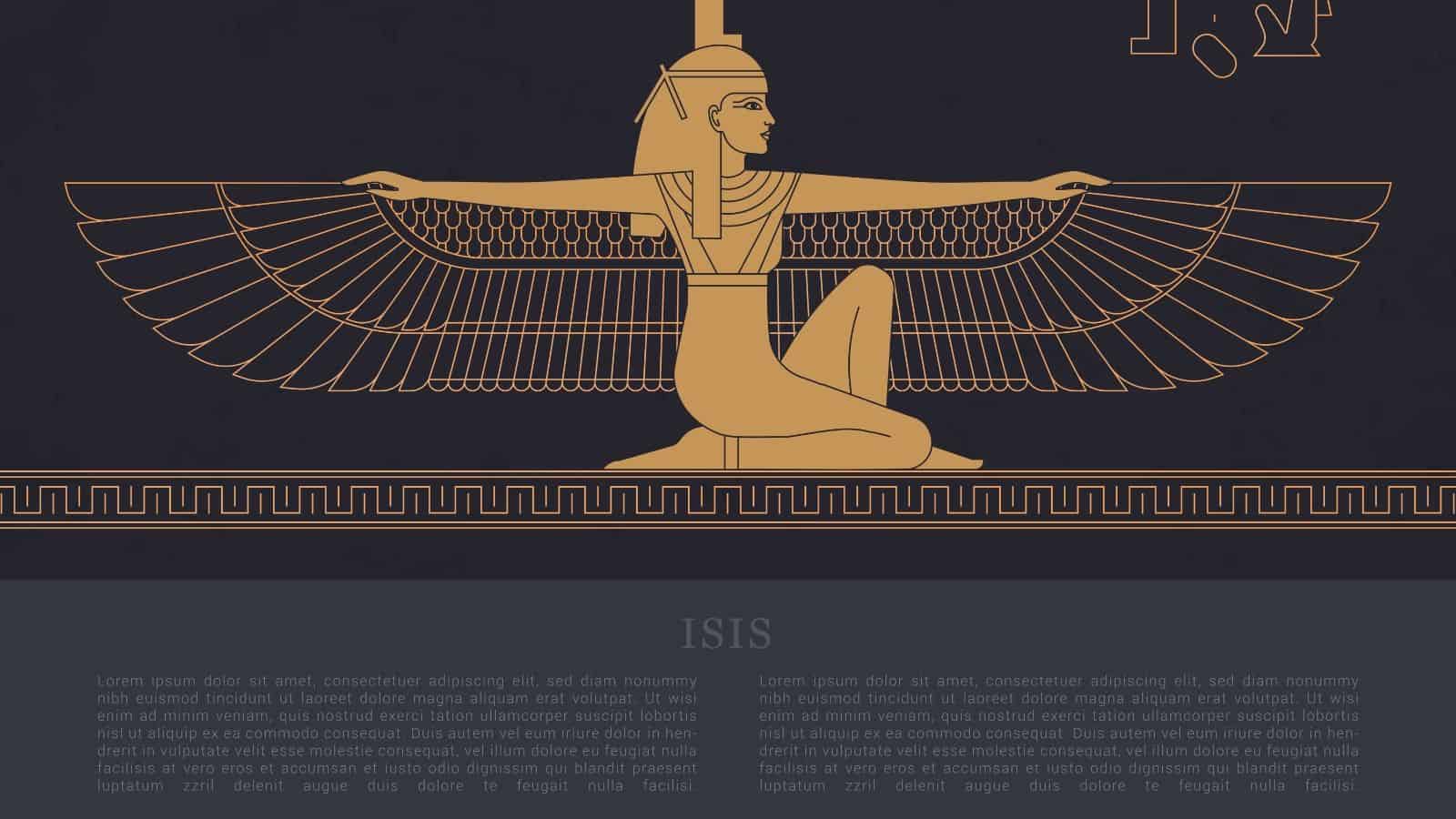
Isis deserves special attention because her religious history was remarkable even in antiquity.
She began as an Egyptian goddess but eventually became enormously popular throughout the Mediterranean world. Under Greek and Roman influence, the cult of Isis spread far beyond Egypt, reaching cities throughout the Roman Empire.
Her worship changed as it traveled. Isis could become associated with motherhood, protection, magic, healing, salvation, the sea, and universal divine power. Temples dedicated to her appeared far from the Nile.
Long before modern globalization, Isis had already crossed languages, borders, and cultures.
Her ancient cult eventually disappeared, but modern Pagan and Kemetic movements have brought Isis back into religious practice. Some contemporary worship draws heavily from Egyptian reconstruction; other forms have been shaped by modern esotericism and Pagan spirituality.
That means there isn’t one simple modern “cult of Isis” continuing unchanged from Roman antiquity.
But the goddess once again has devotees.
7. The Gods of Ancient Rome Have Also Returned
Jupiter, Juno, Mars, Venus, Vesta, and other Roman gods didn’t simply vanish from Western culture when their temples closed.
Their names remained everywhere.
Planets carried them. Renaissance painters depicted them. Classical literature kept their stories alive. The days, months, architecture, political vocabulary, and art of later Europe remained saturated with Roman influence.
But cultural survival isn’t the same thing as worship.
Modern Roman polytheists have gone further, attempting to revive aspects of the religio Romana, the religious traditions of ancient Rome. Practitioners may honor Roman deities through household rites, offerings, prayers, festivals, and reconstructed forms of ancient ritual.
Mars can once again receive a prayer instead of merely lending his name to a planet.
As with other reconstructed religions, modern Roman practice involves interpretation. Ancient Roman religion changed across centuries and differed between household worship, public cult, priesthoods, mystery religions, imperial practices, and local traditions.
There isn’t one ancient instruction manual waiting to be followed.
8. Some Pre-Christian European Gods Never Completely Disappeared From Culture
A god can stop being worshipped without disappearing.
That distinction helps explain how religious revivals become possible.
Norse gods survived in medieval texts written or preserved after Christianization. Greek and Roman gods remained central to European education, literature, and art. Folklore sometimes preserved fragments of older supernatural traditions even when the religious systems behind them were gone.
Names survived too.
Wednesday preserves a connection with Woden/Odin in English. Thursday carries Thor’s name. Friday has Germanic divine associations. The planets preserve Roman divine names familiar to anyone who has looked at the night sky.
Christian Europe spent centuries surrounded by the names and stories of gods it no longer worshipped.
When modern religious revivals began, practitioners therefore weren’t starting with absolute silence. They had myths, inscriptions, archaeology, historical descriptions, place names, folklore, and surviving texts.
What they didn’t have was an uninterrupted living religious community capable of explaining exactly how everything had once been done.
9. Not Every “Ancient Religion” Today Is Actually Ancient in the Same Way
This distinction is essential.
Hindu worship of Shiva or Vishnu belongs to traditions with extraordinary historical continuity. Modern worship of Zeus or Odin is different because ancient Greek and Norse public religious traditions experienced major breaks.
That doesn’t make modern revival religions fake.
All religions change.
But historical accuracy matters, especially when an article uses a phrase such as “ancient gods people still worship.” The gods may be ancient even when the modern religious movement surrounding them isn’t.
Contemporary Pagan and reconstructionist communities vary in how they approach that problem. Some try to reconstruct historical practices as closely as available evidence allows. Others freely combine ancient inspiration with modern spirituality. Still others view reconstruction as a starting point rather than a limitation.
There may therefore be less agreement among two modern worshippers of the same ancient deity than an outsider expects.
Reviving a religion doesn’t automatically settle what that religion should become.
10. A Religion Can Disappear Without Its Gods Disappearing Forever
Religions have always risen, changed, divided, merged, migrated, and sometimes vanished.
For most of history, disappearance seemed final.
When the last temples closed and the last priests died, a religious tradition could lose the human chain that taught the next generation what to do.
Modernity changed that.
Archaeology uncovers temples. Scholars translate inscriptions. Ancient languages can be studied online. Digitized manuscripts put texts once locked inside specialist libraries in front of anyone with an internet connection. People separated by thousands of miles can build religious communities around traditions that once disappeared from public worship.
For perhaps the first time in history, a dead religion doesn’t necessarily have to stay dead.
That creates a religious phenomenon ancient civilizations themselves could hardly have imagined: someone in the 21st century can read a prayer written 2,000 years ago, learn the name of the god it addressed, reconstruct an offering—and begin praying again.
Some Ancient Gods Never Left. Others Came Back.
That’s the distinction that makes this story more interesting than a simple list of old deities.
Shiva and Vishnu belong to vast living traditions whose histories stretch back into antiquity. Their worship changed, diversified, and developed, but it didn’t need to be rediscovered from archaeological ruins.
Zeus, Odin, Isis, Anubis, Jupiter, and other ancient gods followed a different path. Their old religious systems largely disappeared, sometimes for well over a thousand years, while their names survived in myths, literature, art, and historical records.
Then some people began worshipping them again.
A god can apparently survive a very long time without worshippers—as long as somebody remembers the name.
Museums taught us to look at ancient gods as artifacts from civilizations humanity left behind.
Modern worshippers complicate that picture.
For them, the gods aren’t only part of the past.
They’re listening again.