
Why Some Religions Worship With Animals—and Others Won’t Even Eat Them
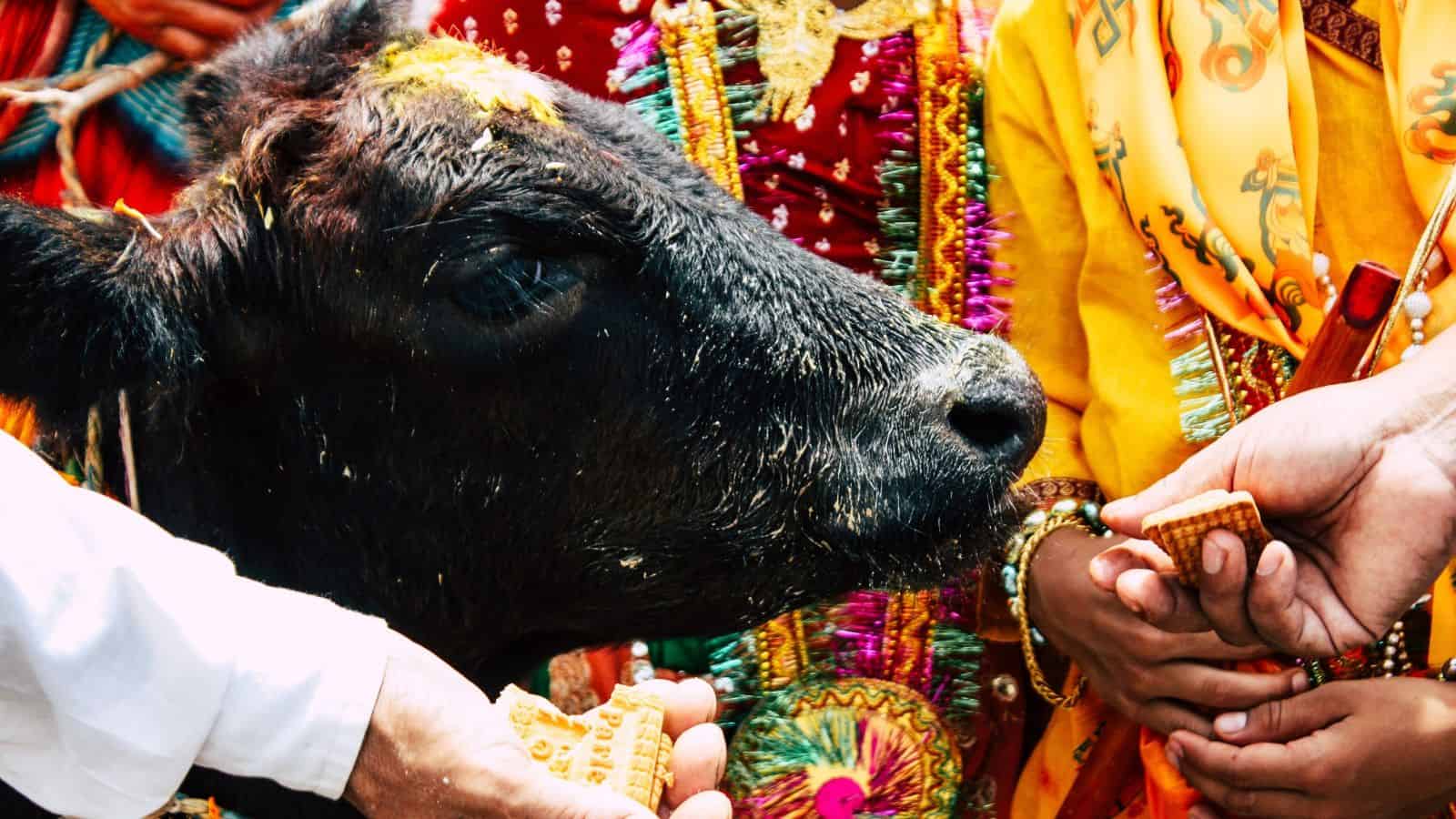
A cow wanders through a crowded Indian street while traffic moves around it. A Jewish family avoids pork. A Buddhist monk carefully moves an insect rather than killing it. In another part of the world, an animal is prepared for a religious sacrifice.
How can animals be sacred in one religion, forbidden as food in another, and central to a religious ceremony somewhere else?
The answer is more interesting than simply saying that some religions love animals and others don’t. Animals can represent divine qualities, serve as reminders of moral responsibility, appear in sacred stories, or become part of rituals connecting people with God. Sometimes the same animal carries completely different meanings in neighboring religious traditions.
And many familiar explanations turn out to be incomplete. Hindus don’t generally believe every cow is a god. Jewish and Muslim restrictions on pork aren’t simply ancient food-safety advice. Buddhist teachings about compassion don’t mean every Buddhist is vegetarian.
Here are 10 surprising ways the world’s religions understand animals—and what those beliefs reveal about the people who practice them.
1. Why Cows Are Sacred in Hinduism
In parts of India, cows receive a level of respect that can surprise visitors. They may wander through streets, appear in religious imagery, and be protected by communities that consider harming them morally unacceptable. For many Hindus, eating beef is unthinkable.
But the familiar claim that Hindus worship cows as gods misses what makes the animal significant.
Cows have long been associated with nourishment, generosity, agricultural life, and nonviolence. In Hindu traditions, the cow can symbolize the giving of sustenance without demanding anything in return. The animal is also connected with Krishna, who is frequently depicted as a cowherd, and with religious ideas about the protection of living beings.
Historical attitudes toward cattle and beef have changed across regions and centuries, and Hindu communities are far from uniform in their dietary practices. Nevertheless, reverence for cows became an important expression of religious and cultural identity for many Hindus.
The cow’s significance is therefore about more than one animal. It represents a larger question about gratitude, dependence, and whether humans have the right to harm creatures that sustain their lives.
2. Why Jews and Muslims Avoid Pork
Pork is one of the most familiar religious food prohibitions in the world. Observant Jews avoid it under the laws of kashrut, while Muslims avoid it because Islamic scripture prohibits consuming swine flesh.
That similarity sometimes leads people to assume the rule must have begun as a practical warning about disease.
Ancient food safety may have influenced some cultural attitudes, but neither religion explains its prohibition simply as a warning that pork is unhealthy. Jewish dietary law classifies permitted land mammals according to specific characteristics, including chewing the cud and having fully divided hooves. Pigs have divided hooves but don’t chew the cud, so they don’t meet the requirements.
In Islam, the prohibition is grounded in Quranic commands. Muslim dietary practice also involves broader distinctions between halal and haram, with specific rules concerning how animals are slaughtered and prepared.
The interesting part is that religious dietary restrictions can remain meaningful even when modern technology changes food production. A prohibition may be about obedience, identity, discipline, and the relationship between daily life and religious law rather than a claim that a particular food is medically dangerous.
You may also want to read: You’ve Heard These Religious Rules. Here’s the Meaning Behind Them.
3. Why Elephants Have Such a Powerful Place in Hinduism
An elephant-headed deity is one of the most recognizable figures in Hindu religious art. Ganesha appears in homes, temples, shops, and celebrations, often associated with new beginnings, wisdom, and the removal of obstacles.
But why an elephant?
Hindu traditions tell several stories about how Ganesha acquired his elephant head. In a well-known version, Shiva removes the head of a child created by Parvati and later restores him to life with an elephant’s head. Other versions tell the story differently, reflecting the diversity of Hindu sacred literature.
The elephant head isn’t simply a tribute to an impressive animal. It belongs to a divine figure whose appearance carries religious meaning.
Elephants can suggest strength, intelligence, and the ability to overcome obstacles. Ganesha’s large ears and distinctive features have also inspired symbolic interpretations about listening, wisdom, and discernment, although such explanations vary.
This is an important distinction. Hindu reverence for Ganesha doesn’t mean every elephant is worshipped as a god. The animal’s form becomes part of a larger religious image, story, and devotional tradition.
4. Why Some Buddhists Try Not to Harm Even the Smallest Creatures
Imagine finding a spider in your home and feeling that killing it would be a serious moral decision. For some Buddhists, that concern reflects a fundamental religious commitment rather than simply a personal affection for animals.
The first of Buddhism’s Five Precepts concerns refraining from taking life. Buddhist teachings emphasize compassion toward sentient beings and recognize that animals, like humans, are subject to suffering and the cycle of rebirth.
The surprising idea is that a tiny insect can matter morally even when it has no obvious usefulness to human beings.
But Buddhism doesn’t impose one identical lifestyle on everyone. Vegetarianism is important in many Buddhist communities, particularly within certain Mahayana traditions, while other Buddhist traditions permit meat under specified circumstances. Monastic rules and lay practices also differ.
Some Buddhist practitioners take special care to avoid killing insects, while others focus on reducing harm within the realities of ordinary life. The central principle is not that every Buddhist behaves perfectly toward animals. It’s that compassion should extend beyond the human species.
5. Why Jains Take Nonviolence Even Further
If Buddhist concern for animal life seems demanding, Jain religious practice offers an even more striking example of how seriously nonviolence can be taken.
Jainism places ahimsa, or nonviolence, at the center of religious life. Jains seek to avoid harming living beings, and many follow vegetarian diets. Some also avoid root vegetables because harvesting them destroys the plant and may harm tiny organisms in the surrounding soil.
Certain Jain monks and nuns use a small broom to gently move living creatures from their path. Some wear a cloth over the mouth as part of practices intended to minimize harm to minute life forms, although this is not universal across Jain traditions.
For a committed Jain ascetic, the moral question isn’t just whether an animal deserves protection. It’s how to live while causing as little harm as possible.
That creates a demanding religious discipline because ordinary life inevitably affects other living things. Jain practice therefore involves careful attention to actions most people barely notice, from eating and walking to cleaning and traveling.
The goal isn’t simply kindness to animals. It’s a comprehensive approach to spiritual liberation in which violence, attachment, and karma are deeply connected.
6. Why Animals Appear in Islamic Sacrifice
For some outsiders, the Islamic festival of Eid al-Adha presents a difficult contrast. Islam teaches compassion toward animals, yet the festival includes the ritual slaughter of livestock by Muslims who are able and choose to participate.
The practice is connected with the story of Abraham’s willingness to sacrifice his son in obedience to God. In the Quran, the son is not named in the sacrifice passage, although later Muslim tradition generally identifies him as Ishmael.
The animal sacrifice, known as qurbani or udhiyah, recalls devotion and submission to God. Meat is commonly shared among family, friends, and people in need, with charitable distribution an important part of the observance.
The religious purpose isn’t to celebrate killing an animal. It’s to remember sacrifice, obedience, and the responsibility to share with others.
Islamic teachings also include requirements concerning humane treatment and the avoidance of unnecessary suffering. Whether particular practices meet those ideals can be debated, just as animal welfare practices can be questioned in secular food production.
The festival illustrates a major difference between religious traditions. Some express reverence for life through strict avoidance of killing, while others permit animal slaughter within a framework of religious law and ethical obligations.
7. Why Some Christians See Animals as Part of God’s Creation to Protect
Christianity doesn’t have one universal set of dietary restrictions concerning animals. Most Christian denominations permit eating meat, although fasting, abstinence, and vegetarian traditions exist within different communities.
The Bible itself contains several approaches to animals. Genesis describes human beings receiving authority over other living creatures, while other passages emphasize God’s concern for creation. Biblical stories also include animals as symbols, companions, sacrifices, and reminders of divine care.
One of Christianity’s enduring questions is what it means for humans to have dominion over animals. Does authority mean permission to use them, or responsibility to protect them?
Christian thinkers and communities have answered that question in different ways. Some emphasize stewardship and the duty to prevent cruelty. Others focus on the distinction between humans and animals within Christian theology.
Saint Francis of Assisi became especially associated with affection for animals and the natural world, although popular stories about him sometimes simplify his religious outlook. His legacy helps explain why some churches hold blessings of animals around his feast day.
The broader lesson is that a religion doesn’t need to forbid meat to develop a serious moral concern for animal life.
8. Why Cats Have a Special Reputation in Muslim Cultures
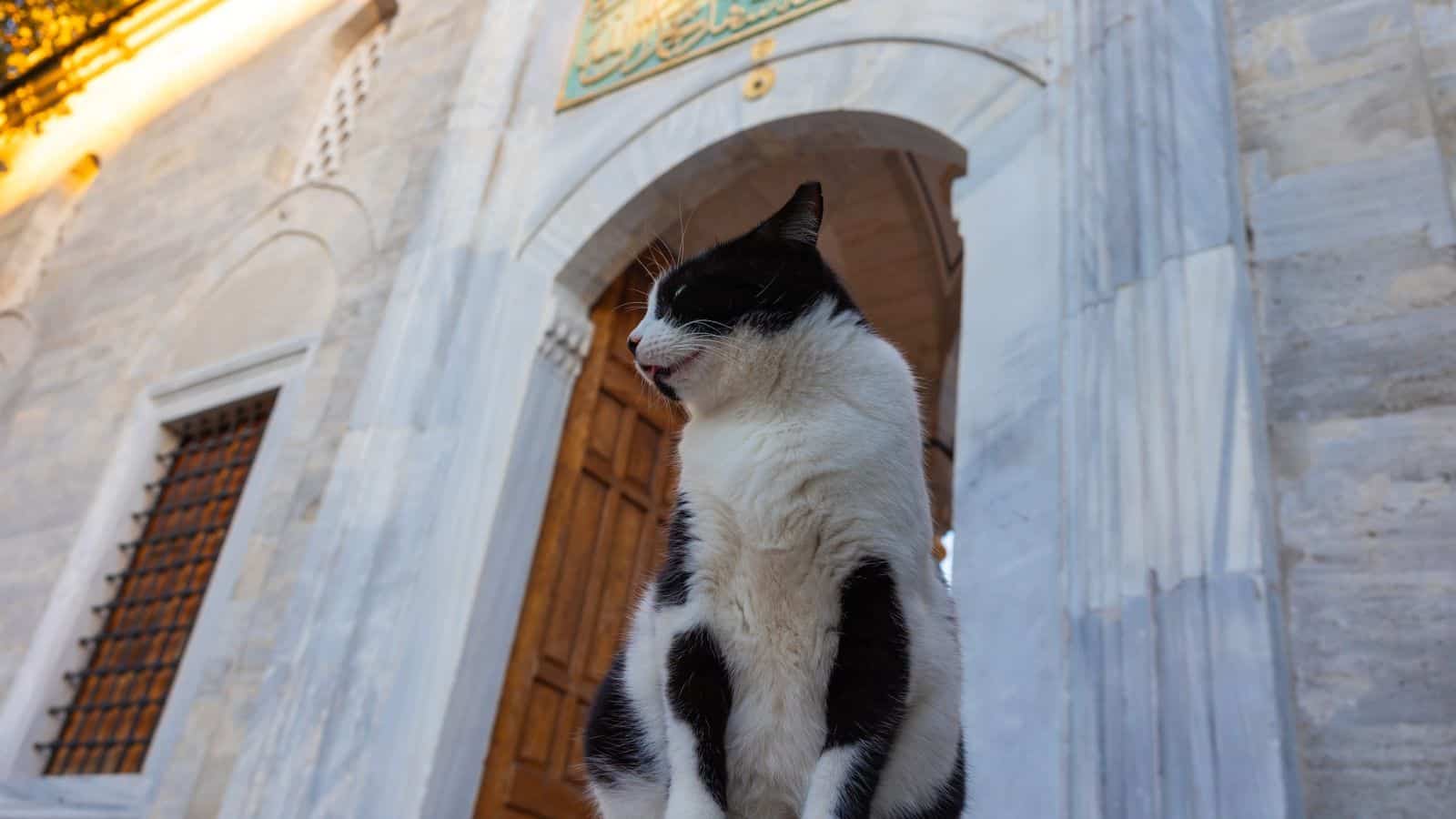
Cats often occupy an affectionate place in Muslim-majority societies, and stories about the Prophet Muhammad’s kindness toward cats circulate widely.
One especially popular tale describes Muhammad avoiding disturbing a sleeping cat, sometimes named Muezza. The story is beloved, but its familiar details aren’t established by reliable early hadith evidence.
That doesn’t mean Islamic traditions lack genuine teachings about animals.
Well-attested hadith accounts include a warning about a woman punished for confining and starving a cat, as well as a story about someone receiving divine forgiveness after giving water to a thirsty dog. These teachings place animal treatment within a larger moral framework.
The more revealing point isn’t that Islam supposedly considers cats magical or holy. It’s that cruelty toward an animal can be treated as a serious religious wrong.
Cats also have practical and cultural associations with households and urban life, while Islamic legal discussions address questions of animal cleanliness and contact with people. Their favorable reputation is therefore a mixture of religious teaching, cultural history, and everyday experience.
9. Why Some Religions Connect Animals With Gods, Spirits, and Ancestors
In many Indigenous religious traditions, animals are not simply resources or decorative symbols. They can appear in origin stories, represent relationships between humans and the natural world, or play important roles in ceremonies and community identity.
But it’s misleading to treat all Indigenous religions as though they share one belief that every animal contains a spirit.
Traditions differ enormously. In some Native American communities, particular animals appear in clan identities, sacred narratives, or ceremonial practices. Certain West African religious traditions connect specific animals with deities, ritual obligations, or symbolic meanings. In Shinto, foxes are closely associated with Inari shrines as messengers, though Inari’s religious identity and symbolism vary.
These relationships aren’t interchangeable. An animal regarded as a messenger in one tradition isn’t necessarily a god, ancestor, or protective spirit in another.
What connects many examples is the refusal to treat the natural world as spiritually irrelevant. Animals may carry stories about how humans should behave, where communities came from, or how they understand their place in the world.
10. Why the Same Animal Can Be Sacred in One Tradition and Forbidden in Another
Consider the cow. For many Hindus, it represents nourishment, protection, and religious reverence. In Judaism and Islam, cattle can be permissible food when the relevant dietary requirements are met. In other traditions, cattle have been used in sacrifice, agricultural rituals, or symbols of wealth.
The animal hasn’t changed. The meaning has.
The same is true of snakes. In some Hindu traditions, serpents called nagas have important religious associations. In parts of Christian tradition, the serpent is strongly associated with temptation through the Genesis story, although biblical snake imagery isn’t uniformly negative. In ancient Egypt, cobras could symbolize royal protection and divine authority.
Religions don’t simply look at animals and discover one universal spiritual meaning. They interpret animals through stories, scriptures, histories, and relationships.
That helps explain why outsiders sometimes find religious animal practices contradictory. What appears inconsistent from a distance may make sense within a particular tradition’s understanding of life, purity, sacrifice, or divine power.
The same creature can represent danger, wisdom, nourishment, protection, or spiritual responsibility depending on the story being told.
What Animals Reveal About Religious Belief
Animals occupy a remarkable position in religious life because humans depend on them, fear them, admire them, and sometimes recognize something of themselves in them.
A cow can represent generosity. An elephant can become part of the image of a beloved deity. A cat can remind believers that cruelty has moral consequences. An insect can challenge a person’s commitment to nonviolence. An animal sacrifice can express obedience and charity within a tradition that permits it.
The deepest difference isn’t between religions that care about animals and religions that don’t. It’s between the different ways they understand human responsibility toward other living beings.
Some traditions emphasize avoiding harm whenever possible. Others permit the use of animals under religious and ethical restrictions. Still others connect particular species with sacred stories, divine figures, or ancestral identity.
These differences don’t disappear simply because everyone agrees that animals deserve humane treatment. They reveal genuinely different beliefs about life, death, spiritual duty, and humanity’s place in creation.
The next time you encounter a religious custom involving an animal, the most useful question may not be why that particular creature matters.
It may be what the tradition believes human beings owe to the rest of the living world.
You may also want to read: You’ve Seen These Religious Practices—but Do You Know What They Actually Mean?