
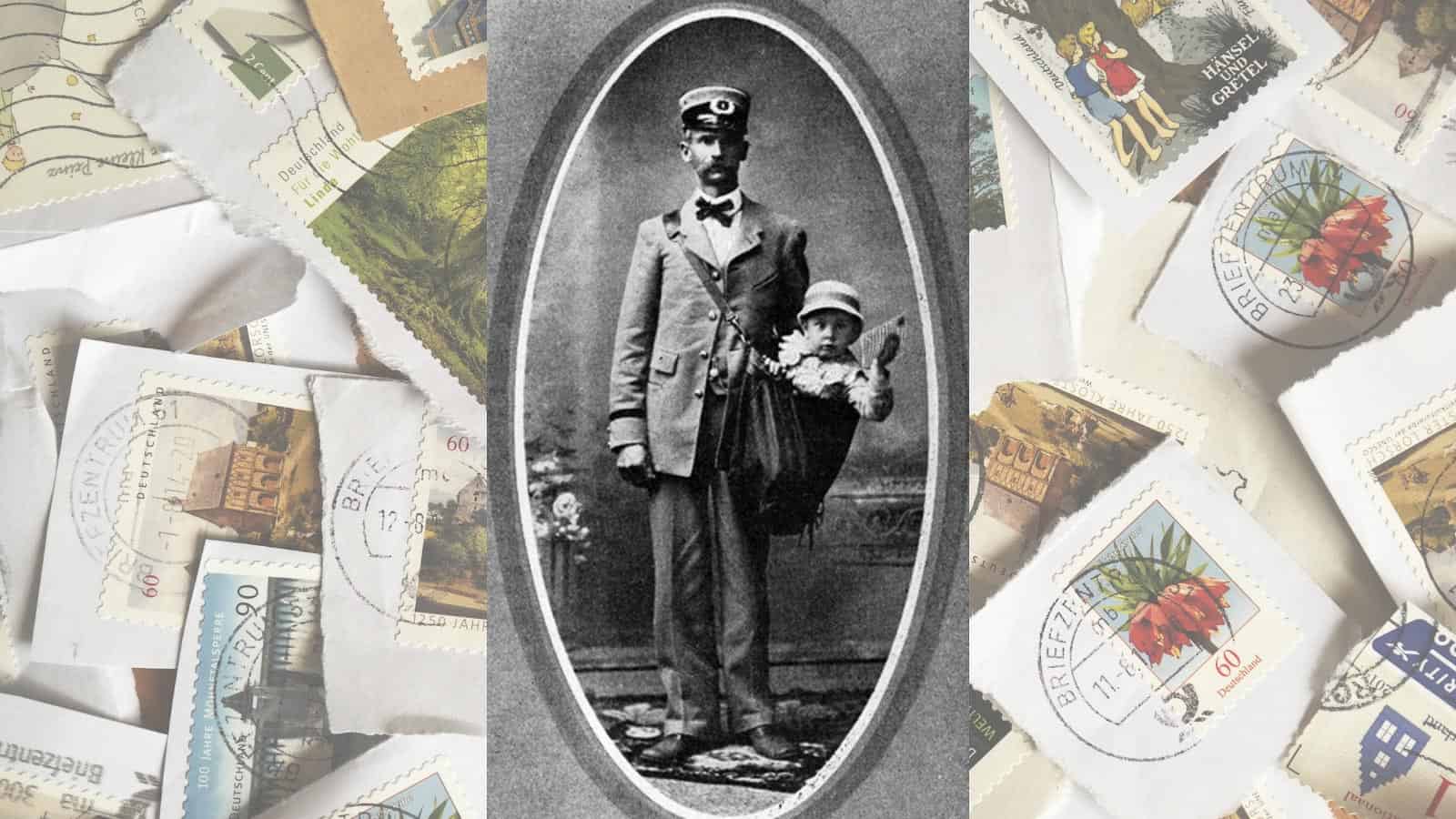
Did American parents really mail their children? These bizarre true stories from the early 1900s are hard to believe
Imagine walking into your local post office with a baby in your arms.
You approach the counter, explain that you need to send your child to Grandma’s house, and ask how much postage will cost.
The postal clerk weighs your little one, calculates the price, and arranges for delivery.
Sounds completely ridiculous, doesn’t it?
But for a brief period in American history, parents really did send their children through the U.S. mail.
And some of the stories are almost impossible to believe.
In 1913, an Ohio couple reportedly paid just 15 cents to send their eight-month-old son to his grandmother.
A year later, a four-year-old girl traveled across Idaho with 53 cents in postage attached to her clothing.
And in 1915, a six-year-old girl made an extraordinary journey from Florida to Virginia through the postal system.
No, these children weren’t stuffed into cardboard boxes or tossed into mailbags alongside ordinary packages.
They generally traveled under the supervision of postal employees, sometimes aboard trains or along familiar rural delivery routes.
But the fact that this happened at all raises an obvious question.
What were American parents thinking—and why would the Post Office ever allow something like this?
The answer begins in 1913, when the United States introduced Parcel Post.
The new service made it easier and cheaper for Americans, particularly those living in rural communities, to send packages over long distances.
But the rules didn’t initially anticipate every unusual thing people might try to mail.
And a few resourceful parents apparently realized that sending a child with a trusted postal worker could cost considerably less than purchasing a regular passenger ticket.
At a time when rural mail carriers were familiar faces in their communities, some families saw the arrangement as practical rather than outrageous.
Postal officials eventually moved to prohibit the practice, although reports of children traveling through the mail continued afterward.
Looking back, it’s a remarkable reminder of how different everyday life was just over a century ago.
From babies delivered along rural mail routes to children traveling hundreds of miles by train, these extraordinary historical accounts reveal how America’s early postal system briefly became an unlikely transportation service for children—and why officials finally decided enough was enough.
Horses & Automobiles
In 1913 through the 20s horse drawn wagons were used in addition to automobiles. What kind of vehicles were used for these mailed children?
Early Days of The Parcel Post and Unintended Consequences
On January 1, 1913, the U.S. Post Office introduced Parcel Post, allowing the shipment of larger packages. This innovation aimed to enhance commerce and connectivity, especially in rural areas. However, the lack of explicit restrictions led to unforeseen uses, including the mailing of human beings.
An 8-month Old Has An Adventure
Just weeks after Parcel Post began, Jesse and Mathilda Beagle mailed their 8-month-old son, James, to his grandmother in Batavia, Ohio. Weighing just under the 11-pound limit, his delivery cost 15 cents in postage.
He Made The News!
Above is a news clipping of the trip.
Is Fargo A Good Destination for a 2-Year Old?
Here’s the story of Freddie Colby, who was mailed to his grandparents at the age of 2.
4-Year Old Takes A Trip
Charlotte May Pierstorff: On February 19, 1914, 4-year-old May Pierstorff was sent from Grangeville to Lewiston, Idaho, to visit her grandparents. Affixed with 53 cents in stamps, she traveled in the train’s mail compartment, accompanied by a postal clerk who was a family member.
Audray Was Safe, But Her Dress & Sweater Were Ruined!
Six-year-old Audray Lenore Christy traveled from LA to Phoenix, without too much incident.
“Do Not Stick Stamps On Baby’s Face”
Apparently, postal clerks needed specific directions on how to handle children.
How Exactly Were Kids “Mailed”?
Were the children placed in packages during transit? Nope. They typically traveled with postal workers or in mail compartments under supervision.
Horses, Autos & Trains!
Sometimes it was via railroad.
Why Did Parents Choose To Mail Their Children?
Mailing children was sometimes cheaper than purchasing a train ticket, making it a cost-effective option for short distances.
Public Reaction
These stories, often highlighted for their novelty, underscored the public’s trust in postal workers. Mail carriers were esteemed community members, sometimes going beyond their duties to assist families.
Postal Regulations
However, the Post Office Department recognized the need for clear guidelines. By 1914, regulations were updated to prohibit the mailing of humans, ensuring the safety and propriety of postal services.
Laws Are Meant to Be Broken
Merely a month after the “no-humans” law went into effect, rural carrier B.H. Knepper transported a 14-pound baby from its grandmother’s home in Clear Spring, MD to the mother’s house in Indian Springs, MD, twelve miles away. A local newspaper reported that the baby slept through the entire trip.
Abandoned Baby Gets A New Home Via USPS
In 1914, Mrs. E.M. Pierce, a compassionate woman living near Stanley, North Dakota, heard about a baby boy who had been abandoned in Grand Forks. Determined to adopt the child, she faced the challenge of bringing him to her home. However, Mrs. Pierce quickly devised an unconventional solution.
She contacted the police matron responsible for the baby, providing detailed instructions. Mrs. Pierce requested that the matron place the boy in a basket, include two or three bottles of milk, and send him on the early morning train. She assured the matron that the rural mail carrier would be waiting to meet the train and deliver the baby safely to her doorstep. Her instructions were clear: “Be sure to send the baby by the first mail.” Remarkably, the child was to be “mailed” directly to Mrs. Pierce.
Mailing Babies & Kids Continues
In 1915, six-year-old Edna Neff made what is believed to be the longest journey by a child sent through the mail via parcel post. Edna traveled from her mother’s home in Pensacola, Florida, to her father’s residence in Christiansburg, Virginia. Details about Edna’s trip are scarce, but it is known that she traveled on a railway mail train. Her weight was recorded as just under the 50-pound parcel limit, allowing her journey to cost only 15 cents in postage.
For 10 Cents…

That same year saw additional instances of children being mailed before stricter regulations were introduced. In March, rural mail carrier Charles Hayes from Tarkio, Missouri, delivered Helen Combs, the daughter of Mr. and Mrs. Albert Combs, to her grandmother, Mrs. C.H. Combs, who lived along Hayes’ delivery route. The cost for Helen’s trip was 10 cents in postage.
And Then There’s Maud
Then again, later in September, three-year-old Maud Smith was sent via parcel post from her grandparents’ home to her mother, Celina Smith, in Jackson, Kentucky. A local newspaper reported that Maud’s journey prompted an investigation by postal officials. John Clark, Superintendent of the Cincinnati division of the Railway Mail Service, requested an explanation from the Caney, Kentucky postmaster for allowing the child to travel in violation of postal regulations.
Laws Progress
1918, day-old chicks were allowed in the mail. In 1919, some additional “harmless live animals” were permitted, but children did not fall into this category.
Conclusion
The brief period when children were sent through the mail reflects a unique intersection of trust, innovation, and the unforeseen implications of new services. It serves as a testament to the evolving nature of regulations in response to public ingenuity.
15 Historical Events That You Will Not Believe Happened At The Same Time. Nope. Nope. Nope.

History often presents us with surprising juxtapositions of events that occurred simultaneously but seem worlds apart. We saw something on TikTok which claimed that wooly mammoths roamed the earth during the period of time that the Egyptian pyramids were built. Was that true? What other historical facts occurred at the same time that seem surprising? We took a look and found 15 instances that we really enjoyed learning about.
READ:15 Historical Events That You Will Not Believe Happened At The Same Time. Nope. Nope. Nope.