Emma Grede Questions Remote Work’s Impact: 12 Ways It May Affect Advancement
Emma Grede is the operational engine behind SKIMS’ $4 billion valuation and the first Black woman to serve as a recurring shark on Shark Tank.
When Grede pushes back on remote work, in her recent Diary of a CEO interview with Steven Bartlett, she isn’t disputing productivity. She is exposing a more uncomfortable reality: most advancement systems are not designed to consistently reward output. They are designed to reward proximity to decision-making environments. Promotions are rarely decided in the same structured environments where performance is tracked.
From her vantage point, building global empires, Grede operates inside systems where speed and judgment override process. In those environments, the person who is physically or socially embedded in the flow of decisions becomes easier to bet on. Two people can produce similar outcomes, but only one is consistently present at the moments where those outcomes are evaluated, reframed, and attached to future opportunities.
Reduced Visibility in Decision-Making Moments

The most brutal truth of corporate architecture is that the real “yes” rarely happens during the scheduled 11:00 AM Zoom. It happens in the 120 seconds after the laptop lid closes, as two executives walk toward the elevators.
That unofficial window where the performance ends and the actual strategy shifts are hammered out in the hallway is a necessity. “That plan won’t work. Here is what we actually need to do.” If you are remote, you are essentially hanging up on the most important part of the conversation. You get the polished summary, but you miss the raw, actionable truth that actually moves the needle.
Mere physical presence: being seen at your desk or in the breakroom, triggers a subconscious dependability bias in leadership. While remote workers might produce 13% more, according to a famous Stanford study by Nicholas Bloom, that same study found they are promoted at roughly half the rate of their in-office peers.
The data is cold: productivity is a metric, but visibility is a currency. If you are a digital ghost, your contributions are viewed as transactional, whereas the person in the chair next to the boss is viewed as a partner.
Weaker Informal Sponsorship
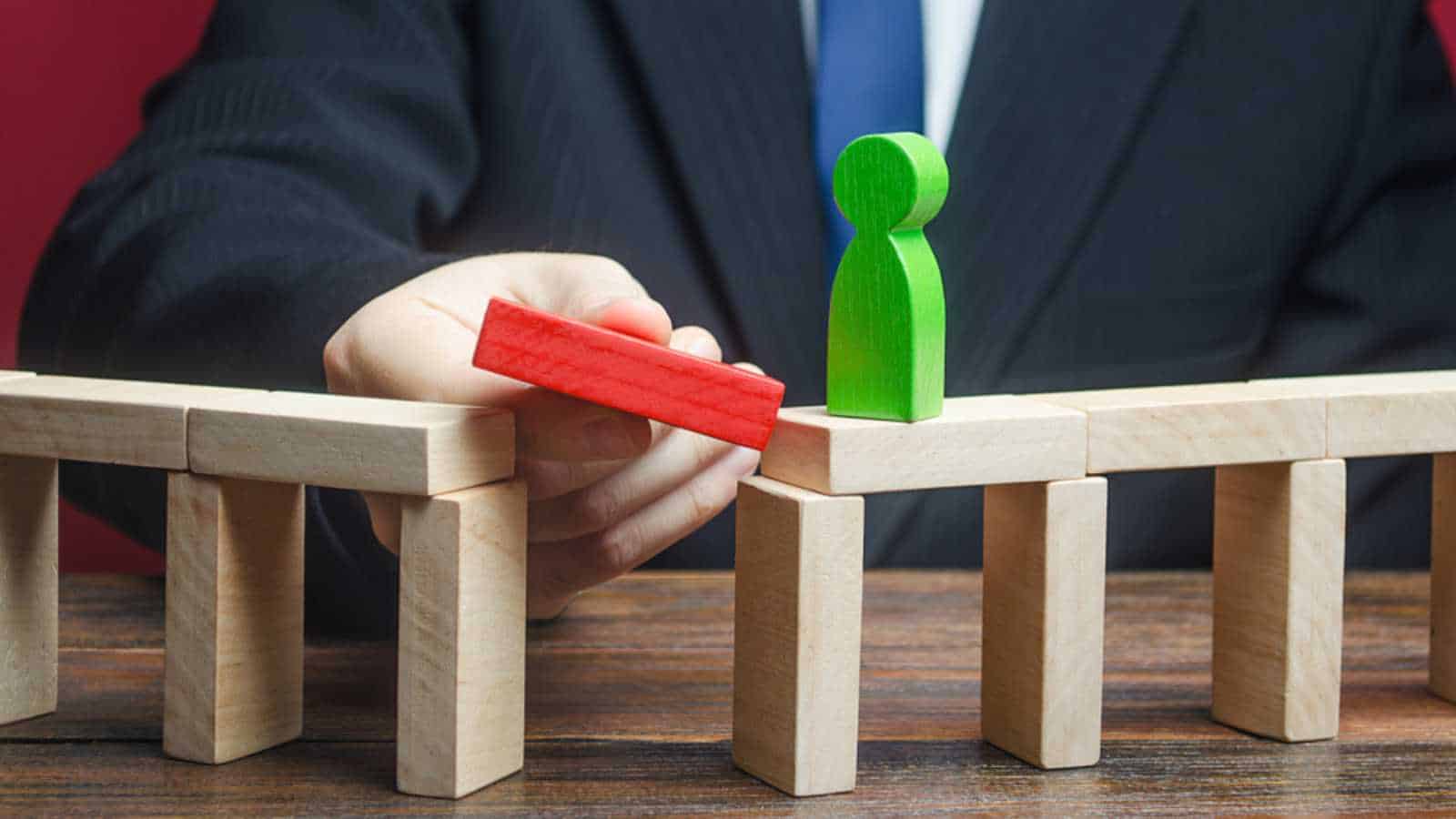
Mentorship is a formal agreement; sponsorship is an emotional investment. You can mentor someone over a grainy video feed, but you rarely risk your professional reputation to sponsor them unless you’ve felt their energy in a high-pressure environment.
A Coqual report found that while 71% of executives have mentees, only a fraction act as sponsors who actively shout your name in closed-door talent reviews. Sponsorship is built on micro-interactions: the unplanned five-minute debriefs where a leader sees your poise under fire.
In a remote vacuum, these moments are sterilized. You become a profile picture, not a person. Without that advocacy proximity, you are relying on the HR system to notice you, which is a losing strategy.
As Sylvia Ann Hewlett famously noted in Forget a Mentor, Find a Sponsor, high-level advocacy requires a level of trust that digital interfaces simply cannot match the grit of a shared physical workspace.
Loss of Observational Learning

Grede’s specific genius lies in her ability to read a room, a skill that is impossible to download via a PDF. Professional mastery is often an ambient form of learning, where junior talent absorbs the nuances of negotiation, conflict resolution, and executive presence by simply being in the presence of excellence.
A study from the National Bureau of Economic Research found that software engineers sitting near each other received 22% more feedback than those on different floors or remote.
When you are remote, you only see the finished polish. You miss the messy, mid-pivot genius of a leader who realizes a pitch is failing and switches gears in real-time. You are learning the what, but you are totally blind to the how.
Hereby, remote workers become excellent executors but remain mediocre leaders because they’ve never witnessed the theater of power in person.
Fewer Collision Opportunities

Innovation is a byproduct of friction, and remote work is too smooth. Sociologist Mark Granovetter’s 1973 theory of the Strength of Weak Ties explains that your primary team provides information, but your weak ties, the people you run into in the lobby, provide opportunities.
In a 2022 analysis of 61,000 Microsoft employees, researchers found that remote work led to networks becoming static and siloed, with a significant drop in cross-departmental collisions. These unplanned hallway chats are where the hidden projects are born.
If you aren’t bumping into the Head of Product at the coffee machine, you aren’t hearing about the secret task force being formed for next quarter. You are effectively locked out of the company’s shadow pipeline, relegated to only doing the work officially assigned to you via a project management tool.
Slower Trust Formation
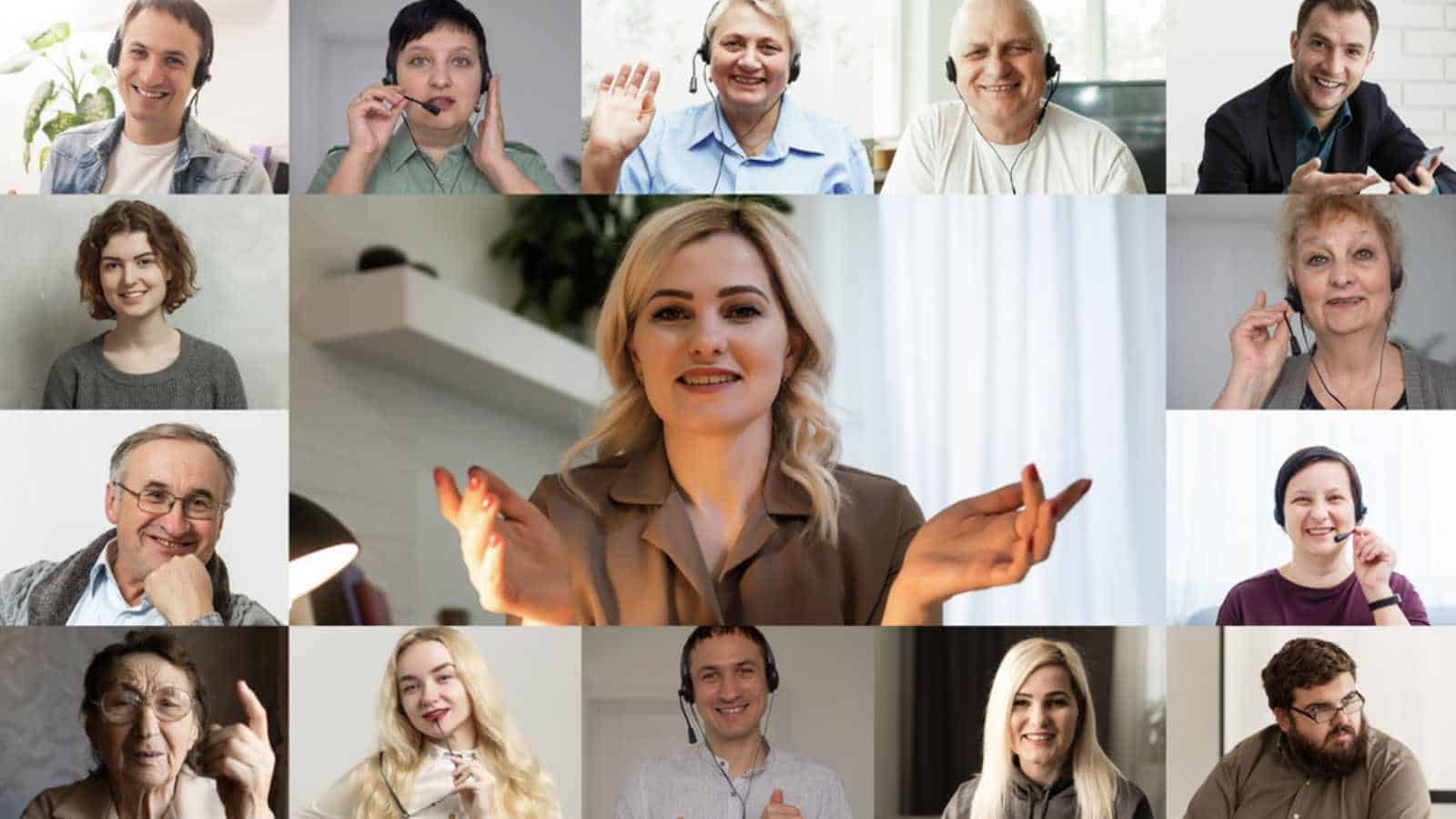
Trust is a biological response to shared space and mirrored body language. In a digital environment, trust is cognitive, based on whether you hit your deadlines. In a physical environment, trust becomes ‘affective’, based on an emotional bond and shared struggle.
The trust deficit in remote teams is a silent killer of advancement. A landmark study in PubMed shows that this smooth meshing of behavior acts like a silent social dance that serves as the primary foundation for deep-seated rapport and mutual liking. When a team is physically in the trenches together, they develop a shorthand that lets them move 10x faster.
Remote teams, by contrast, spend half their energy on contextual repair, clarifying tone and intent that would have been obvious in person. For an entrepreneur like Grede, speed is everything. If it takes you three emails to establish the trust that takes one lunch to build, you are moving too slow for the C-suite.
Bias Toward Present Employees

We like to think we are objective, but the proximity effect is a hardwired human survival mechanism. Leaders naturally assign high-value stretch roles to the people they see most frequently because it reduces the perceived risk.
A 2023 KPMG survey found that 87% of CEOs are more likely to reward in-office employees with favorable assignments and raises. If a crisis erupts at 3:00 PM, the manager won’t scroll through Slack to see who is active.
They are going to grab the person standing outside their office. Those crisis reps are exactly what build a resume for promotion. Over a two-year period, the person in the office has accumulated 50 more battlefield moments than the remote worker.
Delayed Feedback Loops

In an office, feedback is atomic; it’s a raised eyebrow, a nod, or a thirty-second fix that in the hallway. These micro-corrections allow for rapid evolution. Remote work forces feedback into batched sessions. You wait for the Friday sync to hear what you did wrong on Monday. By then, the learning moment has passed, and you’ve likely repeated the mistake five times.
Gallup data indicates that employees who receive frequent, informal feedback are 3.2 times more likely to feel they are doing great work. The friction of scheduling a call for a minor correction means most managers simply don’t bother.
They’ll just fix it themselves or let it slide, which sounds nice but is actually career sabotage. You aren’t getting better; you’re just staying stagnant in a bubble of good enough.
Reduced Participation in High-Stakes Work

When a company faces a critical threat or a massive opportunity, the core leadership gathers in a physical space to hammer it out. Being the voice on the speaker in a room full of people is a position of weakness.
You can’t read the tension; you can’t jump in without a three-second lag; you can’t see the whiteboard. This creates a tiered citizenship system in which the remote worker is a supporting player while the in-office team is the protagonist.
Research from the MIT Media Lab shows that cohesive, physically present groups produce higher-quality creative output under pressure. If you want to be part of the work that defines the company’s future, you have to be where the energy is.
Grede didn’t build SKIMS by being a passive participant; she built it by being in the center of the storm.
Networking Becomes Transactional

Remote networking is a cold exchange of favors; in-person networking is a warm exchange of value. The five-minute favor, a term popularized by Adam Grant in Give and Take, is the engine of professional social capital. It is easy to do a small, unplanned favor for a colleague you just saw at their desk.
In a remote setting, every ask requires a deliberate outreach, which feels heavier and more transactional. This erodes the reciprocity ring that usually supports career growth. Over time, your network becomes brittle. You have connections, but you don’t have allies.
Allies are the people who mention your name when you aren’t there: the invisible promoters. Without the casual reciprocity of an office, you have to work twice as hard to build a network that is half as strong.
Blunted Cultural Fluency

Every organization has a hidden hierarchy: the unwritten rules of power that aren’t on the org chart. You learn who actually holds the influence and who is just a figurehead by observing the social gravity of the office. Who does the CEO listen to in the hallway?
Who gets the nod during a presentation? Remote work provides the map, but physical presence provides the terrain. Employees who lack cultural fluency, the ability to navigate these unwritten rules, are significantly more likely to be sidelined during mergers or restructuring.
If you don’t know how the gears actually turn, you will eventually get caught in them. Immersion is the only way to master the politics of the long game.
Early-Career Skill Gaps Compound Faster

The first five years of a career are about socialization into excellence.
When you remove the office’s ambient safety net, junior employees have to guess what good looks like. In an office, a junior designer hears how a creative director gently but firmly pushes back on a client’s bad idea. Younger workers in remote environments are struggling more with executive presence, the ability to command a room, and speak with authority.
These skills aren’t taught in a webinar; they are practiced in the high-pressure environment of a physical boardroom. If you spend your formative years behind a blurred background, you are building a career on a foundation of sand. The skill gap doesn’t appear in month one, but by year three, the in-office peer is a director, and the remote peer is still a specialist.
Promotion Criteria Drift Toward Presence

Even the most progressive Remote-First companies often have the same issue. When it comes down to the final cut for a VP role, the board looks for total commitment. Rightly or wrongly, physical presence is the most visible proxy for that commitment.
A study by Live Data Technologies found that remote workers were 35% more likely to be laid off than their in-office counterparts. Why? Because it is harder to fire the person you had lunch with yesterday. The humanity buffer of physical presence protects your job, and the visibility multiplier of presence wins you the promotion.
If your goal is to reach the heights Emma Grede has, you have to acknowledge that the world is still run by people who value the handshake over the ‘Like’ button.
Key Takeaways

- Emma Grede reframes the remote work debate by separating performance from advancement, arguing that careers are shaped less by output and more by proximity to decision-making environments where trust and judgment are formed.
- The real disadvantage of remote work is not lower productivity; it is reduced exposure to informal, high-leverage moments where promotions are influenced, from post-meeting conversations to crisis-driven decision points.
- Advancement systems still operate on social signals like visibility, trust, and sponsorship, which are built through repeated, unstructured interactions that are harder to replicate in fully remote settings.
- The impact is uneven: early-career professionals face compounding disadvantages, missing out on observational learning, rapid feedback, and cultural fluency that accelerate leadership readiness.
- Remote work doesn’t eliminate opportunity, but it shifts the burden onto the individual to engineer visibility and influence, meaning those who fail to actively insert themselves into decision flows risk becoming high-performing but overlooked contributors.
Like our content? Be sure to follow us