Ever smile at strangers? Here are 12 personality traits you likely have
If you smile at strangers, you quietly break the “everyone’s scary” spell for a second. People form first impressions fast. Researchers at Princeton showed that people make solid trait judgments after just 100 milliseconds of seeing a face, so your quick grin can do real social work before you say a single word.
In the U.S., that tiny move matters because connection keeps taking hits: the U.S. Surgeon General’s advisory says about half of U.S. adults report loneliness, and only 39% say they feel “very connected” to others emotionally.
I also think smiling at strangers counts as a low-key act of rebellion against the “keep your head down” trend. Pew reports the share of Americans who say “most people can be trusted” fell from 46% (1972) to 34% (2018) in the General Social Survey, so your smile basically says, “I still believe humans can act decently.” Vox also highlighted World Happiness Report data showing that about 25% of Americans ate all their meals alone in 2023 (a 53% jump since 2003), which screams “we need more small social glue.” So yeah, ever wonder what your “smile at strangers” habit says about you?
You lead with warmth instead of suspicion

When you smile first, you send a signal of warmth that many people recognize instantly. Researchers at the Max Planck Institute summarized work showing that “a smile rated as honest and genuine induces trust,” and they tied that trust to more cooperative behavior in the same study setup. In a related trust-interaction experiment write-up from Toulouse School of Economics, researchers described a design that used 84 potential “trustees” and 198 “senders,” which shows how seriously people test trust cues like facial expression in real decisions.
I won’t pretend every stranger deserves your sunshine, because your intuition still matters. Still, your smile nudges first impressions in your favor, and we already know people build those impressions at lightning speed (hi again, 100 ms). Ever notice how a quick smile can soften a cashier’s “Monday face” into a human one?
- You invite conversation without forcing it
- You lower tension in tiny moments
- You make “safe to approach” your default vibe
You show empathy in your face, not just your words

When you smile at strangers, you often practice micro-empathy: you acknowledge someone’s existence without demanding anything in return. A 2022 study on facial mimicry and empathy analyzed an original dataset with 87 participants and used empathy scores ranging from 0 to 80 on the Empathy Quotient, which provides a standardized measurement frame for “how empathic” people feel and report feeling. The authors also noted that online communication increased during and after COVID-19, prompting researchers to study facial cues in more contemporary contexts.
I love this detail from the same paper because it sounds like what we all see in real life: they wrote that “we tend to subconsciously imitate” others’ expressions, and they linked that idea to the “chameleon effect.” A Frontiers review also reported stronger congruent facial reactions among people who score higher on emotional empathy, which supports the idea that empathic people “match” others more naturally. Do you ever catch yourself smiling back before you even think?
- You notice other people’s moods quickly
- You respond with a gentle cue instead of silence
- You treat strangers like “future friends,” not background objects
You pick up social signals faster than most people

Smiling at strangers usually means you read the room and act on it, which takes real social awareness. In Princeton’s work on first impressions, researchers ran five experiments and found that judgments made within 100 ms correlated strongly with those made under no time pressure. That finding tells me your “quick smile” habit works like a social shortcut: you choose a friendly signal before the moment passes.
You also seem to understand that people interpret smiles as information, not decoration. A 2017 paper on facial trustworthiness tested how changes around the eyes affect perceived trustworthiness, and it stated plainly that perceived facial happiness relates to perceived trustworthiness. So you don’t just smile “because manners,” you smile because you know a face sets the tone. Ever wonder why some people feel instantly at ease talking to talk to?
- You scan context (busy street vs. quiet elevator)
- You choose a small, safe signal (smile) instead of a big one (oversharing)
- You keep the moment light and movable
You carry social courage, even when trust drops nationwide

Smiling at strangers takes a little nerve, especially when the national mood feels… spicy. Pew reports that interpersonal trust fell from 46% in 1972 to 34% in 2018 (GSS), and that trend sets the stage for people to second-guess friendliness. The World Happiness Report’s 2025 trust chapter also described a long decline, noting the share of Americans who trust others dropped from 50% to 30% since the 1970s as an illustrative summary.
So when you smile anyway, you signal confidence plus a little hope, and I respect that. You also control the risk because you can keep it simple: a brief smile, a nod, and you move along. The data doesn’t say “trust everyone,” it says “trust feels harder now,” and you still choose a human gesture. Have you noticed how some people act shocked when you smile first?
- You take small social risks on purpose
- You keep your boundaries while staying kind
- You resist the “everybody’s a threat” script
You value connection because loneliness hits hard right now

A stranger-smile often comes from someone who cares about connection, even in tiny doses. The U.S. Surgeon General’s advisory says about half of U.S. adults report experiencing loneliness, and it frames loneliness and isolation as serious threats, not just “bad vibes.” The same advisory also cites a 2022 finding where only 39% of U.S. adults said they felt “very connected” to others emotionally.
Surgeon General Vivek Murthy also wrote, “Each of us can start now… by strengthening our connections and relationships,” and he gave simple actions like answering a friend’s call or sharing a meal. Your smile fits that exact spirit because you create a micro-connection without needing a deep conversation in the cereal aisle. Ever think about how one tiny moment can make someone feel seen?
- You treat friendliness like a daily habit
- You build social glue in low-pressure ways
- You support the community without making it a big production
You practice “micro-kindness” that matches a real global trend

Your stranger-smile also looks like prosocial behavior in miniature, and researchers track that kind of thing. The World Happiness Report 2025 executive summary says benevolent acts remain about 10% above pre-pandemic levels, even after a drop from 2023 to 2024, suggesting people kept some of that “help each other” energy. That same report theme tracks donating, volunteering, and helping strangers as measurable behaviors, so kindness isn’t just a slogan; it’s data.
I know, I know, some days the internet makes it feel like everyone forgot how to act right. Still, the numbers show people kept doing kind things more often than before 2020, and your smile fits right into that “small benevolence” lane. Do you ever smile at someone just to remind yourself that humans still show up for each other?
- You choose small kindness over performative kindness
- You give warmth without expecting applause
- You keep your optimism practical, not delusional
You regulate stress better than you think

Here’s a nerdy-but-useful one: your smile might help your body handle stress. In a randomized controlled trial, Kraft and Pressman studied 170 participants and found that smiling participants had lower heart rates during stress recovery than the neutral-expression group, even when people didn’t feel happier in the moment. The Psychological Science Association’s write-up even summed it up: smiling during brief stressors can reduce the intensity of the body’s stress response.
Pressman gave advice that sounds simple but lands hard in real life: “You might try to hold your face in a smile for a moment” during stress, and she linked it to heart health in that same release. So yeah, your “smile at strangers” habit might double as a nervous-system tool you use without thinking. Ever notice how your shoulders drop after a genuine smile?
- You use facial cues to nudge your mood
- You recover faster after small stress hits
- You keep your energy steadier in public spaces
You spread positivity because smiles sync between people

Smiles don’t live in isolation; people “catch” them, and researchers can measure that. A 2024 study on face-to-face conversations used 40 participants in three-minute chats and found that the speaker’s smiling amount changed significantly depending on the listener’s smiling amount (with a reported p < 0.001 for differences across conditions). The authors also reported that smiling intensities changed in a synchronized way over time, which basically means your smile can pull another smile into the room.
So when you smile at strangers, you often kick off a tiny chain reaction, even if only one person out of ten returns it. I also like how the researchers described smiling interactions as helping build social bonds, because that matches what most of us feel in our bones. Ever smiled at someone and watched their whole face relax as you gave them permission?
- You set a friendly tone fast
- You invite a matching response without pressure
- You turn “cold room energy” into “okay, we’re human” energy
You tap into the “smile – happier feelings” effect on purpose

You might not think of yourself as a psychology person, but your habits line up with real findings on facial feedback. In a massive multi-lab study, the Many Smiles Collaboration analyzed data from 3,878 participants across 19 countries and found that facial mimicry and voluntary facial action tasks could amplify and even initiate feelings of happiness. That team also noted mixed evidence for the classic pen-in-mouth method, which I love because it sounds like science saying, “Okay, context matters, calm down.”
So your smile at strangers likely comes from an inner bias toward positive emotion, not fake “toxic positivity.” You choose a voluntary cue that can lift your mood a bit, and the research backs that direction, even if effects vary by method. Have you ever smiled first, only to realize you actually felt better five seconds later?
- You build your mood from the outside in
- You treat joy like something you can practice
- You avoid the “resting stress face” spiral
You show openness because you stay curious about people
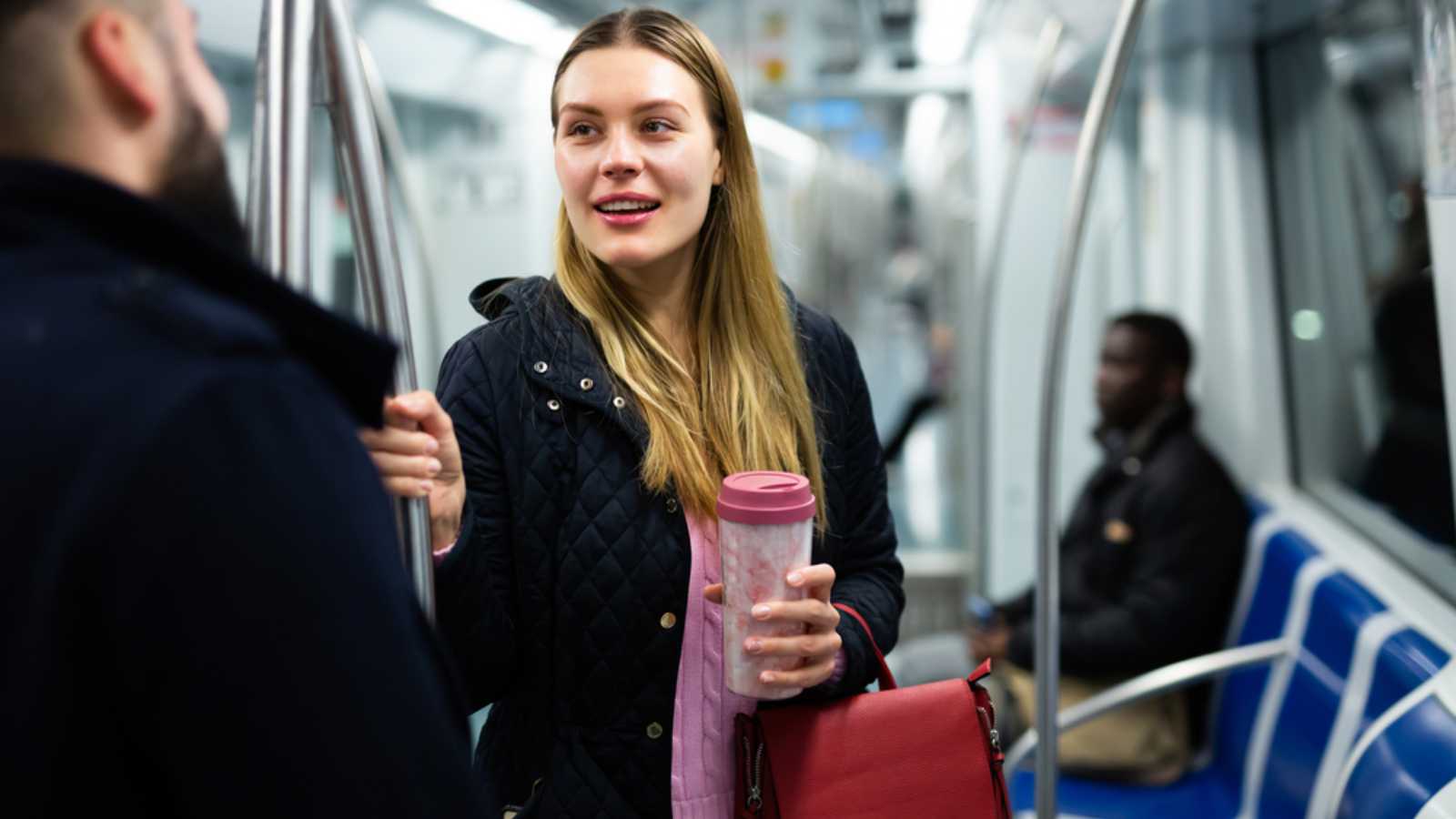
Smiling at strangers often signals openness; you stay curious instead of closed off. In PNAS Nexus, Witkower and colleagues conducted Study 1 with 303 participants and Study 2 with 987 observers, and they found that variations in smiles “leak diagnostic information” about traits such as trustworthiness and conscientiousness. That same paper even pointed out how often people use smiling photos for dating and profiles, which shows how heavily modern life relies on quick face-based cues.
The authors also gave a very “real world” example: if a dating-app user spends 15 seconds per profile and uses an app for 35 minutes a day, that person can evaluate nearly 1,000 faces per week, so smiles become constant social signals. When you smile at strangers in everyday life, you basically practice the offline version of that openness, minus the swiping. Ever feel like a smile says, “I’m open to good interactions today”?
- You approach people as possibilities, not problems
- You stay curious even in routine places
- You keep your social energy flexible
You carry conscientiousness that shows up in your expression
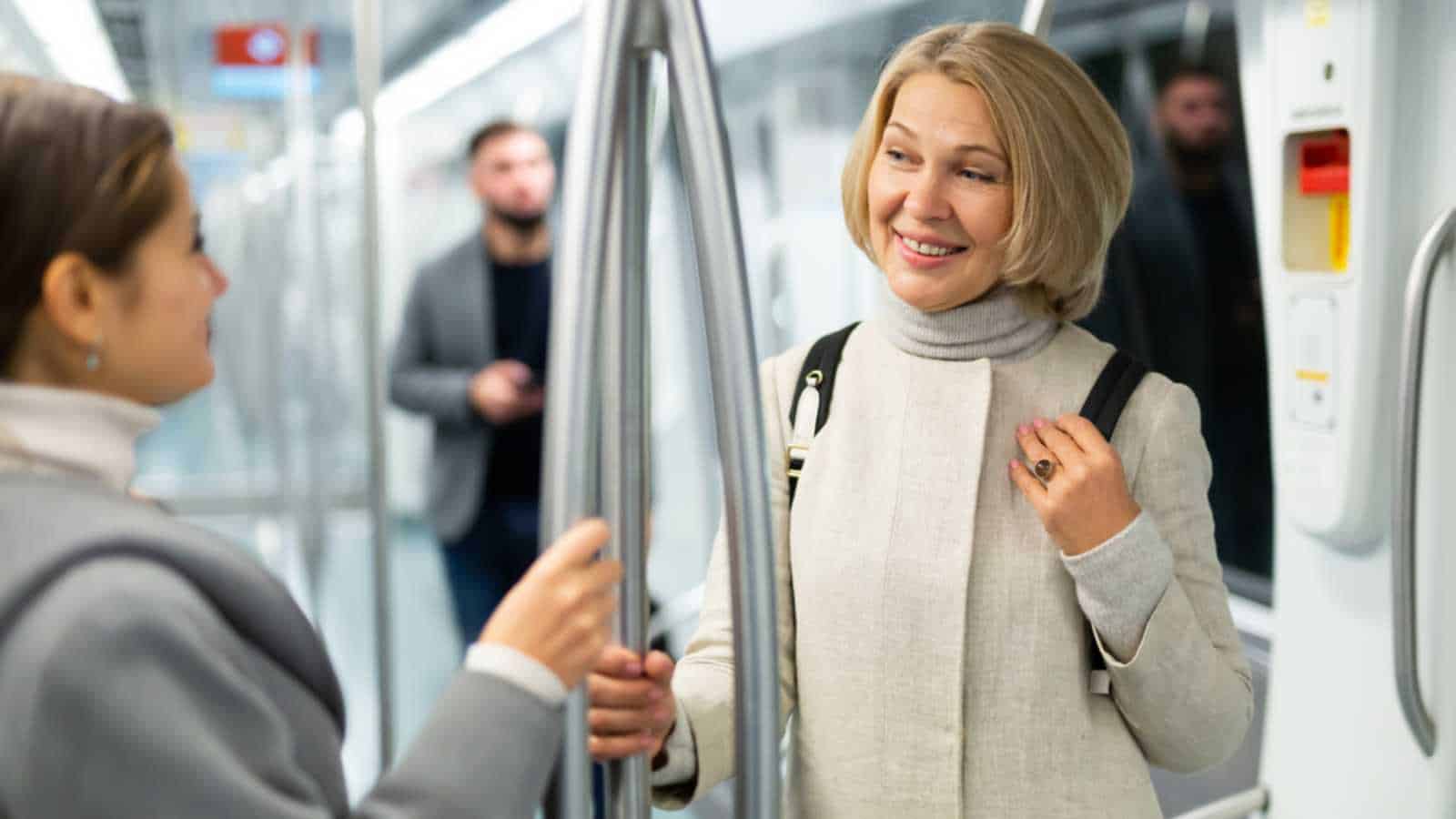
This one surprises people, but research links smiling style to conscientiousness, the “I show up and handle things” trait. The PNAS Nexus study’s significance statement states that variations in smiles leak information about traits such as conscientiousness and trustworthiness, and it used large samples (N=303 and N=987) to test how observers judge those traits. The authors also reported that Duchenne-style smiles were positively associated with perceptions of prosocial and warm traits, which helps explain why “genuine-looking” smiles feel grounded.
In plain language: your smile can hint that you act reliably and kindly, not chaotically and flakily. I don’t mean you need to grin like a cartoon character all day, because nobody wants face cramps. Still, when you consistently smile at strangers, you often show emotional steadiness that people read as maturity. Ever notice how people relax around someone who seems predictably pleasant?
- You signal steadiness without saying a word
- You show follow-through in your social habits
- You make “friendly and reliable” your brand
You understand social norms and use them skillfully
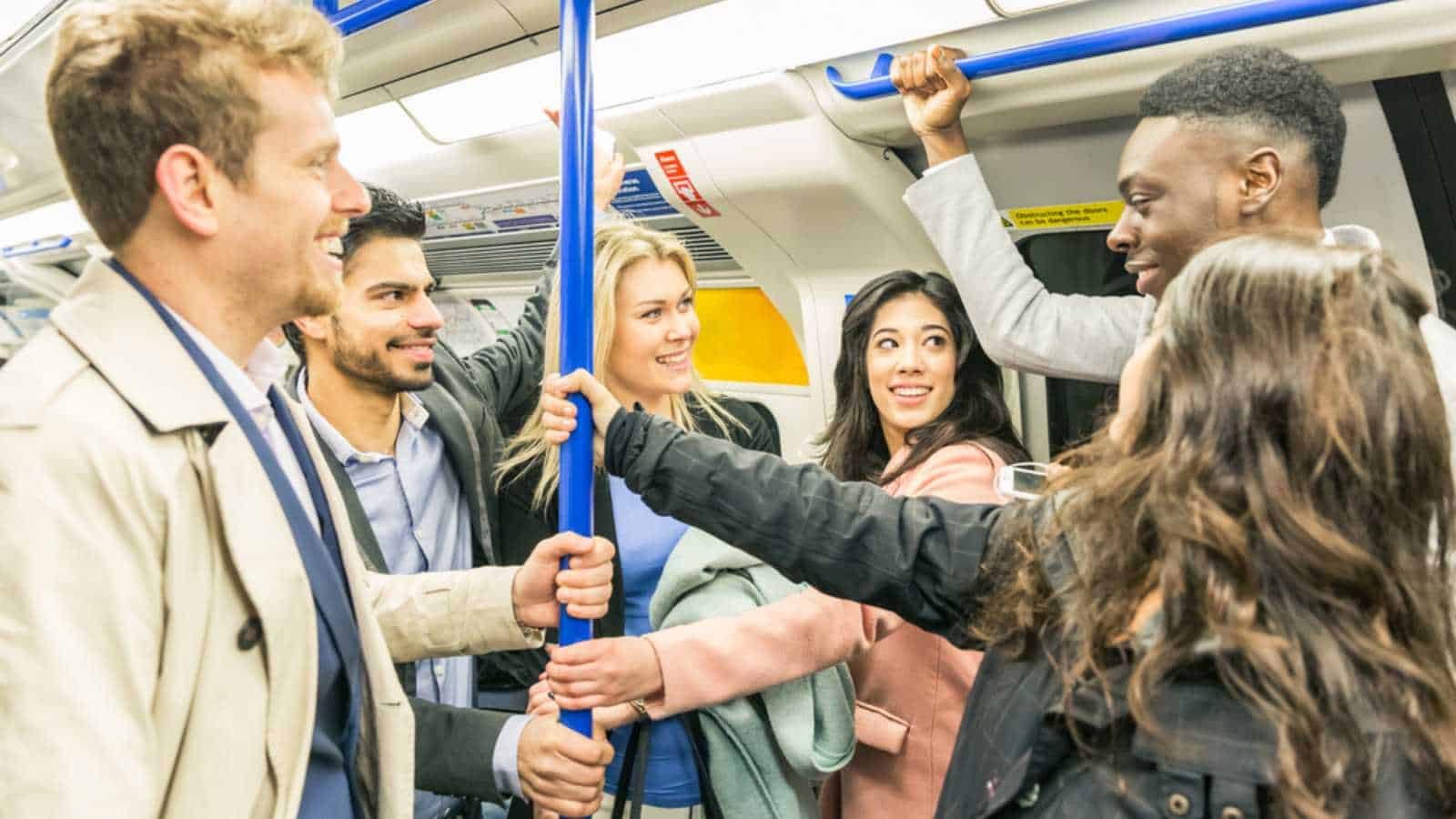
Smiling at strangers also shows you understand when to be friendly and how much to give. The 2024 conversation study on smiling interaction explicitly mentioned “social norms” that govern when, where, and how people smile, which explains why your smile probably changes based on context. In that same study, researchers measured shifts in smile frequency across controlled listener conditions and found large statistical differences, indicating that social context reliably affects how people smile.
So you don’t just smile randomly, you deploy it like a social tool. You can give a quick, polite smile in an elevator, a bigger one at a neighborhood cookout, and a “don’t talk to me” blank face when a creep acts weird (because yes, that counts as healthy). The data support the idea that people tune smiles to relationships and situations, and you seem to do it naturally. Ever catch yourself adjusting your smile depending on who stands in front of you?
- You match the setting instead of forcing a vibe
- You keep friendliness within your boundaries
- You use nonverbal cues with intention
You invest in well-being through tiny social moments

A stranger-smile might look small, but it connects to bigger well-being patterns researchers track. The World Happiness Report 2025 chapter on meal sharing reports that sharing one more meal per week is associated with about a 0.2-point boost in life evaluations on a 0–10 scale, which researchers consider meaningful. Vox highlighted U.S. time-use data showing that about 25% of Americans ate all meals alone in 2023, a trend that points toward more isolation, not less.
So when you smile at strangers, you practice the smallest possible version of social connection, the kind that can lead to “maybe we chat,” “maybe we share a laugh,” or “maybe I feel less invisible today.” I don’t claim your smile fixes loneliness, but I do think it nudges your day toward human contact, and the U.S. needs that nudge right now. Ever think your five-second smile could act like a tiny mental health deposit, for you and the other person?
- You create a connection without demanding closeness
- You support your mood with real social contact
- You push back against isolation one moment at a time
Key takeaway

Smiling at strangers doesn’t make you naïve; it usually means you carry warmth, empathy, social courage, and emotional steadiness in a world where trust and connection keep trending downward. Pew showed that interpersonal trust dropped from 46% (1972) to 34% (2018), and the Surgeon General reported that about half of U.S. adults experience loneliness, so your smile serves as a tiny counter-signal: “I still choose connection.” Research even ties smiling to measurable effects, like lower heart rate during stress recovery in a 170-person trial and mood boosts in a 3,878-person multi-lab study, so your habit can help you as much as it helps others.
So keep smiling, selectively, safely, and with your boundaries intact. If you want a fun challenge, try this: smile at three strangers this week and watch who softens, who smiles back, and who looks confused like you just spoke ancient Latin. (Their loss.)
Like our content? Be sure to follow us.