How can an image be a sacred part of worship in one religion and a serious religious danger in another?
Walk into a Hindu temple and you may see worshippers offering flowers to a beautifully decorated statue. Enter a Catholic church and you might find someone kneeling before an image of Mary. Visit an Eastern Orthodox church and you’ll see believers kissing painted icons.
Now walk into many mosques or synagogues and you’ll notice something strikingly different: no statues of God at all.
How can an image be a sacred part of worship in one religion and a serious religious danger in another?
The disagreement goes much deeper than artistic taste. It raises a question that religious communities have argued over for thousands of years: Can a physical object help human beings connect with the divine, or does it risk turning something created by human hands into a substitute for God?
The answer has divided Christians, shaped Jewish and Islamic worship, inspired elaborate Hindu temples, and even led to the destruction of religious artwork.
Here are 10 surprising reasons religions disagree so strongly about sacred images.
1. Hindu Statues Aren’t Simply Decorations—or Just Representations of Gods
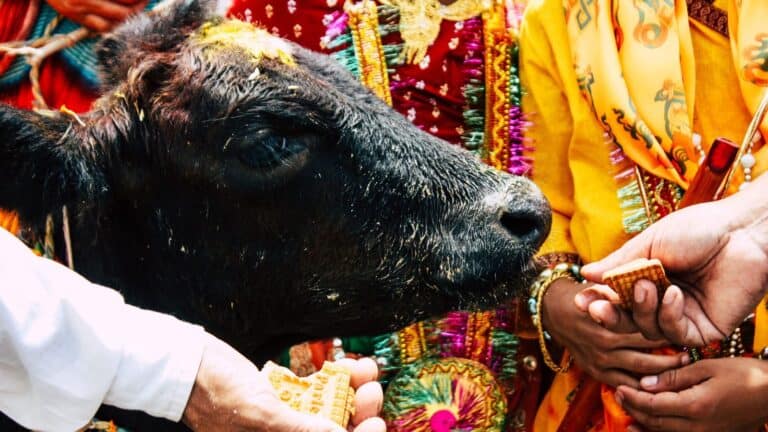
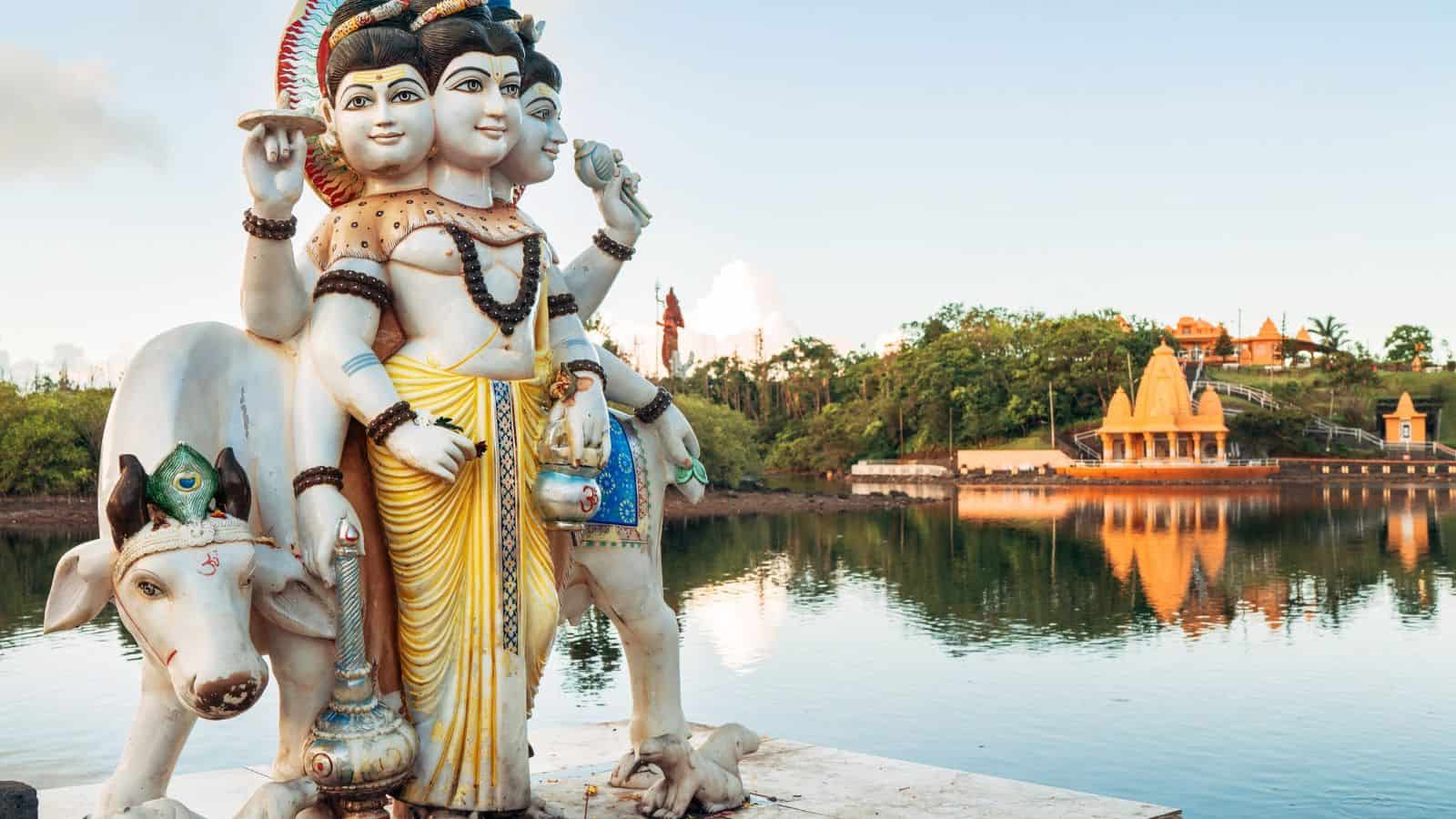
In many Hindu temples, the most important object is a sacred image known as a murti. It may depict Shiva, Vishnu, Ganesha, Devi, or another divine form. Worshippers may bring flowers, offer food, light lamps, and bow before it.
To an outsider, the scene can look like people worshipping a statue made of stone or metal. But that description misses how many Hindus understand what is happening.
The sacred image isn’t necessarily regarded as an ordinary object that happens to resemble a deity. It can become a focus of divine presence and a means of encountering the deity. In many temple traditions, ceremonies of consecration, including prana pratishtha, establish the image’s sacred role. Worship then takes place through practices such as darshan, in which seeing and being seen by the deity is spiritually meaningful.
Hindu traditions don’t all explain divine images in exactly the same way. Some emphasize the deity’s real presence, others the image’s role in concentrating devotion, and still others prefer worship without a physical form.
The crucial distinction is that worshippers aren’t generally confusing stone with an ordinary living creature. Their religious tradition gives the image a meaning that cannot be understood simply by describing its physical materials.
2. Judaism’s Prohibition on Idols Comes From a Much Older Religious Struggle
The Hebrew Bible contains some of the most forceful warnings against making and worshipping idols. The Ten Commandments prohibit making images for the purpose of bowing down to and serving them, and biblical prophets repeatedly criticize the worship of other gods.
Those warnings emerged in an ancient Near Eastern world where divine images played important roles in neighboring religious traditions.
The concern wasn’t that carving a figure was always artistically wrong. It was that people might give something created by human beings the worship owed to God.
Jewish interpretations of the prohibition developed over time, and Jewish communities have not always treated every figurative image as forbidden. Ancient synagogues sometimes contained elaborate mosaics and other artwork, including human and animal figures.
Nevertheless, mainstream Jewish worship avoids statues representing God. The divine is not understood as a being whose nature can be captured in a human-made physical form.
This helps explain why synagogues can contain beautiful decorative art while still rejecting the kind of sacred statue found in many Hindu temples or Catholic churches. The distinction concerns religious use and theological meaning, not simply whether an artist is allowed to draw a picture.
3. Islam Avoids Images of God for a Reason Bigger Than Artistic Simplicity
Many mosques are celebrated for their extraordinary geometric designs, calligraphy, and architectural patterns. Visitors may notice that these sacred spaces generally don’t contain statues or pictures of God.
That absence is deliberate.
Islam places uncompromising emphasis on tawhid, the oneness and uniqueness of God. The Quran rejects associating other beings with God, and Islamic traditions developed strong objections to images that might become objects of worship.
For Muslims, refusing to depict God isn’t a sign that art is unimportant. It’s a way of protecting the belief that God cannot be reduced to a created form.
Islamic attitudes toward images of humans and animals have varied considerably across history. Some Muslim societies produced sophisticated figurative paintings, including illustrations of historical and religious subjects, while other communities discouraged or prohibited such depictions, especially in religious settings.
The strongest shared principle concerns the impossibility of adequately representing God. Islamic calligraphy, particularly Quranic verses and divine names, offers a different way for sacred meaning to become visible.
A mosque’s lack of statues therefore doesn’t mean it lacks religious imagery. It means the tradition developed other ways of expressing reverence.
4. Catholics Distinguish Between Worshipping God and Honoring a Statue
A Catholic kneeling before a statue of Mary can look, to someone unfamiliar with Catholicism, exactly like a person worshipping an image.
That appearance has fueled arguments between Christians for centuries.
Catholic teaching distinguishes worship, which belongs to God alone, from veneration, which expresses honor toward saints. Mary receives a distinctive form of honor because of her role as the mother of Jesus, but she is not regarded as a goddess.
In Catholic understanding, a statue is supposed to direct attention beyond itself, not become a replacement for God.
Images can remind worshippers of biblical events, encourage prayer, or make religious figures feel personally present in the devotional imagination. Catholics may light candles or pray near statues, but official doctrine does not teach that the material statue possesses divine power independently.
The distinction is explained in the Catechism of the Catholic Church’s discussion of sacred images, which places the honor shown to an image in relation to the person represented.
Not all Christians accept that distinction. Some believe the physical actions involved in venerating images come dangerously close to the idolatry prohibited in scripture. That disagreement remains one of the reasons Christian churches can look so different from one another.
You may also want to read: 12 things people often get wrong about Catholicism
5. Eastern Orthodox Christians Once Fought Bitterly Over Icons
Eastern Orthodox churches are famous for icons: painted images of Jesus, Mary, angels, and saints. Worshippers may kiss them, bow before them, or light candles nearby.
But icons were once at the center of one of Christianity’s most explosive controversies.
During the Byzantine iconoclast disputes of the eighth and ninth centuries, some imperial and religious authorities opposed religious images, while defenders argued that icons were legitimate expressions of Christian belief. The conflict involved theology, political power, and competing interpretations of religious tradition.
The argument wasn’t merely about whether churches should be decorated. It was about whether depicting Jesus affirmed or distorted Christianity’s central claims.
Defenders of icons argued that because Christians believe God became human in Jesus, depicting Christ’s human appearance was theologically meaningful. They also distinguished veneration of an image from worship of God.
The Second Council of Nicaea in 787 defended the veneration of icons, although disputes continued afterward. The restoration of icons in 843 became an important event in Eastern Orthodox history.
Today, icons are central to Orthodox worship. Their survival is a reminder that religious images were not always accepted peacefully, even within traditions that now seem inseparable from them.
6. Protestant Reformers Disagreed So Strongly That Some Churches Lost Their Art
When the Protestant Reformation began in the sixteenth century, arguments about religious images became intensely practical.
Some reformers believed that statues, paintings, and elaborate church decorations encouraged superstition or idolatry. In certain regions, churches were stripped of images, and religious artwork was removed or destroyed.
But Protestants didn’t agree on one approach.
Some wanted churches almost completely free of religious images, while others believed pictures could still teach and inspire without becoming objects of worship.
Reformed traditions influenced by figures such as Huldrych Zwingli and John Calvin often took especially restrictive positions. Lutheran traditions generally allowed greater use of religious art, provided images were not treated as divine or necessary for salvation.
These differences remain visible today. A plain meetinghouse, a church with a simple cross, and a richly decorated Lutheran sanctuary can all belong to Protestant Christianity.
The disagreement reveals something easy to overlook: religions can share the same scriptures and still reach sharply different conclusions about what worship should look like.
7. Buddhist Statues Don’t Mean Buddhists Regard the Buddha as a Creator God
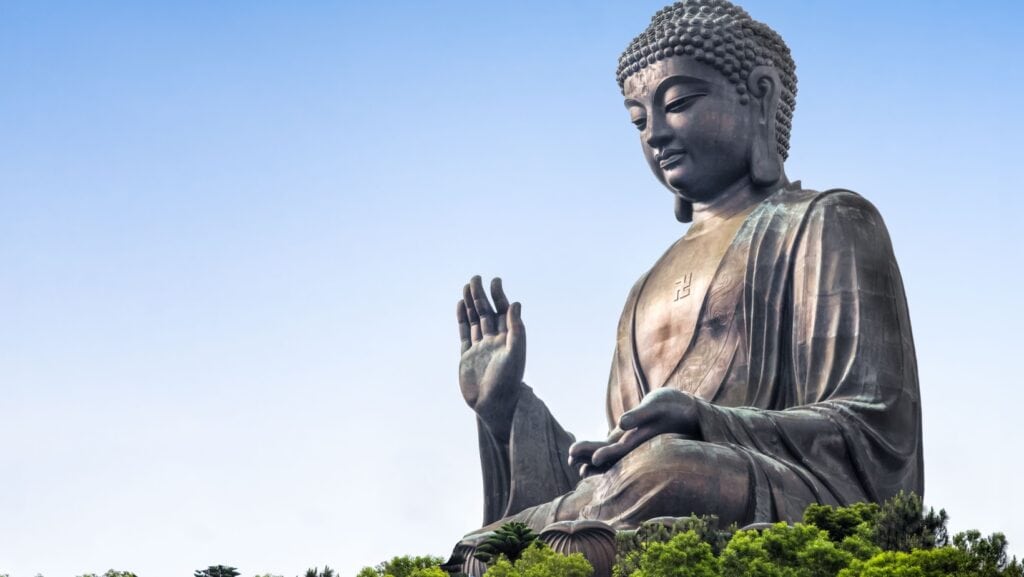
A seated Buddha statue is one of the world’s most recognizable religious images. It appears in temples, gardens, homes, and even commercial spaces where its religious meaning may be barely understood.
But Buddhism generally doesn’t teach that the historical Buddha was a creator god.
A Buddha statue is usually connected with awakening, teaching, reverence, and the possibility of liberation—not the worship of a universe-creating deity.
Buddhist image traditions developed over centuries. Early Buddhist art often represented the Buddha through symbols such as footprints, an empty throne, or the Bodhi tree, although scholars debate how broadly the absence of human depictions should be interpreted.
Later, anthropomorphic Buddha images became central to many Buddhist traditions. Worshippers might bow, offer flowers, light incense, or meditate before an image.
Those actions have different meanings across Buddhist communities. They may express gratitude to the Buddha, cultivate devotion, recall the teachings, or focus the mind on qualities associated with enlightenment.
The statue’s importance therefore cannot be understood by assuming every religious bow is directed toward a god. Different traditions use similar gestures for very different purposes.
8. Jain Temples Have Elaborate Statues Despite Their Strict Teachings on Attachment
Jainism places enormous emphasis on nonviolence, self-discipline, and liberation from attachment. That can make its magnificent temples and sculpted images of the Tirthankaras seem surprising.
Why would a religion devoted to renunciation create such elaborate sacred spaces?
For many Jains, images of the Tirthankaras represent perfected spiritual teachers who have attained liberation. They offer examples of the spiritual goal rather than depicting creator gods who intervene in the world.
The statue points toward a state of liberation that believers seek, even though the liberated teacher is not understood as granting favors in the same way a creator deity might.
Jain communities also disagree about image worship. Many Śvetāmbara and Digambara traditions maintain temples with sacred images, while Śvetāmbara Sthānakavāsī and Terāpanthī traditions generally reject idol worship.
That means Jainism contains both image-venerating and non-image-venerating approaches within the same broader religious tradition.
The disagreement is particularly revealing because it shows that arguments about sacred images aren’t confined to Christianity or the Abrahamic religions. Even communities sharing a commitment to nonviolence and liberation can differ about whether statues help or hinder spiritual practice.
9. Sikhism Rejects Idol Worship but Gives Extraordinary Reverence to Scripture
Enter a gurdwara, a Sikh place of worship, and the most prominent sacred presence is not a statue of Guru Nanak or another Sikh Guru.
It is the Guru Granth Sahib, Sikhism’s sacred scripture, which Sikhs recognize as the eternal Guru.
The scripture is ceremonially installed, treated with great reverence, and central to communal worship. Yet Sikhism rejects the worship of idols and emphasizes devotion to the one divine reality.
This creates an important distinction: treating something with profound reverence doesn’t necessarily mean believing that the object itself is God.
Sikhs may display portraits of the Gurus in homes or community settings, but such images are not objects of worship in the same way that a consecrated murti may be in a Hindu temple.
The focus of Sikh worship is on the divine, expressed through prayer, singing sacred hymns, and living according to the teachings of the Gurus.
To an outsider, the ceremonial treatment of a sacred book might seem similar to the treatment of an image in another religion. Within Sikhism, however, the theological meaning is different. The scripture is honored for its role as Guru and its divine teachings, not as a statue embodying a deity.
10. Religious Images Can Become So Important That People Destroy Them
One of the most unsettling facts about religious images is how often they have become targets during conflict.
Throughout history, statues, paintings, shrines, and sacred objects have been damaged or destroyed by people who considered them idolatrous, politically threatening, or symbols of a rival community.
The destruction of the giant Buddhas of Bamiyan in Afghanistan by the Taliban in 2001 became an internationally recognized example. The statues had stood for centuries before being demolished under an extremist interpretation of religious prohibition.
Destroying a sacred image can be an attempt to destroy more than art. It can be an attack on memory, identity, and the visible presence of another tradition.
But iconoclasm is not limited to one religion or historical period. Christian reform movements, political revolutions, and conflicts within religious communities have also involved the removal or destruction of sacred imagery.
Sometimes the motivation is theological. Sometimes political power, cultural hostility, or a desire to erase the past plays an equally important role.
The irony is that the same object one community regards as a dangerous idol may be treasured by another as an irreplaceable expression of faith.
Why One Religion’s Sacred Image Is Another’s Forbidden Idol
At first glance, the disagreement seems simple. Some religions like statues; others don’t.
But the deeper question is what a physical image is believed to do.
For some Hindus, a consecrated image can be a focus of divine presence. For Catholics and Orthodox Christians, sacred images can direct honor toward the people they represent. For many Buddhists and Jains, statues recall spiritual teachers and the possibility of liberation. Jewish, Islamic, Sikh, and some Protestant traditions place strong limits on images used in worship, though their reasons differ.
The argument isn’t really about whether stone, paint, or wood can be beautiful. It’s about what happens when human beings treat those materials as sacred.
One tradition sees a doorway to devotion. Another sees a risk of confusing creation with the Creator. A third sees an image of a teacher whose example deserves reverence but not divine worship.
Those differences are too important to flatten into a simple contrast between people who worship statues and people who don’t.
The next time you enter a religious building, look at what’s displayed—and what’s deliberately absent. Both choices can reveal something profound about how that community understands the divine.
You may also want to read: Religious Symbols You’ve Seen Everywhere—but Probably Don’t Know the Real Meaning Of